Healthiest Hot Dogs: Beef, Turkey, Chicken and Plant-Based Compared
What are the healthiest hot dogs? Beef, turkey, chicken, lean and plant-based franks compared, what "uncured" really means, and what to check on the pack.
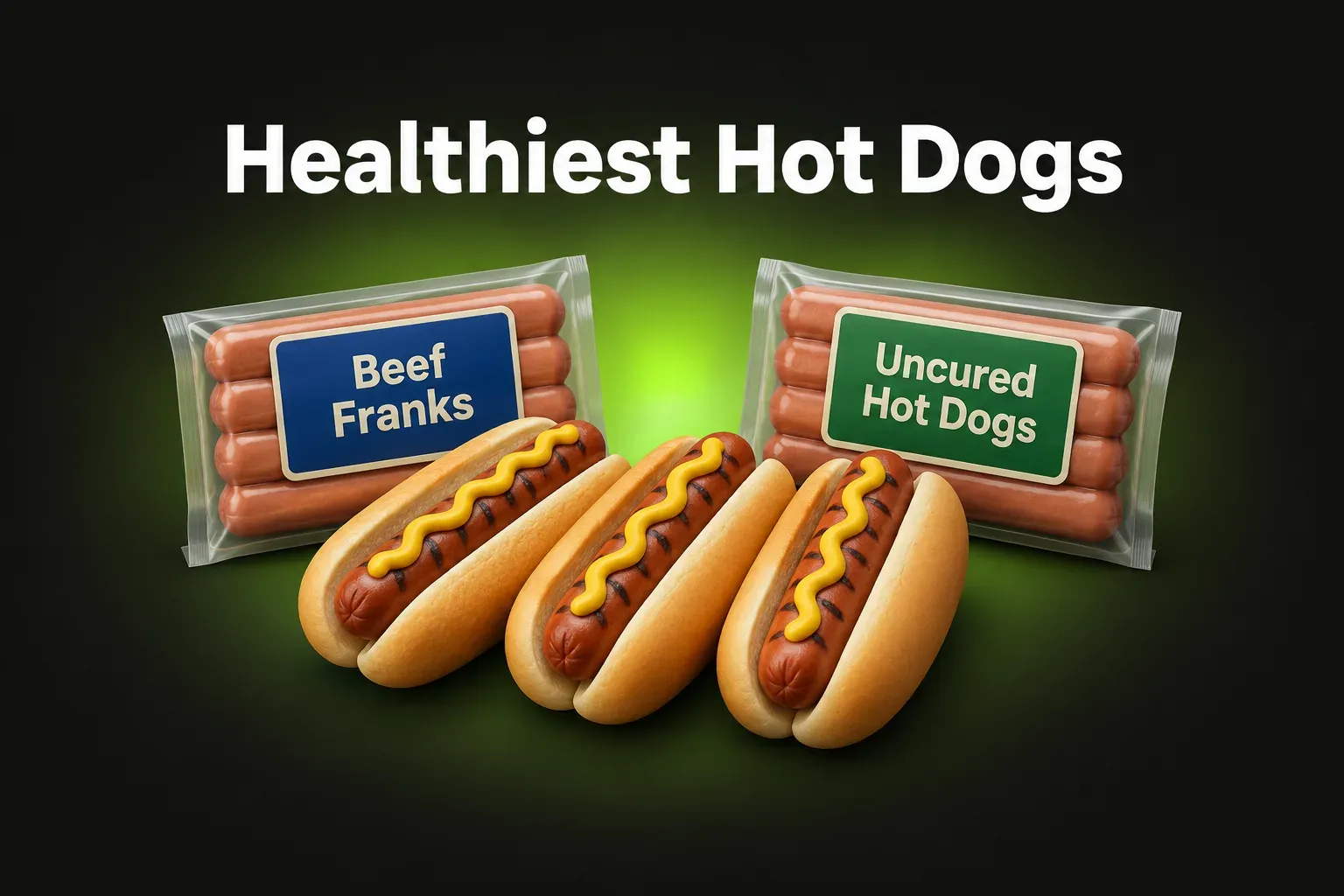
Hot dogs are a summer classic – at cookouts, ballgames and quick family dinners. But they’re also processed meat, often very salty, and some contain corn syrup and phosphates. Not all hot dogs are the same, though: calories, fat and salt can differ by two or three times between packs. So which are the healthiest hot dogs?
The short answer: the healthiest hot dogs are lower in fat and salt (about 300–450 mg of sodium per frank), with a short ingredient list and no corn syrup. Lean beef, chicken and turkey franks have less saturated fat than regular beef, and plant-based dogs have no nitrites. But “uncured” doesn’t mean nitrite-free, and every meat hot dog is processed meat – so they’re best as an occasional food.
Hot dogs compared
| Hot dog (1 frank) | Weight | Calories | Protein | Sat. fat | Sodium |
|---|---|---|---|---|---|
| Beef | 49 g | 154 | 5.7 g | 5.6 g | 424 mg |
| Pork and beef | 52 g | 151 | 5.4 g | 4.0 g | 567 mg |
| Turkey | 45 g | 100 | 5.5 g | 1.8 g | 410 mg |
| Chicken | 45 g | 100 | 7.0 g | 1.7 g | 464 mg |
| Low-fat beef | 57 g | 80 | 6.8 g | 0.9 g | 424 mg |
| Plant-based (meatless) | 70 g | 163 | 13.7 g | 1.2 g | 330 mg |
| Jumbo beef (for comparison) | 85 g | 260 | 10 g | 9 g | 830 mg |
Values from USDA FoodData Central; jumbo beef from a brand label on Open Food Facts. Brands differ – check the pack.
A white bun adds about 120–130 calories, and with ketchup and mustard a beef hot dog in a bun comes to about 320 calories and 700–1,000 mg of sodium. See how many calories are in a hot dog.
What’s in a hot dog
Here’s a typical all-beef frank (Hebrew National Beef Franks), according to Open Food Facts: beef, water, salt, spice, sodium lactate, paprika, hydrolyzed soy protein, garlic powder, sodium diacetate, sodium erythorbate, flavoring, sodium nitrite.
And a classic mixed-meat frank (Ball Park Franks): mechanically separated chicken, pork, water, corn syrup, potassium lactate, salt, sodium phosphate, natural flavor, beef stock, sodium diacetate, sodium erythorbate, maltodextrin, paprika extract, sodium nitrite (Open Food Facts).
What these ingredients do:
- Sodium nitrite – cures the meat, keeps it pink and stops the bacteria that cause botulism, a rare but deadly food poisoning. In the gut and during cooking it can form nitrosamines – substances linked to cancer.
- Sodium erythorbate – a form of vitamin C that speeds curing and reduces nitrosamines.
- Sodium lactate, potassium lactate, sodium diacetate – preservatives that slow bacteria like Listeria.
- Sodium phosphate – keeps the meat juicy; adds extra phosphorus.
- Corn syrup, dextrose, sorbitol – a little sweetness and browning.
- Mechanically separated chicken – a meat paste made by pushing bones with meat left on them through a sieve.
What “uncured” and “no nitrates added” really mean
Many packs say “uncured” or “no nitrates or nitrites added*” – with a small asterisk: “*except those naturally occurring in celery powder”. Here’s the catch:
- Celery powder and celery juice are naturally rich in nitrate. With the help of added bacteria (a starter culture), it turns into nitrite – the same thing that cures regular hot dogs.
- Food scientists have shown that these “natural” cures can leave nitrite levels similar to conventional cured meats (Sebranek & Bacus, Meat Science, 2007).
So “uncured” hot dogs aren’t nitrite-free. They may still be a good pick if they have fewer other additives – but don’t pay extra just for the word “uncured”.
Hot dogs and cancer
The WHO’s cancer agency (IARC) classes processed meat – hot dogs, bacon, ham, salami – as carcinogenic to humans (group 1) – a proven cause of colorectal cancer. Each 50 g of processed meat a day – about one hot dog – raises the risk by about 18% (Bouvard et al., Lancet Oncology, 2015). That doesn’t mean a hot dog is as dangerous as a cigarette; it means the evidence that processed meat can cause cancer is strong, even though the extra risk from an occasional hot dog is small.
Salt is the other big issue: two hot dogs in buns with toppings can supply more than half of the 2,300 mg of sodium the US guidelines suggest as a daily maximum (Dietary Guidelines for Americans).
How to pick the healthiest hot dogs: 5 checks
| Check | Aim for |
|---|---|
| Sodium | Under 450 mg per frank |
| Saturated fat | Under 3 g per frank |
| Meat | Named meat (“beef”, “turkey”) – not “mechanically separated” |
| Added sugar | No corn syrup or dextrose near the top |
| Additives | Short list, no extra phosphates |
How to make hot dog night healthier
- Have one, not three – and add a big salad, corn or grilled vegetables.
- Pick a whole-grain bun for more fiber.
- Load it with vegetables: onions, peppers, sauerkraut, tomatoes or pickled jalapeños.
- Don’t burn them – charring creates more cancer-linked compounds. Grill until hot, not black.
- Make it occasional – a cookout treat, not a weekly dinner.
For other processed meats, see our guide to the healthiest deli meat.
Compare hot dogs in the store. With NutriSmart, you photograph the label or scan the barcode. The app shows the salt and fat per frank, flags nitrites, phosphates and other additives, explains the risks of each one and gives the hot dog a health score out of 100. Set an alert for sodium nitrite, and the app warns you every time a product you scan contains it.Get the app free
You can also read how many calories are in bacon and our guide to high protein dinner ideas.
The bottom line
The healthiest hot dogs are lean (chicken, turkey or lean beef) or plant-based, with less than about 450 mg of sodium, no corn syrup and a short ingredient list. “Uncured” franks still contain nitrite from celery, and all meat hot dogs are processed meat linked to colorectal cancer. Enjoy them now and then, with vegetables and a whole-grain bun, rather than as a regular meal.
FAQ
What are the healthiest hot dogs?
The healthiest hot dogs are lower in fat and salt – about 300–450 mg of sodium per frank – with a short ingredient list and no corn syrup or extra phosphates. Lean beef, chicken or turkey franks and some plant-based dogs fit best. But all hot dogs are processed meat, so they're best as an occasional food.
Are turkey or chicken hot dogs healthier than beef?
They usually have fewer calories and much less saturated fat – about 100 calories and 2 g of saturated fat versus about 150 calories and 5–6 g for beef. But they're just as salty and still processed meat with nitrites.
Are uncured hot dogs healthier?
Not much. "Uncured" hot dogs are cured with celery powder or celery juice instead of sodium nitrite. Celery is naturally high in nitrate, which turns into nitrite – so these hot dogs still contain nitrite, sometimes in similar amounts. They may have other benefits, like fewer additives.
How bad are hot dogs for you?
An occasional hot dog won't hurt a healthy person. But the WHO cancer agency classes processed meat as a cause of colorectal cancer: each 50 g a day – about one hot dog – raises the risk by about 18%. Hot dogs are also high in salt and saturated fat.
Are plant-based hot dogs healthier?
They usually have more protein, less saturated fat and no nitrites, and they're not processed meat. But they're still processed foods, often salty, with gums and flavors. They're a good swap if the ingredient list is reasonable.
How many hot dogs a week is OK?
There's no safe limit for processed meat, but eating it rarely keeps the risk low. Many experts suggest keeping processed meat to an occasional treat – for example, hot dogs at a cookout, not several times a week.