Healthiest Deli Meat: Turkey, Ham or Roast Beef? Ranked
Which deli meat is healthiest? 7 lunch meats ranked by sodium and fat, what "uncured" really means, the cancer link and healthier sandwich swaps.
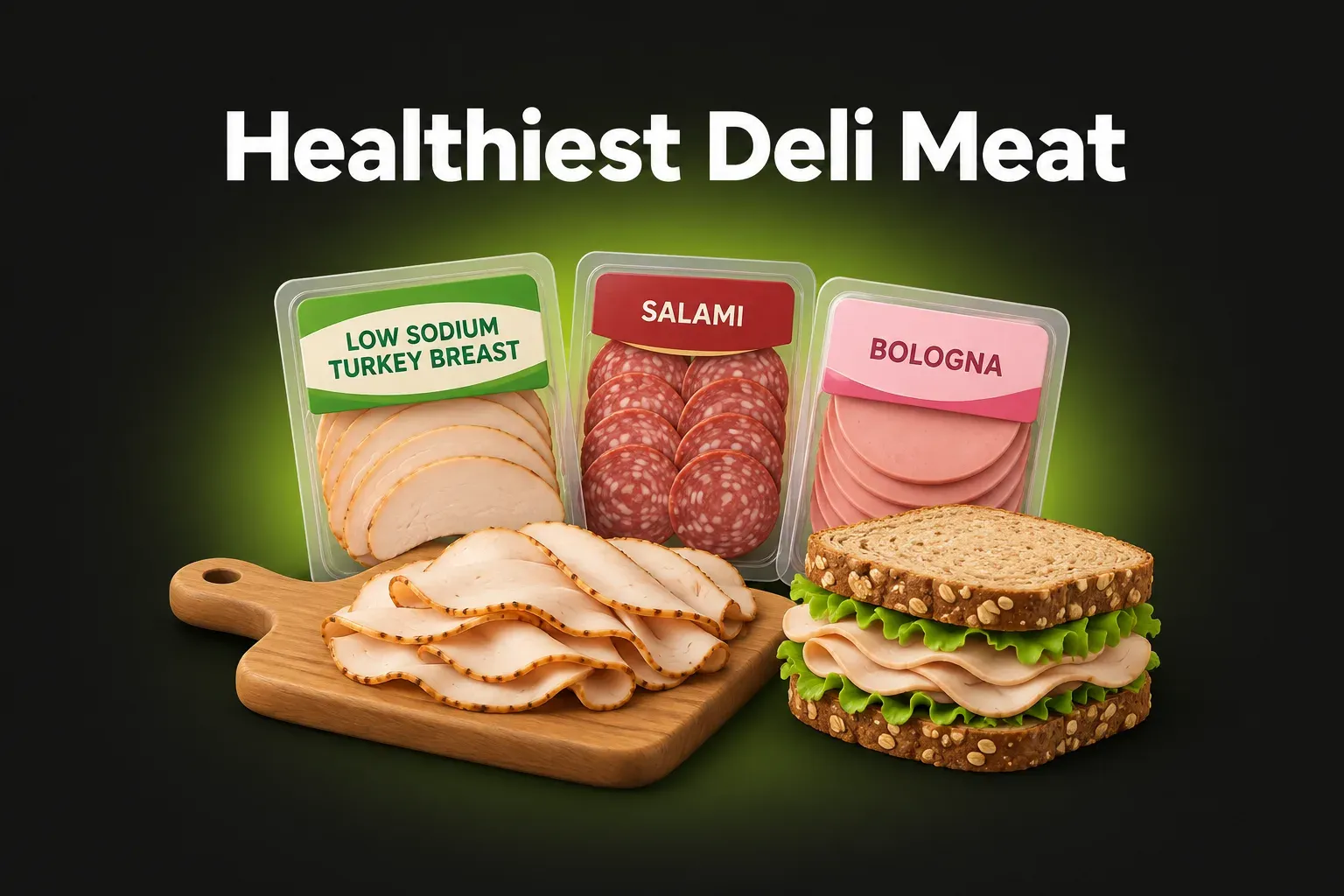
Deli meat makes lunch easy: open the pack, build a sandwich, done. But not all lunch meats are equal. Some are lean and high in protein. Others are as salty as a bag of chips and full of fat. And all of them count as processed meat, which is linked to cancer. Here’s how to pick the healthiest deli meat – and how much is too much.
The short answer: the healthiest deli meat is low-sodium roasted turkey or chicken breast, sliced from a whole piece of meat, with a short ingredient list. Lean roast beef is also a good choice. Salami, bologna and pepperoni are the least healthy. Labels like “uncured” or “no nitrates added” don’t change much. Because all processed meats are linked to colorectal cancer, it’s best to eat them only a few times a week.
Deli meats ranked
Typical numbers for 2 oz (56 g), about 2–3 slices. Brands differ a lot – check the label.
| Deli meat | Calories | Protein | Fat | Sodium | Verdict |
|---|---|---|---|---|---|
| Low‑sodium turkey | 60 | 11 g | 1 g | 250–350 mg | Best choice |
| Chicken breast | 50–60 | 10–11 g | 1 g | 400–550 mg | Good; choose low sodium |
| Roasted turkey breast | 50–60 | 10–12 g | 1 g | 350–550 mg | Good; choose low sodium |
| Lean roast beef | 60–80 | 10–12 g | 2–3 g | 300–500 mg | Good |
| Ham | 60–70 | 9–10 g | 2–3 g | 500–700 mg | Lean, but cured and salty |
| Bologna | 160–180 | 6 g | 14–16 g | 550–650 mg | High fat, little protein |
| Salami | 200–230 | 12 g | 17–20 g | 900–1,100 mg | Least healthy |
Adults should eat less than 2,300 mg of sodium a day. Two ounces of salami can use up almost half of that.
How to pick a healthier deli meat: 5 checks
| Check | Aim for | Why |
|---|---|---|
| Type | Turkey, chicken, lean roast beef | Less fat, more protein |
| Sodium | Under 400 mg per 2 oz | Deli meat is a top source of salt |
| Whole cut | “Breast”, not “chopped and formed” | Formed meat has more fillers and additives |
| Ingredient list | Meat, water, salt, spices | Fewer phosphates, starches and flavors |
| Fresh sliced | From a roasted piece | Often fewer additives than pre-packed |
Salt adds up. In a study of what Americans eat, cold cuts and cured meats were the third-biggest source of sodium, after pizza and bread (Ahmed et al., Nutrients, 2023). A turkey sandwich with cheese and bread can easily reach 1,500 mg.
Is deli meat bad for you?
Cancer
In 2015, the World Health Organization’s cancer agency (IARC) classified processed meat as a cause of cancer in humans. Experts reviewed over 800 studies. They found that each 50 g of processed meat eaten a day – about two slices of ham – raises the risk of colorectal cancer by about 18% (Bouvard et al., Lancet Oncology, 2015).
That doesn’t mean one sandwich gives you cancer. Colorectal cancer is common, so an 18% higher risk matters across a whole lifetime. Turkey and chicken deli meats also count as processed meat, though most studies looked at processed red meats like ham, bacon and salami.
Heart disease and diabetes
A review of studies with over 1 million people found that each 50 g of processed meat a day was linked to a 42% higher risk of heart disease and a 19% higher risk of type 2 diabetes. Unprocessed red meat wasn’t linked to the same risks (Micha et al., Circulation, 2010). The researchers pointed to the salt and preservatives in processed meat as a likely reason.
Nitrites
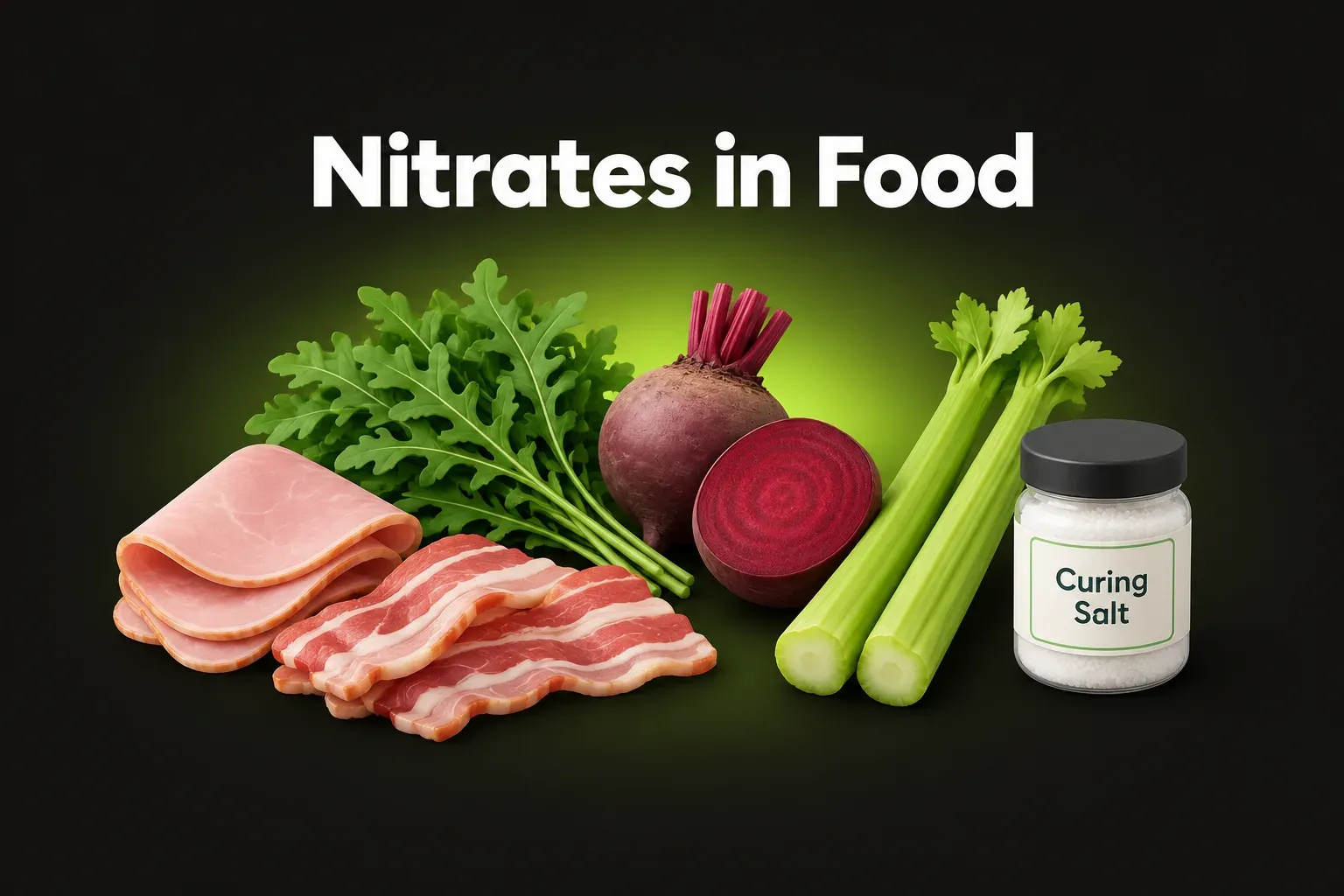
Most cured meats contain sodium nitrite (E250). It keeps ham and salami pink and stops dangerous bacteria. But in the body and when cooked hot, nitrites can form nitrosamines, which caused cancer in animal studies. This is one reason processed meat is linked to cancer. Read more about nitrates and nitrites in food.
Does “uncured” or “no nitrates added” mean healthier?
Not really. “Uncured” meats use celery powder or celery juice instead of sodium nitrite. Celery is naturally rich in nitrate, which bacteria turn into nitrite – the same substance. The label has to say “no nitrates or nitrites added except those naturally occurring in celery powder”, or something similar.
So “uncured” meat can contain as much nitrite as regular cured meat. It may still be a better product overall if it has fewer other additives – but check the label.
Additives to watch for in deli meat
Pre-packed and “chopped and formed” lunch meats often contain:
- Sodium phosphate – keeps meat juicy and heavy with water.
- Carrageenan and modified food starch – bind water and hold the slices together.
- Sodium caseinate – a milk protein; important if you have a milk allergy.
- Dextrose, sugar or corn syrup.
- MSG and natural flavors.
- Sodium erythorbate – helps the cured color form faster.
The healthiest choice has only meat, water, salt and spices.
Food safety: Listeria
Deli meats can carry Listeria, a bacteria that can grow even in the fridge. It’s rare but dangerous for pregnant women, older adults and people with weak immune systems. Health agencies advise these groups to avoid cold deli meat or heat it until steaming hot (165 °F / 74 °C). Eat opened packs within 3–5 days.
Healthier sandwich fillings
You don’t have to give up sandwiches. Try these instead of, or alongside, deli meat:
| Filling | Protein | Why |
|---|---|---|
| Home‑roasted chicken or turkey | 15–18 g per 2 oz | Not processed, no added nitrite |
| Canned tuna or salmon | 12–15 g per 2 oz | Not processed meat; salmon adds omega‑3 |
| Egg salad | 12 g per 2 eggs | Cheap and filling |
| Hummus and vegetables | 5 g per ¼ cup | Plant-based, high in fiber |
| Mozzarella or cottage cheese | 6–12 g | Good protein, no nitrite |
Tip: roast a turkey breast or a few chicken breasts on Sunday, slice them thin and keep them in the fridge. You get deli-style meat for the week with no additives.
Put your fillings on whole-grain bread, add vegetables, and you have a balanced lunch. For more ideas, see our list of high-protein foods.
Compare packs in the store. With NutriSmart, you photograph the label or scan the barcode. The app shows the sodium and fat, flags nitrites, phosphates and other additives, explains each one and gives the deli meat a health score out of 100.Get the app free
The bottom line
The healthiest deli meat is low-sodium turkey or chicken breast, sliced from a whole piece, with only meat, salt and spices on the label. Lean roast beef is also a good pick, while salami and bologna are the worst. “Uncured” meats still contain nitrite from celery. Because all processed meats are linked to colorectal cancer, heart disease and diabetes, keep deli meat to a few times a week and use home-roasted meat, tuna, eggs or hummus the rest of the time.
FAQ
What is the healthiest deli meat?
Low-sodium roasted turkey or chicken breast, sliced from a whole piece of meat, with a short ingredient list. Lean roast beef is also a good choice. Salami, bologna and pepperoni are the least healthy – they're high in fat and salt.
Is deli turkey healthy?
It's one of the better deli meats: lean and high in protein. But it's still a processed meat, and many brands have 400–600 mg of sodium in 2 ounces. Choose low-sodium turkey breast with few additives, or roast your own.
Is uncured deli meat healthier?
Not much. "Uncured" or "no nitrates added" meats use celery powder or juice instead of sodium nitrite. Celery is naturally rich in nitrate, which turns into nitrite – the same substance. The label even says "except those naturally occurring in celery powder".
Is deli meat bad for you?
Eaten often, yes. Processed meats are classified as a cause of cancer by the World Health Organization's cancer agency. Each 50 g eaten a day – about two slices of ham – is linked to an 18% higher risk of colorectal cancer. They're also linked to heart disease and type 2 diabetes and are very salty.
How much deli meat is safe to eat?
There's no proven safe amount, so less is better. Cancer experts advise eating little, if any, processed meat. If you like it, keep it to a few times a week, choose lean, low-sodium types and mix in other sandwich fillings.
Can pregnant women eat deli meat?
Deli meat can carry Listeria, a bacteria that is dangerous in pregnancy. Health agencies advise pregnant women to avoid cold deli meat or heat it until steaming hot (165 °F / 74 °C) before eating.