High Protein Foods: 30 Best Sources (Chart per 100 g)
A chart of high protein foods – meat, fish, dairy and plant foods – with protein and calories per 100 g, the leanest picks for weight loss and daily needs.
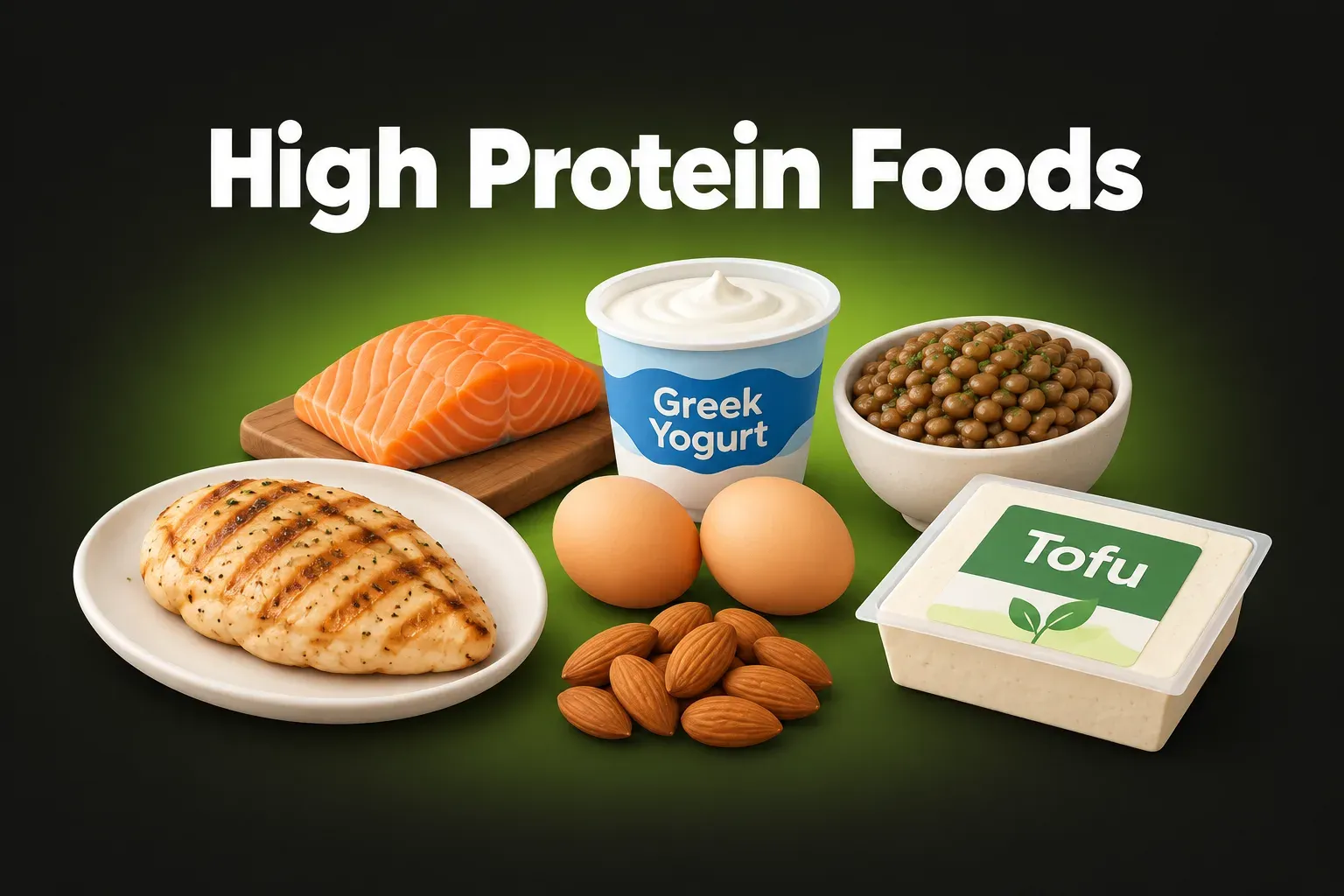
Protein keeps you full, helps you keep your muscles when you lose weight and matters for your bones, skin and immune system. But how much protein is actually in chicken, cheese or lentils – and which high protein foods make it easiest to get enough?
The short answer: per 100 g, the most protein is in hard cheeses, seeds, beef jerky, lean meat and fish (20–36 g). The most protein for the fewest calories comes from chicken and turkey breast, tuna, shrimp, Greek yogurt, cottage cheese and egg whites. The best plant sources are soy, tempeh, lentils, beans, chickpeas, peanuts and seeds. Adults need at least 0.8 g of protein per kg (0.36 g per lb) a day, and 1.2–1.6 g per kg if they exercise or want to lose weight.
The values below are approximate, per 100 g (about 3.5 oz) of food, cooked where you’d eat it cooked, from the US Department of Agriculture’s database (USDA FoodData Central). The last column shows how many grams of protein you get per 100 calories – the higher it is, the more the food helps when you’re trying to lose weight.
High protein foods from meat, fish and eggs
| Food (100 g) | Protein | Calories | Protein per 100 kcal |
|---|---|---|---|
| Beef jerky | 33 g | 410 kcal | 8 g |
| Chicken breast, skinless, cooked | 31 g | 165 kcal | 19 g |
| Turkey breast, cooked | 30 g | 147 kcal | 20 g |
| Pork tenderloin, cooked | 26 g | 143 kcal | 18 g |
| Lean ground beef (90%), cooked | 26 g | 217 kcal | 12 g |
| Tuna in water, drained | 25 g | 116 kcal | 22 g |
| Shrimp, cooked | 23 g | 99 kcal | 23 g |
| Salmon, cooked | 22 g | 206 kcal | 11 g |
| Whole egg | 12.6 g | 143 kcal | 9 g |
| Egg white | 11 g | 52 kcal | 21 g |
Beef jerky has a lot of protein, but also a lot of salt and often added sugar – check the label. To see how many calories are in an egg, read our article on calories in an egg.
High protein dairy foods
| Food (100 g) | Protein | Calories | Protein per 100 kcal |
|---|---|---|---|
| Parmesan | 36 g | 392 kcal | 9 g |
| Cheddar | 25 g | 403 kcal | 6 g |
| Low-fat cottage cheese (1%) | 12 g | 72 kcal | 17 g |
| Nonfat Greek yogurt | 10 g | 59 kcal | 17 g |
| Milk (whole) | 3.3 g | 61 kcal | 5 g |
Cottage cheese and Greek yogurt are two of the easiest ways to add protein: one cup of cottage cheese has about 28 g, and a single-serve cup of Greek yogurt (170 g) about 17 g. Protein powders like whey protein isolate have about 80–90 g per 100 g, but you don’t need them if you eat enough protein from food.
High protein plant foods
| Food (100 g) | Protein | Calories | Protein per 100 kcal |
|---|---|---|---|
| Hemp seeds, hulled | 32 g | 553 kcal | 6 g |
| Pumpkin seeds | 30 g | 559 kcal | 5 g |
| Peanuts | 26 g | 567 kcal | 5 g |
| Peanut butter | 22 g | 590 kcal | 4 g |
| Almonds | 21 g | 579 kcal | 4 g |
| Tempeh | 20 g | 192 kcal | 10 g |
| Soybeans, cooked | 17 g | 172 kcal | 10 g |
| Firm tofu | 16 g | 144 kcal | 11 g |
| Oats | 13–17 g | 380–390 kcal | 4 g |
| Whole wheat bread | 12–13 g | 250 kcal | 5 g |
| Edamame | 12 g | 121 kcal | 10 g |
| Lentils, cooked | 9 g | 116 kcal | 8 g |
| Black beans, cooked | 9 g | 132 kcal | 7 g |
| Chickpeas, cooked | 9 g | 164 kcal | 5 g |
Plant foods usually have less protein by weight, but they also bring fiber, which keeps you full and feeds the good bacteria in your gut. Most plant foods don’t have every amino acid (the “building blocks” of protein) in the right amount. But if you eat beans and whole grains over the day – rice and beans, hummus and pita, peanut butter on whole wheat toast – you get everything you need. For servings, combinations and meal ideas, see our guide to plant-based protein.
Most protein for the fewest calories
If you’re trying to lose weight, the foods with the most protein per 100 calories help you feel full without going over your goal:
- Shrimp and tuna in water – 22–23 g per 100 kcal
- Egg whites – 21 g
- Turkey and chicken breast – 19–20 g
- Pork tenderloin – 18 g
- Nonfat Greek yogurt and low-fat cottage cheese – 17 g
- Lean ground beef (90%) – 12 g
Protein keeps you full longer than carbs and fat, and helps you keep muscle while you lose weight (Leidy et al., American Journal of Clinical Nutrition, 2015). Read more about the calorie deficit.
How much protein do you need per day?
The US recommended amount for adults is 0.8 g of protein per kg of body weight (0.36 g per lb). That’s the minimum to stay healthy, not the ideal for everyone. Many people need more:
| Situation | Protein per day | For a 150 lb (68 kg) person |
|---|---|---|
| Adult who doesn’t exercise | 0.8 g/kg (0.36 g/lb) | about 54 g |
| Over 65 | 1.0–1.2 g/kg | 68–82 g |
| Losing weight while keeping muscle | 1.2–1.6 g/kg | 82–109 g |
| Strength training | 1.4–2.0 g/kg | 95–136 g |
Our protein calculator works out your target in a few seconds, and the macro calculator splits your calories into protein, carbs and fat.
How to get 100 g of protein a day: an example
| Meal | What you eat | Protein |
|---|---|---|
| Breakfast | 2 eggs + 1 slice of whole wheat toast | 17 g |
| Snack | A 6 oz (170 g) cup of Greek yogurt with a few nuts | 20 g |
| Lunch | Salad with 4 oz (113 g) grilled chicken breast | 35 g |
| Snack | 1 oz (28 g) almonds | 6 g |
| Dinner | 4 oz (113 g) salmon with vegetables and rice | 29 g |
| Total | about 107 g |
Tips to eat more protein
- Put a protein food on every plate – it’s easier than catching up at dinner. Aim for 20–30 g per meal.
- Start the day with protein: eggs, Greek yogurt or cottage cheese instead of pastries. See our healthy breakfast ideas.
- Pick high protein snacks: Greek yogurt, cheese, hard-boiled eggs, edamame, jerky, a handful of nuts. We have 27 ideas in our list of high protein snacks.
- Cook beans and lentils a few times a week – in soups, chili, salads or tacos.
- Be careful with “protein” bars and shakes – many contain sugar, sweeteners and additives. Read the label.
- If you have kidney disease, talk to your doctor before eating more protein.
Find out how much protein you eat – no math. With NutriSmart, you snap a photo of what you eat and the app counts protein, calories, carbs and fat, and shows how much you have left for the day.Get the app free
Want these foods turned into full days? See our high protein meal plan with about 150 g of protein a day, or our 1500, 1800 and 2000 calorie meal plans.
Ready-made recipes: our high protein breakfast and high protein dinner ideas put these foods on the plate.
The bottom line
The best high protein foods are lean meat, fish, eggs, dairy, beans, soy and seeds. If you’re trying to lose weight, choose the ones with lots of protein and few calories – chicken, turkey, tuna, shrimp, Greek yogurt, cottage cheese – and put a protein food on every plate. That makes it easier to stay full and keep your muscles.
FAQ
What foods are highest in protein?
Per 100 g, some of the richest are beef jerky (33 g), Parmesan (36 g), hemp and pumpkin seeds (30–32 g), chicken and turkey breast (30–31 g), lean beef and pork (26 g), tuna (25 g) and shrimp (23 g). Among plant foods, seeds, peanuts, soy, tempeh and oats have the most.
How much protein do I need per day?
The US recommended amount for adults is 0.8 g per kg of body weight (0.36 g per lb) – about 54 g for a 150 lb person. If you exercise, want to lose weight while keeping muscle, or are over 65, you need more: usually 1.2–1.6 g per kg (0.55–0.73 g per lb).
What are the best plant-based high protein foods?
Soy foods (tofu, tempeh, edamame), lentils, beans, chickpeas, peas, peanuts, almonds, pumpkin and hemp seeds, oats and whole wheat bread. Eating beans and whole grains over the day gives you all the amino acids you need.
Which foods are high in protein but low in calories?
Chicken and turkey breast, tuna in water, shrimp, white fish, nonfat Greek yogurt, low-fat cottage cheese and egg whites. They have 12–23 g of protein per 100 calories, so they help you stay full when you're trying to lose weight.
What is a good high protein breakfast?
Eggs, Greek yogurt with fruit and nuts, cottage cheese with tomatoes and whole wheat toast, or oatmeal cooked in milk with seeds. A breakfast with 20–30 g of protein keeps you full until lunch.
Can you eat too much protein?
For healthy people, up to about 2 g per kg (0.9 g per lb) a day is considered safe. If you have kidney disease, don't increase your protein without talking to your doctor.