High Protein Meal Plan: 7 Days, 150 g Protein (+ List)
A 7-day high protein meal plan with about 150 g of protein and 1,800 calories a day, calories per meal, low-carb swaps and a shopping list.
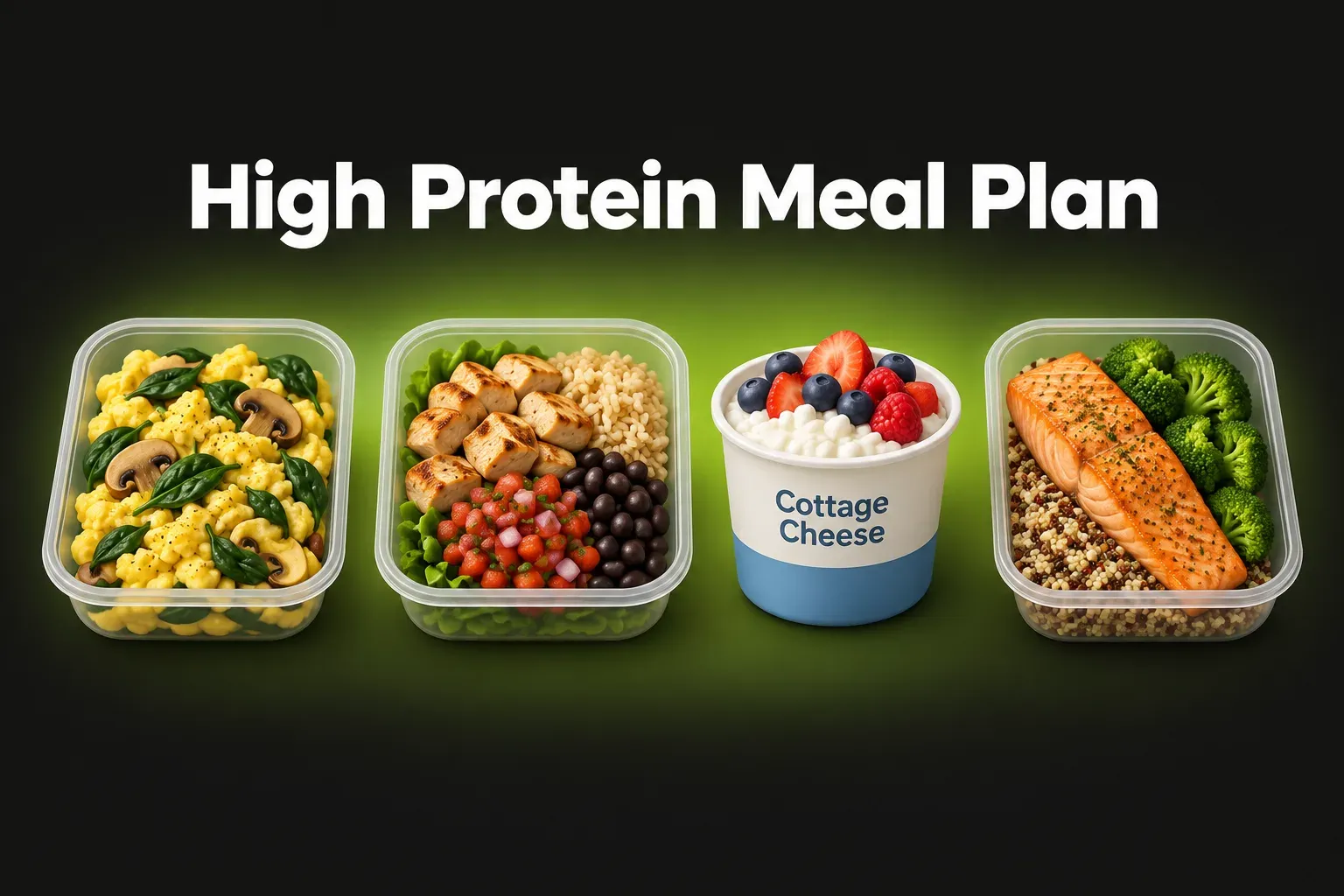
A high protein meal plan is one of the simplest ways to lose fat, keep muscle and stay full on fewer calories. The challenge is reaching 130–160 g of protein a day with normal food – not five protein shakes. This 7-day plan does that with about 150 g of protein and 1,800 calories a day, using eggs, Greek yogurt, cottage cheese, chicken, fish, lean meat, beans and tofu.
The short answer: a high protein diet usually means 1.2–2 g of protein per kg of body weight, or about 25–35% of your calories. Spread it over 3–4 meals with 30–50 g of protein each. The plan below gives 142–178 g of protein and 1,775–1,815 calories a day, with calories and protein for every meal, a shopping list, low-carb swaps and a table to scale it to your own calorie target.
How much protein do you need?
| Goal | Protein per day | For a 75 kg (165 lb) person |
|---|---|---|
| Minimum for health | 0.8 g per kg | 60 g |
| Losing weight | 1.2–1.6 g per kg | 90–120 g |
| Strength training | about 1.6 g per kg (up to 2.2 g) | 120–165 g |
| Older adults | 1.0–1.2 g per kg | 75–90 g |
Why more protein helps:
- It keeps you full. Protein fills you up more than the same calories from carbs or fat. When you eat less, it also helps you lose fat while keeping muscle (Leidy et al., American Journal of Clinical Nutrition, 2015).
- It helps build muscle. A review of 49 studies with 1,863 people found that strength training plus about 1.6 g of protein per kg a day gave the biggest muscle gains. More than that didn’t add more on average (Morton et al., British Journal of Sports Medicine, 2018).
Get your own number with our free protein calculator, and your calorie target with the calorie calculator.
How this plan is built
| Per day | Why | |
|---|---|---|
| Calories | 1,775–1,815 | A weight-loss target for many people |
| Protein | 142–178 g (about 35%) | 30–50 g per meal |
| Carbs | about 35% | Mostly beans, fruit, whole grains |
| Fat | about 31% | Olive oil, nuts, avocado, salmon |
| Fiber | 25–39 g | Beans, vegetables, fruit, oats |
The plan uses food only – no protein powder. If you like shakes, one scoop of whey or pea protein (about 120 calories and 24 g of protein) can replace a snack.
Calories and protein are based on USDA FoodData Central values and rounded. Weigh oils and nut butters – they’re included in the totals.
7-day high protein meal plan
Day 1
| Meal | What to eat | Calories | Protein |
|---|---|---|---|
| Breakfast | Egg scramble: 2 eggs + 4 egg whites cooked in 1 tsp olive oil with spinach and mushrooms, 1 slice whole-wheat toast, 1 orange | 415 | 35 g |
| Lunch | Chicken burrito bowl: 6 oz chicken, ½ cup brown rice, ½ cup black beans, salsa, lettuce, ¼ avocado | 610 | 65 g |
| Snack | 1 cup 2% cottage cheese + ½ cup berries | 215 | 24 g |
| Dinner | Salmon (5 oz), 1 cup broccoli roasted with 2 tsp olive oil, ½ cup quinoa | 535 | 39 g |
| Total | 1,775 | 163 g |
Day 2
| Meal | What to eat | Calories | Protein |
|---|---|---|---|
| Breakfast | Protein oats: ½ cup oats cooked in 1 cup 2% milk, stirred with 4 egg whites, topped with ½ banana and 1 tbsp peanut butter | 490 | 32 g |
| Lunch | Tuna salad wrap: 1 can tuna, 3 tbsp Greek yogurt, mustard, 1 high-fiber tortilla, spinach, tomato + 1 apple + 1 cup baby carrots | 420 | 38 g |
| Snack | 170 g plain nonfat Greek yogurt + ½ cup berries + 1 tbsp walnuts | 180 | 19 g |
| Dinner | Turkey chili: 5 oz lean ground turkey, ½ cup kidney or black beans, tomatoes, peppers, onion; 1 oz cheddar; ½ cup brown rice | 695 | 57 g |
| Total | 1,785 | 146 g |
Day 3
| Meal | What to eat | Calories | Protein |
|---|---|---|---|
| Breakfast | Skyr bowl: 300 g plain skyr, 1 cup berries, ½ banana, 1 tbsp chia seeds, 1 tbsp walnuts | 415 | 38 g |
| Lunch | Leftover turkey chili (4 oz turkey, ½ cup beans) + 1 slice whole-wheat bread + side salad with 1 tsp olive oil | 530 | 45 g |
| Snack | 2 hard-boiled eggs + 1 cup baby carrots + 2 tbsp hummus | 260 | 15 g |
| Dinner | Shrimp stir-fry: 8 oz shrimp, 1½ cups stir-fry vegetables, 2 tsp oil, soy sauce, 1 cup brown rice | 610 | 64 g |
| Total | 1,815 | 162 g |
Day 4
| Meal | What to eat | Calories | Protein |
|---|---|---|---|
| Breakfast | Omelet: 2 eggs + 3 egg whites cooked in 1 tsp olive oil with peppers, 1 oz feta, 1 whole-grain English muffin | 455 | 34 g |
| Lunch | Chicken Greek salad: 6 oz chicken, 2 cups greens, cucumber, tomato, olives, 2 tsp olive oil, ½ whole-wheat pita + 1 orange | 590 | 60 g |
| Snack | Shake: 1 cup 2% milk blended with 170 g Greek yogurt and ½ cup berries | 255 | 26 g |
| Dinner | Steak (4 oz sirloin), 1 medium potato, 1 cup green beans, 2 tsp butter or olive oil | 495 | 41 g |
| Total | 1,795 | 161 g |
Day 5
| Meal | What to eat | Calories | Protein |
|---|---|---|---|
| Breakfast | Cottage cheese toast: 2 slices whole-wheat bread, 1 cup 2% cottage cheese, tomato, 1 tsp olive oil, black pepper + 1 orange | 460 | 34 g |
| Lunch | Lentil pasta (2 oz dry) with 4 oz lean ground turkey, ½ cup marinara, zucchini, 2 tbsp parmesan | 570 | 51 g |
| Snack | 1 string cheese + 1 apple + 1 tbsp peanut butter | 270 | 11 g |
| Dinner | Baked cod (6 oz), 1 medium sweet potato, 1 cup broccoli, 2 tsp olive oil + side salad with 1 tsp olive oil | 505 | 46 g |
| Total | 1,805 | 142 g |
Day 6
| Meal | What to eat | Calories | Protein |
|---|---|---|---|
| Breakfast | Greek yogurt parfait: 170 g Greek yogurt, ½ cup oats, ½ cup berries, 1 tbsp peanut butter | 380 | 26 g |
| Lunch | Leftover lentil pasta with turkey (half portion) + 4 oz chicken, side salad with 1 tsp olive oil, ½ whole-wheat pita | 575 | 62 g |
| Snack | 1 cup shelled edamame + 1 orange | 250 | 20 g |
| Dinner | Tofu and tempeh stir-fry: 150 g firm tofu, 100 g tempeh, 1½ cups vegetables, 2 tsp oil, soy sauce, 1 cup cauliflower rice | 605 | 53 g |
| Total | 1,810 | 161 g |
Day 7
| Meal | What to eat | Calories | Protein |
|---|---|---|---|
| Breakfast | 2 eggs + 4 egg whites scrambled in 1 tsp olive oil with spinach, 1 slice whole-wheat toast, ¼ avocado | 420 | 33 g |
| Lunch | Tuna and white bean salad: 1 can tuna, ½ cup white beans, tomato, cucumber, red onion, 1 oz feta, 2 tsp olive oil, lemon, ½ whole-wheat pita | 515 | 43 g |
| Snack | 300 g plain skyr + 1 tsp honey + 1 tbsp walnuts | 260 | 34 g |
| Dinner | Chicken fajitas: 6 oz chicken, peppers, onion, 1 tsp oil, 2 corn tortillas, salsa, 2 tbsp Greek yogurt, ½ cup black beans | 610 | 68 g |
| Total | 1,805 | 178 g |
The week at a glance
| Day | Calories | Protein | Carbs | Fat | Fiber |
|---|---|---|---|---|---|
| Day 1 | 1,775 | 163 g | 135 g | 65 g | 30 g |
| Day 2 | 1,785 | 146 g | 187 g | 54 g | 39 g |
| Day 3 | 1,815 | 162 g | 170 g | 56 g | 38 g |
| Day 4 | 1,795 | 161 g | 151 g | 64 g | 25 g |
| Day 5 | 1,805 | 142 g | 180 g | 61 g | 35 g |
| Day 6 | 1,810 | 161 g | 148 g | 71 g | 36 g |
| Day 7 | 1,805 | 178 g | 143 g | 59 g | 33 g |
Low-carb high protein version
“High protein low carb” is one of the most searched versions of this plan. To make it lower in carbs:
- Swap the grains: replace rice, quinoa, bread, tortillas and pita with cauliflower rice, extra vegetables or a big salad.
- Swap the potatoes: use roasted broccoli, zucchini or green beans instead.
- Keep the beans small or replace them with extra chicken, fish or tofu.
- Add a little fat – 1–2 tsp olive oil, ¼ avocado or a few nuts – so you don’t drop too many calories.
That brings the plan down to roughly 70–100 g of carbs a day. For a very low-carb (keto) approach, see our keto diet guide.
Scale it to your calorie target
| Your target | What to change |
|---|---|
| 1,500 calories | Drop the snack, or halve the grains and skip one tsp of oil at each meal |
| 1,800 calories | Eat the plan as written |
| 2,000 calories | Add a second snack: 170 g Greek yogurt + 1 tbsp nuts (about 200 calories) |
| 2,300+ calories | Add a second snack and double the grains at lunch and dinner |
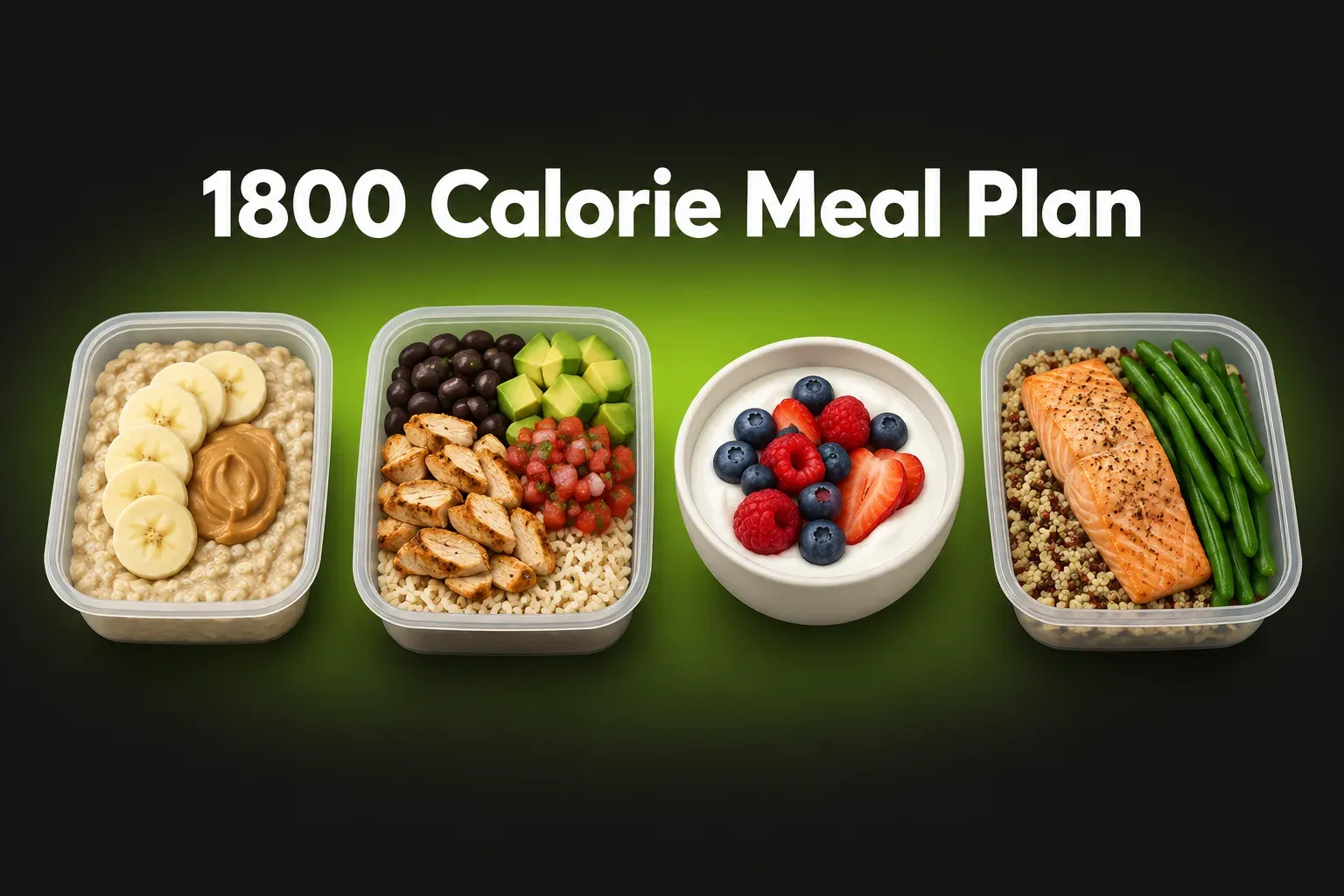
For full plans at other calorie levels, see our 1500, 1800 and 2000 calorie meal plans.
Shopping list for the week
Amounts are for one person.
- Meat and fish: about 1½ lb (650 g) chicken breast, 1 lb lean ground turkey, 1 sirloin steak (4 oz), 1 salmon fillet (5 oz), 1 cod fillet (6 oz), 8 oz shrimp, 2 cans tuna in water
- Eggs and dairy: 8 eggs + 1 carton liquid egg whites (about 2 cups), about 600 g plain nonfat Greek yogurt, 600 g plain skyr, 2 cups 2% cottage cheese, 2 cups 2% milk, cheddar, feta, parmesan, 1 string cheese
- Plant protein: 1 block firm tofu, 1 pack tempeh, 1 bag frozen shelled edamame, 1 box lentil pasta, 2 cans black or kidney beans, 1 can white beans, hummus
- Grains: rolled oats, whole-wheat bread, 1 whole-grain English muffin, whole-wheat pitas, high-fiber tortillas, corn tortillas, brown rice, quinoa
- Vegetables: spinach, salad greens, mushrooms, cherry tomatoes, cucumbers, 3 bell peppers, broccoli, zucchini, green beans, baby carrots, frozen stir-fry vegetables, cauliflower rice, 1 potato, 1 sweet potato, onions
- Fruit: about 3 cups berries (frozen is fine), 4 oranges, 2 apples, 1 banana, 1 avocado, lemons
- Pantry: olive oil, peanut butter, walnuts, chia seeds, honey, olives, salsa, marinara sauce, low-sodium soy sauce, spices
Tips for eating more protein
- Start with protein at breakfast. Eggs, egg whites, Greek yogurt, skyr or cottage cheese make a 30–40 g breakfast easy.
- Use egg whites and cottage cheese. They add a lot of protein for few calories – 4 egg whites have about 14 g of protein and 70 calories.
- Cook protein in batches. Grill 2 lb of chicken or cook a pot of turkey chili on Sunday for several meals.
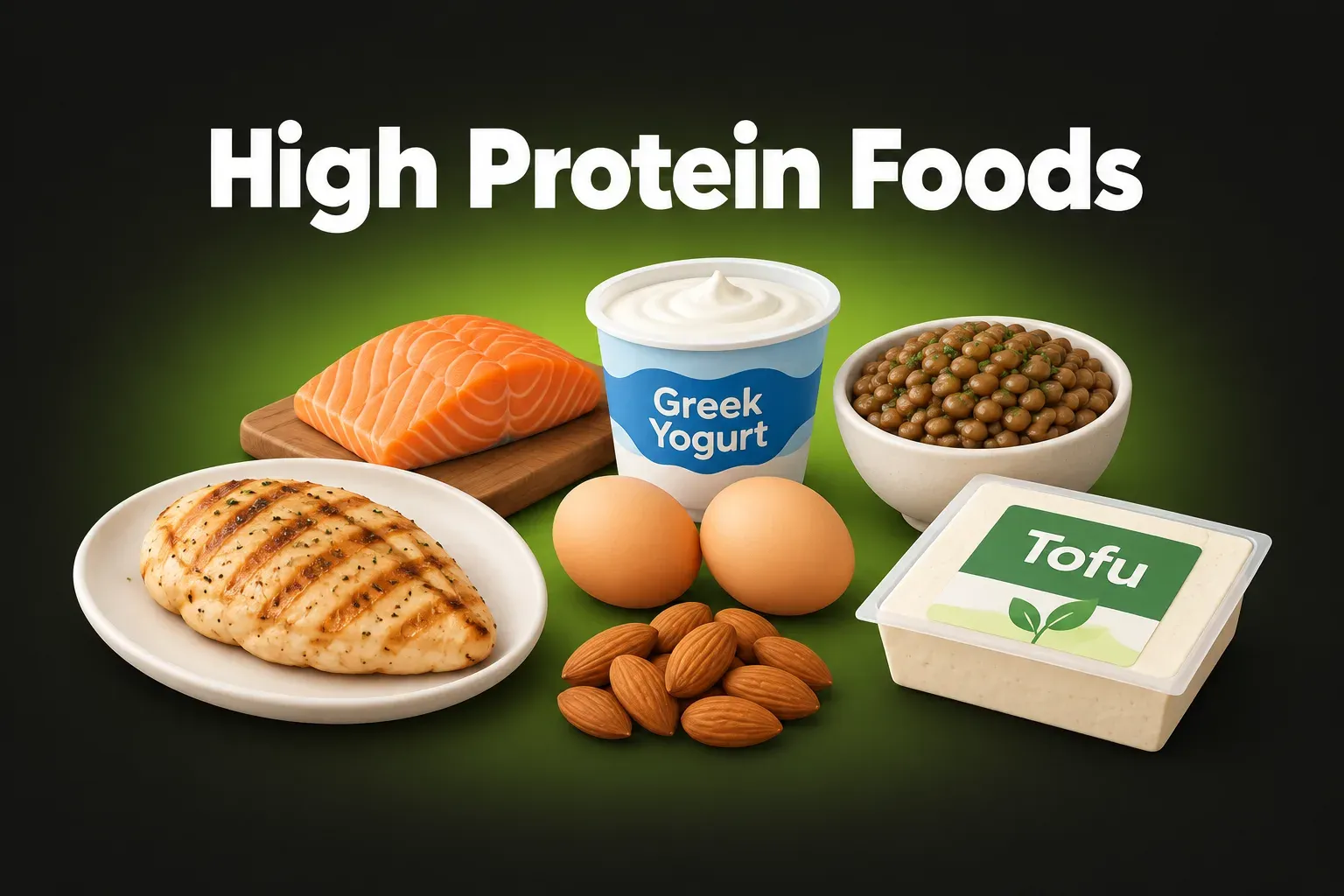
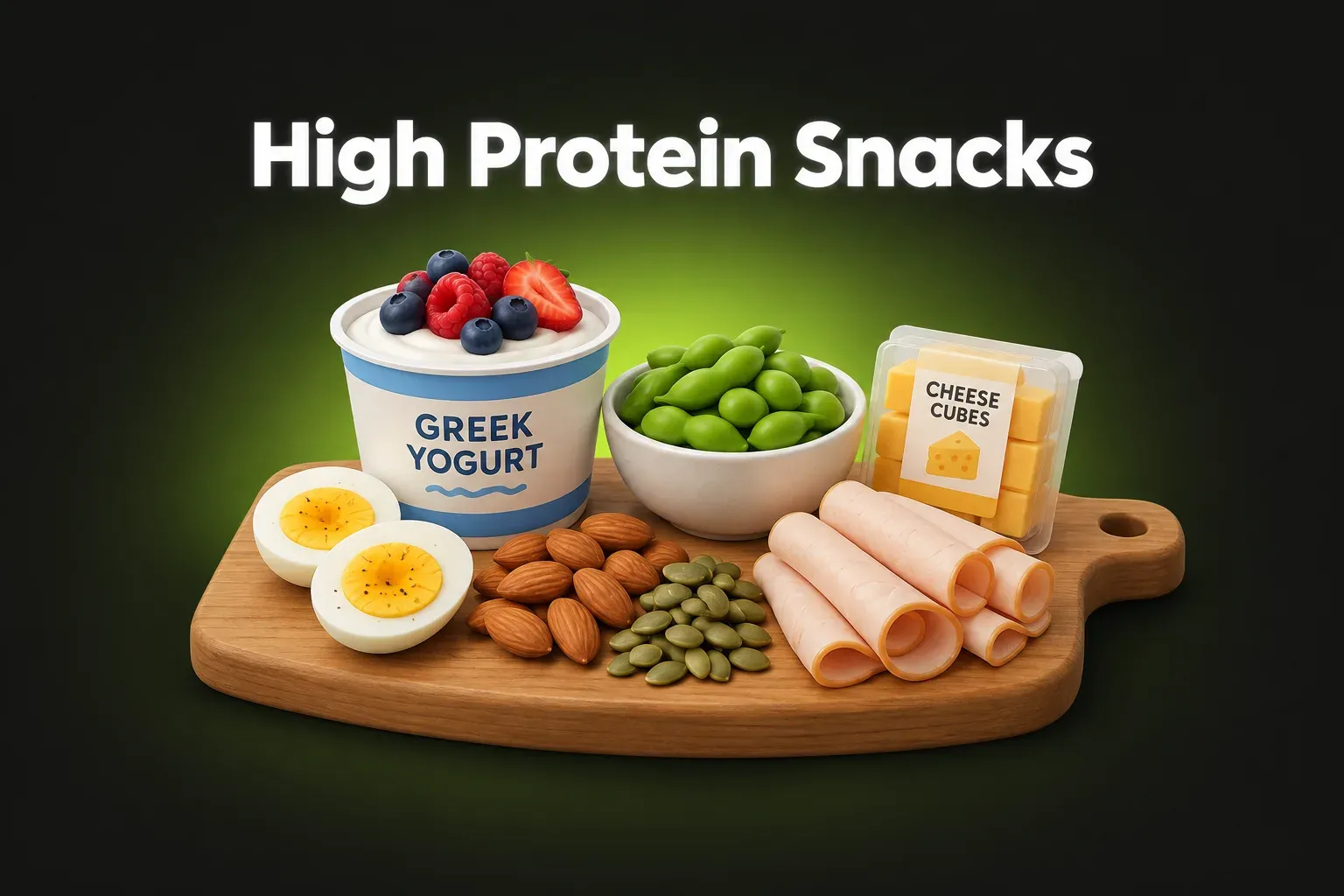
- Keep easy protein snacks ready: hard-boiled eggs, skyr, cottage cheese, edamame, tuna. More ideas in our high-protein snacks.
- Choose simple products. Many “protein” bars and cereals are ultra-processed – see how to pick the healthiest protein bars and the healthiest yogurt.
- Drink enough water, and keep eating vegetables, fruit and beans for fiber.
- Plan ahead. In a French study of 40,554 adults, people who planned their meals ate a more varied, healthier diet and were less likely to be obese (Ducrot et al., International Journal of Behavioral Nutrition and Physical Activity, 2017).
Is a high protein diet safe?
For healthy adults, protein intakes up to about 2 g per kg a day haven’t been shown to cause harm. A few things to keep in mind:
- Kidney disease: if your kidneys don’t work well, ask your doctor before eating more protein.
- Variety matters: get protein from fish, poultry, eggs, dairy, beans and soy – not mostly from processed meat, which is linked to heart disease and cancer. See how to pick the healthiest deli meat.
- Don’t forget fiber: a diet of meat and shakes can leave you constipated. This plan keeps fiber at 25–39 g a day.
For more food ideas, see our list of high-protein foods and our guide to plant-based protein. To cook it all ahead, see our high protein meal prep recipes.
Get a high protein plan made for you. With NutriSmart, you set your calorie and protein targets and the app builds a 7-day meal plan with recipes, calories, protein and a ready shopping list – based on your diet, the foods you avoid and how much time you have to cook. Then you log meals by snapping a photo of what you eat, and the app counts calories and protein and shows how much you have left for the day.Get the app free
Need more recipes? Swap in any of our high protein breakfasts or high protein dinners.
The bottom line
A high protein meal plan gives you about 1.2–2 g of protein per kg of body weight, spread over 3–4 meals with 30–50 g each. The 7-day plan above reaches about 150 g of protein on 1,800 calories with food only – eggs, Greek yogurt, cottage cheese, chicken, fish, lean meat, beans and tofu. Swap the grains for vegetables for a low-carb version, adjust portions to your calorie target, and keep plenty of vegetables and fiber in the mix.
FAQ
How much protein is high protein?
Most guidelines set a minimum of 0.8 g per kg of body weight a day. A high protein diet is usually 1.2–2 g per kg, or about 25–35% of your calories. For a 75 kg (165 lb) person, that's roughly 90–150 g a day.
Is a high protein diet good for weight loss?
Yes. Protein keeps you full longer than carbs or fat, and when you eat fewer calories, it helps you lose fat while keeping muscle. You still need a calorie deficit – protein doesn't cancel out extra calories.
How much protein do I need to build muscle?
A large review of 49 studies found that strength training plus about 1.6 g of protein per kg of body weight a day gave the most muscle gain. Eating more than that didn't add more muscle on average.
Can I eat 150 g of protein without protein shakes?
Yes. This plan reaches 142–178 g a day with food only: eggs and egg whites, Greek yogurt, skyr, cottage cheese, chicken, fish, lean meat, beans, tofu and tempeh. Spread it over 3–4 meals of 30–50 g each.
Is a high protein diet safe?
For healthy people, studies haven't found harm from protein intakes up to about 2 g per kg a day. People with kidney disease should talk to their doctor first, because their kidneys may not handle extra protein well.
Can I make this a low-carb high protein meal plan?
Yes. Replace rice, quinoa, potatoes, bread and tortillas with extra vegetables, cauliflower rice or salad, and add a little more olive oil, avocado or nuts to keep the calories similar. That cuts carbs to about 70–100 g a day.