Healthiest Protein Bars: 6 Label Checks Before You Buy
How to find the healthiest protein bars: how much protein and sugar to look for, sugar alcohols to watch, 6 bar types compared and a homemade recipe.
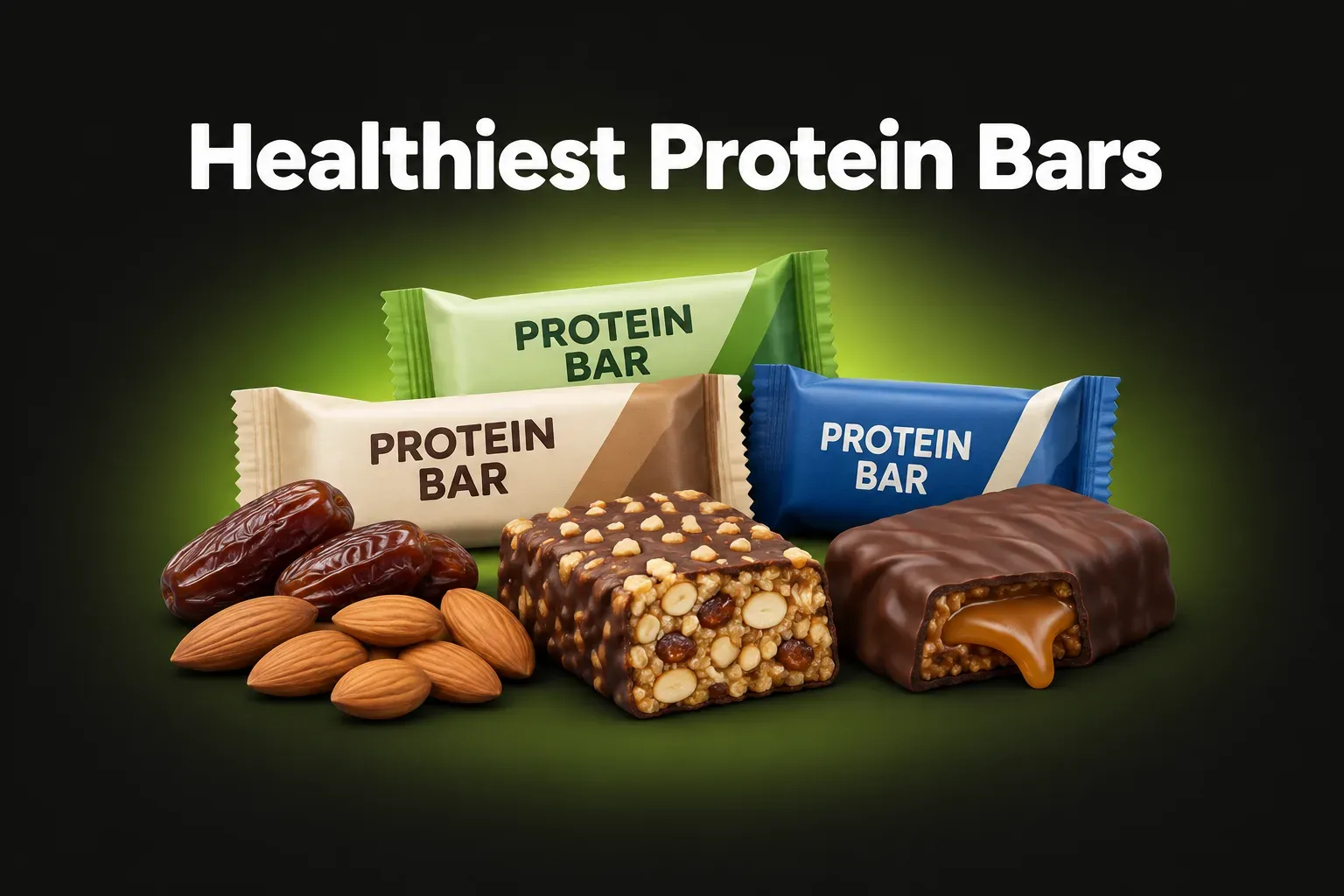
Protein bars look like the perfect snack: 20 g of protein, “low sugar”, “high fiber”, ready in your bag. But turn one over and you’ll often find 20–30 ingredients, including sweeteners, sugar alcohols, added fibers and oils. Some are a healthy snack. Others are a candy bar with protein powder. Here’s how to tell the difference.
The short answer: the healthiest protein bars have at least 10–15 g of protein, 5 g of added sugar or less, 150–250 calories and a short ingredient list you recognize – nuts, egg whites, dates, milk protein. Watch out for sugar alcohols (maltitol, sorbitol) and added fibers (inulin, polydextrose), which often cause bloating. Bars are fine when you’re busy, but whole foods like Greek yogurt, eggs or nuts are usually better.
6 checks for a healthy protein bar
| Check | Aim for | Why |
|---|---|---|
| Protein | 10–20 g | Less than 10 g is just a snack bar |
| Added sugar | 5 g or less | Many bars have 10–20 g |
| Calories | 150–250 | Fits as a snack, not a second lunch |
| Sugar alcohols | None, or low on the list | Maltitol and sorbitol cause gas; maltitol raises blood sugar |
| Protein source | Milk, whey, egg, soy, pea, nuts | Collagen is lower-quality protein |
| Ingredient list | Short; whole foods first | Long lists mean ultra-processed |
Protein
Look for 10–20 g. More isn’t always better – a bar with 30 g of protein usually has more calories and more processing. Check the source too. Whey, milk protein, egg white, soy and pea are good-quality proteins. Some bars add collagen or gelatin to raise the number cheaply. Collagen is missing an essential amino acid, so it counts on the label but does less for your muscles.
Sugar
Read “Added sugars” on the nutrition label. Under 5 g is great. Sugar hides under many names: brown rice syrup, cane sugar, honey, agave, tapioca syrup, dextrose and maltodextrin. A bar sweetened with dates or dried fruit has natural sugar – that’s better than syrups, but still adds calories.
“Net carbs” and sugar alcohols
Many “low sugar” bars replace sugar with sugar alcohols and sweeteners:
- Maltitol – partly turns into glucose, so it raises blood sugar, and it’s a well-known cause of gas and diarrhea.
- Sorbitol and xylitol – can cause bloating in larger amounts.
- Erythritol – almost no calories, but studies from the Cleveland Clinic linked high blood levels to more heart attacks and strokes.
- Sucralose, stevia and monk fruit – sweeteners used in small amounts.
“Net carbs” is a marketing term. The FDA doesn’t define it. Brands subtract fiber and sugar alcohols from the total carbs, which can make a bar look better than it is.
Fiber
A bar with 10–15 g of fiber sounds great. But it usually comes from added fibers like inulin (chicory root fiber), polydextrose or soluble corn fiber. They’re not harmful, but they often cause gas and bloating, and they aren’t the same as fiber from oats, beans or fruit.
Fats and other additives
Check the oils: palm oil and palm kernel oil are common in chocolate coatings. You’ll also see soy lecithin, glycerin (keeps bars soft), natural flavors and gums. One or two are fine. A list of 25 ingredients means a highly ultra-processed product.
Protein bar types compared
Typical numbers per bar. Brands differ a lot – always check the label.
| Bar type | Protein | Added sugar | Verdict |
|---|---|---|---|
| Whole‑food bars | 10–12 g | 0–5 g | Best choice: 4–8 ingredients like nuts, egg whites and dates |
| Nut bars + protein | 10–15 g | 4–8 g | Good: mostly nuts, 8–15 ingredients |
| Whey or milk protein | 15–20 g | 1–5 g | OK: 15–25 ingredients; check sugar alcohols and added fibers |
| Plant protein | 10–20 g | 3–10 g | Varies a lot; read the label |
| Granola “protein” bars | 5–10 g | 8–12 g | More snack bar than protein bar |
| Caramel or chocolate coated | 15–20 g | 10–20 g | A candy bar with protein: 25–30 ingredients |
Are protein bars good for weight loss?
They can be. Protein fills you up more than the same calories from sugar or fat. In one study, women who had a high-protein yogurt as a snack ate about 100 fewer calories at dinner than after a chocolate snack with the same calories (Ortinau et al., Nutrition Journal, 2014).
But bars only help if they replace something. Many have 250–350 calories – more than a sandwich half. Eaten on top of your usual meals, they add calories. And ultra-processed foods make it easier to overeat: in a strict hospital study, people ate about 500 more calories a day on an ultra-processed diet than on simple foods (Hall et al., Cell Metabolism, 2019).
Tips:
- Pick bars with 150–250 calories for a snack.
- Use them for busy days, not every snack.
- Count them in your daily calories – they add up fast.
Not sure how much protein you need? Use our free protein calculator.
Better than a bar: whole-food protein snacks
| Snack | Protein | Calories |
|---|---|---|
| Plain Greek yogurt (170 g) | 17 g | 100–170 |
| 2 hard‑boiled eggs | 13 g | 155 |
| Tuna pouch | 17 g | 70–90 |
| Cottage cheese (½ cup) | 12 g | 90–110 |
| Roasted chickpeas (½ cup) | 7 g | 150 |
| Almonds (1 oz) | 6 g | 165 |
See 27 more ideas in our list of high-protein snacks.
Homemade protein bars
Making your own takes 10 minutes and you control every ingredient. A simple no-bake recipe:
- Mix 1 cup of rolled oats, ½ cup of natural peanut butter, 2 scoops (about 60 g) of protein powder and 2–3 tablespoons of honey.
- Add a little milk until it sticks together. Stir in a handful of chopped nuts or dark chocolate chips if you like.
- Press into a lined pan, chill for an hour and cut into 8 bars.
Each bar has roughly 10 g of protein and 200 calories, depending on your protein powder. For the peanut butter, choose one made only from peanuts – see how to pick the healthiest peanut butter.
Compare bars in the store. With NutriSmart, you photograph the label or scan the barcode. The app shows the protein, sugar and calories, flags sugar alcohols, sweeteners and other additives, explains each one and gives the bar a health score out of 100.Get the app free
More snack ideas with fewer calories: our list of low calorie snacks.
The bottom line
The healthiest protein bars have 10–20 g of protein, 5 g of added sugar or less, 150–250 calories and a short list of real ingredients. Watch for maltitol and other sugar alcohols, added fibers that cause bloating, and chocolate-coated bars that are really candy. A good bar is handy on busy days – but Greek yogurt, eggs, tuna or nuts give you the same protein with fewer additives.
FAQ
What are the healthiest protein bars?
The healthiest protein bars have at least 10–15 g of protein, 5 g of added sugar or less, and a short list of ingredients you recognize – like nuts, egg whites, dates or milk protein. Bars made mostly from whole foods are best. Bars with long lists of sweeteners, sugar alcohols and added fibers are more processed.
Are protein bars healthy?
Some are, but many are ultra-processed snacks with a protein boost. They often contain sweeteners, sugar alcohols, added fibers, oils and flavors. A protein bar is fine when you're busy, but whole foods like Greek yogurt, eggs or nuts are usually better.
How much sugar should a protein bar have?
Ideally 5 g of added sugar or less, and no more than about 8 g. Many bars that look healthy have 10–20 g of sugar – as much as a candy bar.
Are protein bars good for weight loss?
They can help if they replace a less healthy snack and fit your calories. Protein keeps you full. But many bars have 250–350 calories, so eating them on top of your meals can stop weight loss. Choose bars with about 150–250 calories.
Why do protein bars make me bloated?
Usually because of sugar alcohols like maltitol, sorbitol or erythritol, or added fibers like inulin, chicory root fiber or polydextrose. These ferment in the gut and can cause gas, bloating and loose stools. Try bars without them.
Is it OK to eat a protein bar every day?
One bar a day is fine for most people if it fits your calories and has a clean ingredient list. But don't rely on bars for most of your protein. Eggs, dairy, fish, meat, beans and tofu give you more nutrients and fewer additives.