Xylitol: Benefits, Side Effects and Heart Risk
What xylitol (E967) is, how it protects teeth, why it's dangerous for dogs, what new studies show about blood clots and heart attacks, and how much is safe.
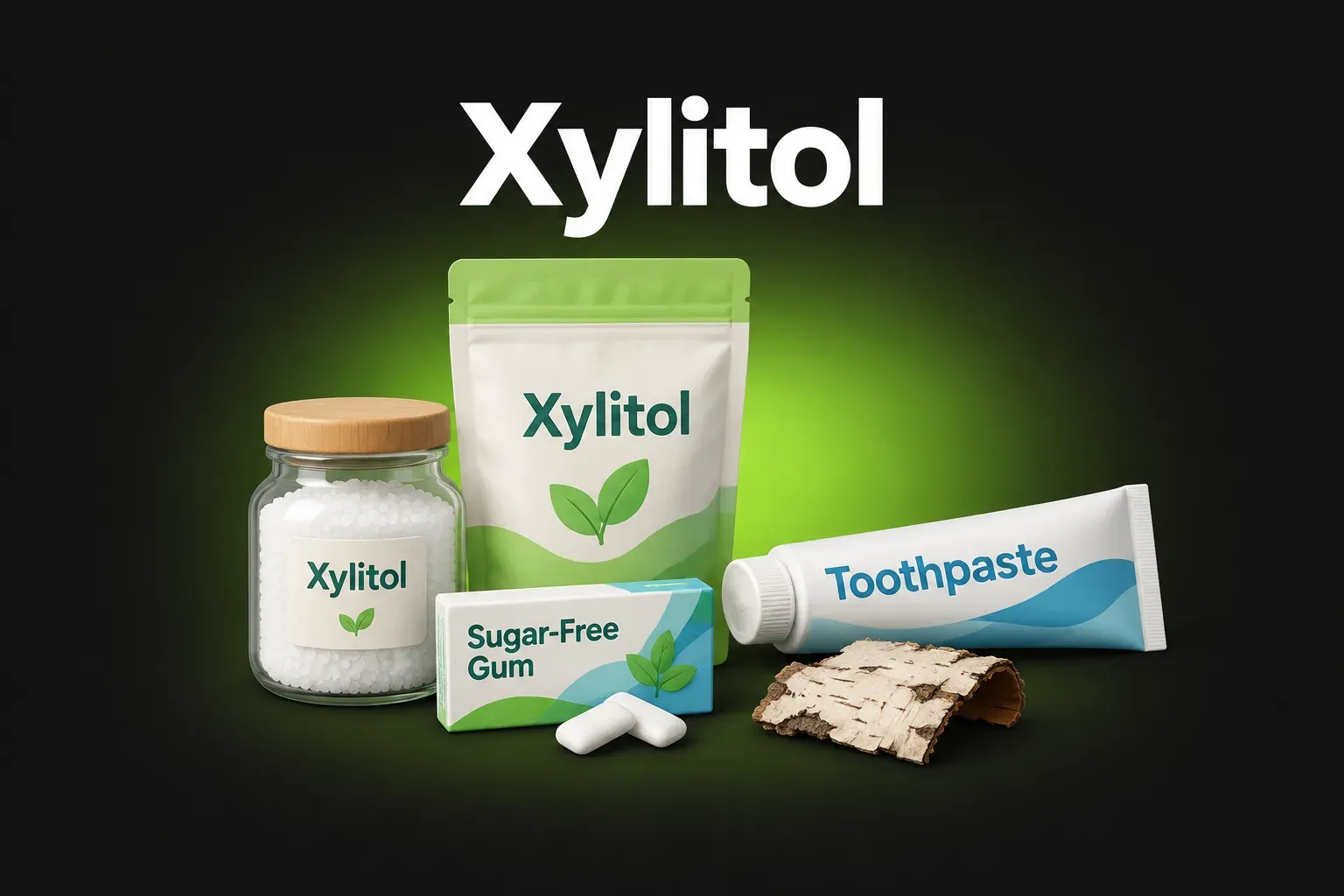
Xylitol is the sweetener in most sugar-free chewing gum, many toothpastes and mints. It’s also sold as a “natural” sugar swap, often called birch sugar. It tastes almost exactly like sugar, has fewer calories and protects teeth. But a 2024 study linked it to blood clots, heart attacks and strokes. And it’s extremely dangerous for dogs.
The short answer: xylitol is as sweet as sugar but has 40% fewer calories, and it raises blood sugar only a little. In gum and toothpaste, it helps prevent cavities. But Cleveland Clinic scientists found that people with more xylitol in their blood had more heart attacks, strokes and deaths. In healthy people, a drink sweetened with xylitol made the blood clot more easily. Large amounts also cause bloating and diarrhea. Small amounts in gum or toothpaste are fine for most people. But it’s better not to use it by the spoonful every day.
What is xylitol?
Xylitol is a sugar alcohol (also called polyol), like erythritol and sorbitol. It’s found in small amounts in plums, strawberries, cauliflower and mushrooms, and your body makes a little too. The xylitol you buy is made in factories from corn cobs or birch wood.
| Xylitol | Sugar | |
|---|---|---|
| Sweetness | about the same | 100% |
| Calories | about 2.4 per gram | 4 per gram |
| Glycemic index | about 7–13 | 65 |
| Causes cavities | No | Yes |
On labels, you’ll see it as xylitol, birch sugar or E967 (“sweetener: E967”).
Where you’ll find xylitol
- Sugar-free chewing gum and mints
- Toothpaste, mouthwash and dental products
- Tabletop sweeteners sold as xylitol or birch sugar
- Sugar-free candy, chocolate and baked goods
- Some nut butters, protein bars and syrups
- Some chewable vitamins and medicines
Benefits of xylitol
Teeth
The bacteria in your mouth that cause cavities can’t use xylitol to make acid. That’s why it’s added to gum and toothpaste. A Cochrane review looked at studies that lasted 2.5–3 years. Fluoride toothpaste with 10% xylitol may lower cavities in children by about 13% compared with fluoride toothpaste alone. But the proof is weak. And there wasn’t enough data to show that other xylitol products, like lozenges, help (Riley et al., Cochrane Database of Systematic Reviews, 2015).
Ear infections in children
Three studies looked at over 1,800 healthy children in daycare. Xylitol (as gum, syrup or lozenges) lowered the risk of ear infections from about 30% to 22%. It didn’t help children who already had a cold or often got ear infections (Azarpazhooh et al., Cochrane Database of Systematic Reviews, 2016).
Blood sugar
Xylitol has a low glycemic index, so it raises blood sugar much less than sugar. That’s why it’s used in products for people with diabetes. Read more about the glycemic index.
Xylitol and heart health: what the research says
In 2024, a Cleveland Clinic team studied xylitol. It’s the same team that raised worries about erythritol:
- Blood levels and heart problems: the team followed over 2,100 people who were being checked for heart disease. Those with the most xylitol in their blood had a 57% higher risk of a heart attack, stroke or death over three years than those with the least.
- Platelets and clots: in the lab and in mice, xylitol made platelets (the blood cells that form clots) stickier, so more clots formed.
- Healthy people: 10 healthy people drank a drink sweetened with xylitol. The xylitol in their blood shot up, and every person’s blood clotted more easily (Witkowski et al., European Heart Journal, 2024).
What this does and doesn’t show: the body makes some xylitol on its own. So higher blood levels may partly be a sign of other health problems. The study shows a link, not proof that xylitol from food causes heart attacks. And the test with 10 people was small. But the results match those for erythritol, using several different methods. Testing for years whether a sweetener causes heart attacks in people would put their health at risk. So these warning signs are worth taking seriously. The amounts in gum and toothpaste are much smaller than in a sweetened drink or dessert.
Side effects: bloating and diarrhea
The body takes in only part of the xylitol you eat. The rest reaches the large intestine. There it pulls in water, and bacteria feed on it. This can cause bloating, gas and diarrhea. Many people are fine with 10–20 g a day once they’re used to it. But more than 20–30 g at once often causes problems. In the EU, products with more than 10% added sugar alcohols must carry the warning “excessive consumption may produce laxative effects”.
Warning: xylitol is toxic to dogs
In people, xylitol barely affects insulin. In dogs, it makes the body release a huge amount of insulin. This causes dangerously low blood sugar within 10–60 minutes. Larger amounts can cause liver failure. Even a few pieces of sugar-free gum can be dangerous for a small dog.
Keep gum, mints, toothpaste, and peanut butter and baked goods sweetened with xylitol away from dogs. If your dog eats something with xylitol, call a vet right away – even if it seems fine.
Xylitol vs other sweeteners
| Sweetener | Calories | Raises blood sugar | Main concerns |
|---|---|---|---|
| Xylitol | 2.4 kcal/g | Slightly | Blood clotting and heart risk in studies; diarrhea; toxic to dogs |
| Erythritol | ~0.2 kcal/g | No | Blood clotting and heart risk in studies; diarrhea in large amounts |
| Allulose | ~0.4 kcal/g | No | Bloating; few long-term studies; not allowed in the EU |
| Stevia | 0 | No | Few worries |
| Sucralose | 0 | No, but may affect insulin | Gut bacteria, DNA damage in lab tests, heating |
| Aspartame | ~0 | No | Possible cancer risk (WHO) |
| Sugar | 4 kcal/g | Yes | Weight gain, tooth decay, diabetes |
How to use xylitol safely
- Gum, mints and toothpaste are fine – the amounts are small and help your teeth.
- Don’t use it by the spoonful as your everyday sugar replacement, and avoid large amounts at once.
- Be extra careful if you have heart disease, diabetes or a history of blood clots or stroke – talk to your doctor.
- Start slowly to avoid bloating and diarrhea.
- Keep all xylitol products away from dogs.
Spot xylitol on any label in seconds. With NutriSmart, you photograph the ingredient list or scan the barcode, and the app tells you right away if the product has xylitol. Turn on an alert for it, and the app warns you every time a product you scan contains it. You’ll also see every other additive, the risks of each one and a health score out of 100.Get the app free
You can also read about other sweeteners: erythritol, allulose and sucralose, or read our overview of all sugar alcohols.
Compare all sweeteners and their NutriSmart ratings in our full list of artificial sweeteners.
The bottom line
Xylitol tastes like sugar, has fewer calories, raises blood sugar only a little and helps protect teeth. That makes it a good choice in gum and toothpaste. But a 2024 study linked more xylitol in the blood to heart attacks and strokes. It also showed that a xylitol drink makes blood clot more easily. And large amounts cause bloating and diarrhea. Enjoy it in small amounts, don’t eat it by the spoonful – and keep it away from your dog.
FAQ
Is xylitol bad for you?
In small amounts, like in chewing gum and toothpaste, it's considered safe and can help prevent cavities. But a 2024 study found that people with more xylitol in their blood had more heart attacks and strokes. In healthy people, a drink sweetened with xylitol made the blood clot more easily. Large amounts also cause bloating and diarrhea. Use it in small amounts, not as a big daily replacement for sugar.
Is xylitol good for your teeth?
Yes, a bit. Mouth bacteria can't use xylitol to make acid, so it doesn't cause cavities. A Cochrane review looked at fluoride toothpaste with 10% xylitol. It may lower cavities in children by about 13% compared with fluoride toothpaste alone. But the proof is weak.
Is xylitol dangerous for dogs?
Yes, very. In dogs, xylitol makes the body release a huge amount of insulin very fast. This can cause dangerously low blood sugar within minutes to hours. Larger amounts can cause liver failure. Even a few pieces of sugar-free gum can be dangerous for a small dog. If your dog eats something with xylitol, call a vet right away.
Does xylitol raise blood sugar?
Only a little. Xylitol has a low glycemic index (about 7–13), so it raises blood sugar slowly. It has about 2.4 calories per gram – 40% fewer than sugar. That's why it's used in products for people with diabetes.
What are the side effects of xylitol?
The most common are bloating, gas and diarrhea, especially when you're not used to it or eat more than 20–30 g at once. In the EU, products with more than 10% added sugar alcohols must warn that eating too much may cause diarrhea.
What is E967?
E967 is the European code for xylitol. On labels you'll see it as "xylitol", "sweetener: E967" or "birch sugar".