Is Sucralose Bad for You? Side Effects, Gut & Cancer Studies
What sucralose (E955, Splenda) is, which foods contain it, and what studies show about blood sugar, gut bacteria, DNA damage, cancer and baking with it.
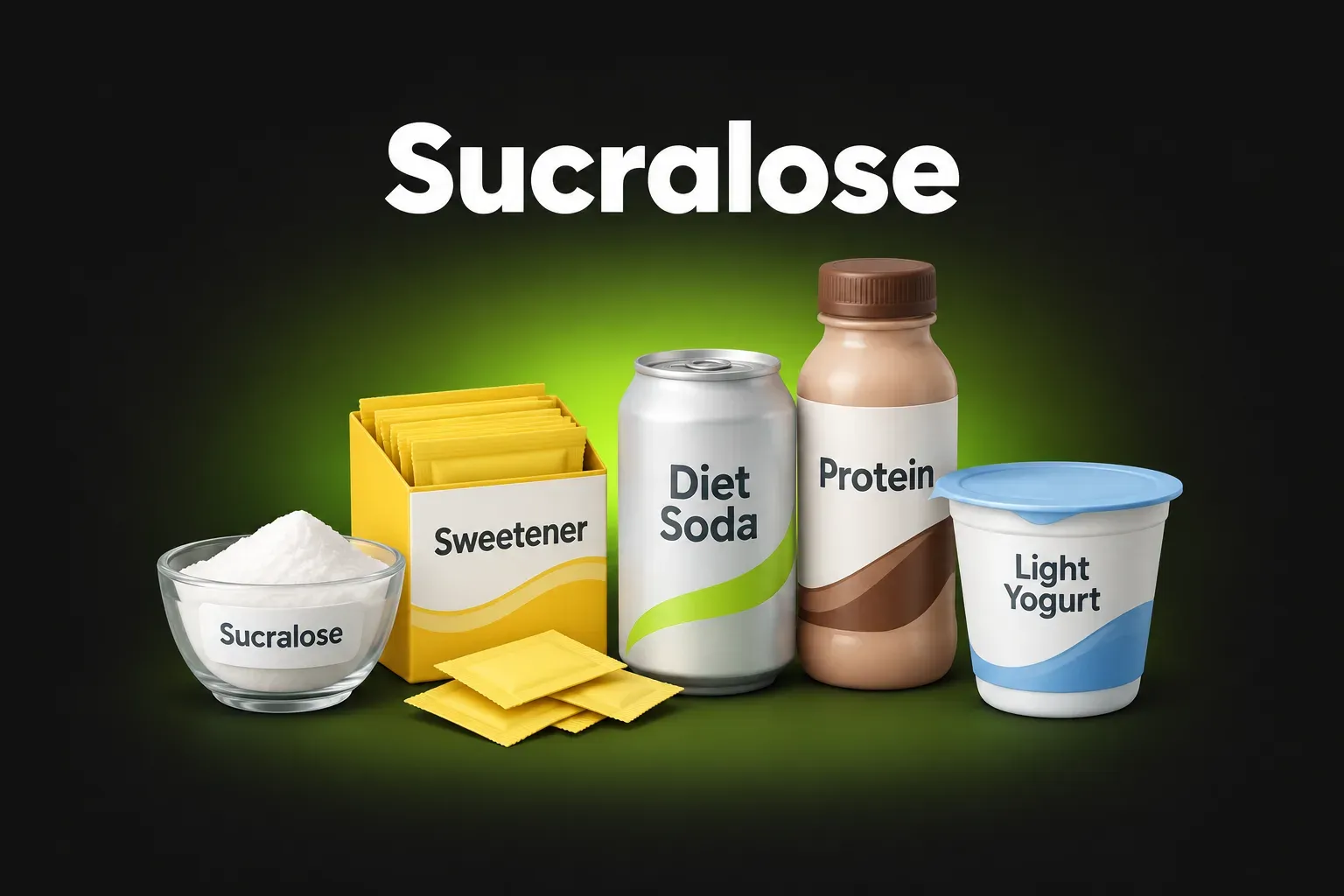
Sucralose is the sweetener in Splenda and in thousands of “diet”, “light” and “zero sugar” products – from diet sodas and protein shakes to yogurt and chewing gum. It has no calories and is about 600 times sweeter than sugar, so it sounds like a perfect swap. But what we know about it has changed a lot in the last few years.
The short answer: sucralose is allowed in food, but it’s not as harmless as people long thought. In studies with people, it raised blood sugar and insulin and made the brain send more hunger signals. In mice, it changed gut bacteria and caused inflammation. At high doses, it was linked to blood cancers. And a substance found in sucralose – which the gut can also make from it – damaged DNA in lab tests. It’s fine to swap it for sugar now and then. But it’s not something to have every day.
What is sucralose?
Sucralose is made from regular sugar in a factory. Three small parts of the sugar are swapped for chlorine. This makes it about 600 times sweeter than sugar. The body can’t use it for energy, so it has no calories. Most of it passes through the gut and leaves the body unchanged.
On labels, you’ll see it as:
| Name | Where you’ll see it |
|---|---|
| Sucralose | Ingredient lists worldwide |
| E955, “sweetener: E955” | European Union, UK and many other countries |
| Splenda | The best-known brand; the yellow packets also contain dextrose and maltodextrin |
Which foods contain sucralose?
- Drinks: diet and “zero sugar” sodas, flavored waters, sports and energy drinks, drink mixes
- Protein products: protein powders, shakes and bars
- Dairy: light and flavored yogurts, puddings
- Sweets: sugar-free candy, gum, ice cream, syrups and jams
- Baked goods and cereals labeled “no added sugar”
- Other: tabletop sweeteners, some medicines, vitamins and e-cigarette liquids
Is sucralose bad for you? What the research says
What regulators say
The FDA approved sucralose in 1998 and set a safe daily limit of 5 mg per kilogram of body weight. The EU allows up to 15 mg per kilogram. But in 2023, the World Health Organization advised against using sweeteners like sucralose to control weight. They don’t help with weight loss in the long run, and they may raise the risk of type 2 diabetes and heart disease (WHO, 2023).
Blood sugar and insulin
Sucralose has no sugar, so you’d expect it to have no effect on blood sugar. Studies in people show otherwise:
- In a study at Washington University, 17 people with obesity drank sucralose or water before a sugar drink. After sucralose, their blood sugar rose higher. Their bodies made about 20% more insulin, and their insulin worked about 23% less well (Pepino et al., Diabetes Care, 2013).
- A study at the Weizmann Institute gave sucralose to 120 healthy adults for two weeks. The doses were below the official daily limit. It changed their gut bacteria and made blood sugar control worse. Then scientists moved these people’s gut bacteria into mice. The mice got the same problem (Suez et al., Cell, 2022).
Hunger and the brain
In a 2025 study at the University of Southern California, 75 young adults drank water, a sugar drink or a sucralose drink. Then their brains were scanned. Sucralose made the hypothalamus more active – the part of the brain that controls hunger. It made people hungrier than the sugar drink did (Chakravartti et al., Nature Metabolism, 2025). The sweet taste without calories may confuse the brain’s hunger signals.
Gut bacteria and inflammation
Most sucralose isn’t taken in by the body, so it reaches the gut bacteria. Mice drank sucralose for six months, at the same daily limit allowed for people. Their gut bacteria changed, and their livers showed signs of inflammation (Bian et al., Frontiers in Physiology, 2017).
DNA damage: sucralose-6-acetate
In 2023, scientists at North Carolina State University studied sucralose-6-acetate, a substance left over from making sucralose. They found it in sucralose sold in stores. They also found that the gut can make it from sucralose. In lab tests, it damaged DNA. Both sucralose-6-acetate and sucralose weakened the lining of human gut tissue. The authors say that one sucralose drink a day may have far more of it than is safe for substances that damage DNA (Schiffman et al., Journal of Toxicology and Environmental Health, 2023).
Cancer: what animal studies show
Many of these questions can only be tested on animals. Giving people large amounts of a substance for years on purpose would put their health at risk. Mice share most of their genes with humans, and their bodies work in many of the same ways. That’s why these studies are used to spot possible dangers early:
- Blood cancers in mice: the Ramazzini Institute in Italy fed sucralose to over 800 mice, from before birth until they died of old age. Male mice had more cancers, including blood cancers such as leukemia. The more sucralose they got, the higher the risk. The authors said more studies are “urgent” (Soffritti et al., International Journal of Occupational and Environmental Health, 2016).
- Cancer treatment: in a 2025 study at the University of Pittsburgh, sucralose upset gut bacteria and weakened the immune cells that fight cancer. So immunotherapy, a type of cancer treatment, stopped working in mice. Data from people with cancer pointed the same way (Morder et al., Cancer Discovery, 2025).
To be fair, these studies have limits. Many of the animal studies used higher doses than most people eat. And no study has yet proven that sucralose causes cancer in people. But results from independent labs keep pointing the same way: gut damage, inflammation and DNA damage. That’s a good reason to be careful instead of waiting for final proof.
Baking and cooking with sucralose
For a long time, sucralose was sold as safe to heat and good for baking. But a review by a German government safety agency (BfR) found that sucralose breaks down at high heat, such as in cooking and baking. It may then form harmful substances that contain chlorine (Eisenreich et al., Food Chemistry, 2020). It’s better not to bake or cook with it.
Sucralose vs other sweeteners
| Sweetener | Calories | Main concerns |
|---|---|---|
| Sucralose (E955) | 0 | Blood sugar, gut bacteria, DNA damage, heating |
| Aspartame (E951) | ~0 | Possible cancer risk (WHO), heart and gut studies |
| Stevia (E960) | 0 | Fewer worries; may change gut bacteria |
| Erythritol (E968) | ~0.2 kcal/g | Blood clotting and heart risk in studies |
| Xylitol (E967) | 2.4 kcal/g | Blood clotting and heart risk in studies; toxic to dogs |
| Allulose | ~0.4 kcal/g | Bloating; few long-term studies; not allowed in the EU |
| Sugar | 4 per gram | Weight gain, tooth decay, diabetes when eaten in excess |
How to cut back on sucralose
- Drink water, sparkling water or unsweetened tea instead of diet sodas.
- Choose plain yogurt and add fruit yourself.
- Check protein powders and bars – many use sucralose; some use stevia or no sweetener.
- Don’t bake or cook with sucralose.
- Get used to less sweetness. Your taste buds adjust within a few weeks, and sweet foods taste sweeter again.
Spot sucralose on any label in seconds. With NutriSmart, you photograph the ingredient list or scan the barcode, and the app tells you right away if the product has sucralose. Turn on an alert for it, and the app warns you every time a product you scan contains it. You’ll also see every other additive, the risks of each one and a health score out of 100.Get the app free
You can also read about other sweeteners: aspartame, acesulfame K, saccharin and erythritol. And find out whether Celsius is bad for you.
Compare all sweeteners and their NutriSmart ratings in our full list of artificial sweeteners.
The bottom line
Sucralose has no calories and is allowed in food. But it isn’t the harmless sugar swap it was sold as. In people, it raised blood sugar and insulin and made the brain hungrier. In mice, it changed gut bacteria, caused inflammation and was linked to blood cancers. And a substance found in sucralose, which the gut can also make from it, damaged DNA in lab tests. Use it now and then if you need to, but don’t make it a daily habit – and don’t bake with it.
Splenda is a trademark of its respective owner. NutriSmart is not affiliated with it.
FAQ
Is sucralose bad for you?
It's allowed in food, and it has no calories. But more and more studies raise worries. In people, it raised blood sugar and insulin and made the brain send more hunger signals. In mice, it changed gut bacteria, caused inflammation (swelling) and was linked to blood cancers at high doses. And a substance found in sucralose, which the gut can also make from it, damaged DNA in lab tests. It's worth limiting, not using every day.
Does sucralose raise blood sugar or insulin?
It doesn't contain sugar. But in a study of people with obesity, some drank sucralose before a sugar drink. Their blood sugar went higher, and they made about 20% more insulin than after drinking water. In another study of 120 healthy adults, two weeks of sucralose made blood sugar control worse in some people. It depended on their gut bacteria.
Does sucralose cause cancer?
There's no proof that it causes cancer in people. But an Italian study found more blood cancers in male mice fed sucralose for their whole lives. In 2023, scientists also found that sucralose-6-acetate damaged DNA in lab tests. It's a leftover substance in sucralose, and the gut can also make it from sucralose. A 2025 study found that sucralose made a type of cancer treatment (immunotherapy) work worse in mice.
Is it safe to bake with sucralose?
For a long time, people thought sucralose didn't change when heated. But a German government safety agency found that it can break down at high heat, such as in baking. It may then form harmful substances that contain chlorine. It's better not to bake or cook with it.
Is Splenda the same as sucralose?
Splenda is a sweetener brand. Its main sweet ingredient is sucralose. The yellow packets also contain dextrose and maltodextrin as fillers, because sucralose is so sweet that only a tiny amount is needed.
What is E955?
E955 is the European code for sucralose. On labels you'll see it as "sucralose", "sweetener: E955" or "sweetener: sucralose".