Allulose: Is This Low-Calorie Sugar Safe? Pros and Cons
What allulose is, how many calories it has, how it affects blood sugar, its side effects, why it isn't allowed in the EU and how it compares with other sweeteners.
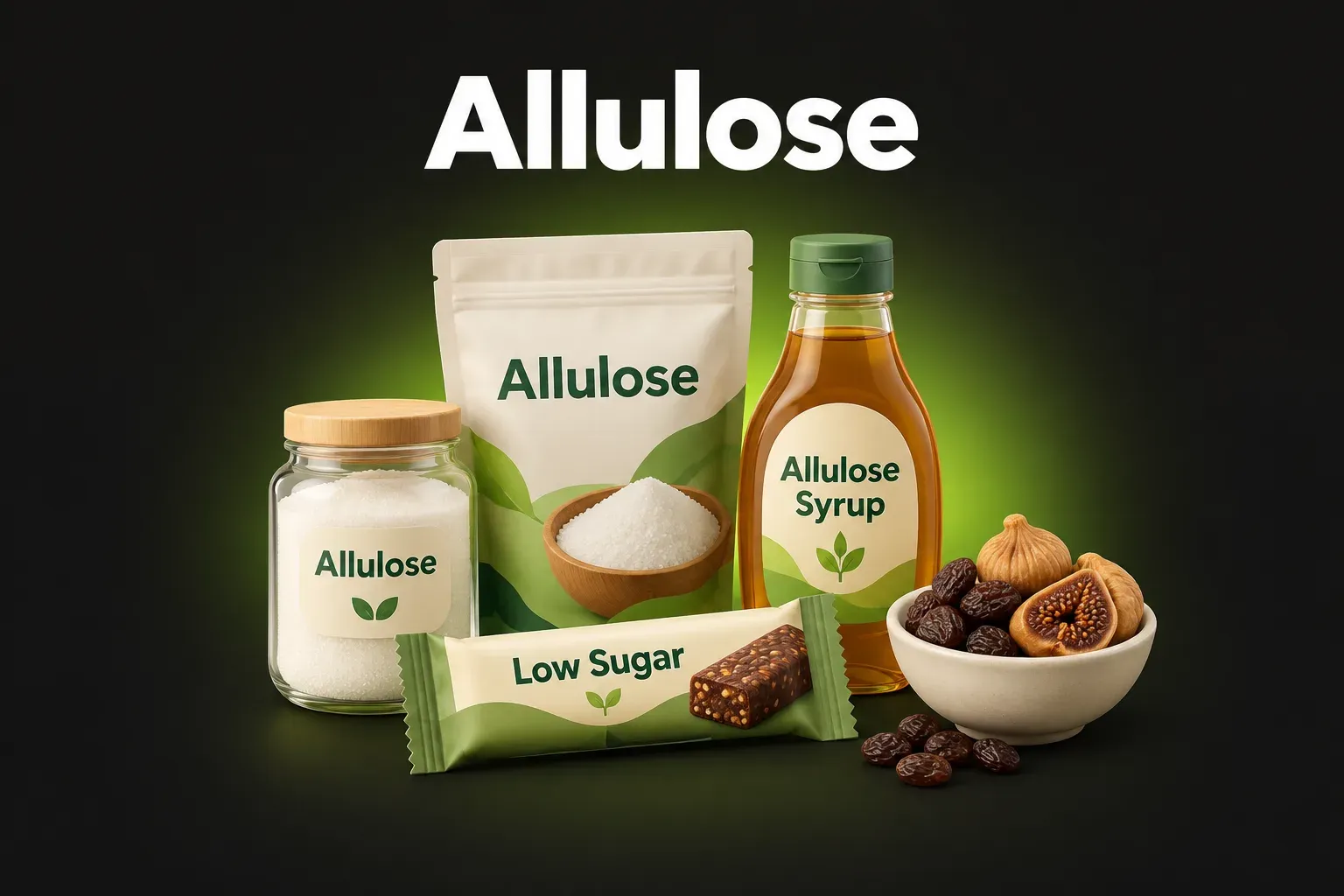
Allulose is one of the newest sweeteners on supermarket shelves. It looks and tastes like sugar and browns like sugar when you bake with it. But it has almost no calories and doesn’t raise blood sugar. That’s why it’s in more and more keto snacks, protein bars and “zero sugar” foods.
The short answer: allulose is a rare sugar that your body barely uses, so it has about 0.4 calories per gram (sugar has 4) and a glycemic index of about zero. Studies in people found it doesn’t raise blood sugar and may even slightly lower the rise after a meal. The downsides: large amounts cause bloating and diarrhea, and there are few long-term studies. It’s also not allowed in food in the EU, because Europe’s food safety agency couldn’t confirm it was safe from the data it got.
What is allulose?
Allulose (also called D-psicose or D-allulose) is made of the same atoms as fructose (fruit sugar), but has a slightly different shape. Because of that, your body takes it in but doesn’t use it for energy. Most of it leaves in the urine within a day.
It’s called a rare sugar because it occurs naturally only in tiny amounts in figs, raisins, jackfruit, maple syrup and wheat. The allulose you buy is made in factories from corn or beet sugar, using enzymes that change fructose into allulose.
| Allulose | Sugar | |
|---|---|---|
| Sweetness | about 70% of sugar | 100% |
| Calories | about 0.4 per gram | 4 per gram |
| Glycemic index | about 0 | 65 |
| Browns when baked | Yes, even faster | Yes |
| Counted as sugar on US labels | No | Yes |
Where you’ll find allulose
- Keto and low-carb products: bars, cookies, ice cream, syrups
- “Zero sugar” and “no added sugar” foods: yogurt, cereals, sauces, drinks
- Protein bars and shakes
- Tabletop sweeteners: granulated allulose and allulose syrup, alone or mixed with monk fruit or stevia
Allulose and blood sugar: what the research says
- No rise in blood sugar: because the body doesn’t break it down for energy, allulose itself doesn’t raise blood sugar or insulin.
- A smaller rise after sugar: in a study of 24 people with type 2 diabetes, adding 10 g of allulose to a sugary drink lowered the rise in blood sugar by about 8% (Noronha et al., Diabetes, Obesity and Metabolism, 2018).
- A 2026 review of controlled trials in people found that allulose lowered blood sugar and insulin after meals (Osborn et al., American Journal of Clinical Nutrition, 2026).
- Body fat: in a 12-week study of overweight adults, the group that took the higher dose of allulose had less belly fat than the placebo group, with no changes in liver or kidney markers (Han et al., Nutrients, 2018). It was a small, early study, so more research is needed.
This makes allulose one of the better sweeteners for people with diabetes – used in normal amounts. Read more about the glycemic index.
Side effects: bloating and diarrhea
The main known side effect is digestive. Part of the allulose reaches the large intestine, where it draws in water and can be fermented by gut bacteria.
In a study of healthy young adults, severe symptoms – diarrhea, bloating and stomach pain – started at about 0.5 g per kg of body weight at once. The researchers suggested staying under 0.4 g per kg at once (about 28 g for a 70 kg adult) and 0.9 g per kg per day (Han et al., Nutrients, 2018). A protein bar or a spoonful in coffee is far below that, but a whole pint of keto ice cream may not be.
Is allulose safe?
In the US: the FDA has accepted allulose as “generally recognized as safe” and, since 2019, lets companies leave it out of “total sugars” and “added sugars” on the Nutrition Facts label and count it as 0.4 calories per gram.
In the EU: allulose is a “novel food” – a new food that needs approval before it can be sold. It isn’t approved yet. In 2025, the European Food Safety Authority (EFSA) said its safety “cannot be established” from the request it reviewed. The company didn’t send the extra data EFSA asked for, on how it’s made, possible DNA damage and studies in people (EFSA, 2025). This doesn’t mean allulose is harmful – it means the evidence wasn’t enough. Other applications are still being reviewed.
What we don’t know yet: most human studies are short – days to a few months. There are no long-term studies on what eating allulose every day for years does to the gut, the gut bacteria or overall health. Newer sweeteners have surprised scientists before: sucralose and erythritol were once considered harmless too.
Allulose vs other sweeteners
| Sweetener | Calories | Raises blood sugar | Main concerns |
|---|---|---|---|
| Allulose | ~0.4 kcal/g | No | Bloating, diarrhea; few long-term studies; not allowed in the EU |
| Stevia | 0 | No | Few concerns; may change gut bacteria |
| Erythritol | ~0.2 kcal/g | No | Linked to blood clotting in some studies |
| Xylitol | 2.4 kcal/g | Slightly | Blood clotting and heart risk in studies; toxic to dogs |
| Sucralose | 0 | No, but may affect insulin | Gut bacteria, DNA damage in lab tests, heating |
| Aspartame | ~0 | No | Possible cancer risk (WHO) |
| Sugar | 4 kcal/g | Yes | Weight gain, tooth decay, diabetes |
How to use allulose
- Start small – a teaspoon or two – and see how your stomach reacts.
- Stay under about 25–30 g at once, and don’t combine several allulose-sweetened products in one sitting.
- Use about a third more than the amount of sugar in a recipe, because it’s less sweet.
- Lower the oven temperature a little when baking – it browns faster than sugar.
- Don’t see “zero sugar” as “healthy” – check the rest of the label for other sweeteners, additives and refined flour. Read about ultra-processed foods.
Spot allulose on any label in seconds. With NutriSmart, you photograph the ingredient list or scan the barcode, and the app tells you right away if the product has allulose. Turn on an alert for it, and the app warns you every time a product you scan contains it. You’ll also see every other additive, the risks of each one and a health score out of 100.Get the app free
Compare all sweeteners and their NutriSmart ratings in our full list of artificial sweeteners.
The bottom line
Allulose tastes like sugar, has almost no calories and doesn’t raise blood sugar. Studies even suggest it slightly lowers blood sugar after meals. That makes it one of the more promising sweeteners for people with diabetes. But large amounts cause bloating and diarrhea, long-term studies are missing, and the EU hasn’t approved it yet. Use it in moderation, not as a reason to eat more sweet processed foods.
FAQ
What is allulose?
Allulose is a rare sugar found naturally in tiny amounts in figs, raisins, maple syrup and wheat. It tastes like sugar and is about 70% as sweet, but your body doesn't use it for energy, so it has almost no calories and doesn't raise blood sugar. The allulose sold in stores is made from corn or beet sugar using enzymes.
Is allulose safe?
The FDA has accepted it as generally recognized as safe, and short-term studies in people haven't found serious side effects. But there are few long-term studies. In 2025, the European Food Safety Authority said it couldn't confirm it was safe from the data one company sent. So it isn't allowed in food in the EU yet. Large amounts can cause bloating and diarrhea.
Does allulose raise blood sugar or insulin?
No. Allulose has a glycemic index of about zero. Studies in people even found that taking it with a meal or a sugary drink slightly lowered the rise in blood sugar and insulin afterwards.
How many calories does allulose have?
About 0.4 calories per gram, compared with 4 calories per gram for sugar. In the US, allulose doesn't have to be counted as sugar or added sugar on the Nutrition Facts label.
Is allulose keto-friendly?
Yes. It doesn't raise blood sugar or insulin and adds almost no calories or digestible carbs, so it's often used in keto and low-carb products.
What are the side effects of allulose?
In larger amounts, allulose can cause bloating, gas, stomach pain and diarrhea. In a study of healthy adults, symptoms became more common above about 0.4 g per kg of body weight at once. That's about 28 g for a 70 kg adult. Over a whole day, the limit was about 0.9 g per kg.