Healthiest Ice Cream: Light Pints, Gelato or Sorbet?
How to pick the healthiest ice cream: sugar and calories in 9 types, low-calorie pints and their sweeteners, emulsifiers and gums to watch, and healthy swaps.
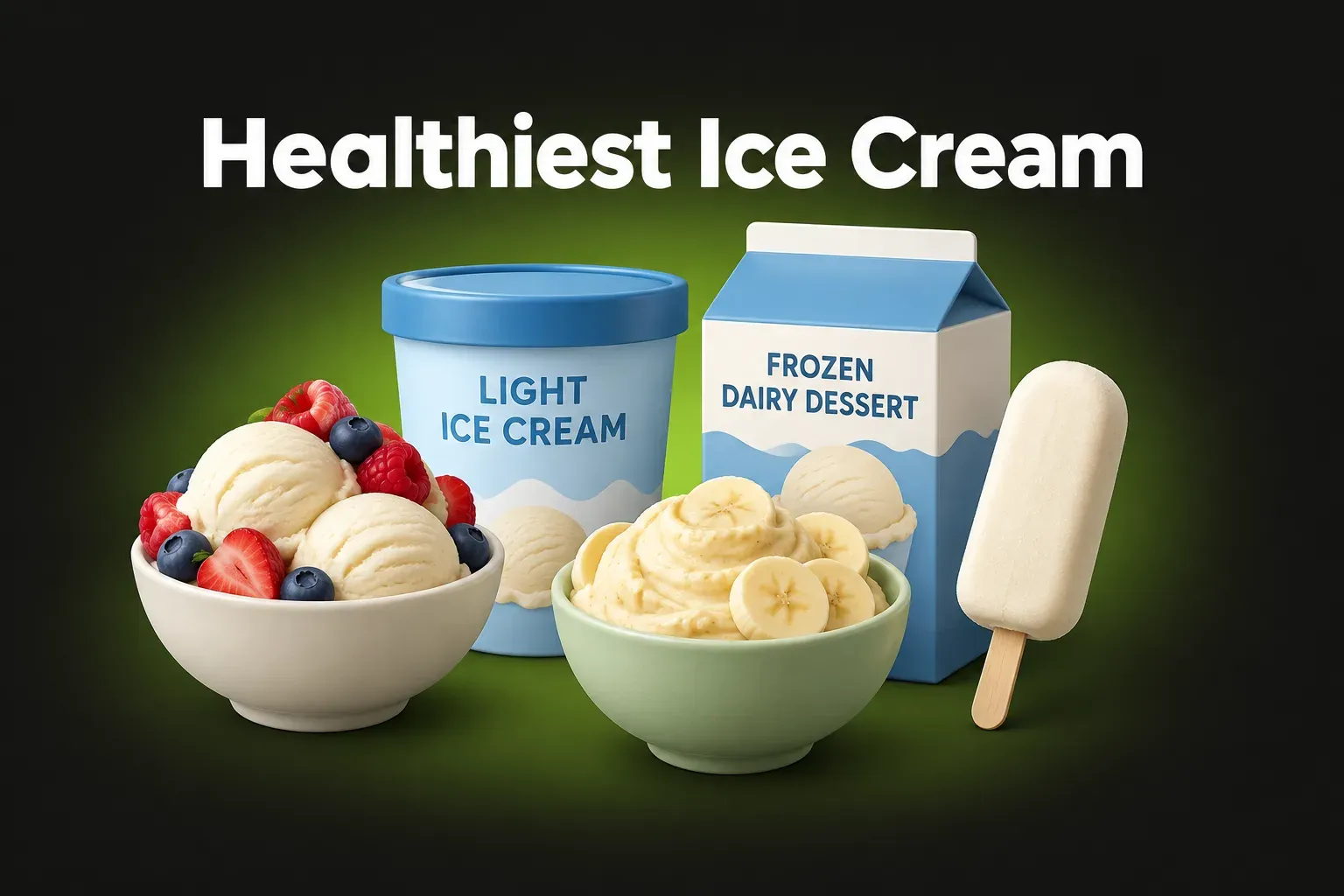
Ice cream will never be a health food – and it doesn’t have to be. But the freezer aisle has huge differences: some pints have five ingredients, others have twenty, with gums, emulsifiers, colors and sweeteners. There are also “light” pints that promise you can eat the whole thing. Here’s how to pick the healthiest ice cream and enjoy it without regrets.
The short answer: the healthiest ice cream has a short ingredient list – milk, cream, sugar, eggs and real flavors – without gums, emulsifiers or artificial colors. Eat a real serving of about ⅔ cup. Low-calorie pints have fewer calories, but they’re more processed, with sweeteners like erythritol and added fibers that can cause bloating. Frozen Greek yogurt bars and homemade banana “nice cream” are good lighter options.
Ice cream types compared
Typical numbers per ⅔ cup (the serving size on US labels). Brands differ a lot – check the label.
| Type | Calories | Sugar | Saturated fat | Verdict |
|---|---|---|---|---|
| Banana nice cream | 100–130 | 14–18 g | 0 g | Best choice: homemade, just fruit |
| Greek yogurt bar | 80–120 | 8–12 g | 1–3 g | Great: protein, small portion |
| Regular ice cream | 180–210 | 18–22 g | 6–7 g | Good in a real serving |
| Light ice cream | 130–160 | 15–18 g | 2–3 g | OK; check for gums |
| Low‑calorie pints | 70–110 | 3–6 g | 1–2 g | Fewer calories, more additives |
| Gelato | 200–250 | 22–28 g | 4–7 g | Dense; similar to ice cream |
| Sorbet | 120–170 | 25–35 g | 0 g | No fat, lots of sugar |
| Premium ice cream | 300–370 | 25–30 g | 12–15 g | Rich – keep portions small |
| Plant‑based | 180–300 | 15–25 g | 2–15 g | Oat, coconut or almond: not lighter; coconut is high in saturated fat |
Why do pints differ so much? Part of ice cream is air, whipped in while it freezes. Cheap ice cream can be close to half air, so a scoop weighs less and has fewer calories. Premium ice cream has little air, so the same scoop can have almost twice the calories.
How to pick a healthier ice cream: 5 checks
| Check | Aim for | Why |
|---|---|---|
| Ingredient list | Milk, cream, sugar, eggs, flavor | Fewer gums and emulsifiers |
| Name | “Ice cream” | “Frozen dairy dessert” means less milkfat, more oils and additives |
| Sugar | Under 20 g per serving | Mix-ins and swirls add a lot |
| Colors | None, or from fruit and vegetables | Avoid Red 40, Yellow 5 and Blue 1 |
| Serving | ⅔ cup, not the pint | A pint has 2–4 servings |
“Ice cream” vs “frozen dairy dessert”
In the US, a product can only be called ice cream if it has at least 10% milkfat. Products with less milkfat, or with vegetable oils, have to be called “frozen dairy dessert”. These are often cheaper and use more oils, gums and emulsifiers to feel creamy. Check the small print under the brand name.
Additives to watch for in ice cream
Simple ice cream needs only a few ingredients. Many brands add:
- Emulsifiers: mono- and diglycerides and polysorbate 80 – keep ice cream smooth and slow melting.
- Gums and thickeners: guar gum, locust bean gum, carrageenan, xanthan gum and cellulose gum – stop ice crystals.
- Colors: Red 40, Yellow 5, Blue 1 or carmine in pink, green and blue flavors.
- Sweeteners and syrups: corn syrup, high-fructose corn syrup, and in light pints erythritol, allulose, stevia or monk fruit.
- Natural flavors instead of real vanilla, fruit or chocolate.
Why emulsifiers matter: in mice, polysorbate 80 and cellulose gum changed gut bacteria and caused gut inflammation and weight gain (Chassaing et al., Nature, 2015). In a careful 2022 study, healthy adults who ate cellulose gum for 11 days had less variety in their gut bacteria and more stomach discomfort after meals (Chassaing et al., Gastroenterology, 2022). Human proof of harm from normal amounts is still missing. But since several labs found similar signals, choosing ice cream without them is a sensible precaution.
Are low-calorie “protein” pints healthy?
Low-calorie pints promise 300–400 calories for the whole pint and extra protein. They do have fewer calories and less sugar. But to replace sugar and fat, they use:
- Sugar alcohols and sweeteners – usually erythritol, plus stevia, monk fruit or allulose. Studies from the Cleveland Clinic linked high blood levels of erythritol to more heart attacks and strokes.
- Added fibers like inulin or soluble corn fiber – often cause gas and bloating, especially when you eat the whole pint.
- Milk protein concentrate and gums to make the texture creamy.
They can help if you’re counting calories and eat them now and then. But they’re more processed than simple ice cream. A small serving of the real thing may be the better choice.
Healthier ways to enjoy ice cream
- Serve it in a small bowl – about ⅔ cup – and put the pint back in the freezer.
- Top it with fresh berries or chopped nuts instead of sauce and candy.
- Choose plain flavors – vanilla, chocolate, strawberry – over cookie-dough and caramel-swirl versions with extra sugar.
- Buy single-serve cups or bars if a pint never makes it to a second day.
- Make banana “nice cream”: freeze sliced ripe bananas, then blend them until creamy. Add cocoa powder, peanut butter or frozen berries for flavor. It’s just fruit, with no added sugar.
For another frozen treat with more protein, try freezing plain Greek yogurt with berries – see our guide to the healthiest yogurt.
Compare ice creams in the store. With NutriSmart, you photograph the label or scan the barcode. The app shows the sugar and calories per serving, flags emulsifiers, gums, colors and sweeteners, explains each one and gives the ice cream a health score out of 100.Get the app free
The bottom line
The healthiest ice cream is a simple one – milk, cream, sugar, eggs and real flavors – eaten in a real serving of about ⅔ cup. Skip “frozen dairy desserts” with oils and gums, and flavors colored with artificial dyes. Low-calorie pints save calories, but they’re more processed, with erythritol and added fibers that can cause bloating. For lighter treats, try frozen Greek yogurt bars or homemade banana nice cream.
FAQ
What is the healthiest ice cream?
There's no truly healthy ice cream, but the best choices have a short ingredient list – milk, cream, sugar, eggs and real flavors – with no gums, emulsifiers or artificial colors. Eat a real serving of about ⅔ cup. Frozen Greek yogurt bars and homemade banana 'nice cream' are good lighter options.
Is low-calorie ice cream healthy?
It has fewer calories and less sugar, but it's more processed. Low-calorie pints usually use sweeteners like erythritol, stevia or allulose, added fibers like inulin, and gums and emulsifiers to replace sugar and fat. They can cause gas and bloating, and erythritol has been linked to heart risks in studies.
Is gelato healthier than ice cream?
Gelato usually has less fat and less air than ice cream, but often more sugar. Because it's denser, a scoop can have just as many calories. The difference is small – the ingredient list and portion matter more.
Is sorbet healthier than ice cream?
Sorbet has no fat, but it's mostly fruit and sugar – often more sugar than ice cream. It's a good choice if you avoid dairy, but not a low-sugar dessert.
What does 'frozen dairy dessert' mean?
In the US, ice cream must contain at least 10% milkfat. Products with less, or with vegetable oils, must be called 'frozen dairy dessert'. They're often cheaper and contain more gums, emulsifiers and oils.
How much ice cream is OK to eat?
A serving is about ⅔ cup on US labels – about two small scoops. Enjoyed a few times a week in that amount, ice cream can fit into a healthy diet. Eating a whole pint at once can mean 600–1,200 calories.