Inulin: Benefits, Side Effects and Who Should Avoid It
What inulin (chicory root fiber) is, what studies show for constipation, cholesterol and weight, its side effects like gas, and a mouse study to know about.
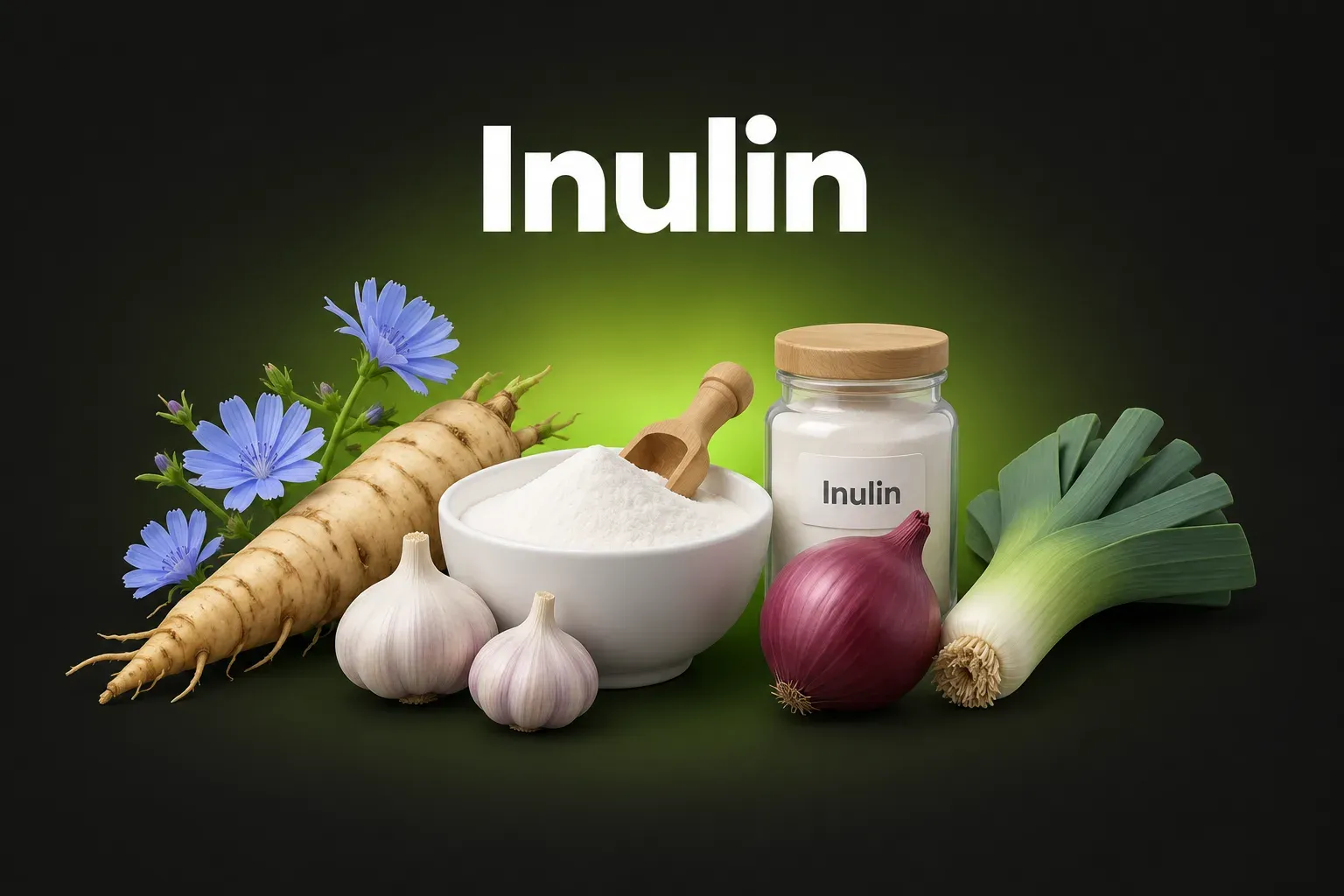
Inulin is everywhere in “healthy” food: protein bars, high-fiber yogurts, low-sugar chocolate, keto snacks – and as a powder in pharmacies. On the label it often appears as chicory root fiber. It’s a real fiber with real benefits. But it also causes gas and bloating in many people, and one mouse study is worth knowing about.
The short answer: inulin is a soluble fiber found in chicory root, garlic, onions, leeks and asparagus. It feeds the good bacteria in your gut. Inulin from chicory helps with constipation – the EU allows this claim for 12 g a day. A review of 55 trials found it may slightly lower LDL cholesterol, blood fats and weight, but the evidence is weak. Its main downside is gas, bloating and cramps, especially in people with IBS. And in a 2018 mouse study, a lot of purified inulin caused liver cancer in mice with an unhealthy gut flora.
What is inulin?
Inulin is a chain of fructose (fruit sugar) molecules that plants use to store energy. Your body can’t digest it, so it passes through the stomach and small intestine and reaches the large intestine. There, gut bacteria – especially bifidobacteria – feed on it. That’s why it’s called a prebiotic.
It has about 1.5–2 calories per gram, much less than sugar, and a slightly sweet taste. Food makers use it to add fiber, to replace sugar and fat and to make foods creamier.
On labels, look for inulin, chicory root fiber, chicory root extract, oligofructose or FOS (fructo-oligosaccharides).
Where is inulin found?
Naturally, in food:
- Chicory root – the richest source; most inulin powder is made from it
- Jerusalem artichoke
- Garlic, onions, leeks
- Asparagus
- Bananas (less ripe ones) and wheat, in smaller amounts
Most people get only a few grams a day from food.
Added to products: protein and cereal bars, high-fiber yogurts, breakfast cereals, bread, low-sugar or “no added sugar” chocolate, ice cream, keto and diet products, fiber drinks and inulin powder supplements.
Benefits of inulin: what the research says
Constipation
In a trial with 44 adults with constipation, 12 g of chicory inulin a day (3 × 4 g) for 4 weeks increased the number of stools from 3 to 4 a week and made them softer (Micka et al., International Journal of Food Sciences and Nutrition, 2017). The study was paid for by an inulin producer. But the European Food Safety Authority looked at the evidence independently, and the EU allows chicory inulin products to say they “contribute to normal bowel function by increasing stool frequency” – for at least 12 g a day.
Gut bacteria
Inulin increases bifidobacteria, which are seen as good bacteria. In the constipation trial, it also lowered Bilophila, a type of bacteria linked to gut inflammation, and this was linked to softer stools (Vandeputte et al., Gut, 2017).
Cholesterol, blood fats and weight
A review of 55 trials with 2,518 adults found that inulin may slightly lower LDL (“bad”) cholesterol and triglycerides and lower body weight by about 1 kg. The effects were bigger in people with overweight and in studies lasting 6 weeks or more. But the authors rated the evidence as low to very low, so these results aren’t certain (Talukdar et al., American Journal of Clinical Nutrition, 2024).
Calcium and bones
In a one-year trial, teenagers who took 8 g of inulin-type fiber a day absorbed more calcium and built more bone than those who got a placebo (Abrams et al., American Journal of Clinical Nutrition, 2005).
Side effects of inulin
Gas, bloating and cramps
This is the most common problem. When gut bacteria ferment inulin, they make gas. Many people get bloating, rumbling, gas and cramps, especially when they start or take large amounts. These usually get better after a few weeks, as the gut gets used to it.
People with IBS
Inulin is a FODMAP – a group of carbohydrates that often trigger symptoms in irritable bowel syndrome (IBS). If onions and garlic give you stomach problems, inulin probably will too. People on a low-FODMAP diet should avoid it.
Allergies
Very rare, but possible. Doctors described a person who had anaphylaxis (a severe, sudden allergic reaction) after eating inulin in vegetables and processed foods (Gay-Crosier et al., New England Journal of Medicine, 2000).
A mouse study about the liver
In 2018, researchers fed mice a diet with a lot of purified inulin. Mice with an unhealthy gut flora developed liver cancer. Normal mice did too when the inulin was added to a high-fat diet. When the researchers stopped the fermentation by the gut bacteria, the cancer didn’t appear (Singh et al., Cell, 2018).
This hasn’t been seen in humans, and the mice ate far more inulin than people get from food. But animal studies matter: mice share most of their genes with us, and you can’t test for years whether something causes cancer in people, because that would put their health at risk. The authors warned that adding a lot of fermentable fiber to foods should be done with care. It’s a good reason to get fiber mainly from vegetables, fruit, legumes and whole grains, not from large doses of purified powder.
How to take inulin
- Start small: 2–3 g a day (about half a teaspoon of powder).
- Increase slowly over 2–3 weeks, up to about 10–12 g a day if you tolerate it.
- Split it over the day, and mix it into yogurt, porridge, coffee or water.
- Drink enough water.
- Stop or cut back if you get a lot of gas, pain or diarrhea.
If you want more fiber with fewer side effects, psyllium is usually better tolerated, because it ferments less. Or simply eat more high-fiber foods. For a comparison of the most common fiber supplements, see our guide to fiber supplements.
Spot inulin on any label in seconds. With NutriSmart, you photograph the ingredient list or scan the barcode, and the app tells you right away if the product has inulin. Turn on an alert for it, and the app warns you every time a product you scan contains it. You’ll also see every other additive, the risks of each one and a health score out of 100.Get the app free
You can also read about polydextrose, another fiber added to processed foods.
The bottom line
Inulin is a natural soluble fiber from chicory root, garlic, onions and other plants. It feeds good gut bacteria and helps with constipation, and it may slightly lower cholesterol, blood fats and weight. But it often causes gas and bloating, it’s a poor choice for people with IBS, and a mouse study linked large amounts of purified inulin to liver cancer. Get most of your fiber from whole foods, and if you take inulin powder, start small and don’t overdo it.
FAQ
What is inulin?
Inulin is a type of soluble fiber found in plants like chicory root, Jerusalem artichoke, garlic, onions, leeks and asparagus. Your body can't digest it, so it reaches the large intestine, where good bacteria feed on it. It's sold as a powder and added to many foods as "chicory root fiber".
What are the benefits of inulin?
Inulin from chicory helps you go to the toilet more often if you're constipated – the EU allows this claim on labels for 12 g a day. A review of 55 trials found it may slightly lower LDL cholesterol, blood fats and body weight (about 1 kg), but the evidence is weak. In teenagers, it helped the body take in more calcium.
What are the side effects of inulin?
The most common are gas, bloating, stomach rumbling and cramps, especially with larger amounts or when you start. People with irritable bowel syndrome (IBS) often react strongly, because inulin is a FODMAP. Allergic reactions are very rare.
How much inulin per day?
Studies on constipation used about 12 g a day, split over the day. Start with 2–3 g and increase slowly over a few weeks so your gut can adjust. Drink enough water.
Is inulin safe?
For most people, yes. It's a natural fiber people have always eaten in vegetables. But a 2018 study found that mice with an unhealthy gut flora fed a lot of purified inulin developed liver cancer. This hasn't been seen in humans, but it's a reason not to take large doses for a long time without a reason.
Who should avoid inulin?
People with irritable bowel syndrome or on a low-FODMAP diet, people who get a lot of gas and bloating from onions and garlic, and people allergic to inulin or chicory. If you have a liver or bowel disease, talk to your doctor before taking supplements.