Soluble Corn Fiber: Is It Healthy? Benefits and Side Effects
What soluble corn fiber is, why it's in protein bars and low-sugar cereal, what studies show about blood sugar, gut health and bones, and its side effects.
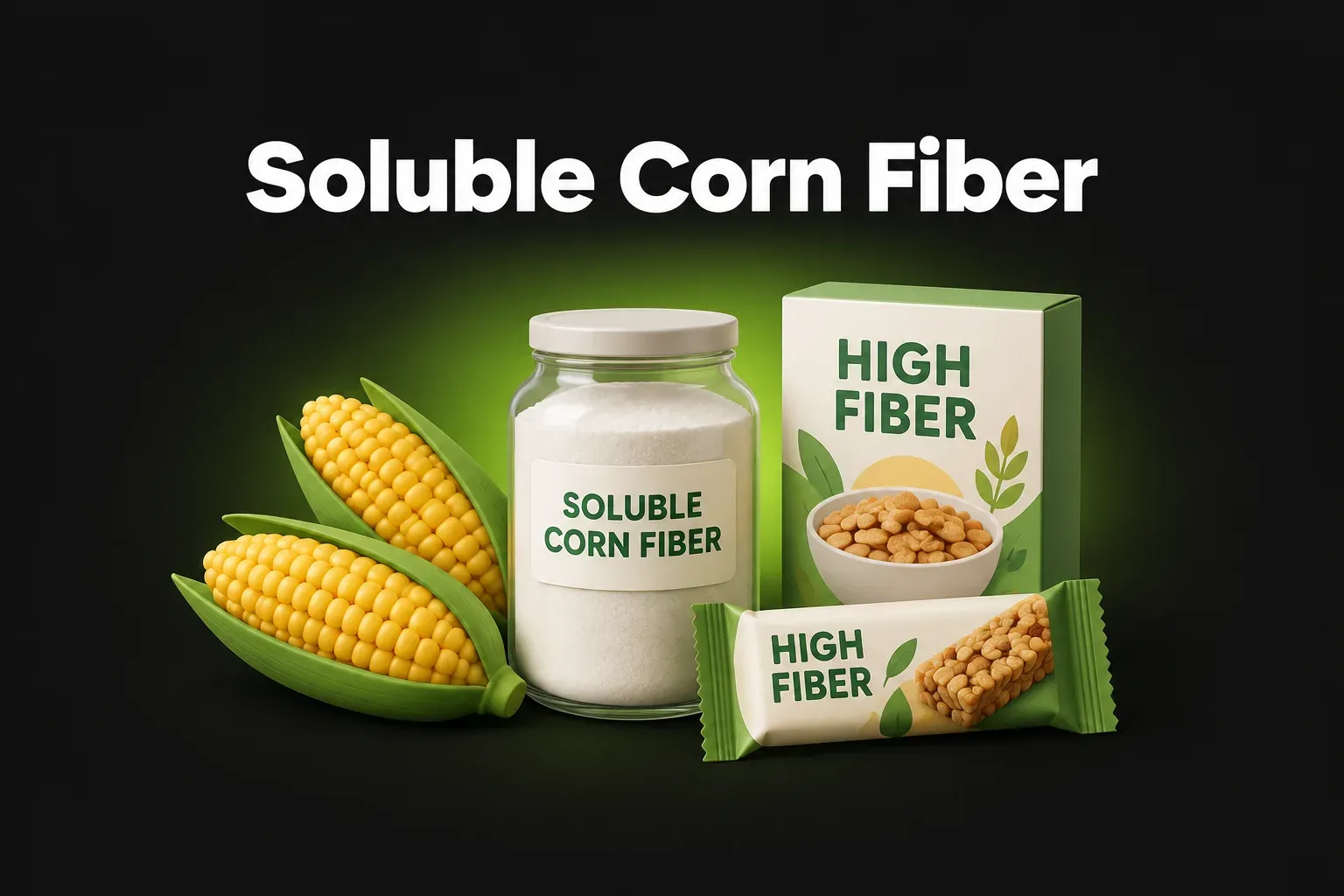
Soluble corn fiber shows up in protein bars, low-sugar cereals, “keto” snacks and fiber-boosted drinks. It helps companies claim “high fiber” and “low sugar” on the front of the pack. But what is it, and is it actually good for you?
The short answer: soluble corn fiber is a fiber made from corn starch, also called resistant maltodextrin. Most of it isn’t digested, so it has about 2 calories per gram and barely raises blood sugar. Studies suggest it feeds good gut bacteria and may help the body absorb calcium. It’s generally safe, but large amounts can cause gas and bloating. It’s an isolated fiber in processed foods, not a substitute for whole-food fiber – and most of the research was supported by the company that makes it.
What is soluble corn fiber?
It starts as corn starch. Heat, acid and enzymes break the starch into short chains of glucose and rearrange the links between them. Our digestive enzymes can’t break most of those new links, so the chains pass through the small intestine undigested and reach the colon, where gut bacteria ferment them – just like natural fiber.
On labels, you may see:
| Name on the label | What it is |
|---|---|
| Soluble corn fiber | The most common US name |
| Resistant maltodextrin / resistant dextrin | The technical name |
| Soluble maize fibre | UK and EU name |
| Promitor | A common brand used by food companies |
In 2018, the FDA added resistant maltodextrin to its list of fibers that can be counted as dietary fiber on the Nutrition Facts label, because studies showed a health benefit.
Where is it used?
- Protein bars and snack bars – to add fiber and bulk with less sugar
- Low-sugar and “high fiber” cereals and granola
- Keto and low-carb snacks, cookies and ice cream
- Fiber-enriched drinks, flavored waters and coffee creamers
- Gummies and candy labeled “less sugar”
It’s popular because it’s mildly sweet, dissolves clear, doesn’t change taste and replaces some of the sugar and its bulk. See our guide to the healthiest protein bars.
What studies show
Blood sugar
When soluble corn fiber replaced half the carbs in a drink or a meal, healthy men had a much smaller rise in blood sugar and insulin than with maltodextrin, which raised blood sugar about as much as pure glucose (Tan et al., Nutrients, 2020).
Gut bacteria and calcium
- Adolescent girls who took 10–20 g a day for four weeks absorbed about 13% more calcium, and their gut bacteria shifted toward types that ferment fiber (Whisner et al., Journal of Nutrition, 2016).
- In postmenopausal women, 10–20 g a day for 50 days helped their bones keep more calcium (Jakeman et al., American Journal of Clinical Nutrition, 2016).
- In a one-year trial in children aged 9–14 with low calcium intake, 12 g a day led to a bigger gain in bone mineral in girls, but not in boys (Palacios et al., American Journal of Clinical Nutrition, 2026).
Digestive comfort
In healthy adults, up to 40 g at once or 65 g spread over the day was well tolerated – about twice as much as inulin (Housez et al., Journal of Human Nutrition and Dietetics, 2012). Products rarely contain that much, but if you eat several “high fiber” products a day, or have IBS, you may notice gas, bloating or loose stools.
A note on the research: most of these studies used Tate & Lyle’s Promitor fiber, and the company funded or supplied many of them. The results look consistent, but independent long-term studies are still few.
Is soluble corn fiber good or bad?
Good points:
- Adds fiber with few calories and little effect on blood sugar.
- Feeds gut bacteria and may help calcium absorption.
- Lets companies use less sugar.
Things to keep in mind:
- It’s an isolated fiber in processed foods. Whole foods give you fiber plus vitamins, minerals and plant compounds.
- A “high fiber” label can make a highly processed bar or cereal look healthier than it is – check the sugar, sweeteners and other additives too.
- Products with soluble corn fiber often also contain sweeteners like sucralose or erythritol.
- Large amounts can upset your stomach.
For the best fiber, focus on beans, lentils, oats, vegetables, fruit, nuts and whole grains. See our list of high fiber foods and our guide to fiber supplements.
Soluble corn fiber vs other added fibers
| Fiber | Made from | Gas and bloating |
|---|---|---|
| Soluble corn fiber | Corn starch | Low to moderate |
| Inulin (chicory root fiber) | Chicory root | Moderate to high |
| Polydextrose | Glucose, sorbitol and citric acid | Low to moderate |
| Psyllium husk | Plantago seeds | Low |
Check what’s really in your bar or cereal. With NutriSmart, you scan the barcode or photograph the ingredient list, and the app shows the added fibers, sugars and sweeteners, explains each additive and gives the product a health score out of 100.Get the app free
The bottom line
Soluble corn fiber is a fiber made from corn starch that mostly isn’t digested. It has about 2 calories per gram, barely raises blood sugar, feeds gut bacteria and may help with calcium absorption, and it’s generally safe in normal amounts. But it’s an isolated fiber used in processed foods, and most studies were supported by its maker. Enjoy products with it in moderation, and get most of your fiber from whole foods.
FAQ
What is soluble corn fiber?
Soluble corn fiber is a fiber made from corn starch. The starch is broken down and rearranged so that most of it can't be digested in the small intestine. It's also called resistant maltodextrin or resistant dextrin, and it's used to add fiber and replace sugar in bars, cereals and snacks.
Is soluble corn fiber healthy?
It's one of the better-studied added fibers and is generally safe. It barely raises blood sugar and feeds good gut bacteria. But it's an isolated fiber, not a whole food, so it doesn't replace fruit, vegetables, beans and whole grains. Most of the research was supported by the company that makes it.
Does soluble corn fiber raise blood sugar?
Only a little. In a study where it replaced half the carbs in a drink or meal, blood sugar and insulin rose much less than with maltodextrin. That's why it's used in low-sugar and keto products.
Does soluble corn fiber cause gas or bloating?
It can, in large amounts. Most people tolerate it well – one study found up to 40 g at once or 65 g spread over a day was well tolerated – but people with IBS or a sensitive gut may get gas or bloating sooner.
Is soluble corn fiber keto?
Many keto products use it because it adds few net carbs. But some of it is digested, so it isn't zero. Check how your body reacts and don't count it as completely free.
Is soluble corn fiber the same as corn syrup?
No. Both start from corn starch, but corn syrup is mostly sugar, while soluble corn fiber is mostly fiber that isn't digested. Soluble corn fiber has about 2 calories per gram; corn syrup has about 3–4.