Fiber Supplements: Which Type Is Best? Psyllium & More
The main types of fiber supplements compared – psyllium, methylcellulose, wheat dextrin, inulin, glucomannan – what each does, side effects and how to choose.
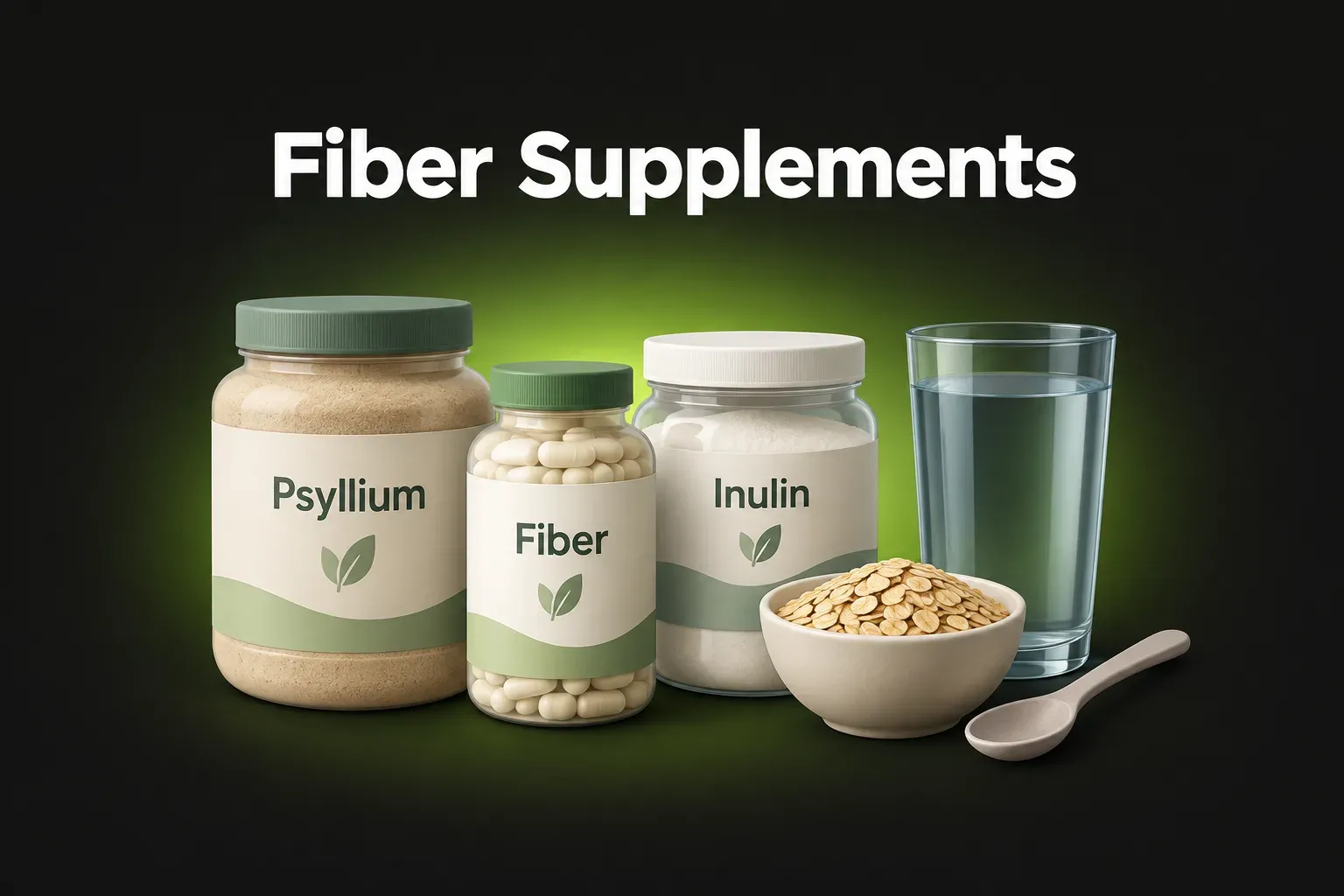
Most Americans get only about half the fiber they need, so fiber supplements have become very popular. But there are many different kinds – psyllium, methylcellulose, wheat dextrin, inulin, glucomannan – and they don’t all do the same thing. Here’s what each type does, what the studies show and how to choose.
The short answer: psyllium husk has by far the most evidence. It helps with constipation and IBS, lowers LDL cholesterol and improves blood sugar in type 2 diabetes. Methylcellulose is a good choice for constipation if psyllium gives you gas. Inulin feeds gut bacteria but often causes gas. Glucomannan lowers cholesterol but doesn’t really help with weight loss. Whatever you take, drink plenty of water and start slowly. And remember that supplements don’t replace fiber from food.
Types of fiber supplements compared
| Supplement | What it is | Gas | Best evidence for |
|---|---|---|---|
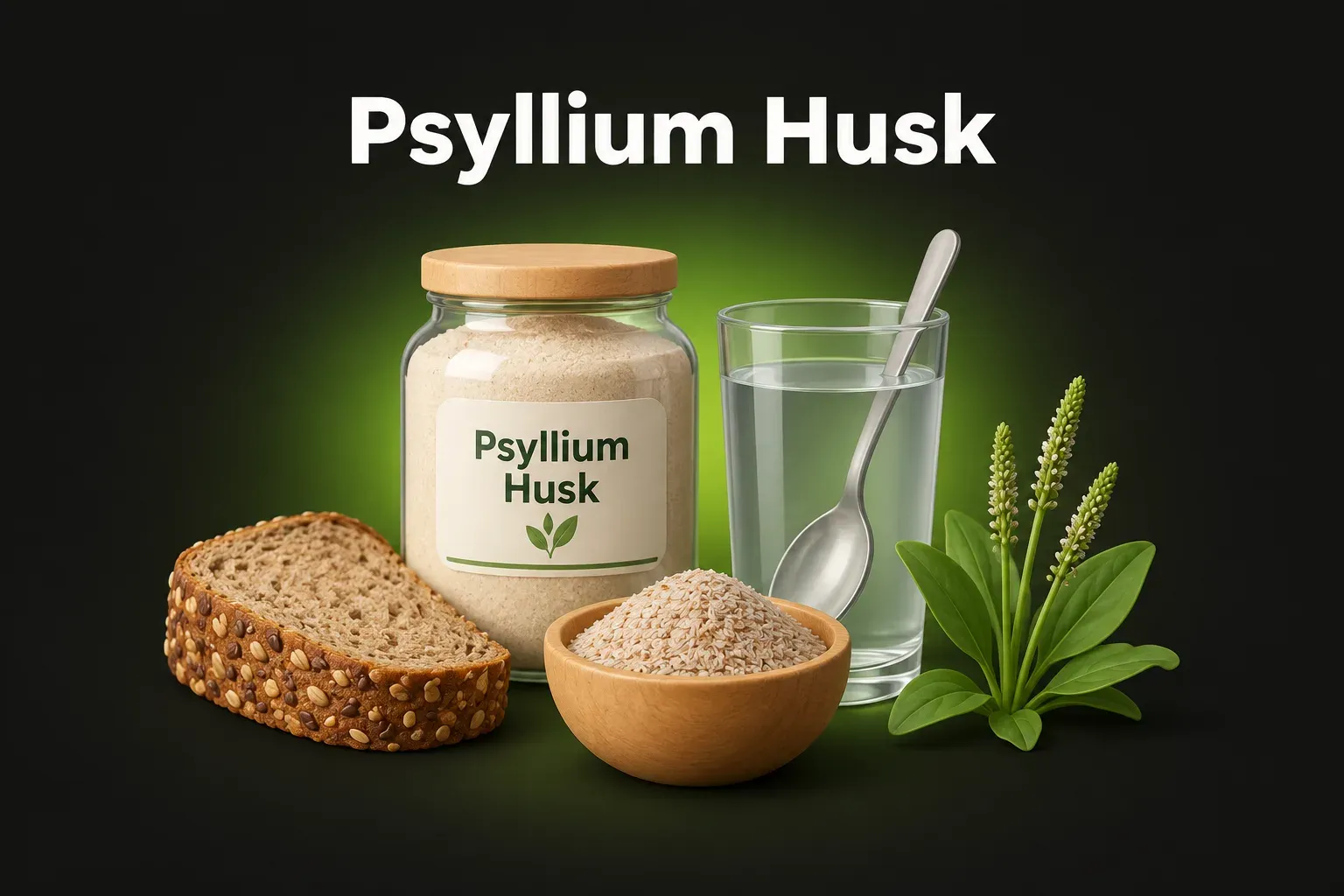
| Psyllium husk | Seed husk, soluble | Moderate | Constipation, IBS, cholesterol, blood sugar |
| Methylcellulose | Made from plant cellulose | Low | Constipation |
| Wheat dextrin | Made from wheat starch | Moderate | Adding fiber to drinks and food |
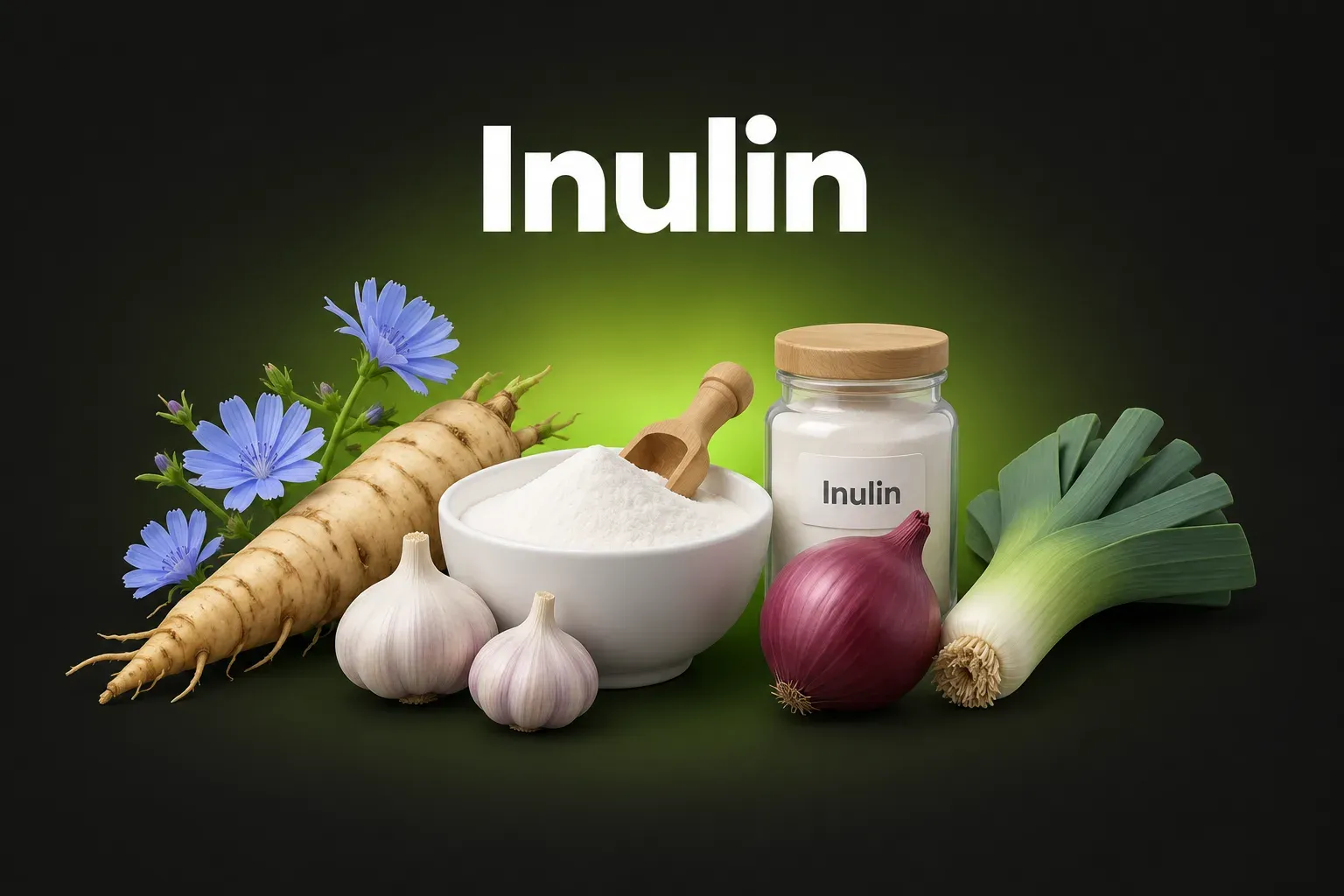
| Inulin | From chicory root | High | Feeding gut bacteria, mild help for constipation |
| Glucomannan | From konjac root | Moderate | Lowering cholesterol |
| Calcium polycarbophil | Made in a lab | Low | Constipation |
Soluble fibers dissolve in water. Gel-forming ones (psyllium, glucomannan) are the ones that lower cholesterol and slow the rise in blood sugar. Fermentable ones (inulin, wheat dextrin) feed your gut bacteria – which is good – but this also makes gas.
What the research says
Constipation
A 2022 review combined 16 trials with 1,251 people with chronic constipation. Fiber supplements helped: people had more bowel movements and softer stools. The best results came from psyllium, at doses above 10 g a day taken for at least 4 weeks. The downside was more gas (van der Schoot et al., American Journal of Clinical Nutrition, 2022).
Inulin helped a little in a small study: 44 people with constipation went from about 3 to 4 bowel movements a week (Micka et al., International Journal of Food Sciences and Nutrition, 2017). The study was funded by an inulin maker, and the effect was modest.
IBS
A review of 14 trials with 906 people with irritable bowel syndrome found that soluble fiber like psyllium helps, while wheat bran doesn’t (Moayyedi et al., American Journal of Gastroenterology, 2014). Fermentable fibers like inulin can make IBS bloating worse for some people.
Cholesterol
- Psyllium: about 10 g a day lowered LDL cholesterol by about 13 mg/dL in a review of 28 trials (Jovanovski et al., American Journal of Clinical Nutrition, 2018).
- Glucomannan: about 3 g a day lowered LDL cholesterol by about 10% in a review of 12 trials (Ho et al., American Journal of Clinical Nutrition, 2017).
Non-gel fibers like methylcellulose, wheat dextrin and inulin haven’t shown the same effect.
Blood sugar
In people with type 2 diabetes, psyllium taken before meals lowered fasting blood sugar by about 37 mg/dL and HbA1c by about 1 point in a review of 35 studies (Gibb et al., American Journal of Clinical Nutrition, 2015). If you take diabetes medicine, talk to your doctor first.
Weight loss
Here the evidence is weak. Glucomannan is often sold for weight loss, but a review of 9 trials found no meaningful weight loss compared with placebo – about 0.2 kg (half a pound) (Onakpoya et al., Journal of the American College of Nutrition, 2014). Fiber can help you feel fuller, but weight loss still comes from a calorie deficit.
How to choose a fiber supplement
| Your goal | Best choice |
|---|---|
| Constipation | Psyllium, or methylcellulose if psyllium gives you gas |
| IBS | Psyllium (soluble, not bran) |
| Lower cholesterol | Psyllium or glucomannan |
| Blood sugar | Psyllium before meals |
| Less gas | Methylcellulose or calcium polycarbophil |
| Fiber in drinks | Wheat dextrin (dissolves without thickening) |
Also check the label for:
- Sugar and sweeteners. Many flavored powders contain sugar or sweeteners like sucralose and aspartame. Choose unflavored when you can.
- Dose per serving. Gummies often have only 2–5 g of fiber, much less than the doses that worked in studies.
- Capsules vs powder. Capsules hold only about 0.5 g each, so you need many to reach a useful dose.
How to take fiber supplements safely
- Start small – for example, 1 teaspoon of psyllium (about 5 g) a day – and increase over 1–2 weeks.
- Drink a large glass of water with each dose, and enough water during the day.
- Keep them at least 2 hours apart from medicines, because fiber can reduce how well they’re absorbed.
- Be careful with glucomannan and psyllium tablets or capsules. These fibers swell a lot. Without enough water, they can cause choking or a blocked esophagus or gut. Some countries, like Australia, have banned glucomannan tablets for this reason.
- Don’t take them if you have trouble swallowing, a narrowing of the esophagus or intestines, or have had a bowel blockage.
Food first
Fiber supplements are useful, but fiber from food does more. Vegetables, fruit, beans, whole grains, nuts and seeds bring several kinds of fiber at once, plus vitamins, minerals and antioxidants. The US recommends 25 g of fiber a day for women and 38 g for men. See our list of high-fiber foods for easy ways to get there.
Track your fiber without guessing. With NutriSmart, you snap a photo of what you eat and the app counts calories, protein, carbs, fat and fiber, and shows how much you have left for the day.Get the app free
You can also read about polydextrose, a man-made fiber added to many “high fiber” foods.
The bottom line
If you need a fiber supplement, psyllium husk is usually the best choice: it has the strongest evidence for constipation, IBS, cholesterol and blood sugar. Methylcellulose is gentler if you get a lot of gas. Inulin feeds gut bacteria but often causes bloating, and glucomannan lowers cholesterol but won’t make you lose weight. Start with a small dose, drink plenty of water, keep it away from your medicines – and keep eating fiber-rich foods.
FAQ
What is the best fiber supplement?
For most people, psyllium husk. It has the most evidence: it helps with constipation and IBS, lowers LDL cholesterol and improves blood sugar in type 2 diabetes. If psyllium gives you too much gas, methylcellulose is a gentler option for constipation.
Are fiber supplements good for you?
They can help if you don't get enough fiber from food, have constipation or IBS, or want to lower your cholesterol. But they don't replace fiber from food: vegetables, fruit, beans and whole grains also bring vitamins, minerals and other plant substances that supplements don't have.
Is it OK to take a fiber supplement every day?
Yes, for most people. Many studies used fiber supplements every day for weeks or months. Take them with plenty of water, start with a small dose and increase slowly, and keep them at least 2 hours apart from medicines.
Do fiber supplements help with weight loss?
Not much. In a review of 9 trials, glucomannan – often sold for weight loss – didn't lead to a meaningful drop in weight compared with placebo. Psyllium didn't lower weight either in studies of people with diabetes. Fiber can help you feel fuller, but weight loss still comes from a calorie deficit.
What are the side effects of fiber supplements?
Gas and bloating are the most common, especially with inulin and at the start. Thick fibers like psyllium and glucomannan can cause choking or a blocked gut if taken without enough water. Fiber can also reduce how well some medicines are absorbed.
How much fiber should I eat a day?
In the US, the recommended amount is 25 g a day for women and 38 g for men (about 14 g per 1,000 calories). Most Americans get only about half that.