High Fructose Corn Syrup: Is It Worse Than Sugar?
What high fructose corn syrup (HFCS) is, how it's made, whether it's worse than sugar, what studies show about weight, cholesterol and cancer, and how to avoid it.
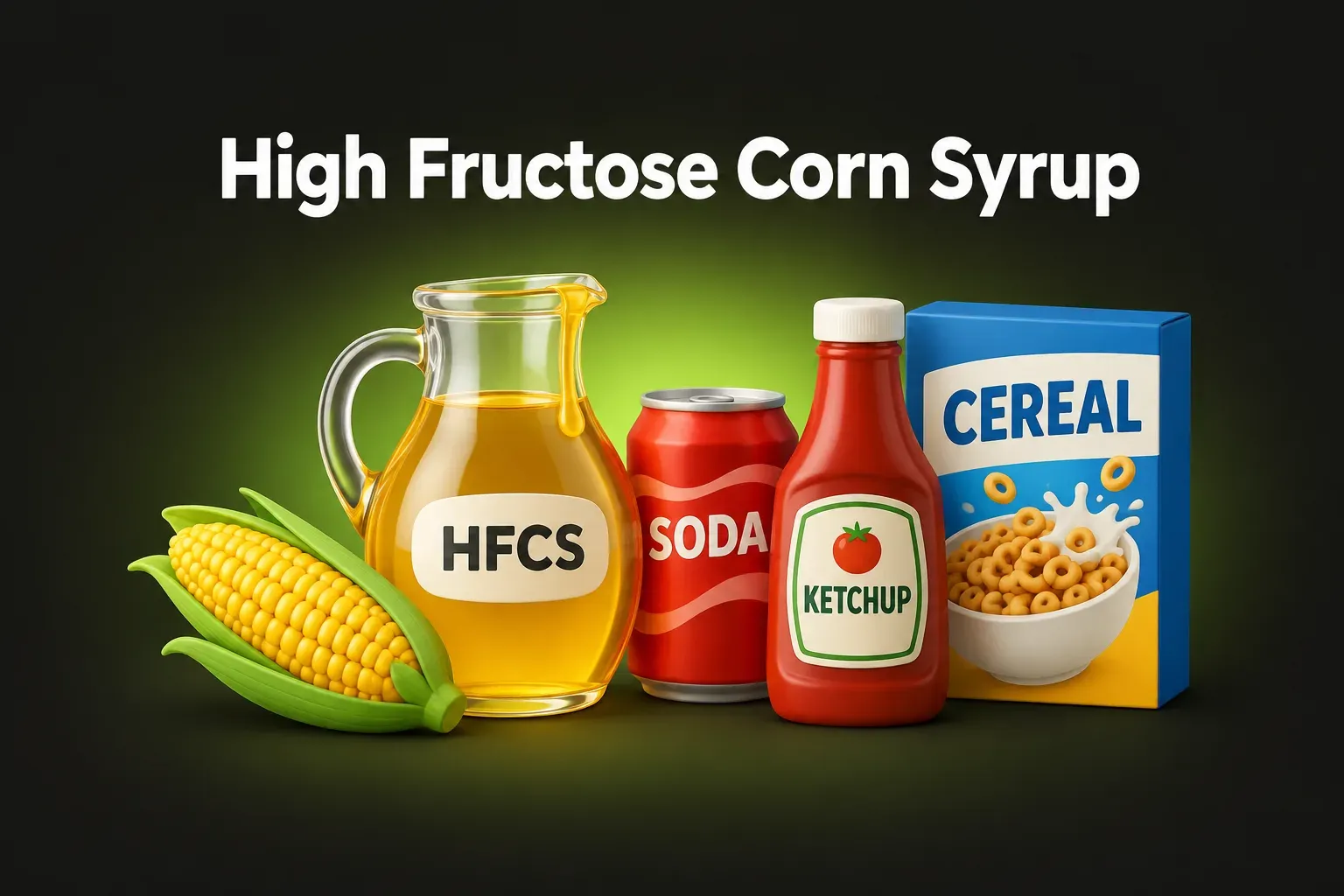
High fructose corn syrup (HFCS) is one of the most controversial ingredients in the American diet. It sweetens most soft drinks in the US and shows up in ketchup, cereals, bread and salad dressings. But is it really worse than ordinary sugar?
The short answer: HFCS and table sugar are very similar. Both are roughly half fructose and half glucose, and in people they act in much the same way. The real problem is how much we eat. HFCS is mostly found in sugary drinks and processed foods, which make it easy to eat far too much sugar. Studies link too much of it to higher cholesterol and blood fats, fat around the organs and fatty liver. In mice, HFCS made gut tumors grow larger. Cutting back is worth it – whether the sugar comes from corn or from sugar cane.
What is high fructose corn syrup?
HFCS is a liquid sweetener made from corn starch:
- Corn starch is broken down into glucose (corn syrup).
- Part of that glucose is turned into fructose, which tastes sweeter.
- The result is mixed to the right sweetness.
The two most common types are:
| Type | Fructose | Used in |
|---|---|---|
| HFCS‑55 | About 55% | Soft drinks |
| HFCS‑42 | About 42% | Baked goods, cereals, sauces, canned fruit |
| Table sugar (sucrose), for comparison | 50% | Everything |
Food makers like HFCS because it’s cheap (in the US, the government supports corn farmers). It’s also a liquid that mixes easily into drinks, and it keeps baked goods soft and moist for longer.
On labels, you’ll see it as:
- US: high fructose corn syrup, HFCS, corn syrup, isoglucose
- EU and UK: glucose-fructose syrup or fructose-glucose syrup (the name depends on which sugar there’s more of)
Is high fructose corn syrup worse than sugar?
HFCS-55 and table sugar are very close: both are about half fructose and half glucose. The main difference is that in table sugar the two are joined together, while in HFCS they’re separate. But your gut splits sugar into fructose and glucose within minutes anyway.
So for people, most experts agree HFCS is about as harmful as sugar – not much more and not much less. The bigger issue is that both are added sugars, and most people eat far too much of them.
That said, some animal research suggests HFCS may have extra effects:
- In a Princeton study, rats given HFCS gained more weight than rats given table sugar, even though they ate the same number of calories. Over months, they got more body fat and higher blood fats (Bocarsly et al., Pharmacology Biochemistry and Behavior, 2010).
What the research says about fructose and HFCS
Cholesterol and blood fats
In a careful study, young adults had drinks sweetened with HFCS for two weeks. Even when HFCS made up only 10% of their daily calories, their blood fats after meals went up. At higher amounts, their “bad” LDL cholesterol, triglycerides (blood fats) and uric acid rose too – all risk factors for heart disease (Stanhope et al., American Journal of Clinical Nutrition, 2015).
Belly fat and insulin
Overweight adults had drinks sweetened with fructose for 10 weeks. They gained fat around their organs (visceral fat), their liver made more fat and their insulin worked less well. People who had the same amount of glucose gained similar weight, but without the same harmful changes (Stanhope et al., Journal of Clinical Investigation, 2009). Fat around the organs and insulin that works less well are early steps toward type 2 diabetes and fatty liver disease.
Cancer in mice
In a 2019 study in Science, mice that easily get gut tumors were given a moderate daily amount of HFCS – roughly what a person gets from one can of soda. Their tumors grew much larger and more aggressive, even though the mice didn’t become obese. The tumors used the fructose as fuel to grow (Goncalves et al., Science, 2019). Another study found that fructose makes the gut take in more nutrients. This made mice on a high-fat diet gain more fat (Taylor et al., Nature, 2021).
These studies were done in mice and rats because they share most of their genes and many body processes with humans. And testing this on people would put their health at risk. They don’t prove the same effects in humans. But together with the human trials above, they’re a strong reason to limit drinks and foods sweetened with HFCS.
Which foods contain high fructose corn syrup?
- Drinks: soft drinks, fruit drinks, sports and energy drinks, sweetened iced teas
- Sweets: candy, cookies, cakes, ice cream toppings, syrups
- Breakfast: cereals, cereal bars, pancake syrup, flavored yogurts
- Sauces: ketchup, BBQ sauce, salad dressings, pasta sauces
- Bakery: packaged bread, buns and snack cakes
- Other: canned fruit in syrup, frozen meals, some “low-fat” products
How to cut back on high fructose corn syrup
- Start with drinks. One 12 oz (355 ml) soda contains about 39 g of sugar – more than many health organizations recommend for a whole day. Swap to water, sparkling water or unsweetened tea.
- Read the ingredient list for high fructose corn syrup, corn syrup, glucose-fructose syrup or isoglucose.
- Check the “added sugars” line on US labels – it includes HFCS and every other added sugar.
- Choose plain versions – plain yogurt, unsweetened cereal – and add fruit yourself.
- Don’t swap HFCS for “natural” syrups like agave, which is even higher in fructose. Less sugar is the goal, not a different sugar.
Spot high fructose corn syrup on any label in seconds. With NutriSmart, you photograph the ingredient list or scan the barcode, and the app tells you right away if the product has high fructose corn syrup. Turn on an alert for it, and the app warns you every time a product you scan contains it. You’ll also see every other additive, the risks of each one and a health score out of 100.Get the app free
You can also read about corn syrup, glucose syrup, maltodextrin and sugar alternatives such as sucralose and allulose.
The bottom line
High fructose corn syrup isn’t much worse than table sugar. Both are added sugars, and both are harmful in the amounts many people eat. Studies show that drinks sweetened with HFCS or fructose can raise cholesterol and blood fats and add fat around the organs. In mice, they helped tumors grow. The best move isn’t to hunt for a “better” sugar. It’s to drink fewer sweet drinks and eat fewer processed foods with added sugar of any kind.
FAQ
Is high fructose corn syrup worse than sugar?
Not by much. HFCS and table sugar are both roughly half fructose and half glucose, and in people they have similar effects. The real problem is the amount. HFCS is mostly in soft drinks and processed foods, and they make it easy to eat far more sugar than your body needs.
What is high fructose corn syrup made from?
It's made from corn starch. The starch is broken down into glucose. Then part of the glucose is turned into fructose, which is sweeter. The most common types contain 42% or 55% fructose.
Why is high fructose corn syrup bad for you?
Because it's an added sugar that's easy to have too much of, especially in drinks. In a trial, drinks sweetened with HFCS raised "bad" LDL cholesterol and blood fats within two weeks, even at 10% of daily calories. In mice, it made gut tumors grow larger.
Is HFCS banned in Europe?
No. In the EU it's allowed and appears on labels as glucose-fructose syrup or fructose-glucose syrup. It's used less than in the US, partly because the EU limited how much could be made until 2017.
Which foods contain high fructose corn syrup?
Mostly soft drinks, fruit drinks, sweetened iced teas, candy, breakfast cereals, cereal bars, ketchup and other sauces, salad dressings, flavored yogurts and packaged bread and baked goods.
Is fructose from fruit bad too?
No. Whole fruit contains fiber, water and vitamins, and its fructose reaches your blood slowly. It's very hard to eat as much fructose from fruit as from a large soft drink. Fruit juice is in between – keep it to a small glass.