Fatty Liver Diet: Foods to Eat, Foods to Avoid and a Menu
What to eat with fatty liver disease (MASLD), which foods and drinks to avoid, how much weight loss helps, what studies say about coffee, and a sample menu.
Fatty liver disease is now the most common liver disease in the world – it affects about one in three adults. Most people don’t know they have it, because it rarely causes symptoms until the liver is badly damaged. The good news: food and weight loss are the main treatment, and they work.
The short answer: a fatty liver diet is about losing weight if you’re overweight and eating like the Mediterranean diet: lots of vegetables, legumes, whole grains, fish, nuts and olive oil. Avoid sugary drinks, sweets, refined carbs, fried and ultra-processed food and alcohol. In a large study, people who lost 10% of their weight saw the liver inflammation disappear in 90% of cases. Coffee – more than 3 cups a day – is linked to a lower risk. There’s no magic food or detox: steady changes in what and how much you eat are what heal the liver.
What is fatty liver disease?
Fatty liver means too much fat builds up in the liver cells. In 2023, doctors renamed it MASLD (metabolic dysfunction-associated steatotic liver disease), replacing the old name NAFLD (Rinella, Gastroenterology & Hepatology, 2023). It’s linked to:
- overweight, especially belly fat
- type 2 diabetes or high blood sugar
- high blood pressure and high triglycerides
A review of studies from 17 countries estimated that about 32% of adults worldwide have fatty liver – more men than women – and that the number keeps rising (Riazi et al., Lancet Gastroenterology & Hepatology, 2022).
In some people, the fat causes inflammation (MASH, formerly NASH), which can lead to scarring (fibrosis), cirrhosis and even liver cancer. Fatty liver also raises the risk of heart disease and type 2 diabetes.
Weight loss: the most important step
In a study from Cuba, 293 people with liver inflammation (NASH) were helped to change their lifestyle for a year, and had liver biopsies before and after:
- of those who lost at least 10% of their weight, 90% had the inflammation disappear and 45% had less scarring
- of those who lost at least 5%, 58% had the inflammation disappear
- the more weight people lost, the more the liver healed (Vilar-Gomez et al., Gastroenterology, 2015)
For someone who weighs 90 kg, that’s 4.5–9 kg. Aim to lose 0.5–1 kg a week – crash diets and fasting can make liver inflammation worse. Read about how a calorie deficit works.
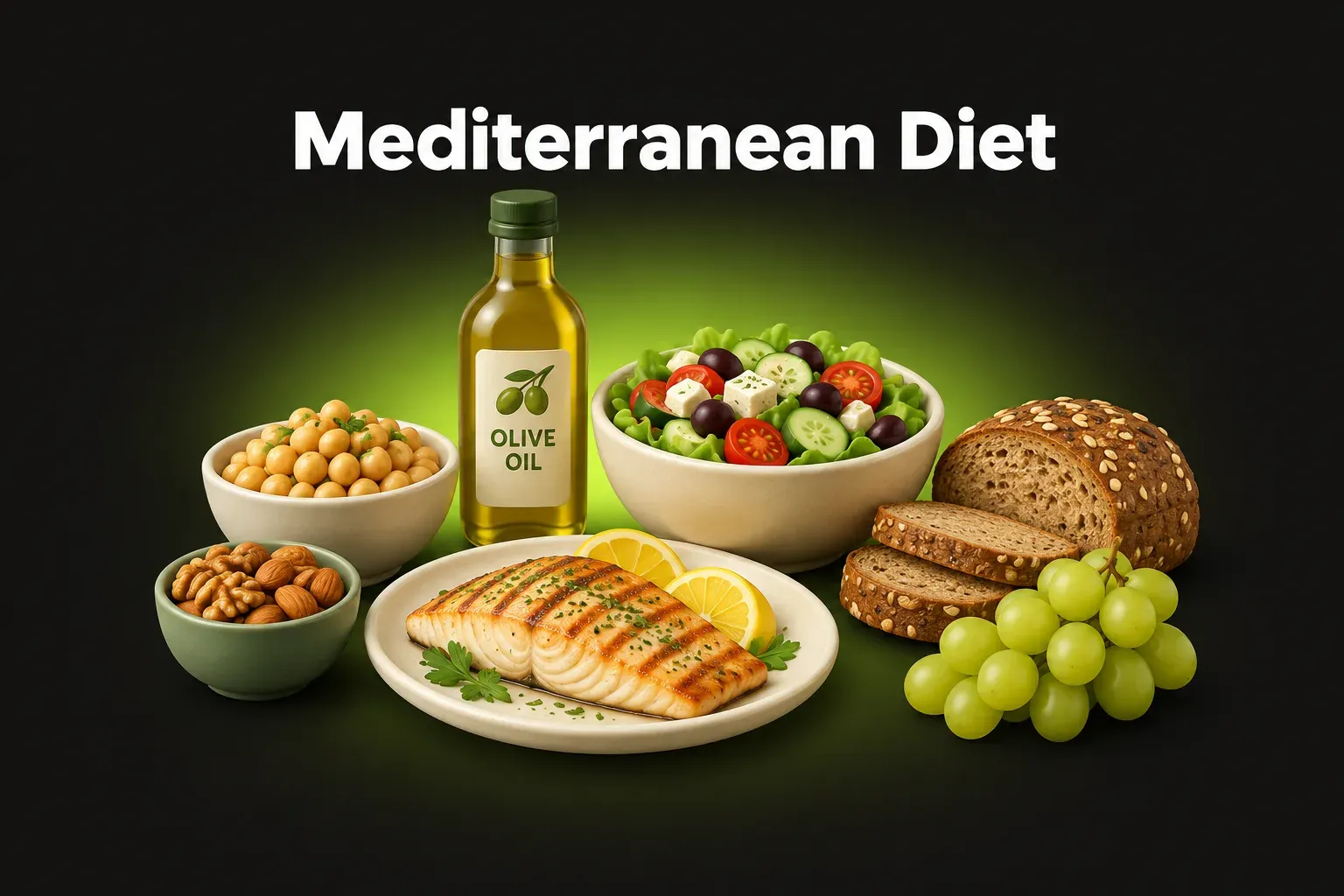
What to eat: the Mediterranean diet
The Mediterranean diet has the most evidence for fatty liver. In a small study, people with fatty liver who followed it for six weeks had 39% less liver fat, compared with 7% on a low-fat diet – even without losing weight (Ryan et al., Journal of Hepatology, 2013). A later trial found similar results for the Mediterranean and a healthy low-fat diet (George et al., Liver International, 2022) – so the overall quality of the diet matters more than the exact style.
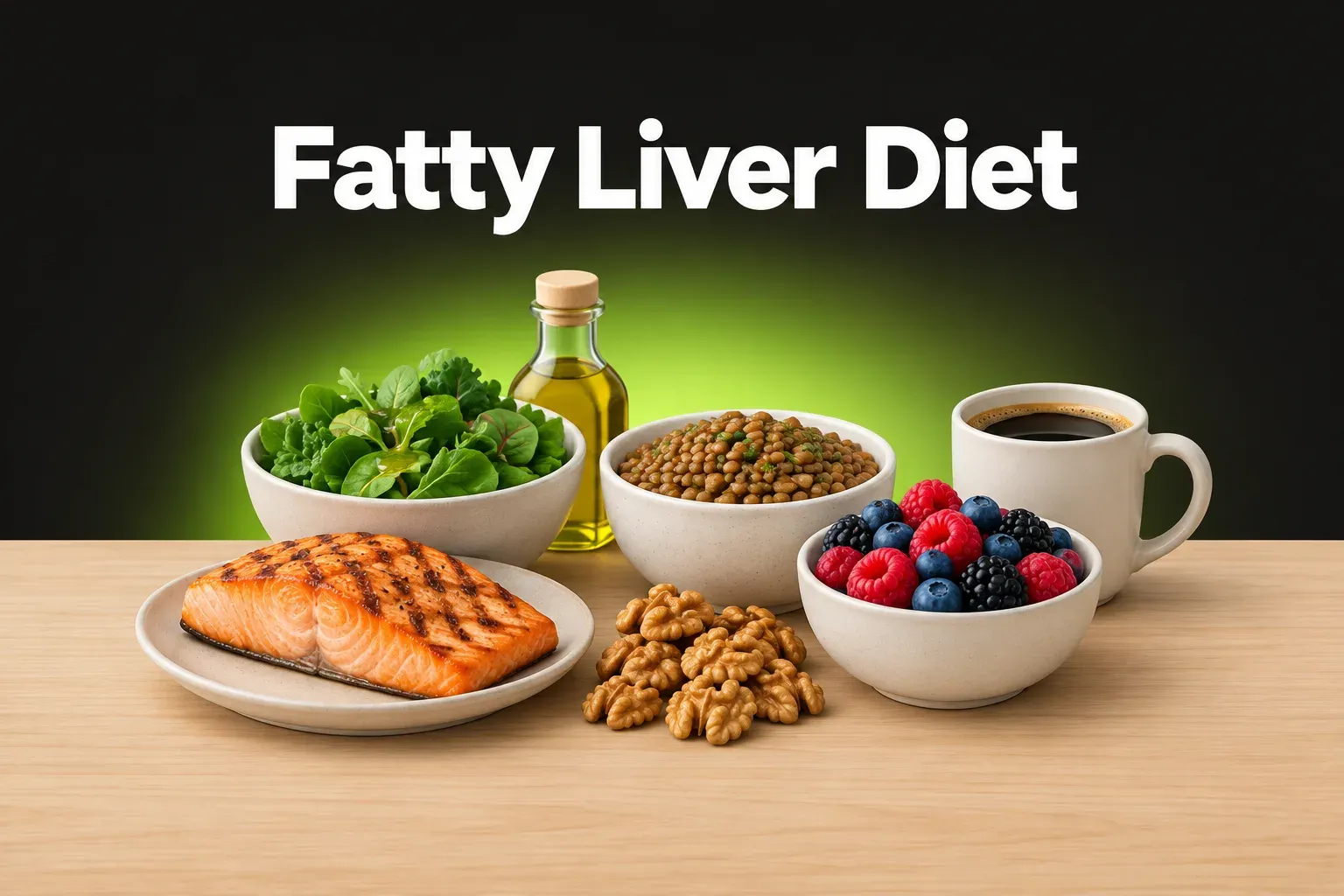
Foods to eat
| Food group | Examples | Why |
|---|---|---|
| Vegetables | Leafy greens, broccoli, peppers, tomatoes | Fiber, few calories |
| Legumes | Lentils, beans, chickpeas | Fiber and plant protein |
| Whole grains | Oats, brown rice, whole-grain bread | Slower rise in blood sugar |
| Fish | Salmon, sardines, mackerel | Omega‑3 fats |
| Nuts and seeds | Walnuts, almonds, chia seeds | Healthy fats, fiber |
| Olive oil | Extra virgin olive oil | Healthy fats, polyphenols |
| Lean protein | Chicken, eggs, Greek yogurt, tofu | Keeps you full, protects muscle |
| Fruit | Berries, apples, citrus | Fiber – whole fruit, not juice |
| Coffee | Black or with a little milk | Linked to lower risk |
Foods and drinks to avoid
- Sugary drinks and fruit juice – in the Framingham Heart Study, people who drank sugary drinks every day had 61% higher odds of fatty liver. Diet soda wasn’t linked to it (Ma et al., Journal of Hepatology, 2015).
- Sweets, cookies and pastries – sugar and refined flour are turned into fat in the liver
- White bread, white rice and refined cereals – eat whole-grain versions instead
- Fried food and fast food
- Processed meat – sausages, bacon, deli meat
- Ultra-processed snacks and ready meals – read about ultra-processed foods
- Alcohol – it damages the liver on its own; ask your doctor whether you should stop completely
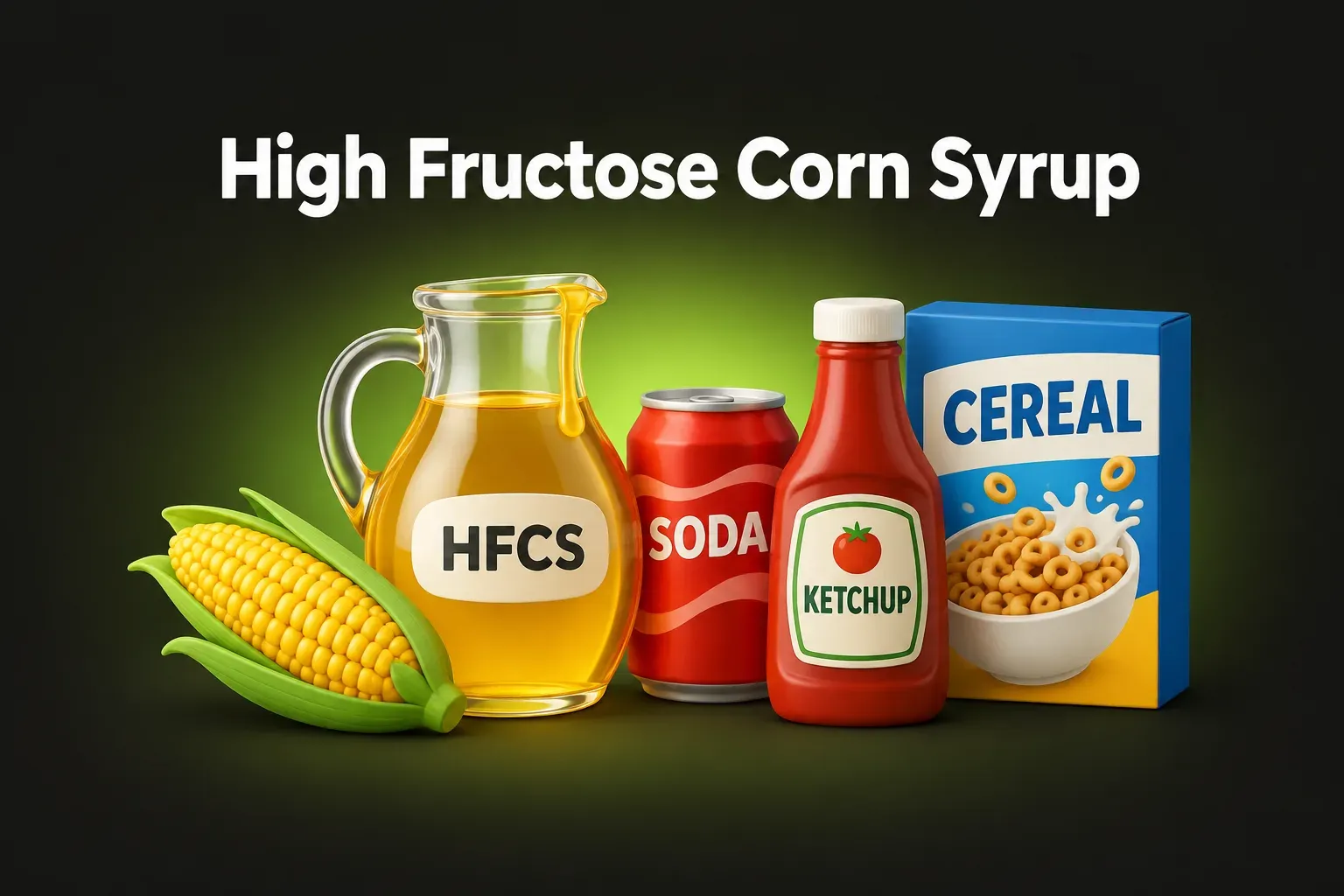
- Products with high fructose corn syrup – see high fructose corn syrup
Coffee and fatty liver
A review of seven studies with almost 55,000 people found that drinking more than 3 cups of coffee a day was linked to a lower risk of fatty liver disease (Chen et al., Clinical Nutrition, 2019). These are observational studies, so they don’t prove coffee protects the liver. But coffee seems to be a good habit – as long as it’s not loaded with sugar and syrups.
A sample day on a fatty liver diet
| Meal | What to eat |
|---|---|
| Breakfast | Oatmeal with berries, walnuts and plain Greek yogurt; black coffee |
| Snack | An apple and a handful of almonds |
| Lunch | Lentil and vegetable soup, a large salad with olive oil, a slice of whole-grain bread |
| Snack | Carrot and cucumber sticks with hummus |
| Dinner | Baked salmon with roasted vegetables and a small portion of brown rice or quinoa |
Other things that help
- Exercise: 150 minutes a week of brisk walking or other activity lowers liver fat, even without weight loss. Strength training helps too.
- Sleep and stress: poor sleep is linked to weight gain and insulin resistance.
- Check your medicines and supplements with your doctor – some herbal supplements can harm the liver.
- Regular check-ups: blood tests and a liver scan (like FibroScan) show how your liver is doing.
There’s no proven “liver detox” drink, tea or supplement. Your liver heals when the extra fat goes away.
See what you eat, without counting by hand. With NutriSmart, you take a photo of what you eat and the app counts calories, protein, carbs, fat and fiber, and shows how much you have left for the day – so you can reach a steady calorie deficit and see where the sugar in your day comes from.Get the app free
The bottom line
Fatty liver disease affects about one in three adults, but it can often be reversed. Losing 7–10% of your weight is the most powerful treatment, and a Mediterranean-style diet helps even before the weight comes off. Cut sugary drinks, sweets, refined carbs, fried and ultra-processed food and alcohol, and fill your plate with vegetables, legumes, whole grains, fish, nuts and olive oil. Coffee seems to help. Talk to your doctor about check-ups – and start with small changes you can keep.
FAQ
What is the best diet for fatty liver?
There's no single best diet, but the Mediterranean diet has the most evidence: vegetables, fruit, legumes, whole grains, fish, nuts and olive oil, with little red and processed meat, sugar and refined carbs. Most important is losing weight if you're overweight – losing 7–10% of your weight can reverse much of the damage.
Which foods should you avoid with fatty liver?
Sugary drinks and fruit juice, sweets, white bread and pastries, fried food, processed meat, ultra-processed snacks and alcohol. Sugar – especially fructose from drinks – and refined carbs are turned into fat in the liver.
How much weight loss reverses fatty liver?
In a study of 293 people with fatty liver inflammation (NASH), 90% of those who lost at least 10% of their weight saw the inflammation disappear, and 45% had less scarring. Even 5% weight loss helped many people.
Is coffee good for fatty liver?
It seems to be. A review of studies found that people who drank more than 3 cups of coffee a day had a lower risk of fatty liver disease. Drink it black or with a little milk – sugary coffee drinks don't count.
Can fatty liver be reversed?
Yes, often. Liver fat can drop within weeks of eating better and losing weight, and even early scarring can improve. Advanced scarring (cirrhosis) is much harder to reverse, so the earlier you start, the better.
What is MASLD?
MASLD (metabolic dysfunction-associated steatotic liver disease) is the new name for non-alcoholic fatty liver disease (NAFLD), adopted in 2023. It means fat builds up in the liver in people with at least one metabolic problem, such as overweight, high blood sugar, high blood pressure or high blood fats.