Mediterranean Diet: Food List, 7-Day Meal Plan & Studies
The Mediterranean diet made simple: what to eat and how often, a full food list, a 7-day meal plan and what studies show about your heart and weight.
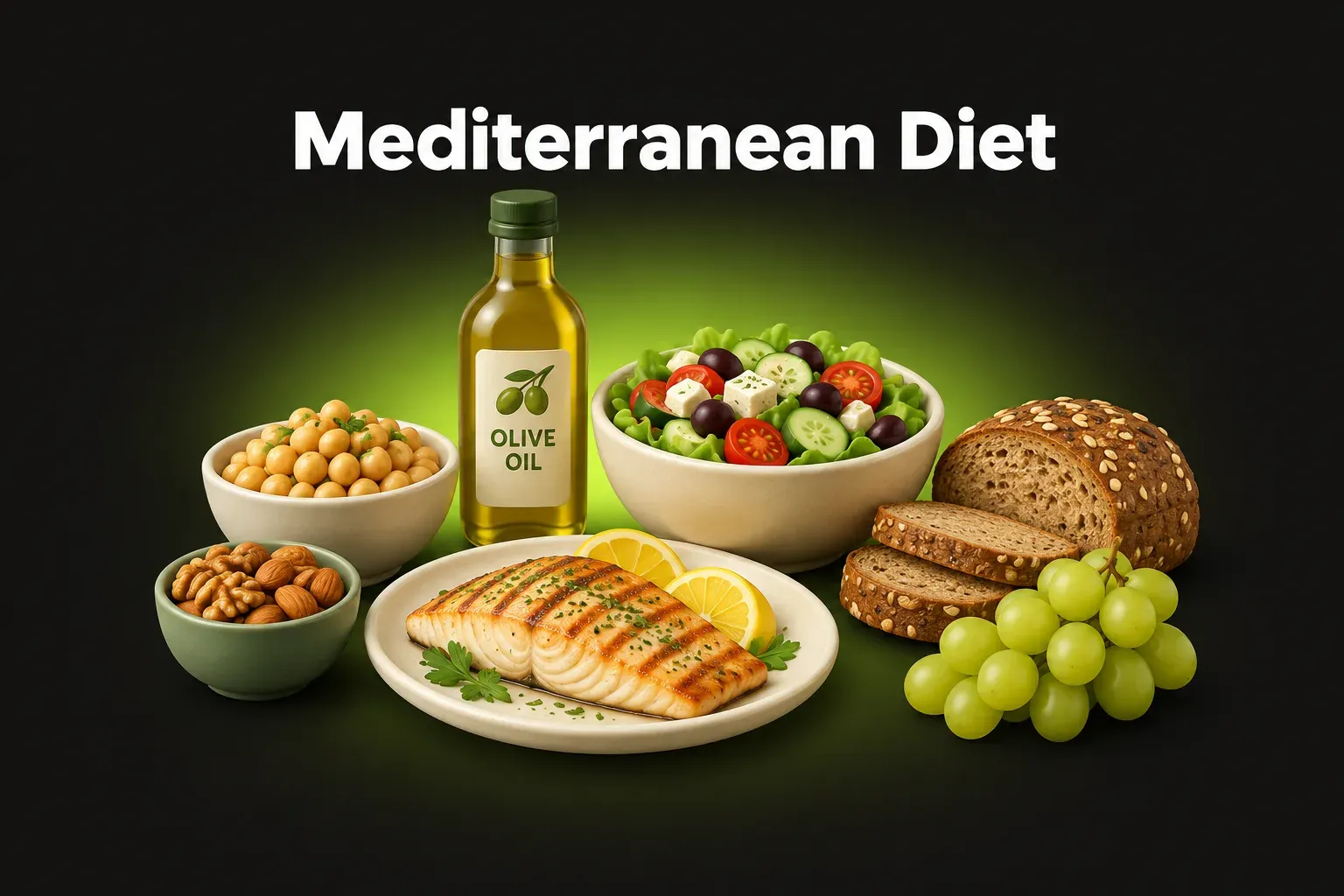
The Mediterranean diet is one of the most studied ways of eating in the world. It has no strict rules, and you don’t have to weigh every bite. You fill your plate with vegetables, beans, whole grains, fish and olive oil, and you eat red meat and sweets only now and then. Large studies link it to fewer heart attacks and strokes, less diabetes and a longer life. The US Dietary Guidelines even list a “Healthy Mediterranean-Style” eating pattern as one of their recommended options.
The short answer: on the Mediterranean diet you eat every day vegetables, fruit, whole grains, olive oil and a handful of nuts. A few times a week you eat fish, beans, chicken, eggs, yogurt and cheese. Rarely you eat red meat, processed meat and sweets. In a large trial in Spain, people who followed it had about 30% fewer heart attacks, strokes and deaths from heart disease. Below you’ll find a full food list and a 7-day meal plan with foods from any US grocery store.
What is the Mediterranean diet?
The Mediterranean diet is the way people around the Mediterranean Sea ate in the middle of the last century, mainly in Greece (on the island of Crete), southern Italy and Spain. In the 1950s and 1960s, researchers noticed that these people had far less heart disease than Americans or northern Europeans. And that was even though they ate quite a lot of fat – but mostly from olive oil, not from meat and butter.
In 2010, UNESCO added the Mediterranean diet to its list of the world’s cultural heritage. That’s because it’s more than a list of foods. It also means home-cooked meals, eaten slowly with other people, and moving your body every day.
What to eat and how often
| How often | What you eat |
|---|---|
| At every meal | Vegetables, fruit, whole grains (whole-grain bread, oats, brown rice, bulgur), olive oil |
| Every day | A handful of nuts or seeds, some yogurt or cheese, garlic, onions and herbs instead of a lot of salt |
| At least 2 times a week | Fish, especially fatty fish (salmon, sardines, mackerel, trout) |
| At least 3 times a week | Beans, lentils, chickpeas, peas |
| A few times a week | Chicken or turkey, eggs |
| Rarely | Red meat (beef, pork), processed meat, butter, sweets, sugary drinks, ultra-processed foods |
Your main drink is water. Coffee and tea are fine, without much sugar.
Mediterranean diet food list
| Group | Examples |
|---|---|
| Vegetables | Tomatoes, peppers, cucumbers, eggplant, zucchini, cabbage, spinach, lettuce, onions, garlic, broccoli |
| Fruit | Apples, pears, grapes, plums, oranges, berries, figs |
| Whole grains | Whole-grain bread, oats, brown rice, bulgur, farro, whole-wheat pasta |
| Beans and lentils | Chickpeas, lentils, black beans, white beans, peas, hummus |
| Fats | Extra virgin olive oil, olives, avocado |
| Nuts and seeds | Walnuts, almonds, pistachios, pumpkin seeds, sunflower seeds, sesame |
| Fish | Salmon, sardines, mackerel, trout, tuna |
| Dairy | Plain Greek yogurt, feta, mozzarella, a little hard cheese |
| Poultry and eggs | Chicken, turkey, eggs |
| Herbs and spices | Parsley, basil, thyme, oregano, rosemary, paprika, black pepper, lemon |
What you limit: red meat, processed meat (bacon, sausage, deli meat), a lot of butter and cream, pastries, soda, white bread and ultra-processed foods. Read why in our guide to ultra-processed food.
What the studies show
Your heart: the PREDIMED trial
The best-known study on the Mediterranean diet was done in Spain. Researchers followed 7,447 people at high risk of heart disease for about 5 years. They were split into three groups:
- a Mediterranean diet plus extra virgin olive oil (each family got about 1 liter a week)
- a Mediterranean diet plus nuts (about 1 oz, or 30 g, a day)
- a low-fat diet, for comparison
Both Mediterranean groups had about 30% fewer heart attacks, strokes and deaths from heart disease (Estruch et al., New England Journal of Medicine, 2018). The study was published again in 2018, after mistakes were found in how some people were put into groups. The researchers redid the math, and the results stayed almost the same.
After a heart attack
In a study in Lyon, France, 605 people who had already had a heart attack got either the Mediterranean diet or the usual advice. Over about 4 years, those on the Mediterranean diet had 50–70% fewer new heart problems (de Lorgeril et al., Circulation, 1999).
Women: 12 years of follow-up
A US study followed almost 26,000 healthy women for up to 12 years. The women who ate the most “Mediterranean” had up to 28% less heart disease. Part of the benefit came from less inflammation, better blood sugar and a lower weight (Ahmad et al., JAMA Network Open, 2018).
A longer life
Researchers combined studies with more than 1.5 million people. The more “Mediterranean” people ate, the lower their risk of death, heart disease, cancer and diseases like Parkinson’s and Alzheimer’s (Sofi et al., BMJ, 2008). These studies show a link, not proof. People who eat well often have other healthy habits too.
Olive oil on its own also seems to matter. A study followed more than 90,000 Americans for 28 years. People who used more than half a tablespoon of olive oil a day had a 19% lower risk of death than people who rarely or never used it (Guasch-Ferré et al., Journal of the American College of Cardiology, 2022).
Diabetes
In one part of the PREDIMED trial, 418 people without diabetes were followed for 4 years. On the Mediterranean diet, they got type 2 diabetes about 50% less often than on the low-fat diet (Salas-Salvadó et al., Diabetes Care, 2011). And that was without losing weight. The diet has lots of fiber and little added sugar, so your blood sugar rises more slowly. Learn more in our guide to low glycemic index foods.
Can you lose weight on the Mediterranean diet?
Yes, but only if you eat fewer calories than you burn. Olive oil and nuts are healthy, but they’re high in calories: one tablespoon of oil has about 120 calories.
In a 2-year study, 322 people with overweight followed one of three diets. On the Mediterranean diet they lost 9.7 lb (4.4 kg) on average, on a low-carb diet 10.4 lb (4.7 kg) and on a low-fat diet 6.4 lb (2.9 kg) (Shai et al., New England Journal of Medicine, 2008). In people with diabetes, the Mediterranean diet also improved blood sugar.
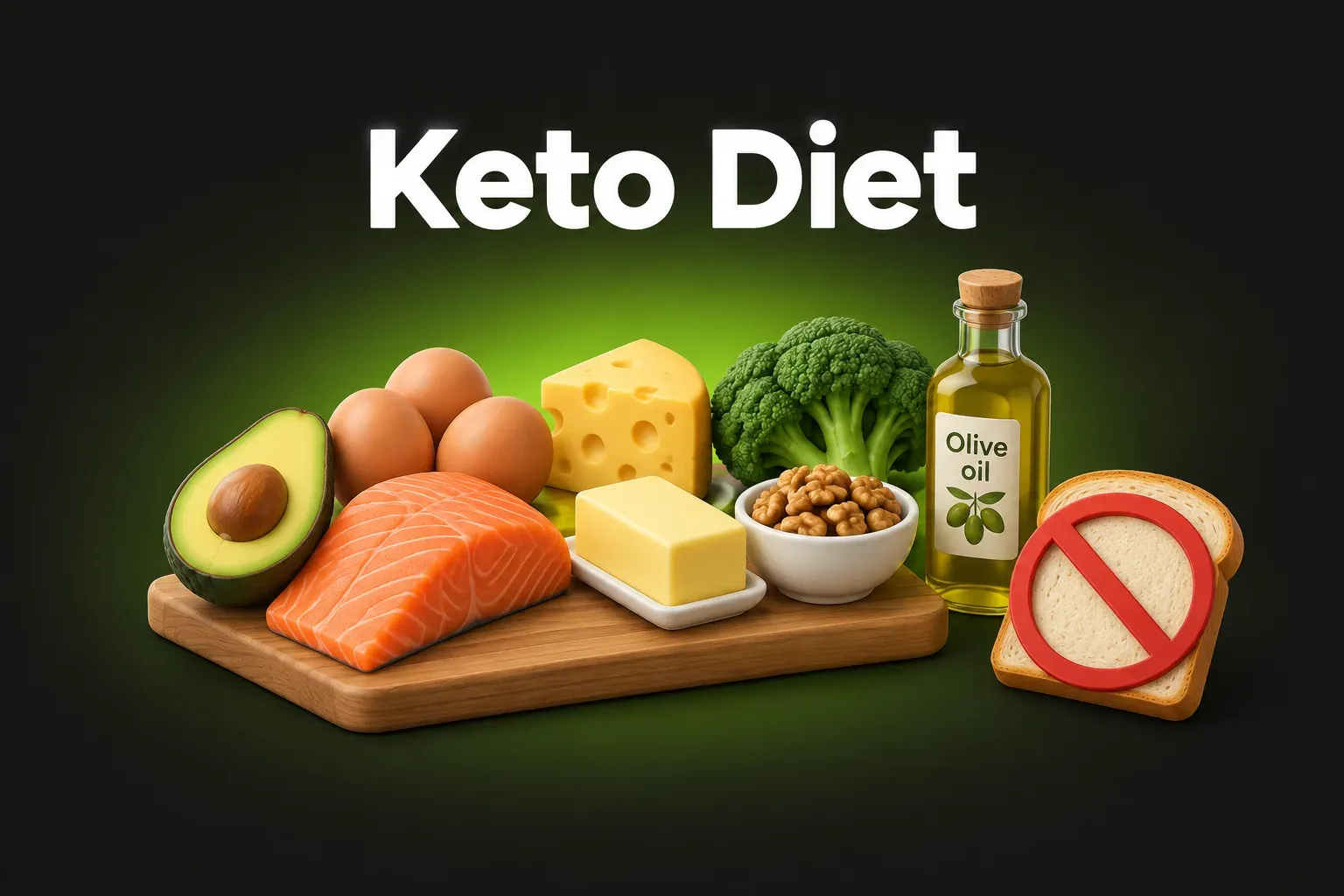
Its big advantage: it doesn’t ban whole food groups, so you can stick with it for years. If you want to lose weight, find your number with our free calorie calculator and read how a calorie deficit works. If you’re thinking about a stricter diet, read our guide to the keto diet too.
What about wine?
A glass of red wine with dinner is part of the tradition around the Mediterranean. But you don’t need to start drinking to follow this diet. The World Health Organization says that no amount of alcohol is safe for health. Even a little alcohol raises the risk of some cancers (WHO, 2023). The benefits of the Mediterranean diet come from the food: vegetables, beans, fish, nuts and olive oil.
7-day Mediterranean diet meal plan
A simple example with foods from any grocery store:
| Day | Breakfast | Lunch | Dinner |
|---|---|---|---|
| Monday | Greek yogurt with berries and walnuts | Lentil soup, cabbage salad with olive oil | Baked salmon with roasted vegetables |
| Tuesday | Oatmeal with milk, apple and cinnamon | Chickpea salad with tomatoes, cucumber, red onion and olive oil | Spinach omelet with a slice of whole-grain toast |
| Wednesday | Whole-grain toast with hummus and tomato | Grilled chicken with bulgur and salad | Minestrone soup with a little feta |
| Thursday | Boiled eggs, tomato, peppers and whole-grain toast | Black bean and vegetable stew | Sardines on whole-grain toast with a green salad |
| Friday | Greek yogurt with oats and plums | Whole-wheat pasta with tomato sauce, tuna and olives | Greek salad with olive oil |
| Saturday | Vegetable omelet | Baked white fish with small potatoes and salad | Pumpkin soup with seeds |
| Sunday | Avocado toast with an egg | Chicken and roasted vegetables with brown rice | White bean salad with herbs |
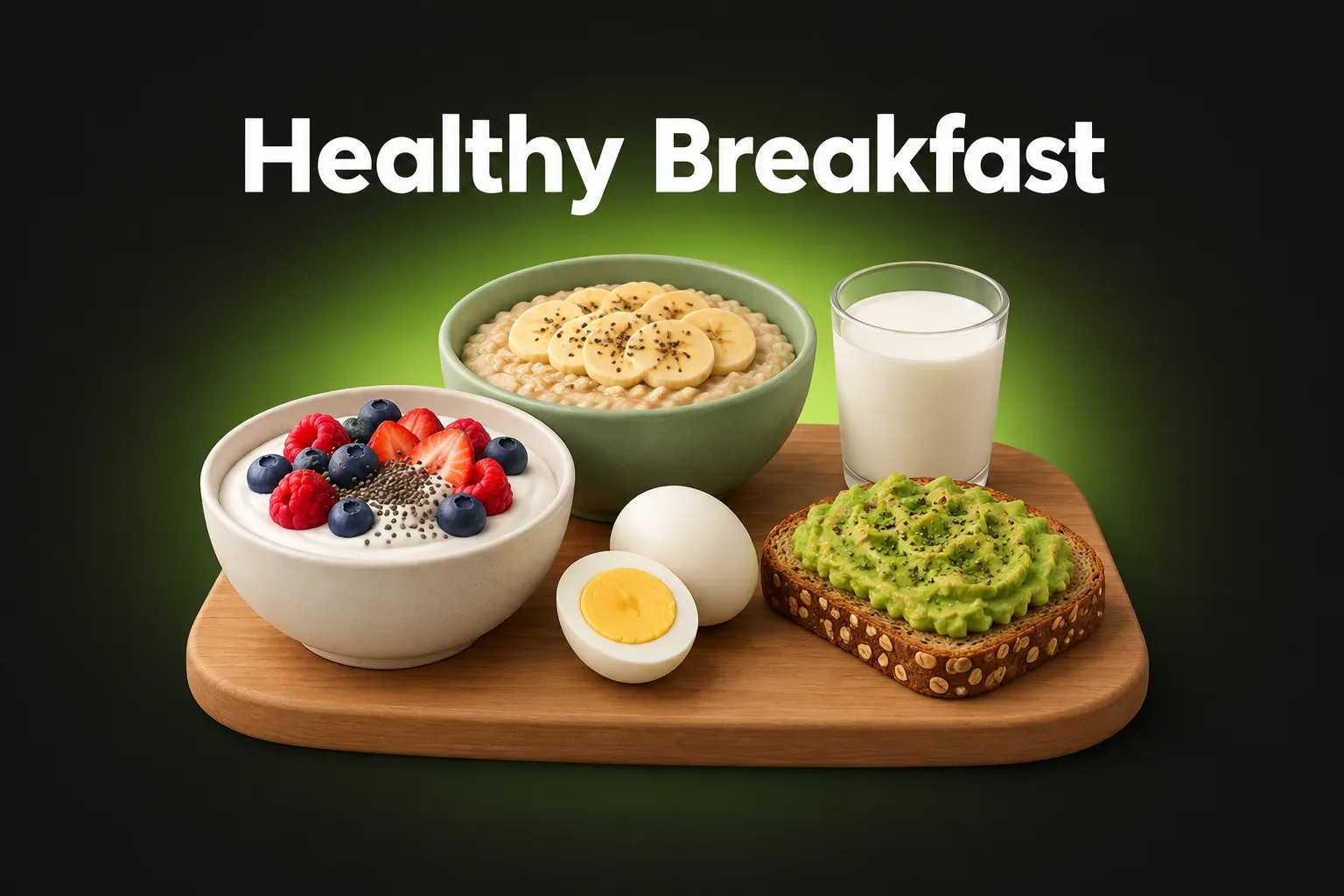
Snacks: a handful of nuts or almonds, a piece of fruit, plain yogurt, raw vegetables with hummus. More ideas in our lists of high protein snacks and healthy breakfast ideas.
Eating Mediterranean on a budget
You don’t need expensive ingredients. These cheap foods do most of the work:
- Canned beans, lentils and chickpeas – rinse them to remove some of the salt.
- Canned fish like sardines, salmon and tuna give you healthy omega-3 fats for little money.
- Frozen vegetables and berries are as healthy as fresh ones.
- Oats, brown rice and dried lentils cost little and keep for months.
- Olive oil is the biggest cost. Use it for salads and cooking, and use canola oil for high-heat cooking if you want to save money. Read more about canola oil.
- Cheese is fine in small amounts, but it’s high in salt and fat.
How to start
- Switch your fat: use extra virgin olive oil for salads and cooking instead of butter.
- Add vegetables to every meal – at least half your plate.
- Eat beans at least 3 times a week – lentil soup, chickpea salad, hummus.
- Eat fish at least twice a week, especially fatty fish.
- Choose whole grains instead of white bread and white rice.
- Have a handful of nuts a day instead of cookies or chips.
- Keep red meat and sweets for now and then, not every day.
- Move every day and, when you can, eat with other people.
Track your meals without guessing. With NutriSmart, you take a photo of what you eat and the app counts the calories, protein, carbs, fat and fiber, and shows you what’s left for the day.Get the app free
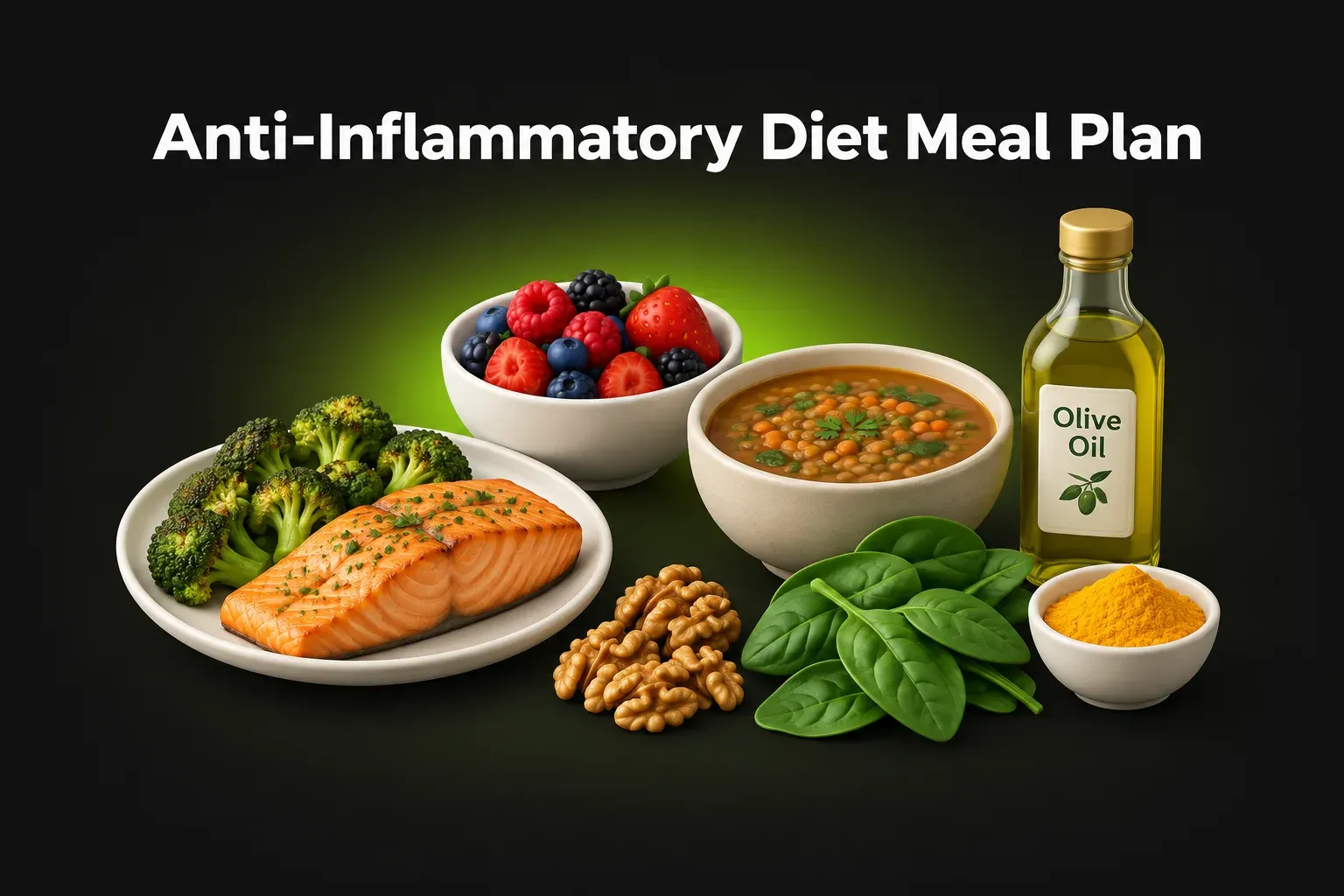
For more ideas, see our lists of high fiber foods, healthy breakfast ideas and our anti-inflammatory diet meal plan. To split your calories into protein, carbs and fat, use the macro calculator.
More quick weeknight ideas in the same spirit: our healthy dinner ideas.
The bottom line
The Mediterranean diet isn’t a quick fix. It’s a way of eating for life. Put vegetables, fruit, whole grains, beans, fish, nuts and olive oil at the center of your meals, and eat red meat, processed meat and sweets only now and then. Large studies link it to less heart disease, less diabetes and a longer life. And because it doesn’t ban anything, it’s one of the few diets you can keep for good.
FAQ
What is the Mediterranean diet?
It's the way people around the Mediterranean Sea used to eat, for example in Greece, southern Italy and Spain. It has lots of vegetables, fruit, whole grains, beans, nuts and olive oil. Fish comes a few times a week, while red meat, processed meat and sweets are rare. It isn't a strict diet, but a way of eating you can keep for life.
What foods do you eat on the Mediterranean diet?
Every day: vegetables, fruit, whole grains, olive oil and a handful of nuts or seeds. A few times a week: fish, beans and lentils, chicken, eggs, yogurt and some cheese. Rarely: red meat, processed meat, sweets and sugary drinks.
Can you lose weight on the Mediterranean diet?
Yes, if you eat fewer calories than you burn. In a 2-year study, people on a Mediterranean diet lost 9.7 lb (4.4 kg) on average, people on a low-carb diet 10.4 lb (4.7 kg) and people on a low-fat diet 6.4 lb (2.9 kg). Its big advantage is that it's easy to stick with for years.
Is the Mediterranean diet good for your heart?
Yes, it has some of the strongest evidence of any diet. In the PREDIMED trial in Spain, people at high risk who followed it had about 30% fewer heart attacks, strokes and deaths from heart disease than people on a low-fat diet.
Do you have to drink wine on the Mediterranean diet?
No. Wine is part of the tradition around the Mediterranean, but you don't need to start drinking. The World Health Organization says no amount of alcohol is safe for health. The benefits of the diet come from the food.
What's the difference between the Mediterranean diet and keto?
Keto cuts out almost all carbs, including bread, fruit and beans. The Mediterranean diet keeps them but chooses whole-grain versions. It has more fiber, is easier to follow long term and has more evidence for heart health.