Keto Diet: Food List, 7-Day Meal Plan and Risks
What the keto diet is, a keto food list (what to eat and avoid), a 7-day keto meal plan, how much weight you really lose and what studies show.
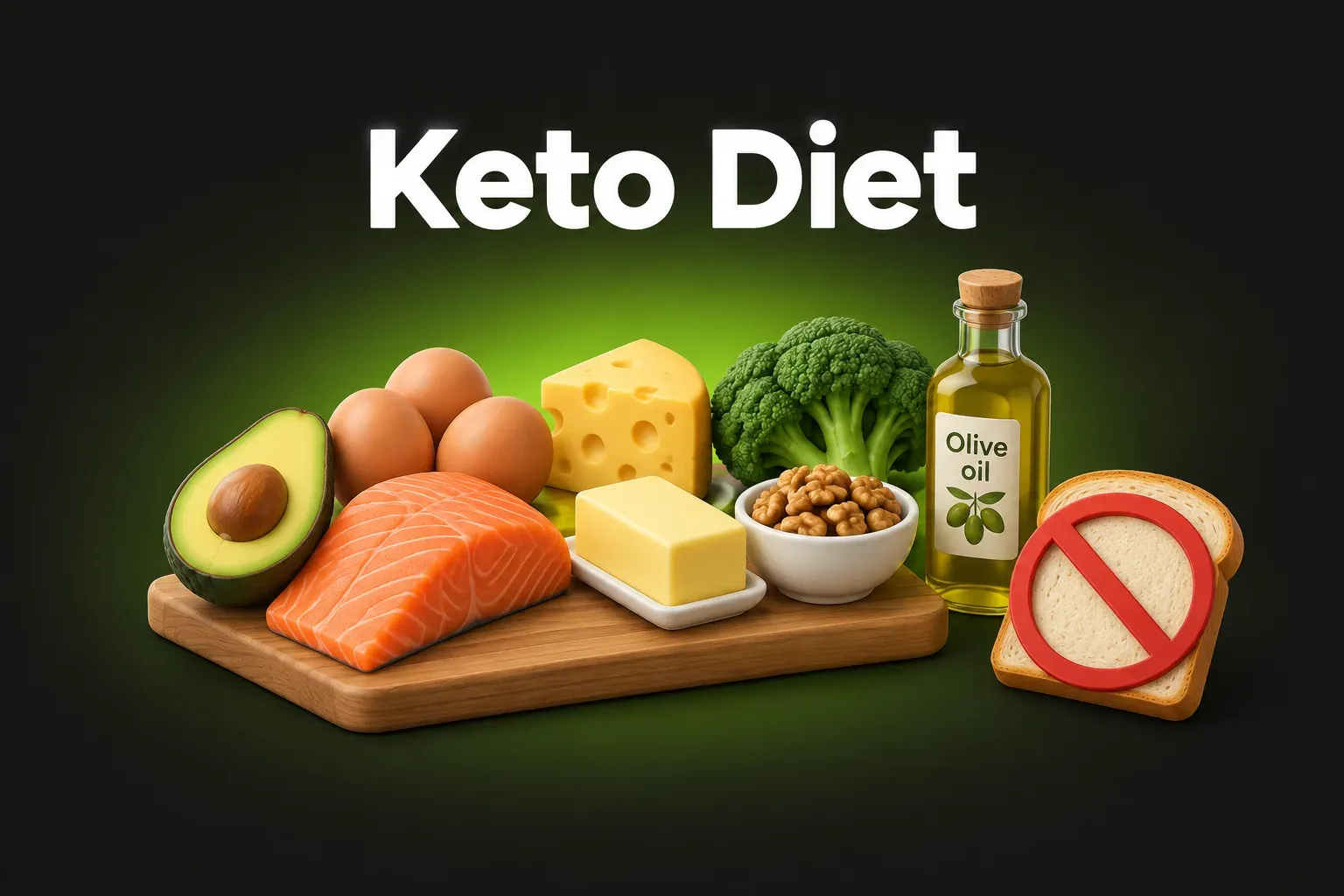
The keto diet is one of the most popular weight-loss diets: no bread, pasta or sweets, but plenty of eggs, cheese, meat and avocado. Many people say they lost weight fast on it. But what really happens in your body, what can you eat – and what do long-term studies show?
Quick answer: the keto diet has very few carbs (under 20–50 g a day), lots of fat and a medium amount of protein. Your body switches to ketosis and burns more fat. You lose weight fast at first, but much of it is water. Over the long term, keto doesn’t make you lose much more weight than other diets with the same calories. In many people it raises LDL cholesterol, and it’s low in fiber. Animal studies also show liver and blood sugar problems when it’s followed for a long time. It can work for some people, but it’s not a magic fix.
What is the keto diet?
The keto (or ketogenic) diet was first used in medicine, for children with epilepsy who don’t respond to medication. Today it’s mostly used for weight loss.
Normally, your body runs mainly on glucose from carbs. When you eat very few carbs for a few days, your glucose stores run out. Your liver then starts turning fat into ketones, which your brain and muscles can use for energy. This state is called ketosis.
A classic keto diet looks roughly like this:
| Nutrient | Share of daily calories | Per day (at 2,000 kcal) |
|---|---|---|
| Fat | 70–80 % | 155–180 g |
| Protein | 15–20 % | 75–100 g |
| Carbs | 5–10 % | 20–50 g |
To give you an idea: one slice of bread has about 15–20 g of carbs. One banana has about 25 g. That’s almost all you can have in a day.
Keto food list: what to eat
The values below are net carbs (carbs minus fiber), approximate, per 100 g (3.5 oz), from the U.S. Department of Agriculture database (USDA FoodData Central).
| Food (100 g) | Net carbs |
|---|---|
| Meat, fish, chicken | 0 g |
| Butter, olive oil | 0 g |
| Eggs | 1 g |
| Cheddar, aged cheese | 1–2 g |
| Spinach | 1.5 g |
| Avocado | 2 g |
| Zucchini | 2 g |
| Lettuce, cucumber | 2–3 g |
| Cauliflower | 3 g |
| Sour cream | 3–4 g |
| Broccoli | 4 g |
| Full-fat Greek yogurt | 4 g |
| Raspberries, strawberries | 5–6 g |
| Walnuts | 7 g |
| Almonds | 9 g |
In short, the best keto foods are: meat, fish, eggs, cheese, butter, cream, oils, avocado, olives, nuts and seeds, plus vegetables that grow above ground and contain little starch.
Foods to avoid on keto
| Food (100 g) | Net carbs |
|---|---|
| Sugar | 100 g |
| White bread | 45–50 g |
| Cooked rice | 28 g |
| Cooked pasta | 25–30 g |
| Banana | 20 g |
| Boiled potatoes | 17 g |
| Cooked beans, lentils | 12–15 g |
| Apple | 12 g |
| Beer (100 ml) | 3.5 g |
Avoid: bread, pasta, rice, potatoes, cereal, sweets, soda and other sweetened drinks, beer, most fruit, dried fruit and beans (including lentils and chickpeas). Watch out for ready-made sauces, too – ketchup and barbecue sauce, for example, contain a lot of sugar.
What fruits can you eat on keto?
Only a few: raspberries, blackberries and strawberries (a handful a day), avocado, lemon and olives. Bananas, grapes, apples, pears and dried fruit have too much sugar.
Keto diet plan: 7-day meal plan
A simple example with everyday foods. Each day has roughly 30 g of net carbs or less.
| Day | Breakfast | Lunch | Dinner |
|---|---|---|---|
| Monday | 3-egg omelet with spinach and cheese | Grilled chicken salad with avocado and olive oil | Baked salmon with broccoli and butter |
| Tuesday | Full-fat Greek yogurt with raspberries and walnuts | Lettuce-wrap burger with cheese and pickles | Pork chop with green salad and cucumber |
| Wednesday | Fried eggs with bacon and tomato | Tuna salad with mayo, lettuce and olives | Roasted chicken thighs with cauliflower |
| Thursday | Mushroom and cheese omelet | Greek salad with feta | Sausages with mustard and sauerkraut |
| Friday | Greek yogurt with chia seeds | Creamy zucchini soup | Grilled fish with sautéed spinach |
| Saturday | Scrambled eggs with avocado | Steak salad with arugula and parmesan | Chicken with mushrooms and cream, with mashed cauliflower |
| Sunday | Cream cheese pancakes (eggs and cream cheese) | Roast lamb with salad | Deviled eggs with roasted eggplant dip |
Keto snacks: a handful of nuts or almonds, a few olives, a cube of cheese, cucumber slices with cream cheese.
The first weeks on keto: what to expect
Many plans last 21 to 30 days. The first 2–3 weeks are when your body gets used to ketosis. In the first days you may get the so-called “keto flu”: tiredness, headaches, dizziness, cramps and constipation. What helps:
- plenty of water and a little extra salt, because you lose water and salt in the first days
- foods rich in potassium and magnesium: spinach, avocado, nuts, seeds
- lots of vegetables, for fiber
You don’t have to stay on keto afterwards. Many people then move to a diet with a few more carbs – but healthy ones: vegetables, beans, fruit and whole grains.
How much weight do you lose on keto? What studies show
The first week: mostly water
Your body keeps a store of carbs in your muscles and liver, called glycogen. Each gram of this store holds about 3 g of water. When you cut carbs, you lose the glycogen and the water – hence the 2–7 lb (1–3 kg) in the first week. When you go back to carbs, the water comes back too.
Long term: a little more than other diets
- An analysis of 13 studies followed people for at least a year. Those on keto lost on average 0.9 kg (2 lb) more than those on a low-fat diet (Bueno et al., British Journal of Nutrition, 2013).
- Another analysis, with 11 studies and 1,369 people, found 2.2 kg (5 lb) more after at least 6 months. But it also found a rise in LDL (“bad”) cholesterol (Mansoor et al., British Journal of Nutrition, 2016).
Ketosis doesn’t burn fat “by magic”
Researchers at the U.S. National Institutes of Health (NIH) kept 17 men in a clinic. They all got exactly the same calories: first on a higher-carb diet, then on keto. On keto, they lost fat more slowly, and they lost more muscle and water (Hall et al., American Journal of Clinical Nutrition, 2016).
In another NIH study, 20 adults ate as much as they wanted: two weeks on keto and two weeks on a low-fat diet made of plants. On the plant diet, they ate almost 700 calories less per day (Hall et al., Nature Medicine, 2021).
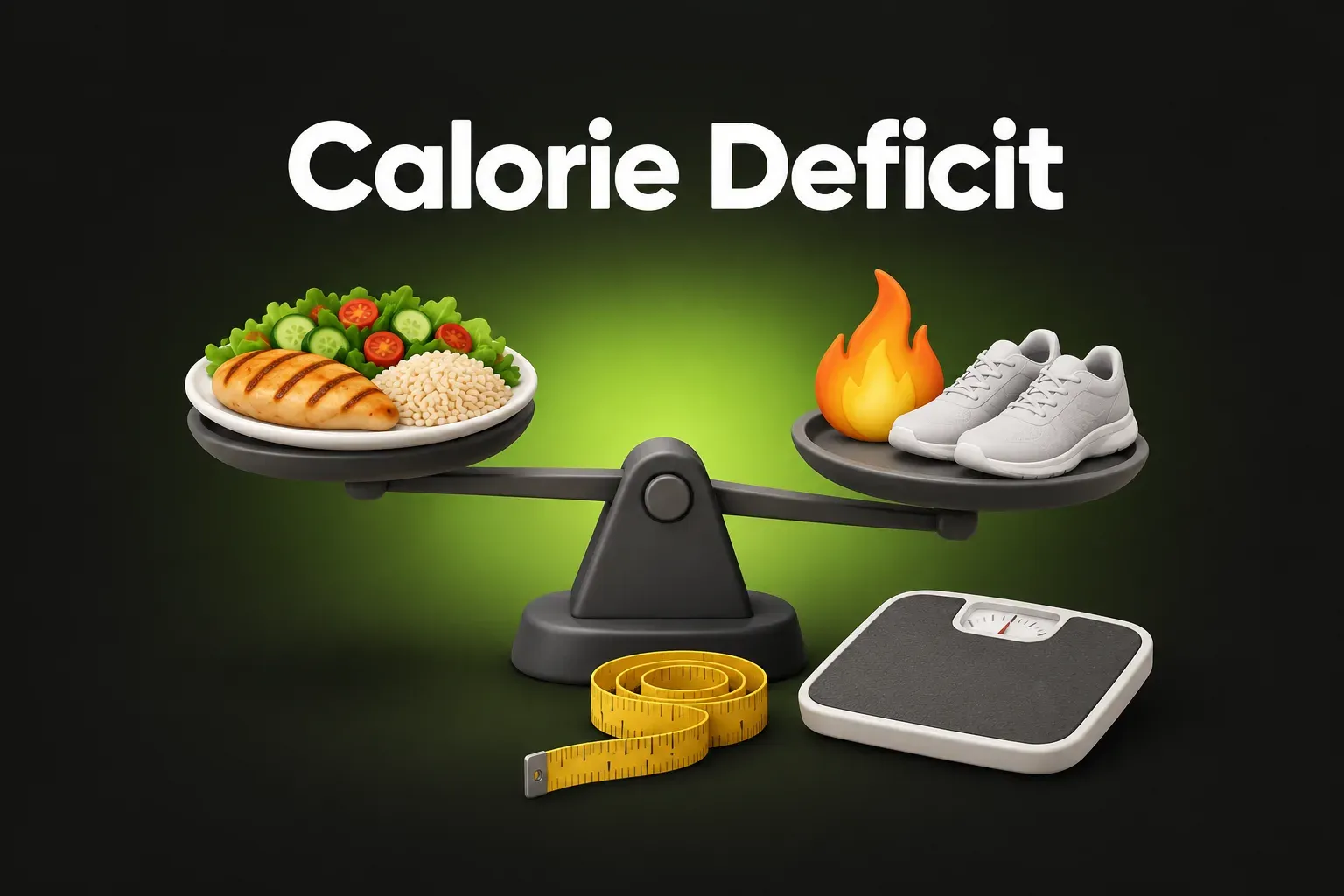
Bottom line: you lose weight on keto because you eat fewer calories – many people feel full more easily with fat and protein and stop eating sweets and pastries. It’s not a diet that makes you lose weight “without a calorie deficit”. Learn more in our article on the calorie deficit.
The risks of the keto diet
LDL cholesterol goes up in many people
A Stanford study followed 40 people with prediabetes or type 2 diabetes. Each person did 12 weeks of keto and 12 weeks of a Mediterranean diet. Long-term blood sugar (HbA1c) was the same. On keto, triglycerides (fats in the blood) fell more, but LDL cholesterol rose by 10%, while it fell by 5% on the Mediterranean diet (Gardner et al., American Journal of Clinical Nutrition, 2022). Keto also had less fiber and fewer vitamins. If you stay on keto for longer, get your cholesterol checked.
Liver and blood sugar: what animal studies show
Researchers at the University of Utah kept mice on a keto diet for a long time. At first they lost weight. But over time they got high blood fats, a fatty liver and very high blood sugar after meals, because the pancreas made too little insulin (Gallop et al., Science Advances, 2025).
Animal studies matter: mice share most of our genes and mechanisms, and testing this on people for years would put their health at risk. They don’t prove the same happens in humans, but they are a good reason not to stay on keto for years without medical check-ups.
Kidney stones
An analysis of 36 studies followed nearly 2,800 people on keto. After 3–4 years on average, about 6% had kidney stones (Acharya et al., Diseases, 2021). Drinking plenty of water helps.
Other side effects
- constipation – because of the low fiber
- “keto flu” in the first days
- breath that smells like acetone
- less energy for intense exercise
- it’s hard to stick to – many people quit after a few weeks
Who shouldn’t follow the keto diet
Don’t start keto without talking to your doctor if you:
- have type 1 diabetes or take diabetes medication (insulin, sulfonylureas or SGLT2 inhibitors) – the risk of low blood sugar or ketoacidosis (too many ketones in the blood, a medical emergency) is real
- take blood pressure medication
- have kidney, liver, pancreas or gallbladder disease
- are pregnant or breastfeeding
- have had an eating disorder
- are a teenager or have high cholesterol
Keto in medicine: epilepsy
This is where keto has solid evidence. A Cochrane review found that in children with epilepsy that doesn’t respond to medication, a keto diet can greatly reduce the number of seizures (Martin-McGill et al., Cochrane Database of Systematic Reviews, 2020). It’s only done under medical supervision.
If you want to try keto: tips
- Choose good fats: olive oil, avocado, nuts, seeds and oily fish – not just bacon, butter and processed meat.
- Eat lots of low-carb vegetables for fiber, vitamins and minerals.
- Skip ultra-processed “keto” products – keto bars, cookies and bread often contain sweeteners like erythritol and many additives.
- Drink plenty of water.
- Get blood tests (cholesterol, blood sugar) before you start and after a few months.
- Think about what comes next: how you eat after keto matters more than the first few weeks.
Count your carbs without guesswork. With NutriSmart, you snap a photo of what you eat, and the app counts your calories, carbs, protein, fat and fiber and shows how much you have left for the day.Get the app free
To find out how many calories you need to lose weight, use our free calorie calculator. For carbs that raise your blood sugar slowly, read our guide to low glycemic index foods, and if you’re considering another popular method, our article on intermittent fasting or the Mediterranean diet, which is easier to stick with long term.
Conclusion
The keto diet cuts almost all carbs and makes your body burn fat. You lose weight fast at first, but much of it is water. Over the long term, the results are only slightly better than other lower-calorie diets. In many people it raises LDL cholesterol, and it’s low in fiber. Animal studies also show liver and blood sugar problems over time. If you want to try it, choose good fats and lots of vegetables, get your blood checked, and talk to your doctor if you have a health condition or take medication.
FAQ
What is the keto diet?
The keto (ketogenic) diet is a very low-carb diet – usually under 20–50 g of carbs a day – with lots of fat and a medium amount of protein. Without carbs, your body starts burning fat and making ketones, which it uses for fuel. This state is called ketosis.
What foods can you eat on keto?
Meat, fish, eggs, cheese, butter, cream, olive oil, avocado, nuts and seeds, plus low-carb vegetables: spinach, lettuce, broccoli, cauliflower, zucchini, cucumber and peppers. Bread, pasta, rice, potatoes, sugar, sweets, soda, beer, most fruit and beans are out.
What fruits can you eat on keto?
Only a few, in small amounts: berries (raspberries, strawberries, blackberries), avocado, lemon and olives. Bananas, grapes, apples, pears and dried fruit have too much sugar for keto.
How much weight can you lose on keto?
You may lose 2–7 lb (1–3 kg) in the first week, but much of it is water. Over the long term, people lose about the same on keto as on other lower-calorie diets. After a year, they have lost on average only 2–5 lb (1–2 kg) more. You lose weight because you eat fewer calories, not because of ketosis itself.
Is the keto diet healthy?
It helps some people in the short term, especially with blood sugar and triglycerides. But in many people it raises LDL (“bad”) cholesterol, it's low in fiber, and some people get kidney stones. In mice, long-term keto led to a fatty liver and blood sugar problems. It isn't right for everyone – talk to your doctor first, especially if you have diabetes or take medication.
How long can you stay on keto?
Many plans last 21 days to a few months. Nobody knows for sure how safe keto is over many years. Many people follow it for a few weeks or months and then move to a diet with a few more carbs – but healthy ones, like vegetables, beans and whole grains.