Intermittent Fasting 16/8: Schedule, Benefits and Risks
What intermittent fasting is, the main schedules (16/8, 18/6, 20/4, 5:2), what you can drink, a 16/8 meal plan, how much weight you lose and the risks.
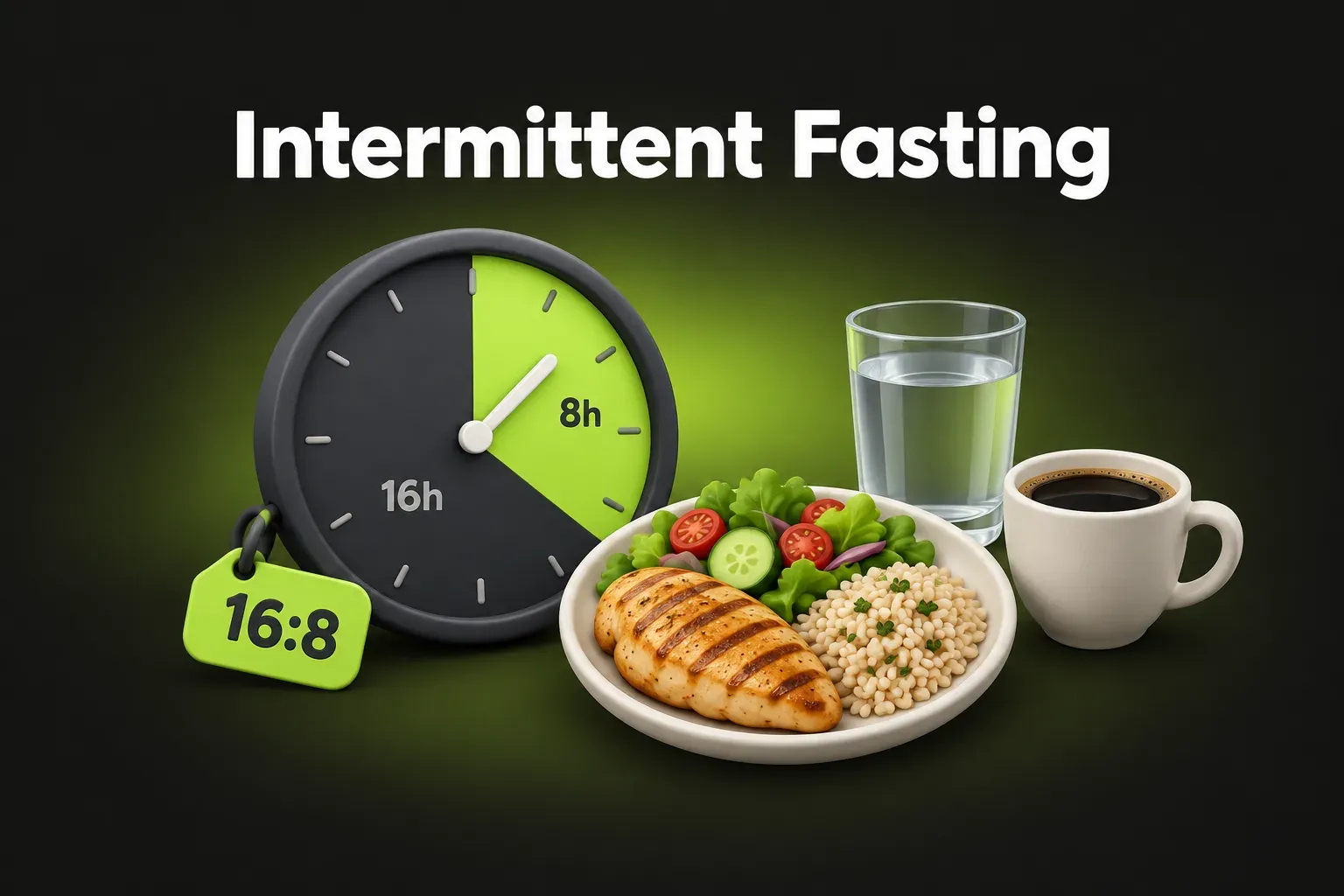
Intermittent fasting is one of the most popular ways to lose weight: it’s not just about what you eat, but when. The best-known version, 16/8, means you only eat for 8 hours a day. It sounds simple – but does it work better than a regular diet? And is it safe for everyone?
Quick answer: intermittent fasting means you have hours when you eat and hours when you don’t eat at all. While fasting, you can have water, tea and black coffee. In studies, intermittent fasting helps you lose about as much weight as a regular lower-calorie diet – not more. It works because you usually end up eating less. If it’s easier for you this way, it’s a good option. But it’s not right for everyone, and eating within less than 8 hours a day has been linked to more risks.
What is intermittent fasting?
Intermittent fasting isn’t a diet in the classic sense – it doesn’t tell you what to eat, but when. Your day is split into two parts:
- the fasting window: you eat nothing and only have calorie-free drinks
- the eating window: you eat your normal meals
Because a large part of the fast happens at night, 16 hours isn’t as hard as it sounds. For example: your last meal at 8 pm, then your first meal the next day at 12 pm.
Intermittent fasting schedules
| Type | How it works | Best for |
|---|---|---|
| 14/10 | 14 hours fasting, 10 hours eating | Beginners |
| 16/8 | 16 hours fasting, 8 hours eating | The most popular |
| 18/6 | 18 hours fasting, 6 hours eating | People used to 16/8 |
| 20/4 | 20 hours fasting, 4 hours eating | Very strict – usually 1–2 meals |
| 5:2 | 5 normal days, 2 days with 500–600 kcal | People who don’t want to fast daily |
| Alternate‑day fasting | One normal day, one day with very little food | Hard to stick to |
| 24‑hour fast | A whole day without food, 1–2 times a week | Only for healthy, experienced people |
Tip: start with 12/12 or 14/10 and move to 16/8 after 1–2 weeks.
What can you drink while fasting?
Allowed (doesn’t break the fast):
- water, still or sparkling
- unsweetened tea (green, black, herbal)
- black coffee, with no sugar or milk
Breaks the fast:
- coffee with milk, cream or sugar
- juice, including fresh juice
- milk, kefir, smoothies
- alcohol
- “small snacks” – even a handful of nuts has almost 200 calories
Diet drinks with sweeteners (diet cola, for example) have no calories, but they may make you crave sweets. Learn more in our article on aspartame.
How to do intermittent fasting the right way
- Choose a window that fits your schedule. For example 12 pm–8 pm, or 10 am–6 pm if you prefer to eat earlier. An earlier evening is usually better for sleep and blood sugar.
- Start slowly: 12 hours, then 14, then 16.
- Drink plenty of water while fasting.
- Eat real meals, not snacks: make your first meal rich in protein (eggs, cheese, chicken, fish, beans) and vegetables, so it keeps you full longer.
- Don’t make up for it: if you eat in 8 hours what you used to eat in 14, you won’t lose weight.
- Get enough protein – in studies, some people also lost muscle. Work out how much you need with our protein calculator.
- Stay active – especially strength training, to keep your muscles.
16/8 intermittent fasting meal plan
An example day with an eating window from 12 pm to 8 pm, around 1,600–1,800 calories:
| Time | Meal | What you eat |
|---|---|---|
| 8–11 am | Fasting | Water, tea or black coffee |
| 12 pm | First meal | 3-egg omelet with vegetables, a slice of whole-grain toast, a tomato |
| 4 pm | Snack | Greek yogurt with berries and a handful of nuts |
| 7:30 pm | Last meal | Chicken breast or fish, a big salad and rice or roasted potatoes |
| 8 pm–12 pm | Fasting | Water, tea |
More meal ideas: vegetable soup with whole-grain bread, a bean and vegetable chili, whole-wheat pasta with tuna and vegetables, cottage cheese with tomatoes and herbs, baked salmon with vegetables.
Need a full week of meals? Our 1500, 1800 and 2000 calorie meal plans work inside any eating window.
How much weight do you lose with intermittent fasting? What studies show
16/8 with no other diet
In the TREAT study, 116 overweight adults were split into two groups: some ate only between 12 pm and 8 pm, the others had three meals a day. After 12 weeks, the fasting group lost 0.94 kg (2 lb) and the other group 0.68 kg (1.5 lb) – the difference wasn’t reliable. Among those measured more closely, the fasting group also lost more muscle (Lowe et al., JAMA Internal Medicine, 2020).
Fasting plus a diet, for a year
In a study in China, 139 people with obesity all ate fewer calories for 12 months. Some ate only between 8 am and 4 pm. The fasting group lost 8 kg (18 lb), the other group 6.3 kg (14 lb) – again, no reliable difference in weight, body fat, waist size, blood pressure or other risk factors (Liu et al., New England Journal of Medicine, 2022).
Alternate-day fasting
In another study, 100 adults were followed for a year. Some did alternate-day fasting: one day with 25% of their calories, one day with 125%. The others ate 25% fewer calories every day. They lost the same amount, but more people quit alternate-day fasting: 38% compared with 29% (Trepanowski et al., JAMA Internal Medicine, 2017).
Bottom line: intermittent fasting works as well as a regular lower-calorie diet – not better. For some people it’s easier to skip breakfast than to count calories at every meal. For others it’s harder. Choose what you can stick to for the long term. If you do eat breakfast, make it a good one – here are some healthy breakfast ideas. Learn how weight loss really works in our article on the calorie deficit.
Intermittent fasting benefits
A review in the New England Journal of Medicine showed what fasting does in animals: the body uses sugar and fat better, inflammation goes down and life may be longer. In humans, some studies show that insulin works better, blood pressure goes down and people snack less at night (de Cabo and Mattson, New England Journal of Medicine, 2019). But many of these effects also appear when you lose weight with a regular diet.
The risks of intermittent fasting
Eating windows under 8 hours and the heart
A U.S. study followed almost 20,000 adults. Some ate all their food in less than 8 hours a day. They had a 2.35 times higher risk of dying from heart disease than people who ate over 12–14 hours (Chen et al., Diabetes & Metabolic Syndrome, 2025). The study only watched what people did – it shows a link, not proof, and the authors say it needs to be checked. But it’s a reason not to overdo very short windows like 20/4.
Hair: what studies in mice show
Researchers at Westlake University in China studied mice. Intermittent fasting stopped their hair from growing back: the cells that make hair grow died during fasting. A small study in people also found that hair grew more slowly with intermittent fasting (Chen et al., Cell, 2025).
Many effects can only be studied in animals first, because a long test on people would put their health at risk. Mice share most of our genes and mechanisms – which is why these studies are warning signs worth taking seriously.
Other side effects
- hunger, irritability and headaches in the first days
- muscle loss, if you eat too little protein
- eating too much in your eating window
- worse sleep, if you eat a lot very late
Who shouldn’t do intermittent fasting
Talk to your doctor first if you:
- have diabetes and take insulin or other drugs that lower blood sugar – the risk of low blood sugar (hypoglycemia) is real
- are pregnant or breastfeeding
- have had an eating disorder
- are underweight or under 18
- are older and frail
- take medication that must be taken with food
Is intermittent fasting worth it?
Yes, if: you’re not hungry in the morning, you like bigger meals, you want a simple rule instead of counting calories and you feel good doing it.
Not necessarily, if: you get very hungry and then overeat, you feel unwell, you do intense exercise in the morning or you have one of the issues above.
Intermittent fasting is a tool, not a miracle. What matters most stays the same: how many calories you eat in total and how good your food is.
Track what you eat in your window. With NutriSmart, you snap a photo of what you eat, and the app counts your calories, protein, carbs and fat and shows how much you have left for the day. So you know if you’re really in a deficit.Get the app free
To find out how many calories you need to lose weight, use our free calorie calculator. If you’re considering another popular diet, read our article on the keto diet.
Conclusion
Intermittent fasting means eating only during part of the day – most often 16/8. While fasting, you can have water, tea and black coffee. Studies show you lose about as much weight as with a regular lower-calorie diet, not more. It only helps if eating less is easier for you this way. Don’t overdo very short windows, eat enough protein and talk to your doctor if you have diabetes, are pregnant or have had an eating disorder.
FAQ
What is intermittent fasting?
Intermittent fasting means you only eat during a set window of time and eat nothing the rest of the day. The best-known type is 16/8: 16 hours without food (including the night) and an 8-hour eating window, for example from 12 pm to 8 pm.
What can you drink while fasting?
Water, sparkling water, unsweetened tea and black coffee, with no sugar or milk. Anything with calories – juice, milk, sugar, beer – breaks the fast. Diet drinks have no calories, but they may make you crave sweets.
How much weight can you lose with 16/8 fasting?
In studies, people lost about as much weight with 16/8 as people who simply ate less throughout the day. In a one-year study, people who fasted and dieted lost 8 kg (18 lb). People who only dieted lost 6.3 kg (14 lb). The difference was too small to be sure. You only lose weight if you eat fewer calories overall.
What should you eat on 16/8 intermittent fasting?
Normal, healthy meals: protein (eggs, chicken, fish, cheese, beans), plenty of vegetables, whole grains, fruit and healthy fats. Fasting doesn't mean you can eat anything in your 8-hour window – if you eat too much, you won't lose weight.
Does coffee break a fast?
Black coffee with no sugar or milk doesn't break your fast – it has only 2–3 calories per cup. Coffee with milk, cream or sugar has calories and does break the fast.
Is intermittent fasting dangerous?
For most healthy adults, a 12–16-hour fast is not dangerous. But it's not right if you have diabetes and take insulin or other drugs that lower blood sugar. It's also not right if you're pregnant, have had an eating disorder or are underweight. A large study linked eating windows under 8 hours to more deaths from heart disease – a link, not proof.