2000 Calorie Meal Plan: 7-Day Menu, Chart and List
A 7-day 2000 calorie meal plan with calories and protein for every meal, a daily food group chart, a shopping list and who it is right for.
2,000 calories is the number on every US nutrition label – the “% Daily Value” is based on it. But is 2,000 calories right for you? For many men, it’s a comfortable weight-loss target. For many active women, it’s about what they need to maintain their weight. Here’s a full 7-day 2000 calorie meal plan with calories and protein for every meal, a daily food group chart, a shopping list and easy swaps.
The short answer: 2,000 calories is a weight-loss target for many men and very active women, and a maintenance level for many moderately active women and smaller men. Split it into about 500 calories for breakfast, 575 for lunch, 300 for a snack and 575 for dinner. Fill half your plate with vegetables, add lean protein, whole grains, fruit and some healthy fat, and aim for 120–150 g of protein if you’re losing weight or training.
Is 2000 calories right for you?
| You are… | What 2,000 calories does |
|---|---|
| A man, lightly to moderately active | Steady weight loss for most |
| A very active woman | Often gentle weight loss |
| A moderately active woman | About maintenance |
| A smaller or less active person | May lead to slow weight gain – try our 1800 or 1500 calorie plans |
To lose weight, most people do well eating about 300–500 calories less than they burn. Get your own number from our free calorie calculator, and read how a calorie deficit works.
2000 calorie diet chart: what to eat each day
The US Dietary Guidelines describe a healthy 2,000-calorie day like this (Dietary Guidelines for Americans):
| Food group | Per day | Examples of one portion |
|---|---|---|
| Vegetables | 2½ cups | 1 cup broccoli, 2 cups salad greens = 1 cup |
| Fruit | 2 cups | 1 banana, 1 apple, 1 cup berries |
| Grains | 6 ounces (at least half whole) | 1 slice bread, ½ cup cooked rice or pasta = 1 oz |
| Dairy | 3 cups | 1 cup milk, 1 cup yogurt, 1½ oz cheese |
| Protein foods | 5½ ounces | 1 oz meat or fish, 1 egg, ¼ cup beans, 1 tbsp peanut butter = 1 oz |
| Oils | about 27 g (6 tsp) | Olive oil, nuts, avocado |
This chart has fairly moderate protein. If you’re losing weight or doing strength training, the plan below adds more protein foods and a bit less grain, for about 120–150 g of protein a day.
How this plan is built
| Per day | Why | |
|---|---|---|
| Calories | 1,980–2,015 | Close to 2,000 every day |
| Protein | 114–157 g (about 26%) | Keeps you full and supports muscle |
| Fiber | 33–50 g | Above the 28 g on nutrition labels |
| Carbs | about 42% | Oats, whole grains, fruit, beans |
| Fat | about 34% | Olive oil, nuts, avocado, salmon |
Why protein matters: protein keeps you full longer than carbs or fat, and when you eat less than you burn, it helps you lose fat while keeping muscle (Leidy et al., American Journal of Clinical Nutrition, 2015). See how much you need with our protein calculator.
Low-carb, low-fat or in between? A year-long study of 609 adults found that a healthy low-fat diet and a healthy low-carb diet led to about the same weight loss (Gardner et al., JAMA, 2018). This plan is balanced. If you prefer another split, use our macro calculator.
Calories and protein come from USDA FoodData Central values and are rounded. Oils used for cooking are included – measure them.
7-day 2000 calorie meal plan
Day 1
| Meal | What to eat | Calories | Protein |
|---|---|---|---|
| Breakfast | 2 eggs + 2 egg whites scrambled in 1 tsp olive oil, 2 slices whole-wheat toast, ¼ avocado, 1 orange | 520 | 30 g |
| Lunch | Chicken quinoa bowl: 4 oz chicken, 1 cup quinoa, roasted broccoli and pepper, 2 tsp olive oil, 1 oz feta | 635 | 51 g |
| Snack | 170 g plain 2% Greek yogurt + 1 cup berries + 1 tbsp walnuts + 1 tsp honey | 265 | 19 g |
| Dinner | Lean beef chili: 3 oz lean beef, ½ cup black beans, tomatoes, pepper; ½ cup brown rice, 1 oz cheddar | 565 | 41 g |
| Total | 1,985 | 141 g |
Day 2
| Meal | What to eat | Calories | Protein |
|---|---|---|---|
| Breakfast | Oatmeal: ½ cup oats in 1 cup 2% milk, 1 banana, 1 tbsp peanut butter, 1 tbsp chia, 1 tbsp walnuts | 580 | 21 g |
| Lunch | Tuna pasta salad: 1 can tuna, 1½ cups whole-wheat pasta, cherry tomatoes, cucumber, olives, 1 oz feta, 2 tsp olive oil | 595 | 43 g |
| Snack | 2 rye crispbreads + ½ cup cottage cheese + 1 apple | 255 | 14 g |
| Dinner | Salmon (5 oz), 1 medium sweet potato, 1 cup green beans, side salad, 2 tsp olive oil | 560 | 38 g |
| Total | 1,990 | 116 g |
Day 3
| Meal | What to eat | Calories | Protein |
|---|---|---|---|
| Breakfast | Smoothie: 1 cup 2% milk, 170 g Greek yogurt, 1 banana, 1 tbsp peanut butter, ½ cup berries | 455 | 30 g |
| Lunch | Lentil soup (1 cup lentils with carrots and tomatoes) + 2 slices whole-wheat bread + 1 oz cheddar + 1 apple | 635 | 35 g |
| Snack | 1 oz almonds + 1 pear + 1 string cheese | 345 | 14 g |
| Dinner | Chicken stir-fry: 4 oz chicken, 1½ cups vegetables, 2 tsp oil, soy sauce, 1 cup brown rice | 575 | 45 g |
| Total | 2,010 | 124 g |
Day 4
| Meal | What to eat | Calories | Protein |
|---|---|---|---|
| Breakfast | Whole-grain English muffin with 2 eggs (cooked in 1 tsp oil) and 1 oz cheddar + 1 cup berries | 495 | 27 g |
| Lunch | Chicken hummus wrap: 4 oz chicken, 1 whole-wheat tortilla, 2 tbsp hummus, ¼ avocado, spinach, cucumber + 1 orange | 545 | 44 g |
| Snack | 170 g plain 2% Greek yogurt + ½ cup berries + 2 tbsp walnuts + 1 tsp honey | 280 | 20 g |
| Dinner | Turkey pasta: 4 oz lean turkey, ½ cup marinara, 1½ cups whole-wheat pasta, 1 cup zucchini, 1 tsp olive oil, 2 tbsp parmesan | 680 | 50 g |
| Total | 2,000 | 141 g |
Day 5
| Meal | What to eat | Calories | Protein |
|---|---|---|---|
| Breakfast | Overnight oats: ½ cup oats, 1 cup 2% milk, ½ cup Greek yogurt, 1 tbsp chia, 1 cup berries | 445 | 24 g |
| Lunch | Burrito bowl: 4 oz chicken, ½ cup brown rice, ½ cup black beans, ¼ avocado, salsa, 1 oz cheddar, lettuce | 630 | 54 g |
| Snack | 1 cup baby carrots + 4 tbsp hummus + 1 oz almonds | 350 | 11 g |
| Dinner | Baked cod (5 oz) with 1 medium potato, 1 cup broccoli, 2 tsp olive oil + ½ cup brown rice | 555 | 42 g |
| Total | 1,980 | 131 g |
Day 6
| Meal | What to eat | Calories | Protein |
|---|---|---|---|
| Breakfast | Veggie omelet: 3 eggs cooked in 1 tsp oil, spinach, pepper, 1 oz feta + 2 slices whole-wheat toast | 515 | 32 g |
| Lunch | Leftover turkey pasta (4 oz turkey, ½ cup marinara, 1½ cups pasta) + side salad with 1 tsp olive oil | 625 | 45 g |
| Snack | 1 cup shelled edamame + 1 orange + 1 string cheese | 330 | 27 g |
| Dinner | Shrimp tacos: 6 oz shrimp cooked in 1 tsp oil, 2 corn tortillas, cabbage, salsa, ¼ avocado + ½ cup black beans | 535 | 53 g |
| Total | 2,005 | 157 g |
Day 7
| Meal | What to eat | Calories | Protein |
|---|---|---|---|
| Breakfast | Peanut butter toast: 2 slices whole-wheat bread, 2 tbsp peanut butter, 1 banana + 1 cup 2% milk | 575 | 24 g |
| Lunch | Salmon quinoa salad: 4 oz salmon, 1 cup quinoa, 2 cups greens, tomatoes, cucumber, 1 tsp olive oil + lemon | 530 | 35 g |
| Snack | ½ cup cottage cheese + ½ cup mango + 1 oz almonds | 305 | 19 g |
| Dinner | Tofu stir-fry: 150 g tofu, 1½ cups vegetables, 2 tsp oil, soy sauce, 1 cup brown rice | 605 | 36 g |
| Total | 2,015 | 114 g |
The week at a glance
| Day | Calories | Protein | Carbs | Fat | Fiber |
|---|---|---|---|---|---|
| Day 1 | 1,985 | 141 g | 184 g | 77 g | 39 g |
| Day 2 | 1,990 | 116 g | 229 g | 75 g | 43 g |
| Day 3 | 2,010 | 124 g | 254 g | 62 g | 50 g |
| Day 4 | 2,000 | 141 g | 183 g | 84 g | 36 g |
| Day 5 | 1,980 | 131 g | 211 g | 70 g | 48 g |
| Day 6 | 2,005 | 157 g | 186 g | 76 g | 45 g |
| Day 7 | 2,015 | 114 g | 210 g | 87 g | 33 g |
Shopping list for the week
Amounts are for one person.
- Protein: 1 lb (450 g) chicken breast, 2–3 salmon fillets (about 9 oz total), 1 cod fillet (5 oz), 6 oz shrimp, 8 oz lean ground turkey, 3 oz lean ground beef, 1 can tuna in water, 1 block firm tofu, 1 dozen eggs, 1 bag frozen shelled edamame
- Dairy: about 600 g plain Greek yogurt (nonfat or 2%), 4 cups 2% milk, 1 tub 2% cottage cheese, cheddar, feta, parmesan, 2 string cheeses
- Grains: rolled oats, whole-wheat bread, 1 whole-wheat tortilla, corn tortillas, 1 whole-grain English muffin, brown rice, quinoa, whole-wheat pasta, rye crispbread
- Beans: 1–2 cans black beans, lentils
- Vegetables: salad greens, spinach, cherry tomatoes, cucumbers, 2 bell peppers, zucchini, broccoli, green beans, baby carrots, frozen stir-fry vegetables, 1 sweet potato, 1 potato, onion, garlic, cabbage
- Fruit: about 4 cups berries (frozen is fine), 3 bananas, 2 apples, 3 oranges, 1 pear, frozen mango, 1 avocado, lemons
- Pantry: olive oil, peanut butter, almonds, walnuts, chia seeds, honey, olives, hummus, marinara sauce, salsa, low-sodium soy sauce
Easy swaps
Swap any meal for one with similar calories and protein:
- Breakfast (about 450–550 calories): eggs on toast with avocado ↔ oatmeal with peanut butter and banana ↔ a smoothie with milk, Greek yogurt, banana and peanut butter. More ideas in our healthy breakfast ideas.
- Proteins: 4 oz chicken ↔ 5 oz white fish + 1 tsp oil ↔ 6 oz shrimp ↔ 150 g tofu ↔ 1 can tuna + 1 tsp oil.
- Grains: 1 cup cooked brown rice ↔ 1 cup quinoa ↔ 1 cup whole-wheat pasta ↔ 2 slices whole-wheat bread.
- Snacks (about 250–350 calories): Greek yogurt + berries + walnuts ↔ almonds + fruit ↔ cottage cheese + fruit + crispbread ↔ edamame + fruit.
- Busy days: a frozen meal can work if it has enough protein and not too much salt – see how to pick healthy frozen meals.
Tips for a 2000 calorie diet
- Cook in batches. The turkey pasta on day 4 is lunch on day 6. Make double portions of chili, stir-fry or soup.
- Eat protein at every meal – 30–40 g at each main meal is easy with chicken, fish, eggs, Greek yogurt or tofu.
- Don’t fear carbs. Oats, beans, whole grains and fruit give you energy and fiber, especially if you’re active.
- Keep an eye on extras. Cooking oil, dressings, sauces and drinks can add 300–500 calories without you noticing.
- Adjust to your results. If you lose more than about 1 kg (2 lb) a week after the first two weeks, or you’re always hungry, eat a bit more. If nothing changes in 3–4 weeks, eat 100–200 calories less or move more.
- Track for a few weeks. In a review of 22 studies, people who kept track of what they ate consistently lost more weight (Burke et al., Journal of the American Dietetic Association, 2011).
Your own 7-day plan in a minute. With NutriSmart, you set your calorie target and the app builds a 7-day meal plan with recipes, calories and a ready shopping list – based on your diet, foods you don’t eat and how much time you have to cook. To log a meal, you snap a photo of what you eat, and the app counts calories and protein and shows how much is left for the day.Get the app free
The bottom line
A 2000 calorie meal plan is a weight-loss target for many men and very active women, and a maintenance level for many moderately active women. Build each day from vegetables, fruit, whole grains, dairy or other calcium sources, lean protein and a little healthy fat. Aim for 120–150 g of protein if you’re losing weight or training, measure oils and extras, and adjust your calories after a few weeks based on your results.
FAQ
Is 2000 calories a day a lot?
No, it's an average amount. 2,000 calories is the reference used on US nutrition labels. Many moderately active women maintain their weight around 2,000 calories, and many men lose weight on it. Your own needs depend on your size, age and activity.
Can I lose weight eating 2000 calories a day?
Yes, if your body burns more than 2,000. Many men and very active women burn 2,400–2,800 calories a day, so 2,000 creates a deficit of 400–800 calories. If you're smaller or less active, 2,000 may keep your weight the same.
What does a 2000 calorie day look like?
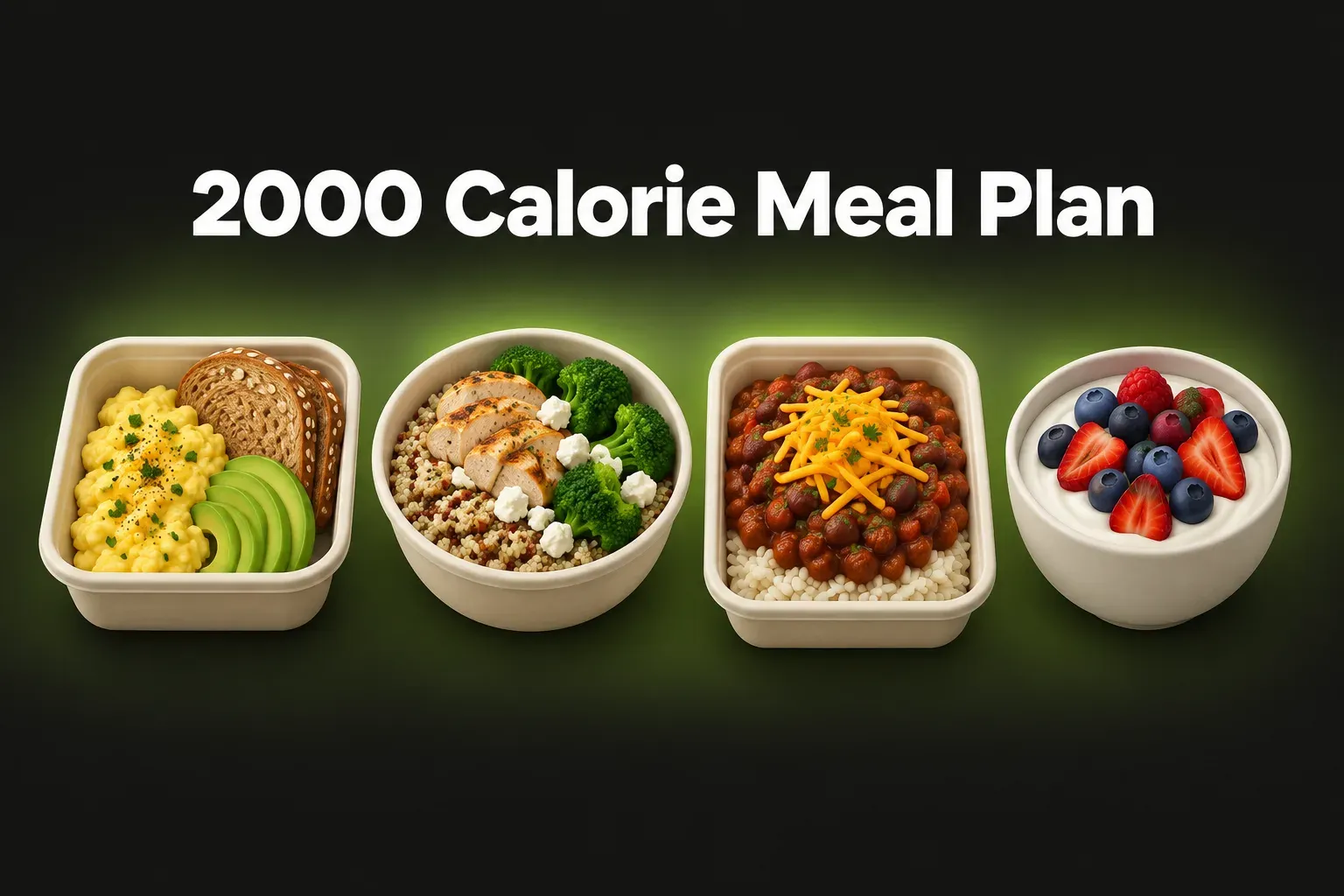
For example: eggs on whole-grain toast with avocado and an orange for breakfast (about 520 calories), a chicken quinoa bowl for lunch (about 635), Greek yogurt with berries and walnuts as a snack (about 265) and lean beef chili with rice for dinner (about 565).
How much protein should I eat on 2000 calories?
For weight loss or exercise, about 120–150 g a day is a good target – roughly 25–30% of your calories. This plan gives about 114–157 g a day.
What should I eat on a 2000 calorie diet?
According to US dietary guidelines, a healthy 2,000-calorie day includes about 2½ cups of vegetables, 2 cups of fruit, 6 ounces of grains (at least half whole grains), 3 cups of dairy, 5½ ounces of protein foods and about 27 g of oils.
Why is 2000 calories used on food labels?
It's a round number close to what many adults need. The percent Daily Value (%DV) on US labels is based on a 2,000-calorie diet, so 10% DV means 10% of what you'd need on 2,000 calories. If you eat more or less, the percentages shift.