Is Canola Oil Bad for You? Benefits, Risks & Facts
What canola oil is, how it's made, its fat profile compared with olive oil and butter, what studies show about cholesterol and the brain, and how to use it well.
Canola oil is one of the most used cooking oils in the world – in kitchens, restaurants and in thousands of packaged foods. It’s cheap, has a neutral taste and handles high heat. But online it’s often called toxic, inflammatory or “industrial”. What does the science actually say?
The short answer: canola oil has the least saturated fat of common cooking oils, contains omega-3 and, in studies with people, lowers LDL cholesterol compared with butter and some other oils. The real concerns are different. Most canola oil is made with chemical solvents and heavily processed. It’s in many ultra-processed and deep-fried foods. And a few animal studies found effects on memory and blood vessels. Used in moderation at home, it’s a reasonable choice – but extra virgin olive oil has stronger evidence for health.
What is canola oil?
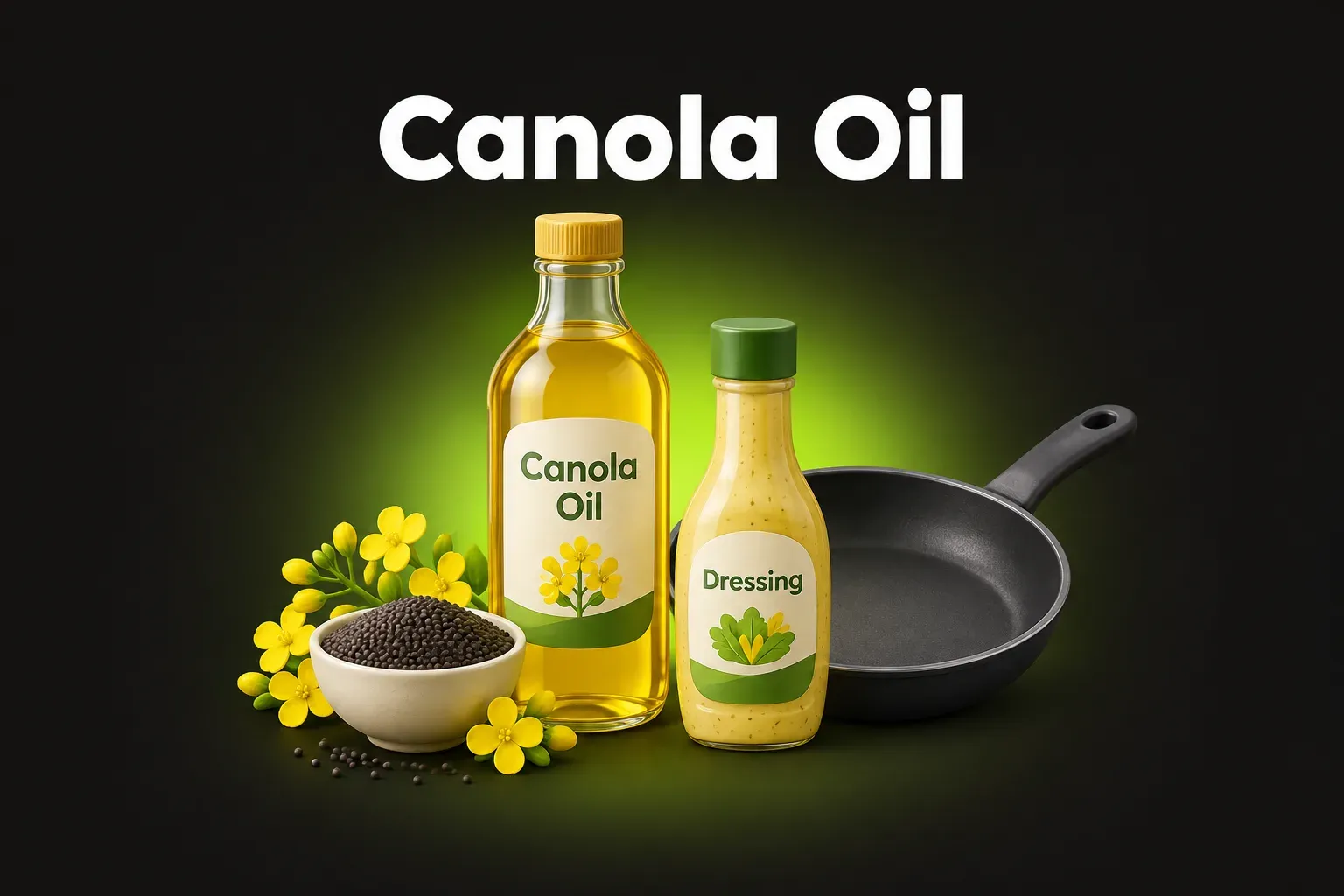
Canola is a type of rapeseed, bred in Canada in the 1970s. Old rapeseed oil had a lot of erucic acid, which damaged the heart in animal studies, and bitter substances called glucosinolates. Canola was bred to have almost none of either. Its name comes from “Canada” and “oil, low acid”.
Most canola oil in supermarkets is made like this:
- The seeds are pressed. The oil that’s left is pulled out with hexane, a chemical made from petroleum.
- The oil is heated, bleached and cleaned of smell to make it clear and tasteless. This removes almost all the hexane, but also some vitamins and protective substances. It can also create small amounts of trans fats.
Cold-pressed (or expeller-pressed) canola oil is made without solvents and is less processed – it’s more common in Europe, where it’s usually sold as rapeseed oil.
Most canola grown in the US and Canada is genetically modified to tolerate herbicides. Organic canola oil isn’t.
Canola oil vs other fats
| Fat (per 100 g) | Saturated | Monounsaturated | Polyunsaturated |
|---|---|---|---|
| Canola oil | 7 g | 63 g | 28 g (incl. 9 g omega‑3) |
| Olive oil | 14 g | 73 g | 11 g |
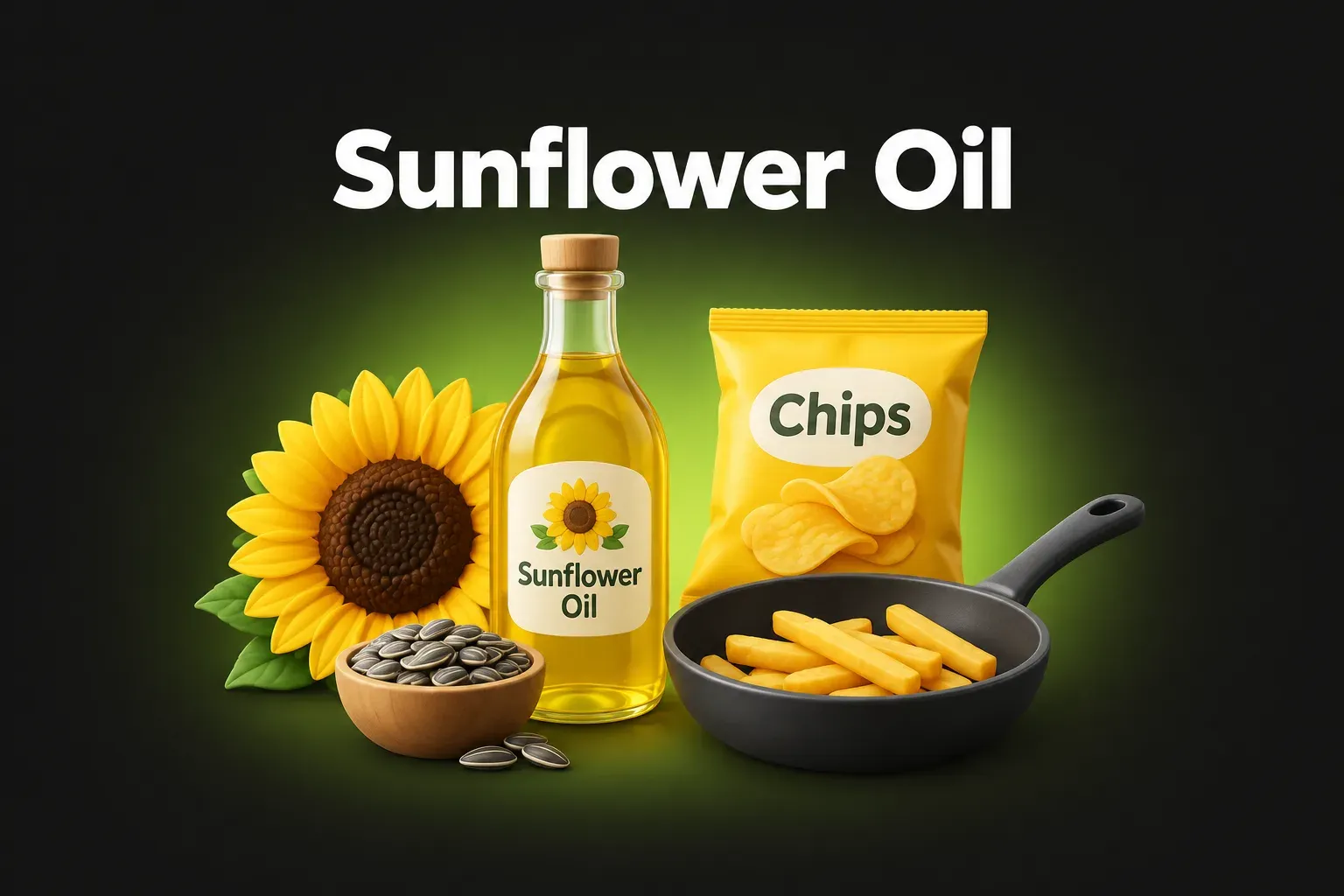
| Sunflower oil | 10 g | 20 g | 66 g |
| Butter | 51 g | 21 g | 3 g |
Canola oil has less saturated fat than any other common cooking oil. It also has a good balance of omega-6 and omega-3 fats (about 2 to 1). Like every oil, it has about 880 calories per 100 g – roughly 120 per tablespoon.
Is canola oil bad for you? What the research says
Cholesterol and heart health
- A review of 27 trials with about 1,400 people found that canola oil lowered total and LDL (“bad”) cholesterol, compared with saturated fats and with sunflower oil (Ghobadi et al., Journal of the American College of Nutrition, 2019).
- In people with overweight or obesity, rapeseed oil lowered LDL cholesterol and another blood marker of heart risk (apolipoprotein B) compared with other oils (Yang et al., European Journal of Clinical Nutrition, 2024).
- A 2025 Harvard study of over 220,000 adults found that people who ate more plant oils, including canola, had a lower risk of death than those who ate more butter. Read more in our guide to seed oils.
What animal studies show
A few animal studies raise questions worth knowing about:
- Memory in mice: some mice were bred to develop changes like Alzheimer’s disease. After six months of a diet rich in canola oil, they gained more weight, had worse short-term memory and had more of a harmful protein (amyloid) in the brain. The authors concluded their data “do not justify” replacing olive oil with canola oil (Lauretti and Praticò, Scientific Reports, 2017).
- Blood vessels in rats: in rats bred to have high blood pressure and strokes, canola oil weakened the body’s natural cell protection and raised LDL cholesterol compared with soybean oil (Papazzo et al., Lipids in Health and Disease, 2011).
These were special animals bred to get sick, and the results don’t match what’s seen in human trials. But animal studies matter, because testing for years whether an oil harms the brain would put people’s health at risk. They’re a reason not to treat canola as a “health food”.
Heating and frying
Refined canola oil only starts to smoke at about 200–230 °C, so it holds up well for frying, roasting and baking. The problem is reusing oil for deep-frying, as many restaurants do. Heating oil again and again breaks the fats down into harmful substances. Fresh oil for each use, at moderate temperatures, is the safer way to cook.
Ultra-processed foods
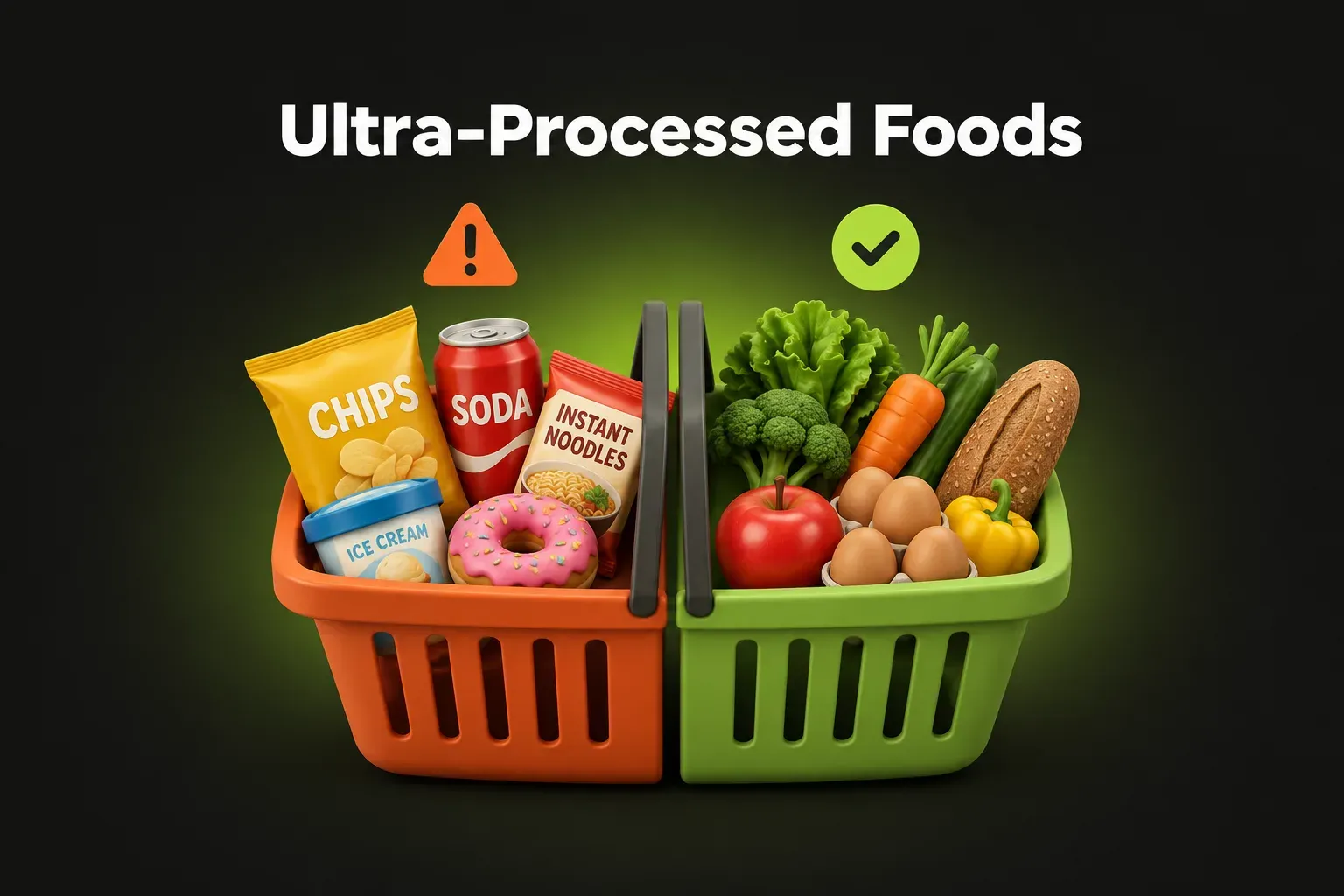
Canola oil is in chips, crackers, cookies, fried foods, margarine, dressings and ready meals. These foods are linked to weight gain and long-term disease. But that’s because of the whole package – refined carbs, salt, additives, eating too much – not mainly because of the oil. Read more about ultra-processed foods.
Canola oil vs olive oil
| Canola oil | Extra virgin olive oil | |
|---|---|---|
| Processing | Usually refined with solvents | Pressed, unrefined |
| Saturated fat | Lowest | Low |
| Omega-3 | Yes (about 9%) | Very little |
| Protective substances (antioxidants) | Few (removed by processing) | Many (polyphenols) |
| High-heat cooking | Very good | Good for normal cooking |
| Evidence for heart health | Good | Strongest |
| Price | Low | Higher |
How to use canola oil well
- Use it for high-heat cooking – frying, roasting, baking – and olive oil for dressings and most other cooking.
- Choose cold-pressed or organic canola oil if you want less processing and no GMOs.
- Don’t reuse frying oil and don’t heat it until it smokes.
- Store it in a cool, dark place and use it within a few months of opening.
- Watch the amount – about 120 calories per tablespoon adds up quickly.
- Cut back on fried and ultra-processed foods – that’s where most of the canola oil in our diets comes from.
Spot canola oil on any label in seconds. With NutriSmart, you photograph the ingredient list or scan the barcode, and the app tells you right away if the product has canola oil. Turn on an alert for it, and the app warns you every time a product you scan contains it. You’ll also see every other additive, the risks of each one and a health score out of 100.Get the app free
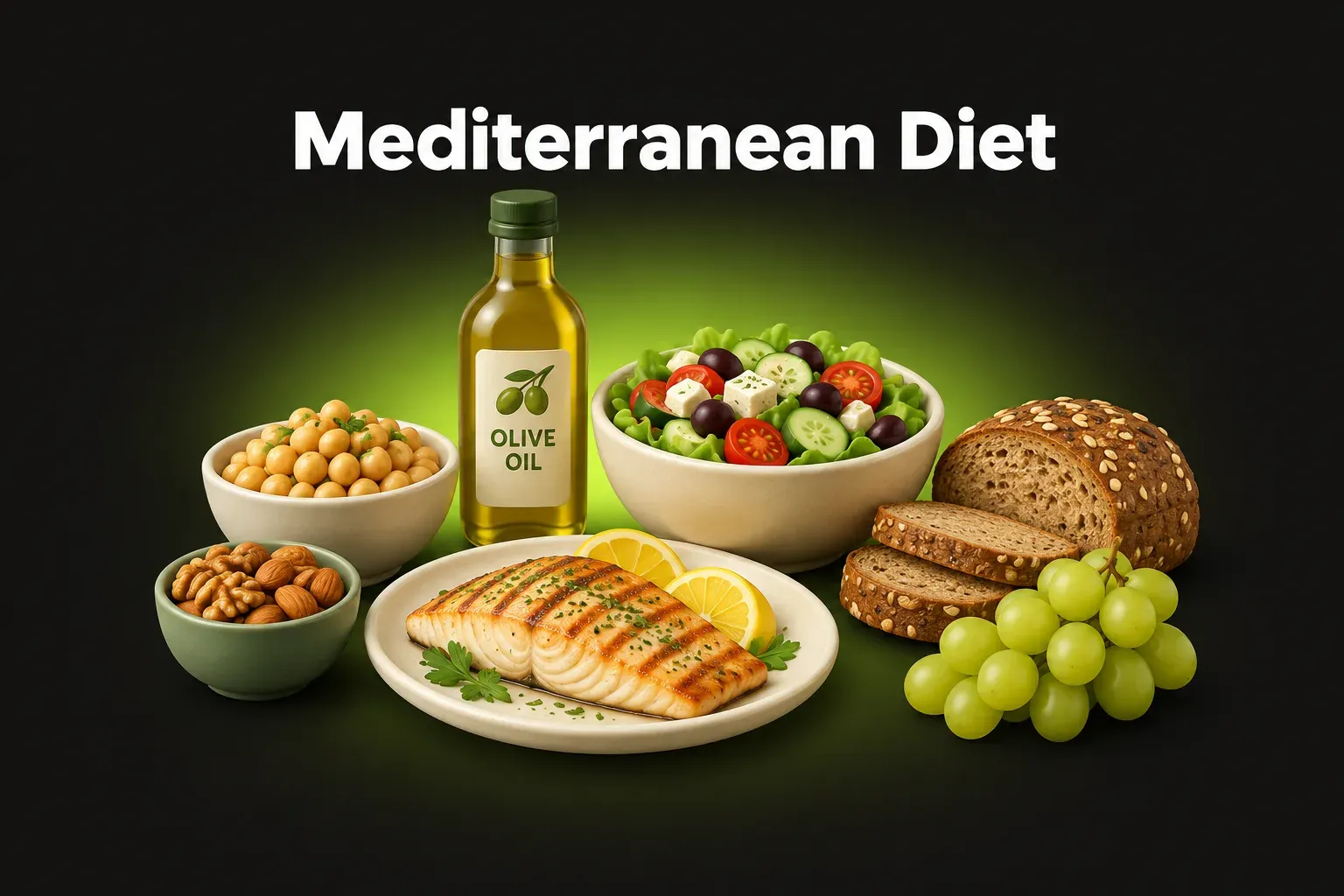
You can also read about other oils: seed oils and palm oil. To see how olive oil and canola oil fit into everyday meals, read our guide to the Mediterranean diet.
The bottom line
Canola oil has the least saturated fat of common cooking oils, contains omega-3 and lowers LDL cholesterol in human studies. But most of it is heavily processed, and it’s in many ultra-processed and fried foods. A few animal studies also raise questions about the brain and blood vessels. Use it for high-heat home cooking, prefer cold-pressed versions, and make extra virgin olive oil your main oil when you can.
FAQ
Is canola oil bad for you?
In studies with people, canola oil lowers LDL ("bad") cholesterol compared with butter and some other oils. It has the least saturated fat of common cooking oils, plus some omega-3. The concerns: most canola oil is made with chemical solvents, it's in many ultra-processed and deep-fried foods, and a few animal studies found effects on memory and blood vessels. Used in moderation at home, it's a reasonable choice. Extra virgin olive oil has stronger evidence.
What is canola oil made from?
From the seeds of the canola plant, a type of rapeseed bred in Canada in the 1970s. Older rapeseed had a lot of erucic acid, which may be harmful, and bitter substances. Canola was bred to have almost none of them. The name comes from "Canada" and "oil, low acid".
Is canola oil better than olive oil?
Both are good choices compared with butter. Canola oil has less saturated fat and more omega-3, and it's cheaper and better for very hot cooking. Extra virgin olive oil is less processed, rich in substances that protect cells, and has the strongest evidence for heart health. If you can, use olive oil for most cooking and dressings and canola for high heat.
Is canola oil inflammatory?
Studies in people don't show that canola oil causes inflammation. It has less omega-6 than most seed oils and contains omega-3. What can promote inflammation is a diet full of ultra-processed and deep-fried foods – which are often made with canola and other seed oils.
Is canola oil genetically modified?
Most canola grown in the US and Canada is genetically modified to tolerate herbicides. If you want to avoid GMOs, choose organic or non-GMO canola oil, or cold-pressed rapeseed oil, which is common in Europe.
What is the smoke point of canola oil?
Refined canola oil only starts to smoke at about 200–230 °C (400–450 °F), so it's good for frying, roasting and baking. Cold-pressed canola oil has a lower smoke point and is better for low-heat cooking and dressings.