What Are Seed Oils? Full List & Are They Bad for You
What seed oils are, the full list (canola, soybean, corn, sunflower and more), what studies say about inflammation and heart health, and how to use them well.
Seed oils have become one of the most argued-about foods online. Some influencers blame them for inflammation, obesity and heart disease. Most nutrition scientists say they’re one of the healthier fats you can eat. So what are seed oils, and who’s right?
The short answer: seed oils are oils taken from the seeds of plants – canola, soybean, corn, sunflower and others. Studies in people don’t show that they cause inflammation. Using them instead of butter and other saturated fats is linked to a healthier heart. The real problem is different. Seed oils are in almost every ultra-processed and deep-fried food, and those foods are worth cutting back on – whatever oil they’re made with.
What are seed oils?
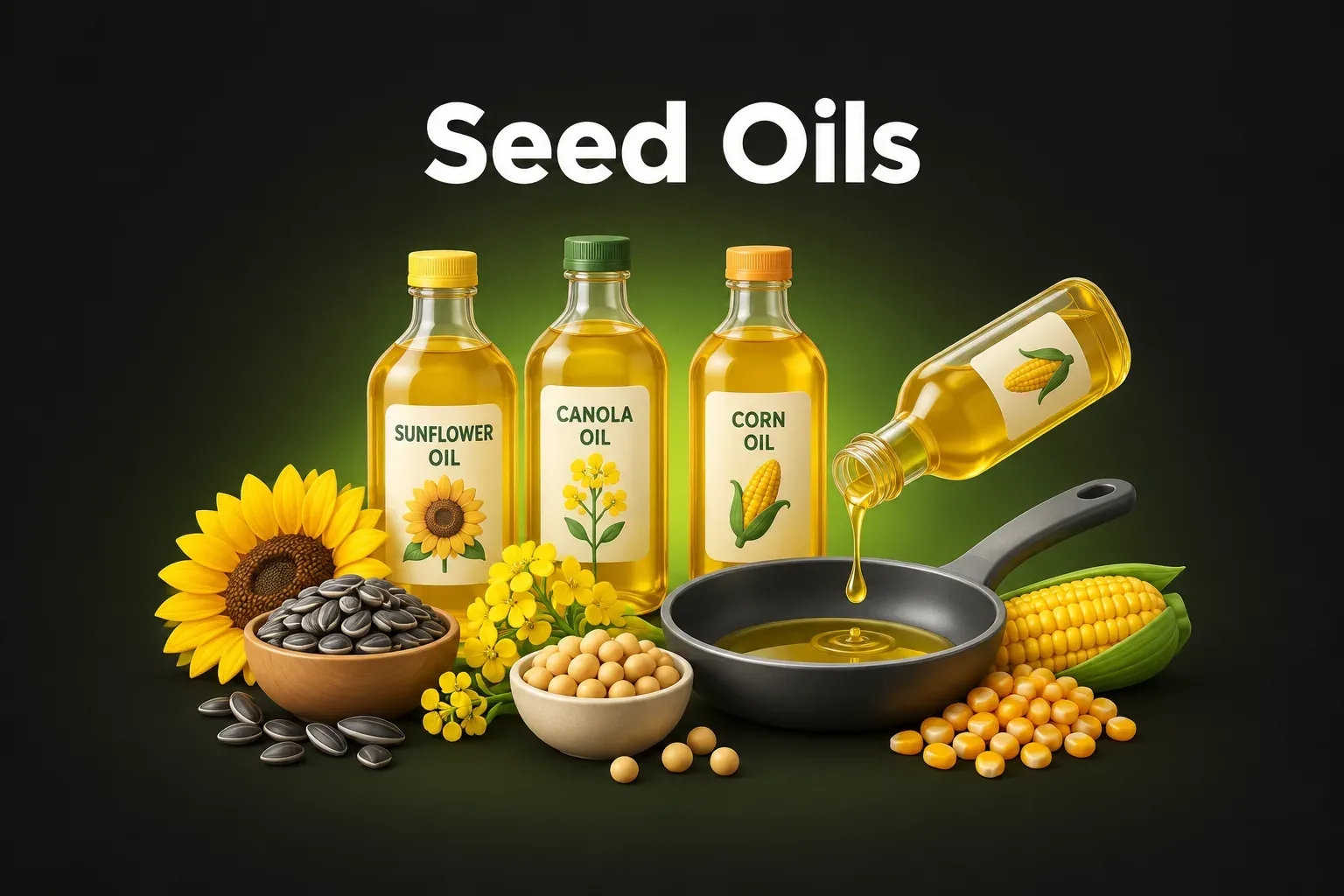
Seed oils are vegetable oils made from the seeds of plants, not from their fruit. Most are made in big factories. The seeds are crushed, and the oil is pulled out, often with a chemical called hexane that is later removed. Then the oil is cleaned, bleached and has its smell removed. This gives it a plain taste and lets it last a long time. Some, like cold-pressed sunflower oil, are simply pressed by machine instead.
What they share is the type of fat they contain. Most seed oils are rich in polyunsaturated fat (a type of healthy fat), mainly linoleic acid. This is an omega-6 fat your body needs but can’t make, so it has to come from food. They have little saturated fat, which is why they’re liquid at room temperature.
The full list of seed oils
These are the eight oils usually meant by “seed oils” (sometimes called the “hateful eight” online):
| Seed oil | Also called | Omega-6 (linoleic acid) | Common uses |
|---|---|---|---|
| Canola oil | Rapeseed oil | Low – and it contains omega-3 | Cooking, baking, dressings, packaged foods |
| Soybean oil | Often labeled “vegetable oil” | High | Fast food frying, mayonnaise, dressings, snacks |
| Corn oil | Maize oil | High | Frying, margarine, snacks |
| Sunflower oil | – | Very high (high-oleic versions are low) | Cooking, chips, crackers |
| Safflower oil | – | Very high (high-oleic versions are low) | Cooking, margarine |
| Cottonseed oil | – | High | Fast food frying, chips, baked goods |
| Grapeseed oil | – | Very high | Dressings, sautéing |
| Rice bran oil | – | Moderate | High-heat cooking in Asian cuisine |
Not seed oils: olive oil, avocado oil and coconut oil are pressed from fruit, and butter, ghee, lard and tallow are animal fats. Sesame, peanut and flaxseed oil come from seeds too, but they’re rarely part of the debate.
On labels, seed oils often hide behind general names such as “vegetable oil”, “vegetable oil blend” or “contains one or more of the following: soybean, canola, sunflower oil”.
Are seed oils bad for you? What the research says
Inflammation
This is the main argument against seed oils. The body can turn linoleic acid into substances that play a role in inflammation. So, the idea goes, more seed oils mean more inflammation.
Studies in people don’t back this up. A review looked at 15 studies where healthy adults were given more linoleic acid. Their blood tests for inflammation didn’t go up (Johnson & Fritsche, Journal of the Academy of Nutrition and Dietetics, 2012). The studies were small, but later reviews found the same thing.
Heart health
This is where the proof is strongest – and it points the other way:
- Trials: A large review of studies found that eating less saturated fat lowered the risk of heart attacks and strokes by 17%. This was when people ate vegetable oils or starchy foods instead (Hooper et al., Cochrane, 2020).
- Blood levels: 30 studies with 68,659 people were combined. People with the most linoleic acid in their blood were 22% less likely to die from heart disease (Marklund et al., Circulation, 2019). Blood levels show what people really eat, so this is more reliable than asking them.
- Butter vs plant oils: A 2025 Harvard study followed 221,054 adults for up to 33 years. People who ate the most plant oils (including canola, soybean and olive oil) were 16% less likely to die than those who ate the least. Swapping 10 g of butter a day for plant oils was linked to a 17% lower risk of death (Zhang et al., JAMA Internal Medicine, 2025).
- The American Heart Association advises eating unsaturated fats, especially polyunsaturated ones, instead of saturated fat. This lowers the risk of heart disease (Sacks et al., Circulation, 2017).
Some of these studies only followed people over time, so they show a link, not proof. But the trials, the blood tests and the long-term studies all point the same way.
What the critics point to
People against seed oils often point to the Minnesota Coronary Experiment, a study from the 1960s–70s. Its data was never published at the time. In 2016, scientists found it and looked at it again. Using corn oil instead of saturated fat lowered cholesterol, but fewer people didn’t die. And in people over 65, a bigger drop in cholesterol was linked to a higher risk of death (Ramsden et al., BMJ, 2016). It’s worth knowing. But it’s one old study, and many people dropped out of it. The corn-oil margarine used back then may also have had trans fats. It hasn’t changed what most other studies show.
Oxidation and frying
There is one fair worry. The fats in seed oils break down more easily when heated than butter or coconut oil. Some oil is heated for a long time or used again and again, as in many restaurant deep-fryers. Then it breaks down and forms harmful substances. Cooking at home with fresh oil is very different from food fried all day in the same pot of oil.
The real problem: what seed oils come in
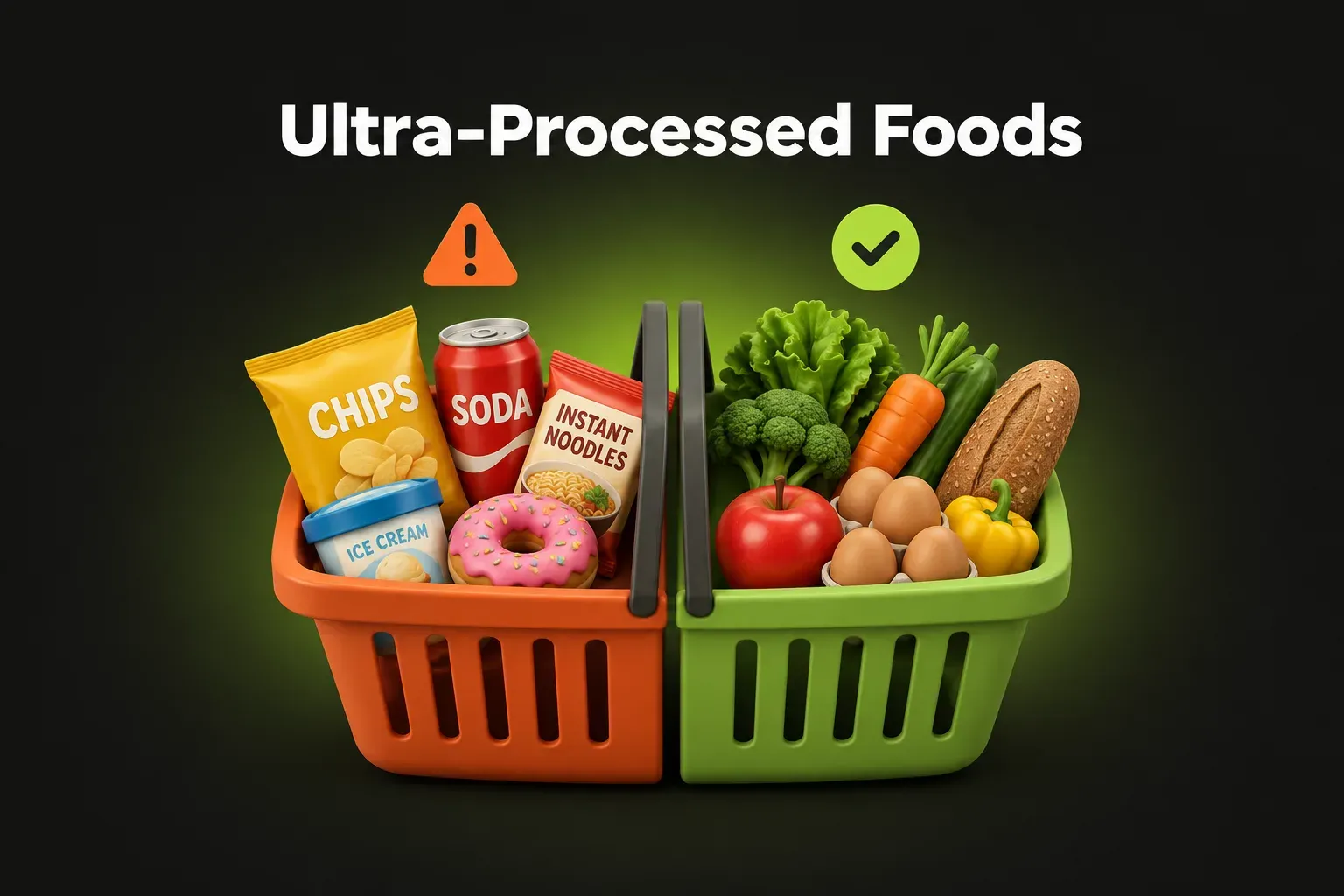
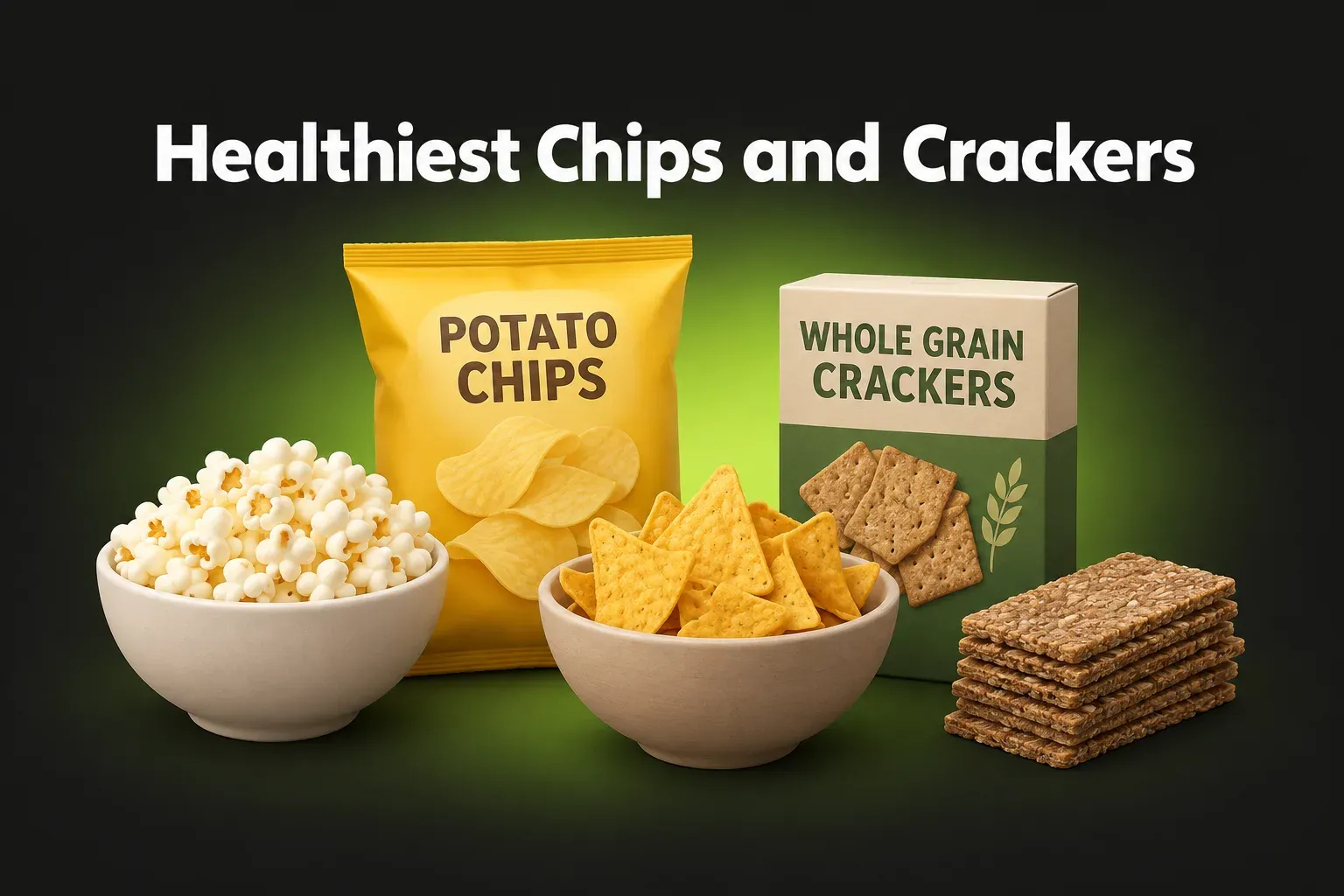
Seed oils are cheap, have little taste and last long on the shelf. That’s why they’re in almost every ultra-processed food: chips, crackers, cookies, frozen meals, fast food, salad dressings, margarine and many “healthy” snack bars. People who eat a lot of seed oils usually get most of them from these foods. And ultra-processed and fried foods are bad for health for many reasons: white starch, added sugar, salt, additives, and how easy it is to eat too much of them.
That’s why someone who “cuts out seed oils” often feels better. They’ve stopped eating fries, chips and packaged snacks. The benefit most likely comes from eating fewer ultra-processed foods, not from avoiding the oil itself. A homemade stir-fry cooked in canola oil isn’t the problem.
How to use oils well
- Make extra virgin olive oil your everyday oil for salads and most cooking – it has the best evidence of any fat.
- Use canola or high-oleic sunflower oil for cooking at high heat, if you like a plain taste. They break down less when heated than regular sunflower or grapeseed oil.
- Don’t reuse frying oil many times, and eat deep-fried food only now and then.
- Cut back on ultra-processed foods – that removes most of the seed oils in a typical diet, along with the sugar, salt and additives that come with them.
- Get enough omega-3 from oily fish, walnuts, flaxseed or chia, rather than worrying only about omega-6.
Check what’s really in a product. Ingredient lists are long, and oils are often hidden under “vegetable oil”. With NutriSmart, you photograph the label or scan the barcode. The app explains each ingredient, highlights additives and ultra-processed ingredients, and gives the product a health score out of 100. So you can compare two products right in the store.Get the app free
If you’re also watching calories, our free calorie calculator shows how much you need each day.
The bottom line
Seed oils aren’t the poison social media says they are. Studies in people don’t show they cause inflammation. Swapping butter for plant oils is linked to a healthier heart and a longer life. The foods that contain most seed oils – deep-fried and ultra-processed foods – are the ones worth cutting back on. For cooking at home, extra virgin olive oil and canola oil are both good choices.
FAQ
What are the 8 seed oils?
The "hateful eight" is a popular name for the eight seed oils most criticized online: canola (rapeseed), corn, cottonseed, soybean, sunflower, safflower, grapeseed and rice bran oil. It's a term from health books and social media, not a science term.
Is olive oil a seed oil?
No. Olive oil is pressed from the fruit of the olive tree, not from seeds. Avocado oil and coconut oil are also fruit oils. Sesame, peanut and flaxseed oils come from seeds but usually aren't included in the "seed oil" debate.
Do seed oils cause inflammation?
Studies in people say no. Healthy adults ate more linoleic acid, the main fat in most seed oils. Their blood tests for inflammation (swelling inside the body) didn't go up. The worry comes from lab and animal studies about how the body uses this fat.
Is canola oil bad for you?
No. Canola oil is low in saturated fat, has some omega-3 and has less omega-6 than most other seed oils. In a large 2025 Harvard study, people who ate more canola oil were less likely to die over 30+ years. Like any oil, it's high in calories.
Are seed oils worse than butter?
For heart health, studies favor seed oils. Swapping butter and other saturated fats for vegetable oils lowers "bad" LDL cholesterol. A large review of studies found it also lowers the risk of heart attacks and strokes. A 2025 study followed over 220,000 adults. Those who swapped 10 g of butter a day for plant oils were 17% less likely to die during the study.
What is the healthiest cooking oil?
Extra virgin olive oil has the strongest proof overall. Canola oil is a good, cheaper choice for cooking at high heat. But the oil you cook with at home matters less than how much deep-fried and ultra-processed food you eat.