Healthiest Chips (Crisps) and Crackers: What to Look For
How to pick the healthiest chips and crackers: oils, salt and additives to check, potato, tortilla and veggie chips compared, the best crackers, and popcorn.
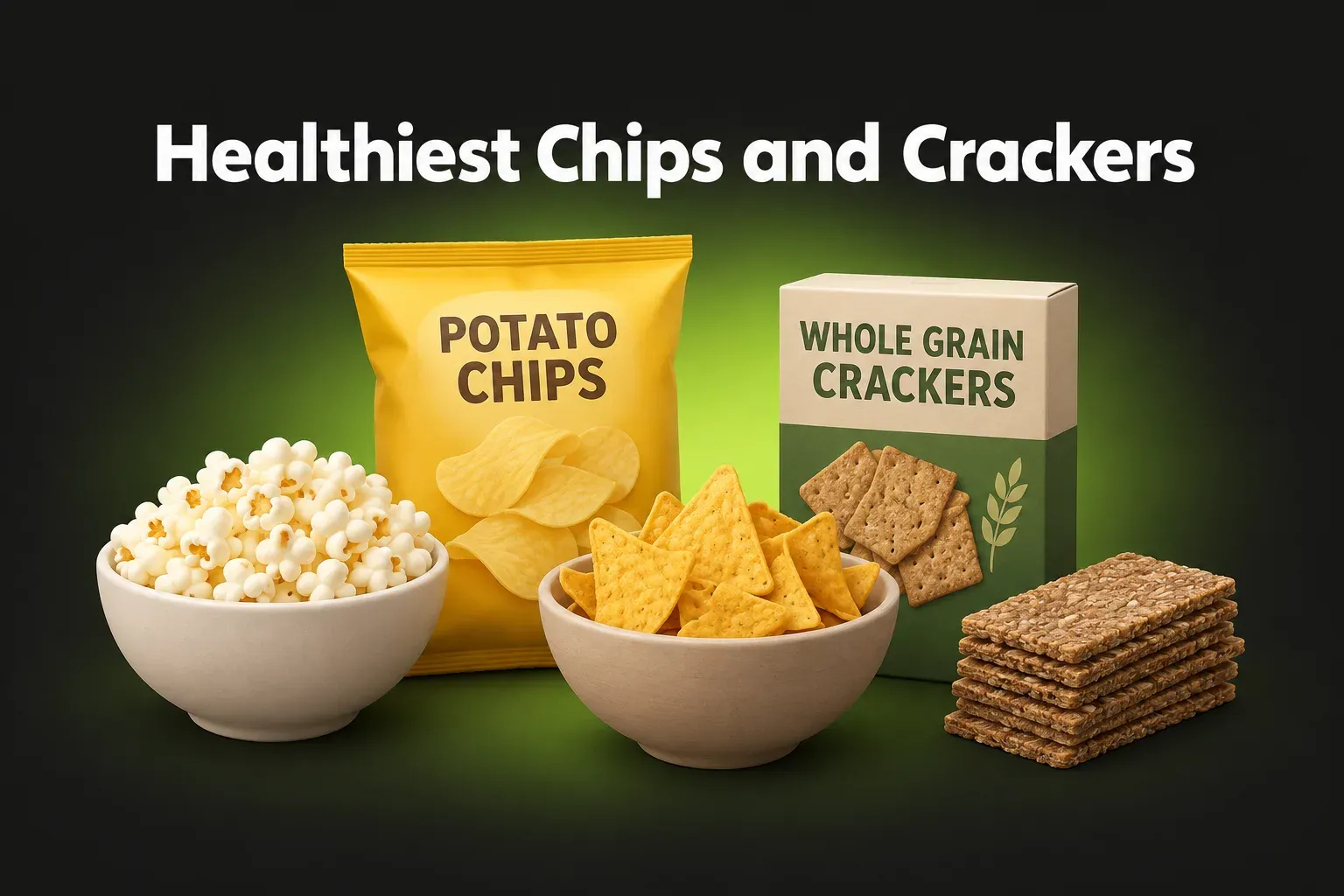
Chips – or crisps, as they’re called in the UK and Ireland – and crackers are some of the most-eaten snacks in the world – and some of the hardest to stop eating. You don’t have to give them up. But the snack aisle has big differences: some bags have three ingredients, others have twenty, with flavor powders, colors and preservatives. Here’s how to pick the healthiest chips and crackers, and how to eat them without overdoing it.
The short answer: the healthiest chips have a short ingredient list – potatoes or corn, one oil and salt. Plain chips cooked in olive or avocado oil, lightly salted tortilla chips and plain popcorn are the best picks. Veggie chips and baked chips aren’t as healthy as they sound. For crackers, choose whole grain first, at least 2–3 g of fiber and little salt – like rye crispbread or seed crackers. Whatever you choose, put one portion in a bowl.
How to pick healthier chips and crackers: 5 checks
| Check | Aim for | Why |
|---|---|---|
| Ingredient list | 3–5 ingredients | Flavored snacks add powders, MSG and colors |
| Oil | Olive, avocado, high‑oleic sunflower | Not palm or hydrogenated oil |
| Sodium | Under 150–200 mg per serving | Salty snacks add up fast |
| Fiber | 2 g or more | Whole grains, beans or popcorn |
| Additives | No colors or TBHQ | Signs of a highly processed snack |
Chips compared
Typical numbers per 1 oz (28 g), about 15 potato chips. Brands differ – check the label.
| Chips | Calories | Fat | Sodium | Verdict |
|---|---|---|---|---|
| Air‑popped popcorn (3 cups) | 95 | 1 g | 0–100 mg | Best choice: whole grain, 3.5 g fiber |
| Potato chips in olive or avocado oil | 150 | 9–10 g | 80–150 mg | Good: simple ingredients, better oil |
| Plain corn tortilla chips | 140 | 7 g | 100–120 mg | Good: a little fiber |
| Bean or lentil chips | 130–140 | 5–7 g | 150–250 mg | Good if beans are first, not starch |
| Regular potato chips | 150–160 | 10 g | 150–180 mg | OK in small amounts |
| Kettle‑cooked chips | 150 | 8–9 g | 100–150 mg | OK; often darker, more acrylamide |
| Baked chips | 120 | 3 g | 180–250 mg | Less fat, more processing |
| Veggie chips and straws | 130–150 | 6–8 g | 200–250 mg | Mostly potato starch |
| Flavored and cheese puffs | 150–160 | 9–10 g | 200–300 mg | Most additives |
The oil matters
Chips soak up a lot of oil, so the type matters. Olive oil, avocado oil and high-oleic sunflower or safflower oil are mostly heart-friendly monounsaturated fat and handle frying well. Regular sunflower oil, canola oil and corn oil are common – read more about seed oils. Avoid palm oil and hydrogenated oils, often found in cheese puffs and crackers.
Flavored chips add the most
Plain chips: potatoes, oil, salt. Barbecue, sour cream, cheese or “flamin’ hot” chips can add:
- MSG and other flavor boosters (disodium inosinate and guanylate)
- Maltodextrin, sugar and dextrose
- Natural flavors and yeast extract
- Colors like Red 40, Yellow 5, Yellow 6 or annatto
Veggie chips: not really vegetables
Many veggie chips and veggie straws list potato starch or potato flour first. The “vegetables” are often spinach or tomato powder for color. They have about the same calories and salt as potato chips. Real vegetable chips (sliced beets, sweet potato, kale) exist – check that a vegetable is the first ingredient.
Baked chips: less fat, more processing
Baked chips have less fat and about 25% fewer calories. But many are made from dried potato flakes, starch, sugar and soy lecithin, pressed into chip shapes. They can also contain more acrylamide (see below). They’re a fine swap if you’re counting calories – not a health food.
Acrylamide in chips
Acrylamide forms when starchy foods like potatoes are fried, baked or roasted at high heat. The World Health Organization’s cancer agency lists it as probably causing cancer in humans, based on animal studies. Chips and french fries are among the biggest sources.
The EU set a benchmark level of 750 µg per kg for potato chips, which manufacturers should stay below. When Spanish researchers tested 70 bags of potato chips, 27% were above it. The browner and redder the chips, the more acrylamide they had (Mesias et al., Foods, 2020).
Tip: choose lighter, golden chips over dark, crunchy ones, and skip the burnt pieces at the bottom of the bag.
Healthiest crackers
Typical numbers per serving (about 30 g, or 2 slices of crispbread). Brands differ – check the label.
| Crackers | Calories | Fiber | Sodium | Verdict |
|---|---|---|---|---|
| Rye crispbread (2 slices) | 60–70 | 3–4 g | 80–120 mg | Best choice: whole rye, very filling |
| Seed crackers | 130–150 | 3–5 g | 100–200 mg | Great: protein and healthy fats |
| 100% whole‑wheat crackers | 120–130 | 3 g | 140–180 mg | Good: often just wheat, oil and salt |
| Rice crackers | 120 | 0–1 g | 100–250 mg | OK; little fiber |
| Saltines | 120 | under 1 g | 250–300 mg | White flour, salty |
| Butter crackers | 140–150 | under 1 g | 200–250 mg | Often palm oil and sugar |
| Cheese crackers | 150 | under 1 g | 230–250 mg | Some contain TBHQ and colors |
| Graham crackers | 130 | 1 g | 130 mg | Closer to a cookie: 7–8 g sugar |
What to check on crackers
- Whole grain first: “whole wheat flour”, “whole grain rye” or “whole grain oats”. “Wheat flour” or “enriched flour” means white flour.
- Fiber: at least 2–3 g per serving.
- Oil: avoid palm oil and hydrogenated oils.
- Preservatives: some cheese and butter crackers use TBHQ, a preservative that weakened immune cells in lab and mouse studies.
- “Multigrain” and “made with whole grain” don’t mean mostly whole grain – the same tricks as in bread.
For a plain, low-calorie crunch, see also are rice cakes healthy?.
Why chips are so easy to overeat
In a Harvard study of over 120,000 people, researchers looked at which foods were linked to weight gain over four years. Eating one more serving of potato chips a day was linked to about 1.7 lb (0.8 kg) of extra weight every four years – more than any other food, including sugary drinks (Mozaffarian et al., New England Journal of Medicine, 2011).
Chips are salty, crunchy, high in fat and quick to eat. That combination makes it hard to stop. Tips:
- Put one portion in a bowl and close the bag.
- Buy single-serving bags if a big bag disappears in one evening.
- Pair chips with protein or vegetables – salsa, guacamole, hummus or a few slices of cheese.
- Try popcorn: 3 cups of air-popped popcorn have about the same calories as 10 chips, and more fiber.
Compare snacks in seconds. With NutriSmart, you photograph the label or scan the barcode. The app checks the oil, salt and fiber, flags flavor enhancers, colors and preservatives, explains each one and gives the chips or crackers a health score out of 100.Get the app free
The bottom line
The healthiest chips have a short ingredient list – potatoes or corn, a good oil like olive or avocado, and salt. Plain tortilla chips and air-popped popcorn are also good picks, while veggie straws and baked chips aren’t as healthy as they sound. Flavored chips bring the most additives. For crackers, look for whole grain first, at least 2–3 g of fiber, little salt and no palm oil or TBHQ – rye crispbread and seed crackers are great choices. And always put one portion in a bowl.
FAQ
What are the healthiest chips?
Plain chips with a short ingredient list: potatoes or corn, one oil and salt. Chips cooked in olive or avocado oil, lightly salted tortilla chips and plain popcorn are the best picks. Flavored chips usually add sugar, MSG, colors and flavor powders.
What are the healthiest crisps in the UK?
The same rules apply as for chips: choose plain or lightly salted crisps with a short ingredient list – potatoes, one oil and salt – ideally cooked in sunflower (high-oleic), rapeseed or olive oil. Lower-fat oven-baked crisps and plain popcorn are lighter options. Flavoured crisps usually add sugar, flavour enhancers and colourings.
Are veggie chips healthier than potato chips?
Usually not much. Many veggie chips and veggie straws are made mostly from potato starch or potato flour, with a little vegetable powder for color. They have about the same calories and salt as regular chips. Check the first ingredient.
Are baked chips healthier?
Baked chips have less fat and fewer calories – about 120 instead of 150–160 per ounce. But many are made from dried potato flakes and starch, with more additives, and they can contain more acrylamide, a substance formed when starchy foods are heated. They're not a health food.
Are tortilla chips healthier than potato chips?
Plain corn tortilla chips are a bit better: slightly fewer calories, less salt and a little more fiber. Corn is a whole grain if it's whole-kernel corn. The difference is small, so portion size matters more.
What are the healthiest crackers?
Crackers with a whole grain as the first ingredient, at least 2–3 g of fiber per serving, little sugar, under about 200 mg of sodium and no palm or hydrogenated oils. Rye crispbread, seed crackers and simple whole-wheat crackers are good choices.
Are chips bad for weight loss?
They're one of the easiest foods to overeat. In a large Harvard study, eating more potato chips was linked to more weight gain than any other food. Put a single portion in a bowl instead of eating from the bag.