What Is Dextrose? Is It Bad for You? Sugar vs Dextrose
What dextrose is, how it differs from sugar, why it's in so many processed foods, how it affects blood sugar, and when it's actually useful – like for low blood sugar.
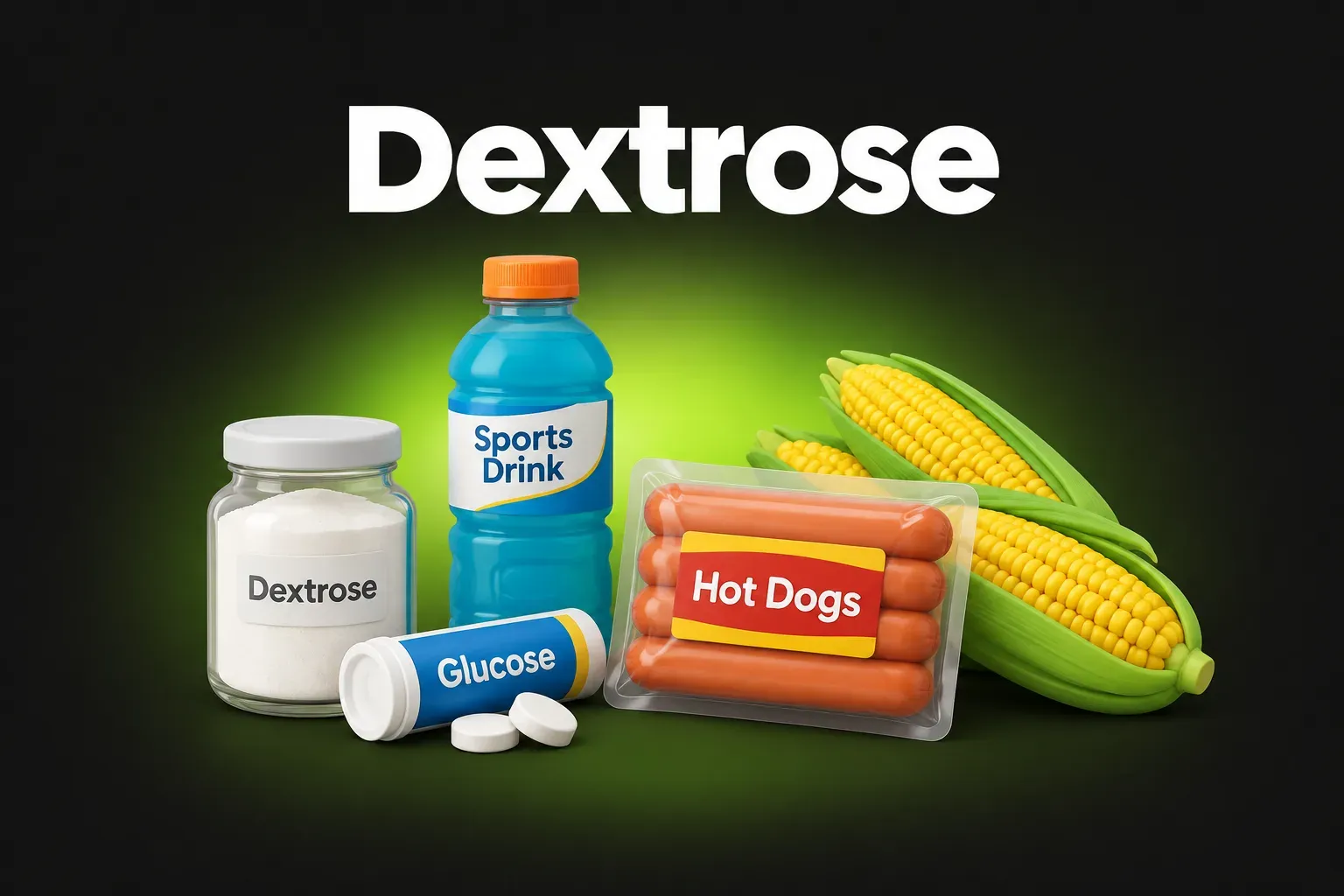
Dextrose appears on the labels of hot dogs, bread, crackers, sauces, sports drinks and even sweetener packets. It sounds like a chemical, but it’s simply glucose – the sugar your body runs on. So why is it added to so many foods, and is it any worse than regular sugar?
The short answer: dextrose is pure glucose, usually made from corn starch. It has the same 4 calories per gram as sugar but is a bit less sweet. It raises blood sugar faster than any other common food – its glycemic index is about 100. In small amounts it’s harmless, and it’s actually the best treatment for low blood sugar. But it counts as added sugar and is mostly found in processed foods. Eating a lot of it has the same downsides as other added sugars.
What is dextrose?
Dextrose is the name for glucose made from starch. Starch is a long chain of glucose. Factories cut it into single glucose pieces, then clean and dry them into a fine white powder.
- In the US, most dextrose is made from corn, so it may come from genetically modified crops.
- In Europe, it’s often made from wheat or potatoes.
On labels, you’ll see it as dextrose, glucose, dextrose monohydrate or corn sugar.
Dextrose vs sugar
| Dextrose | Table sugar (sucrose) | Fructose | |
|---|---|---|---|
| What it is | Pure glucose | Glucose + fructose | Fruit sugar |
| Sweetness | 70–80% of sugar | 100% | about 120–170% |
| Calories | 4 per gram | 4 per gram | 4 per gram |
| Glycemic index | about 100 | 65 | 15–25 |
| How fast it raises blood sugar | Fastest | Fast | Slow |
Because dextrose doesn’t need to be digested, it goes straight into the blood. That’s why its glycemic index is 100: every other food is compared with it. Read more about the glycemic index.
Why dextrose is in so many foods
- Processed meats (hot dogs, sausages, bacon, ham): adds mild sweetness, helps browning and feeds the bacteria used in curing
- Bread and baked goods: feeds the yeast and gives a golden crust
- Cake mixes, cookies and crackers: cheap sweetener and browning agent
- Sauces, dressings and frozen meals: balances flavor
- Sports drinks and gels: fast energy during exercise
- Candy and sweets: texture and sweetness
- Sweetener packets: many “zero calorie” sweeteners, including some with sucralose, use dextrose as a filler
Is dextrose bad for you?
Blood sugar spikes
Because it raises blood sugar faster than any other common food, dextrose causes a quick spike in blood sugar and insulin. Then comes a drop that can leave you hungry and tired again soon after. For people with diabetes or insulin that doesn’t work well, foods with a lot of added dextrose make blood sugar harder to control.
Large studies link diets with a high glycemic index to more heart disease and type 2 diabetes. For example, the PURE study of over 137,000 people found a 21% higher risk of heart attack, stroke or death with the highest-GI diets (Jenkins et al., New England Journal of Medicine, 2021).
It’s added sugar
Dextrose counts as added sugar, just like table sugar or high fructose corn syrup. The World Health Organization recommends keeping added sugars under 10% of daily calories, and ideally under 5% – about 25 g a day for an adult (WHO, 2015). Too much added sugar is linked to weight gain, type 2 diabetes and tooth decay.
It’s a sign of processed food
Dextrose itself is no worse than other sugars. In fact, unlike fructose, it doesn’t put the same strain on the liver. But it’s mostly found in processed and ultra-processed foods, which are linked to overeating and long-term disease. Read more about ultra-processed foods.
When dextrose is useful
Treating low blood sugar
For people with diabetes, dextrose is the best treatment for low blood sugar (hypoglycemia). The American Diabetes Association advises taking 15–20 g of glucose, for example glucose tablets or gel. Check your blood sugar after 15 minutes, and repeat if it’s still low (American Diabetes Association, Diabetes Care, 2025). Pure glucose works faster than juice or candy.
Endurance exercise
During long workouts or races (over 60–90 minutes), athletes use drinks and gels with glucose to keep their energy up. For a normal gym session or a walk, you don’t need it.
Medicine
In hospitals, dextrose is given through a drip (IV) to provide energy and fluids.
How to spot and limit dextrose
- Read ingredient lists – look for dextrose, glucose, glucose syrup, corn sugar and maltodextrin.
- Check “total sugars” and “added sugars” on the nutrition label.
- Choose fresh meat over hot dogs, sausages and other processed meats.
- Pick breads and crackers with short ingredient lists.
- Drink water instead of sports drinks unless you’re exercising for more than an hour.
- If you have diabetes, keep glucose tablets for lows – and limit dextrose the rest of the time.
Spot dextrose on any label in seconds. With NutriSmart, you photograph the ingredient list or scan the barcode, and the app tells you right away if the product has dextrose. Turn on an alert for it, and the app warns you every time a product you scan contains it. You’ll also see every other additive, the risks of each one and a health score out of 100.Get the app free
You can also read about other sugars and starches: maltodextrin and high fructose corn syrup.
The bottom line
Dextrose is pure glucose made from corn or other starches. It has the same calories as sugar, is a bit less sweet and raises blood sugar faster than any other common food. It’s useful for treating low blood sugar and for long workouts. But in everyday foods it’s simply added sugar – usually a sign of processed food. Read labels, keep added sugars low, and save dextrose for when you really need fast energy.
FAQ
What is dextrose?
Dextrose is another name for glucose, the simple sugar your body uses for energy. As a food ingredient, it's made by breaking down starch – usually from corn in the US, or from wheat or potatoes in Europe – into pure glucose.
Is dextrose the same as sugar?
Not exactly. Table sugar (sucrose) is made of one glucose and one fructose joined together. Dextrose is pure glucose. It's about 70–80% as sweet as sugar and has the same 4 calories per gram. But it raises blood sugar faster, because your body doesn't need to break it down.
Is dextrose bad for you?
In small amounts, no – it's just a type of sugar. But it counts as added sugar, it raises blood sugar very quickly (glycemic index about 100), and it's mostly in processed foods. Large or frequent amounts can contribute to weight gain, type 2 diabetes and tooth decay, like other added sugars.
Is dextrose safe for people with diabetes?
Dextrose raises blood sugar faster than any other common food, so people with diabetes should limit foods with added dextrose. But it's also the best treatment for low blood sugar (hypoglycemia): about 15 g of glucose tablets or gel, then check your blood sugar again after 15 minutes.
Why is dextrose in processed meat and bread?
In processed meats it adds a little sweetness, helps browning and feeds the bacteria used to cure the meat. In bread, it feeds yeast and helps the crust brown. It's also used in cake mixes, crackers, sauces and frozen foods because it's cheap.
Is dextrose the same as maltodextrin?
No. Both are made from starch. But maltodextrin is short chains of glucose, while dextrose is single glucose pieces. Both raise blood sugar very quickly.