Glucose Syrup: What It Is and Is It Bad for You?
What glucose syrup is, how it's made from corn, wheat or potatoes, why it's in candy and ice cream, its calories, and how it compares with sugar and HFCS.
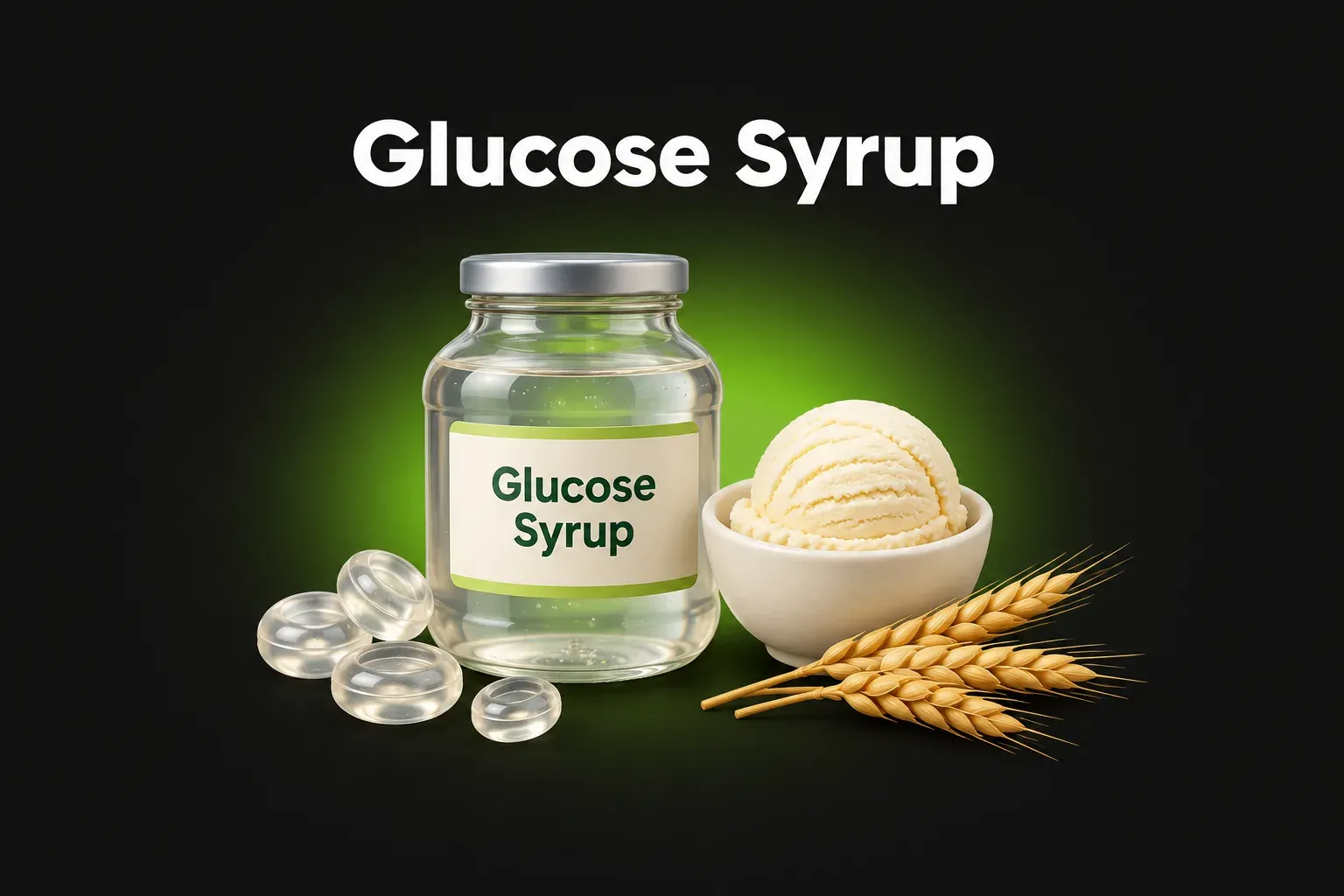
Glucose syrup is one of the most common ingredients on European food labels. It’s in candy, gummies, chocolate bars, ice cream, cereal bars, jams, sauces and baked goods. It sounds like something from a hospital drip, but it’s simply a sugar syrup made from starch.
The short answer: glucose syrup is made by breaking down starch from corn, wheat or potatoes into glucose and maltose. It keeps candy smooth, ice cream soft and baked goods moist. It has about 280–320 calories per 100 g, no nutrients and raises blood sugar quickly. It’s not worse than table sugar, but it’s still an added sugar, so keep it low.
What is glucose syrup?
Glucose syrup is made in a few steps:
- Starch is taken from corn, wheat, potatoes or rice.
- Enzymes or acid break the starch into smaller sugars – glucose, maltose and some longer chains.
- The liquid is filtered, cleaned and boiled down into a thick, clear syrup.
How much the starch is broken down decides how sweet the syrup is. In the EU and US, the starch must be broken down past a set point to be called glucose syrup. If it’s broken down less, it’s called maltodextrin.
In the US, glucose syrup made from corn is usually called corn syrup. In Europe it’s usually made from wheat or potatoes.
On labels you’ll see glucose syrup, glucose, dried glucose syrup (the powder form), corn syrup or wheat glucose syrup.
Glucose syrup vs other sugars
| Sweetener | Mostly made of | Raises blood sugar | Fructose |
|---|---|---|---|
| Glucose syrup | Glucose and maltose | Fast | Almost none |
| Dextrose | Pure glucose | Very fast | None |
| Table sugar | Glucose + fructose | Medium | 50% |
| Glucose‑fructose syrup / HFCS | Glucose and fructose | Medium | 5–55% |
| Invert sugar | Free glucose and fructose | Medium | about 50% |
Don’t mix up glucose syrup and glucose-fructose syrup. Glucose syrup has almost no fructose. Glucose-fructose syrup – called high fructose corn syrup in the US – has part of the glucose turned into fructose. Large amounts of fructose are linked to fatty liver and higher blood fats, so NutriSmart gives glucose-fructose syrup its own risk rating.
Glucose syrup nutrition
Approximate values; syrups vary with how much water they contain. Based on light corn syrup from the US Department of Agriculture (USDA FoodData Central).
| Amount | Calories | Sugars and starch |
|---|---|---|
| 1 teaspoon (7 g) | about 20 kcal | about 5 g |
| 1 tablespoon (22 g) | about 62 kcal | about 17 g |
| 100 g | about 280–320 kcal | about 75–80 g |
It has no fiber, fat, protein, vitamins or minerals worth mentioning.
Tip: some glucose syrups show fewer “sugars” on the label because part of them is longer glucose chains that don’t count as sugars. Your body still turns them into glucose quickly, so look at total carbohydrates.
Where you’ll find glucose syrup
- Candy, gummies, marshmallows and toffee – stops sugar crystals and keeps them chewy
- Chocolate bars and fillings
- Ice cream and sorbet – keeps them soft and scoopable
- Cereal bars and granola – holds everything together
- Jams and fruit spreads
- Cakes, cookies and pastries – keeps them moist
- Sauces, ketchup and ready meals
Read our guides to healthiest protein bars and healthiest cereal.
Is glucose syrup bad for you?
Glucose syrup isn’t toxic, and it isn’t worse than table sugar. The issue is that it’s added sugar:
- Blood sugar: it’s mostly glucose and maltose, which are absorbed fast, so it raises blood sugar quickly – a bit faster than table sugar. If you have diabetes, count it like sugar. Read about low glycemic index foods.
- Weight and health: diets high in added sugar are linked to weight gain, type 2 diabetes, fatty liver, heart disease and tooth decay.
- How much is too much: the WHO recommends keeping free sugars below 10% of daily calories, ideally 5% (about 25 g) (WHO).
- Gluten: wheat-based glucose syrup is gluten-free after processing. In the EU it’s specifically excluded from allergen labeling (EU Regulation 1169/2011, Annex II).
Spot glucose syrup on any label in seconds. With NutriSmart, you photograph the ingredient list or scan the barcode, and the app tells you right away if the product has glucose syrup – it counts it as sugar – or glucose-fructose syrup. Turn on an alert for sugar or glucose-fructose syrup, and the app warns you every time a product you scan contains it. You’ll also see every other additive, the risks of each one and a health score out of 100.Get the app free
You can also read about tapioca syrup and brown rice syrup.
The bottom line
Glucose syrup is a sugar syrup made from the starch in corn, wheat or potatoes. It keeps candy smooth, ice cream soft and cakes moist. It has about the same calories as sugar, no nutrients and raises blood sugar quickly – but it’s not the same as glucose-fructose syrup, which has much more fructose. Count it as added sugar and keep the total low.
FAQ
What is glucose syrup?
Glucose syrup is a thick, clear syrup made by breaking down starch from corn, wheat, potatoes or rice into glucose and other small sugars. It's used to sweeten food, keep candy and ice cream smooth and make baked goods moist.
Is glucose syrup bad for you?
It's an added sugar, like table sugar. It has about 280–320 calories per 100 g and no nutrients, and it raises blood sugar quickly. A little isn't harmful, but diets high in added sugar are linked to weight gain, type 2 diabetes and tooth decay.
Is glucose syrup the same as corn syrup?
In the US, corn syrup is glucose syrup made from corn. In Europe, glucose syrup is usually made from wheat or potatoes. They work and act in the body the same way.
Is glucose syrup the same as glucose-fructose syrup?
No. Glucose syrup is mostly glucose and maltose. Glucose-fructose syrup (called high fructose corn syrup in the US) has part of the glucose turned into fructose. On EU labels, it's called glucose-fructose syrup when it has more than 5% fructose.
Is glucose syrup gluten-free?
Yes, even when made from wheat. The process removes the gluten, and in the EU wheat-based glucose syrup doesn't have to be labeled as an allergen. It's considered safe for people with celiac disease.
Is glucose syrup worse than sugar?
Not really. It has about the same calories per gram of sugar. Because it's mostly glucose, it raises blood sugar a bit faster than table sugar, but it has less fructose. What matters most is how much added sugar you eat in total.