Healthiest Cereal: How to Pick One (Sugar, Fiber, Additives)
How to find the healthiest cereal: the numbers to check for sugar, fiber and whole grains, 9 cereal types ranked, and which additives to avoid on the label.
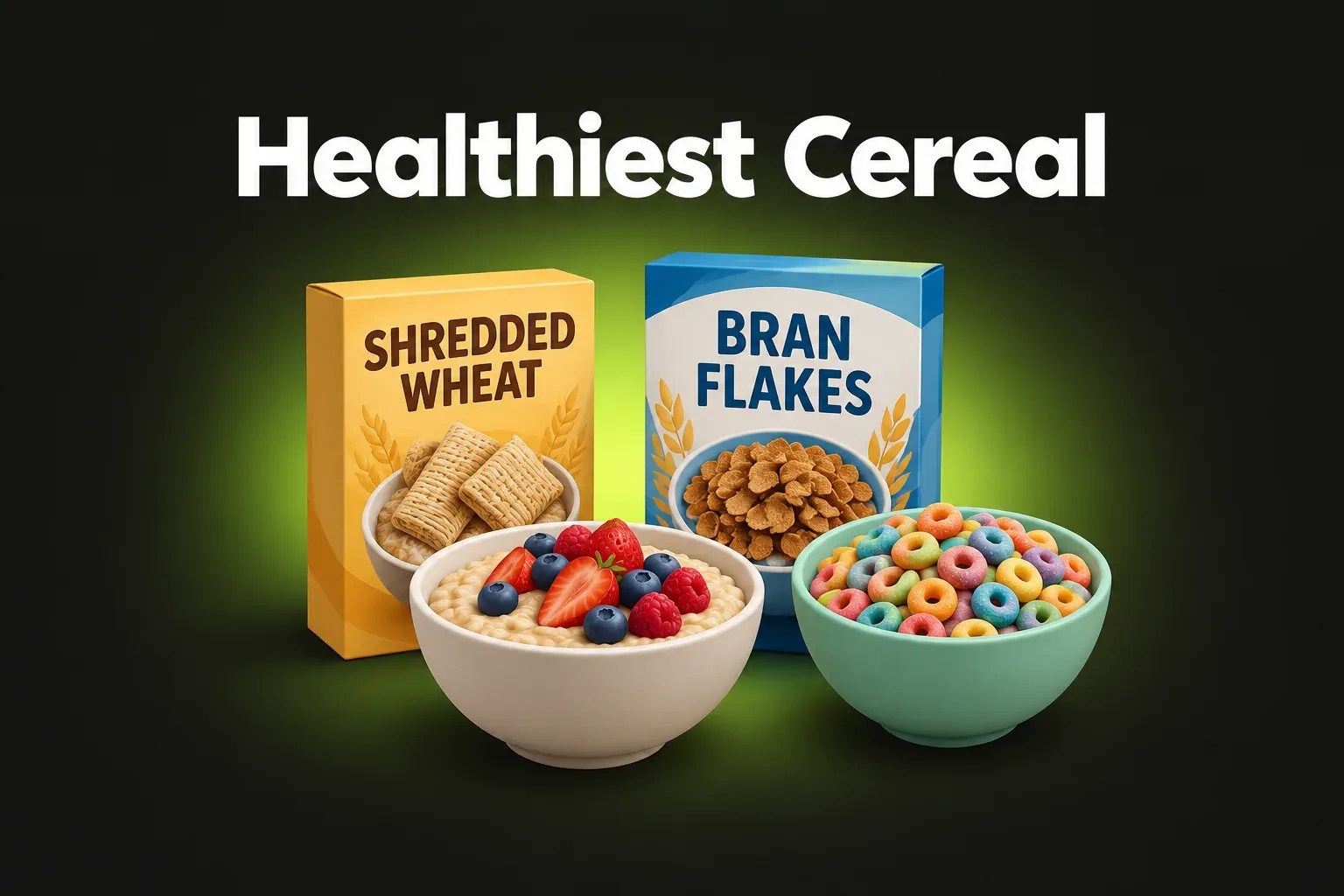
The cereal aisle is full of boxes that say “whole grain”, “high fiber” or “heart healthy”. But many of them have as much sugar as a cookie. The good news: you only need to check three numbers and one line of ingredients to find the healthiest cereal.
The short answer: the healthiest cereals are plain oats, plain shredded wheat, unsweetened muesli and plain whole-grain O’s. A good cereal has whole grain as the first ingredient, at least 3 g of fiber and no more than 5 g of added sugar per serving. Skip cereals with artificial colors, BHT and long lists of sweeteners. And measure your bowl – most people eat two or three servings at once.
How to pick a healthy cereal: 4 checks
| Check | Aim for | Why |
|---|---|---|
| First ingredient | Whole grain (oats, whole wheat, brown rice) | “Wheat flour” or “corn” means refined grain |
| Added sugar | 5 g or less per serving | The FDA limit for grain foods labeled “healthy” |
| Fiber | 3 g or more per serving | Keeps you full and helps digestion |
| Ingredient list | Short, no colors or BHT | Fewer additives, less processing |
The 5 g limit isn’t random. In 2024, the US Food and Drug Administration updated its rules for the word “healthy” on labels. A grain food can only use it if it has at least ¾ ounce of whole grain, no more than 5 g of added sugar, 230 mg of sodium and 1 g of saturated fat per serving (FDA). Most sweetened cereals don’t pass.
Tip: look at “Added sugars” on the label, not only “Total sugars”. Dried fruit in muesli adds natural sugar, which is less of a concern than sugar added by the factory.
Cereal types ranked
Numbers are typical for one serving and differ by brand. Check the label of what you buy.
| Cereal type | Serving | Fiber | Added sugar | Verdict |
|---|---|---|---|---|
| Plain rolled oats | ½ cup dry (40 g) | 4 g | 0 g | Best choice |
| Plain shredded wheat | 1 cup (about 50 g) | 6 g | 0 g | Best choice |
| Unsweetened muesli | ½ cup (about 50 g) | 4–5 g | 0 g | Great; sugar only from dried fruit |
| Plain whole‑grain O’s | 1½ cups (39 g) | 4 g | 1–2 g | Good |
| Bran flakes | 1 cup (about 40 g) | 5–7 g | 5–7 g | Good fiber, some sugar |
| Protein cereal | 1 cup (about 40 g) | 1–5 g | 0–5 g | Check sweeteners and additives |
| Flavored instant oatmeal | 1 packet (43 g) | 3 g | 10–12 g | Choose plain packets instead |
| Granola | ½ cup (about 60 g) | 3 g | 8–15 g | High in sugar and calories |
| Frosted and kids’ cereals | 1 cup (about 40 g) | 1 g | 10–16 g | A dessert, not a breakfast |
Why whole grains matter
Whole grains keep the bran and germ of the grain, where most of the fiber, vitamins and minerals are. Refined grains lose them.
A large review combined 45 studies. People who ate 90 g of whole grains a day – about one bowl of whole-grain cereal and two slices of whole-grain bread – had a 19% lower risk of heart disease and a 17% lower risk of dying early than people who ate almost none (Aune et al., BMJ, 2016). These studies show a link, not proof. But the link was strong and the same in many countries. Whole-grain cereal was one of the foods linked to lower risk.
Oats have an extra benefit. They contain a fiber called beta-glucan. In a review of 28 trials, eating 3 g of oat beta-glucan a day lowered LDL (“bad”) cholesterol (Whitehead et al., American Journal of Clinical Nutrition, 2014). That’s about 1½ cups of cooked oatmeal.
The sugar problem
The American Heart Association advises no more than 25 g of added sugar a day for women and 36 g for men (Johnson et al., Circulation, 2009). A big bowl of frosted cereal – two cups, which is what many people pour – can use up most or all of that before 8 a.m.
Watch for sugar under other names: honey, syrup, cane juice, malt, dextrose, fructose and maltodextrin. If two or three of these appear on the list, the cereal is sweeter than it looks.
Additives to watch for in cereal
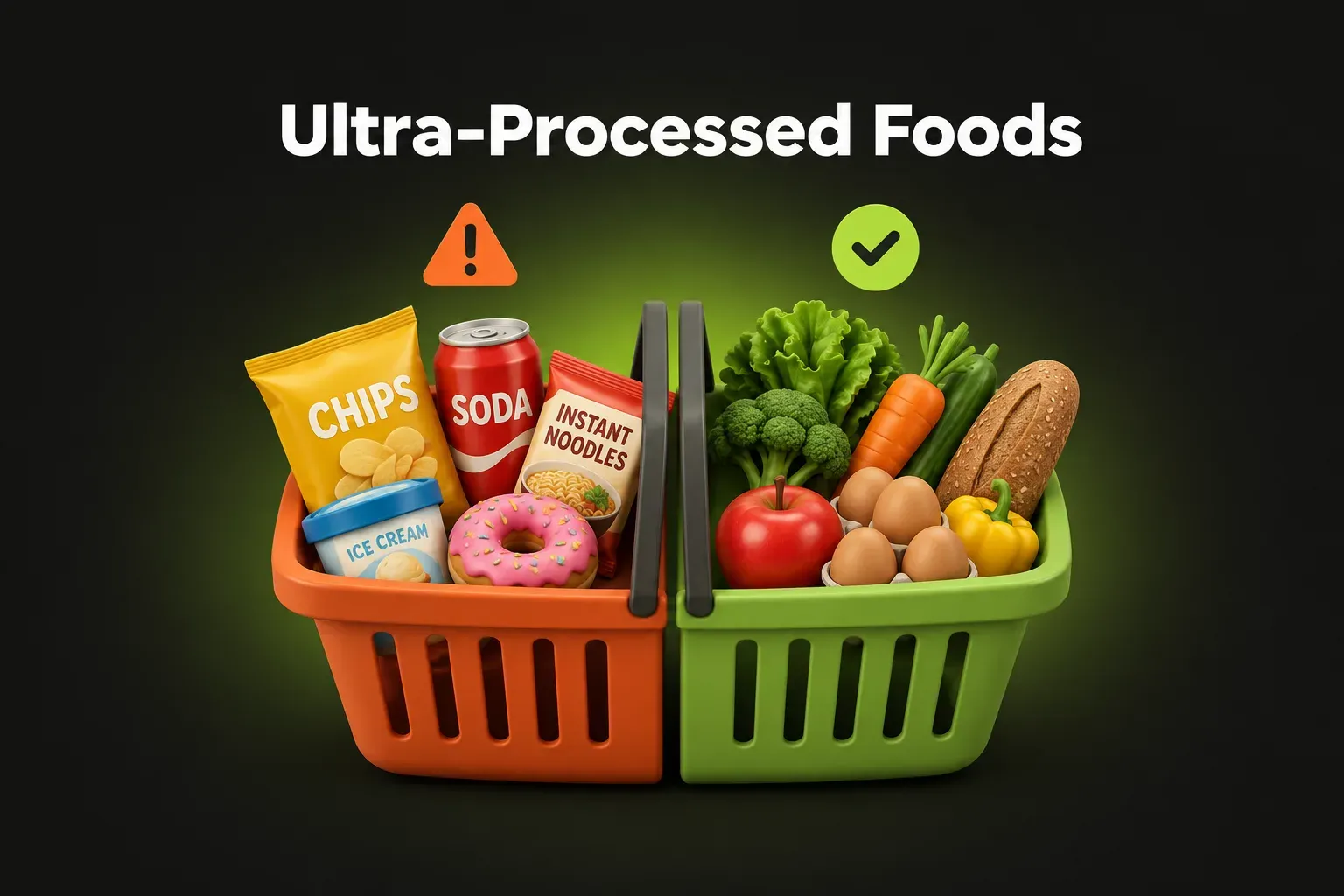
Many cereals are ultra-processed foods. In a strict hospital study, people ate about 500 more calories a day on an ultra-processed diet than on a diet of simple foods (Hall et al., Cell Metabolism, 2019). Read more about ultra-processed foods.
These are the additives you’ll see most often:
- Artificial colors – Red 40, Yellow 5 and Blue 1 in colorful kids’ cereals.
- BHT – a preservative added to some cereals or to the bag liner. Animal studies raise concerns, and the FDA began reviewing it in 2026.
- Sweeteners – sucralose or stevia in “low sugar” and protein cereals.
- Natural flavors and soy lecithin – common, but a sign of a processed product.
The healthiest cereals have almost no additives at all. Plain oats have one ingredient: oats.
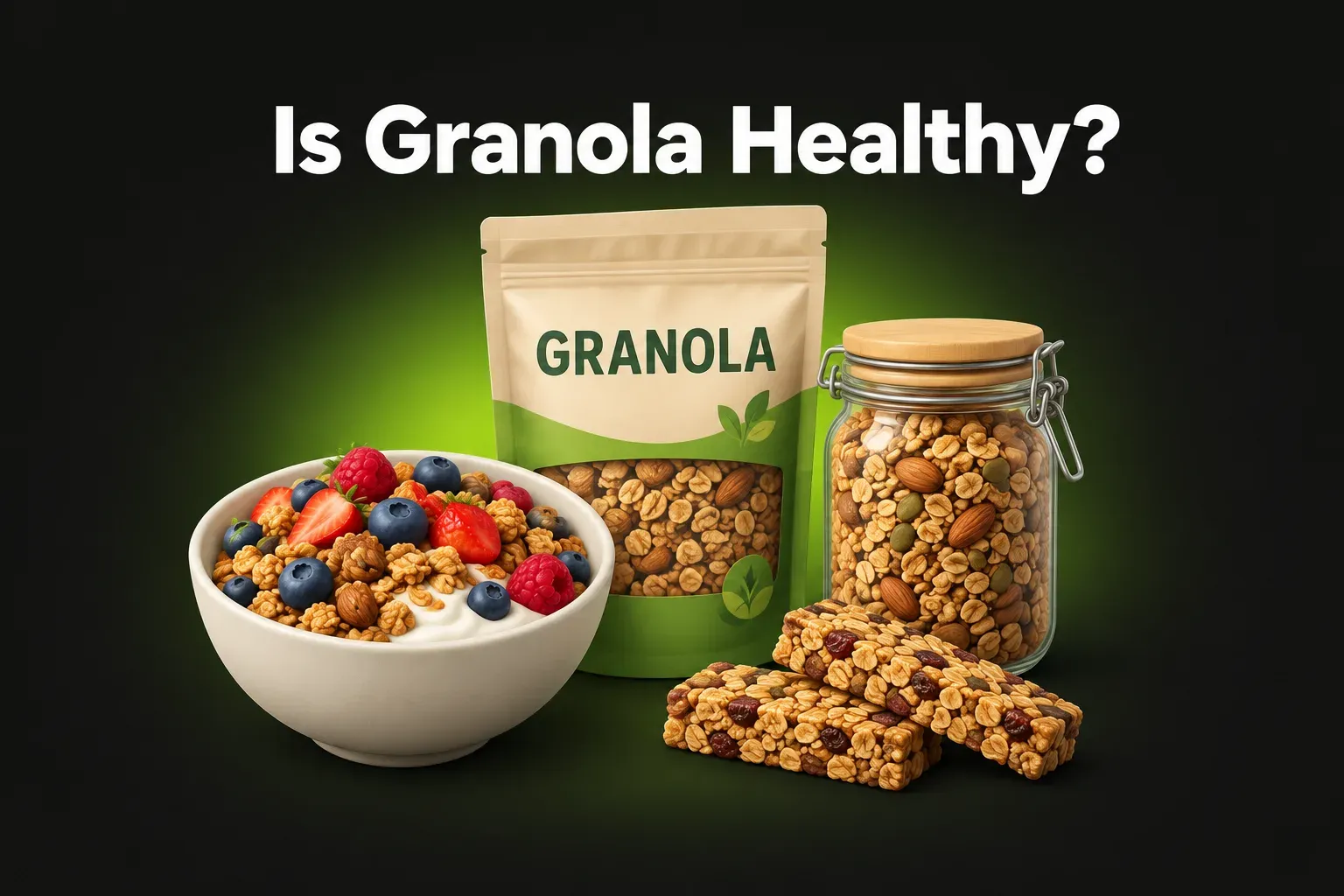
Is granola healthy?
Granola has a healthy image, but it’s usually baked with sugar, honey or syrup and oil. Half a cup can have 250–300 calories – more than a full cup of most other cereals. Some brands add coconut sugar or “natural” syrups, which are still sugar.
If you love granola, choose one with 5 g of added sugar or less per serving, or use 2–3 tablespoons as a topping on plain yogurt or oats.
How to make cereal more filling
- Measure one serving the first few times, so you know what it looks like.
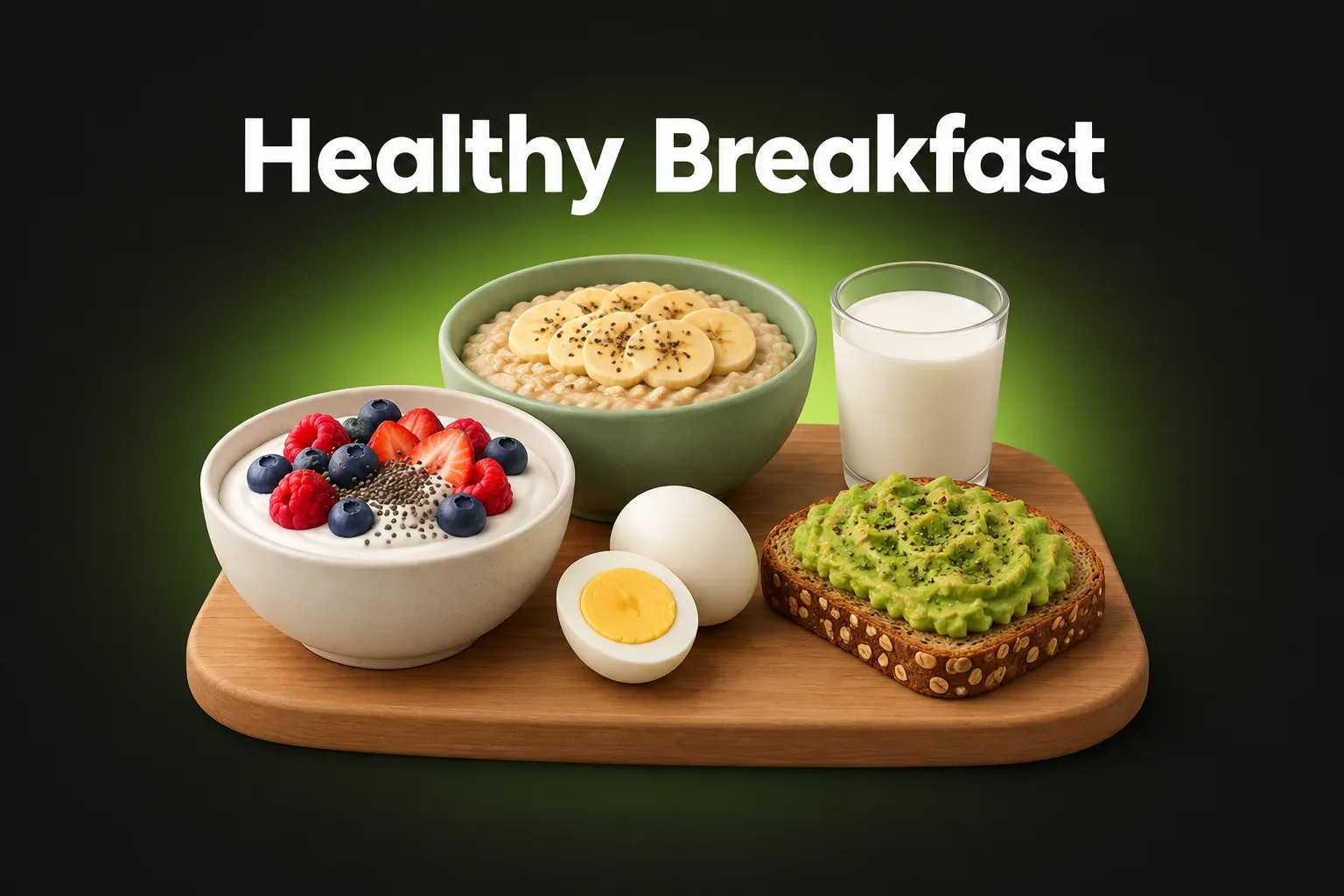
- Add protein – milk, Greek yogurt or a handful of nuts. See our list of high-protein foods.
- Add fruit instead of sugar – berries, banana or apple.
- Mix a sweet cereal with a plain one, half and half, to cut sugar slowly.
- Try hot oats – they keep many people full longer than cold flakes.
For more ideas, see our healthy breakfast ideas and high-fiber foods.
Compare cereals in seconds. With NutriSmart, you photograph the label or scan the barcode in the store. The app shows the added sugar, fiber and additives, explains each one and gives the cereal a health score out of 100 – so you can put the box back before it lands in your cart.Get the app free
The bottom line
The healthiest cereal is mostly whole grain, with at least 3 g of fiber and no more than 5 g of added sugar per serving. Plain oats, plain shredded wheat, unsweetened muesli and plain whole-grain O’s are the best picks. Granola, flavored oatmeal and frosted cereals are closer to dessert. Check the first ingredient, the added sugar line and the additives – and measure your bowl.
FAQ
What is the healthiest cereal?
The healthiest cereals are made almost only from whole grains and have little or no added sugar. Plain oats, plain shredded wheat, unsweetened muesli and plain whole-grain O's are the best picks. Look for whole grain as the first ingredient, at least 3 g of fiber and at most 5 g of added sugar per serving.
How much sugar should a healthy cereal have?
At most 5 g of added sugar per serving – that's the limit the FDA set in 2024 for grain foods that want to be called healthy. Less is better. Many kids' and frosted cereals have 10–16 g per cup.
Is granola a healthy cereal?
Usually less healthy than it looks. Granola is often baked with sugar, honey or syrup and oil, so half a cup can have 250–300 calories and 10–15 g of sugar. Choose one with little added sugar, or use it as a topping instead of a full bowl.
What is the healthiest cereal for weight loss?
Cereals with a lot of fiber and protein and little sugar keep you full longer. Plain oats, shredded wheat and bran cereals are good choices. Measure your serving – most people pour two or three times the serving size on the box.
Is oatmeal healthier than cold cereal?
Plain oatmeal is one of the healthiest options. It's just whole oats, with fiber that helps lower cholesterol. Flavored instant oatmeal packets are different – they can have 10–12 g of added sugar each.
Are protein cereals healthy?
Some are a good choice, but check the label. Many get their protein from soy or milk protein isolates and add sweeteners, gums and flavors. A bowl of plain oats with milk or Greek yogurt gives you protein with fewer additives.