Is Coconut Sugar Healthy? Glycemic Index, Calories & Facts
Is coconut sugar healthier than white sugar? Its real glycemic index, calories, minerals, whether it's OK for diabetes and how to bake with it.
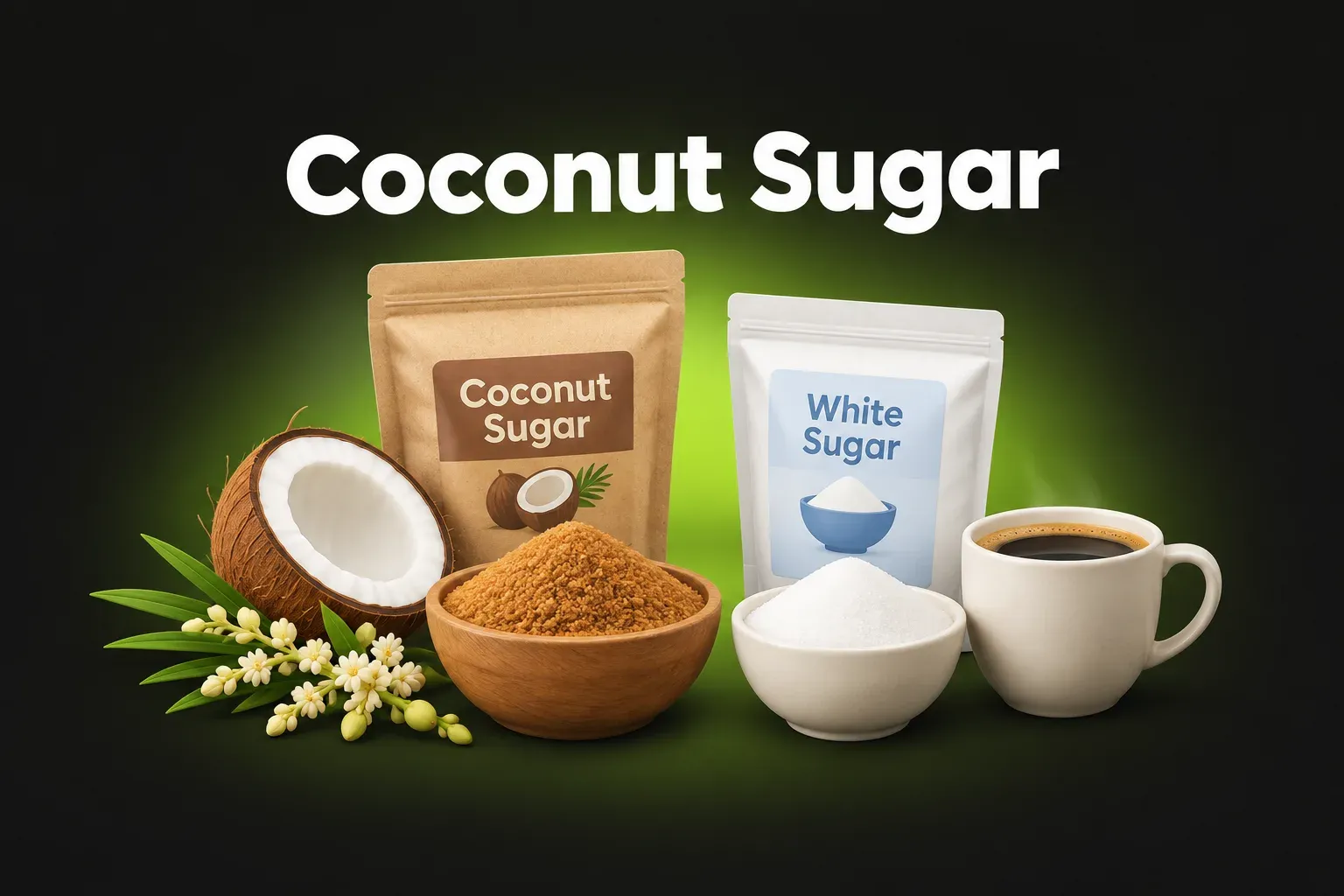
In health food stores, coconut sugar is sold as a “natural” sugar that’s healthier than white sugar: lower glycemic index, rich in minerals, unrefined. It often costs two to three times more. But is it really better for you?
The short answer: coconut sugar is mostly sucrose, the same molecule as white sugar. It has almost as many calories. The glycemic index printed on packages (about 35) comes from a single study. The University of Sydney measured about 54, only a little lower than table sugar. Its minerals are too few to matter. For your health, it’s added sugar like any other. Choose it for its caramel taste if you like, but not to lose weight or control your blood sugar.
What is coconut sugar?
Coconut sugar doesn’t come from the coconut itself, but from the sap of coconut palm flowers. The flower stems are cut slightly, and the sap that drips out is collected. Then it’s heated until the water evaporates. What’s left is a brown, granulated sugar. It tastes like caramel or brown sugar, not like coconut.
You’ll also see it sold as coconut palm sugar, coconut blossom sugar or coconut nectar (in syrup form). Careful: palm sugar sold in Asian shops sometimes comes from other palm trees.
Coconut sugar vs white sugar
| Coconut sugar | White sugar | |
|---|---|---|
| Made of | Mostly sucrose (about 70–80%), some glucose and fructose | Almost 100% sucrose |
| Calories per 100 g | About 380 | About 400 |
| Glycemic index | About 35–54, depending on the study | About 65 |
| Minerals | A little potassium, iron, zinc | Almost none |
| Taste | Caramel | Plain sweet |
| Price | 2–3 times more | Low |
The glycemic index of coconut sugar: take it with a grain of salt
The main selling point of coconut sugar is its low glycemic index. The number 35 on many packages comes from a study by the nutrition institute of the Philippines, the country that makes the most coconut sugar. But the University of Sydney tested it too. It runs the world’s glycemic index database. It found about 54 – just under the line for a medium glycemic index. Table sugar is about 65.
Even with a slightly lower glycemic index, coconut sugar:
- raises blood sugar, like any sugar
- is half fructose in its sucrose, just like white sugar
- has almost the same calories
Read more about low glycemic index foods.
What about the minerals?
Coconut sugar has a little potassium, magnesium, iron and zinc, plus a little inulin, a type of fiber. But in one or two teaspoons, the amounts are close to zero. To get as much potassium as one banana, you’d have to eat dozens of teaspoons – hundreds of calories. Real sources of minerals are vegetables, beans and fruit. See our list of foods high in iron.
Coconut sugar counts as added sugar
The World Health Organization recommends keeping free sugars under 10% of your calories, and ideally under 5%. That’s about 25 g a day for an adult (WHO, 2015). The American Heart Association suggests at most 25 g a day for women and 36 g for men. Coconut sugar counts toward these limits, just like white sugar, honey, agave syrup or maple syrup. It’s not “free”.
That’s why a cookie or bar “made with coconut sugar” isn’t a sugar-free product. On the nutrition label, check the “Added sugars” line.
Coconut sugar and diabetes
For people with diabetes, coconut sugar isn’t a risk-free swap. It raises blood sugar and counts fully toward your carbs. If you want something sweet that doesn’t raise blood sugar, there are sweeteners like stevia or monk fruit, each with its own pros and cons. The best option is still to get used to less sweetness.
Baking with coconut sugar
- In most recipes, you can use the same amount as white sugar.
- It’s a bit less sweet and has a caramel taste. It’s great in chocolate cakes, crumbles and coffee.
- It makes baked goods darker and a little moister.
It’s a good choice for flavor. For your health, the most useful change is to use half the sugar in a recipe, whatever kind it is.
Coconut sugar vs other sugars
| Sugar | Calories per 100 g | Glycemic index | Good to know |
|---|---|---|---|
| Coconut sugar | ~380 | ~35–54 | Mostly sucrose. Very few minerals |
| White sugar | ~400 | ~65 | Pure sucrose |
| Brown sugar | ~380 | ~65 | White sugar with a little molasses. Same effect |
| Honey | ~300 | ~55–60 | Glucose and fructose. Counts as added sugar |
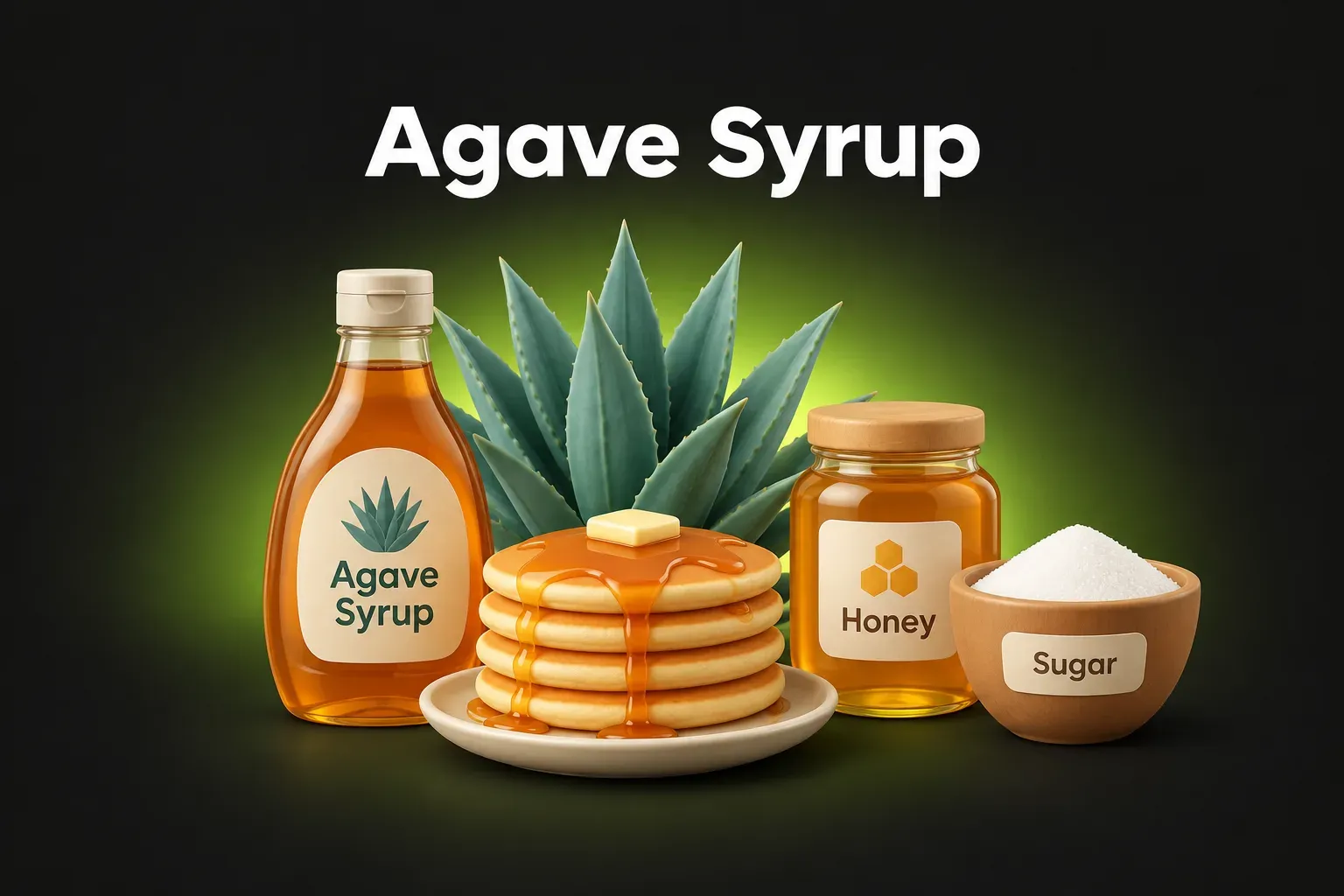
| Agave syrup | ~310 | ~10–20 | Very high in fructose |
| Dextrose | ~400 | ~100 | Pure glucose, raises blood sugar very fast |
Key points
- Coconut sugar is sugar. It counts toward your added sugars and calories.
- Its low glycemic index isn’t certain: between 35 and 54, depending on the study.
- Its minerals don’t matter in normal amounts.
- Choose it for taste, not for health.
- The real win is using less, whatever the sugar.
Spot coconut sugar on any label in seconds. With NutriSmart, you photograph the ingredient list or scan the barcode, and the app tells you right away if the product has coconut sugar. Turn on an alert for it, and the app warns you every time a product you scan contains it. You’ll also see every other additive, the risks of each one and a health score out of 100.Get the app free
You can also read about coconut oil, agave syrup and stevia.
The bottom line
Coconut sugar has a nice caramel taste, but it’s not a health food. It’s mostly sucrose and has almost as many calories as white sugar. Its low glycemic index isn’t certain, and its minerals are too few to matter. Use it if you like the taste – but like white sugar, in moderation.
FAQ
Is coconut sugar healthier than white sugar?
Not really. Coconut sugar is mostly sucrose, the same molecule as white sugar. It has almost as many calories. It contains a few minerals and a little fiber, but so little that it makes no real difference. For your health, it counts as added sugar, just like white sugar.
What is the glycemic index of coconut sugar?
The numbers vary. A study from the Philippines found a glycemic index of about 35 – the number you often see on packages. But the University of Sydney, which measures the glycemic index of foods from around the world, found about 54. That's only a little lower than table sugar (about 65).
Is coconut sugar good for people with diabetes?
No better than regular sugar. It raises blood sugar, has the same calories and counts fully toward your carbs. People with diabetes should limit it like any other sugar and talk to their doctor or dietitian.
How many calories are in coconut sugar?
About 380 calories per 100 g, almost as much as white sugar (about 400). One teaspoon (about 4 g) has about 15 calories.
Can I swap white sugar for coconut sugar?
In most recipes, you can use the same amount of coconut sugar as white sugar. It's a bit less sweet and tastes like caramel. It makes baked goods darker, but not healthier. The best change is to use less sugar, whatever kind it is.
Is coconut sugar made from coconuts?
No. It's made from the sap of coconut palm flowers. The sap is collected and heated until the water evaporates and the sugar forms granules. It doesn't taste like coconut.