Brown Rice Syrup: Is It Healthier Than Sugar?
What brown rice syrup is, its calories and very high glycemic index, the arsenic findings in products made with it, and how it compares with sugar.
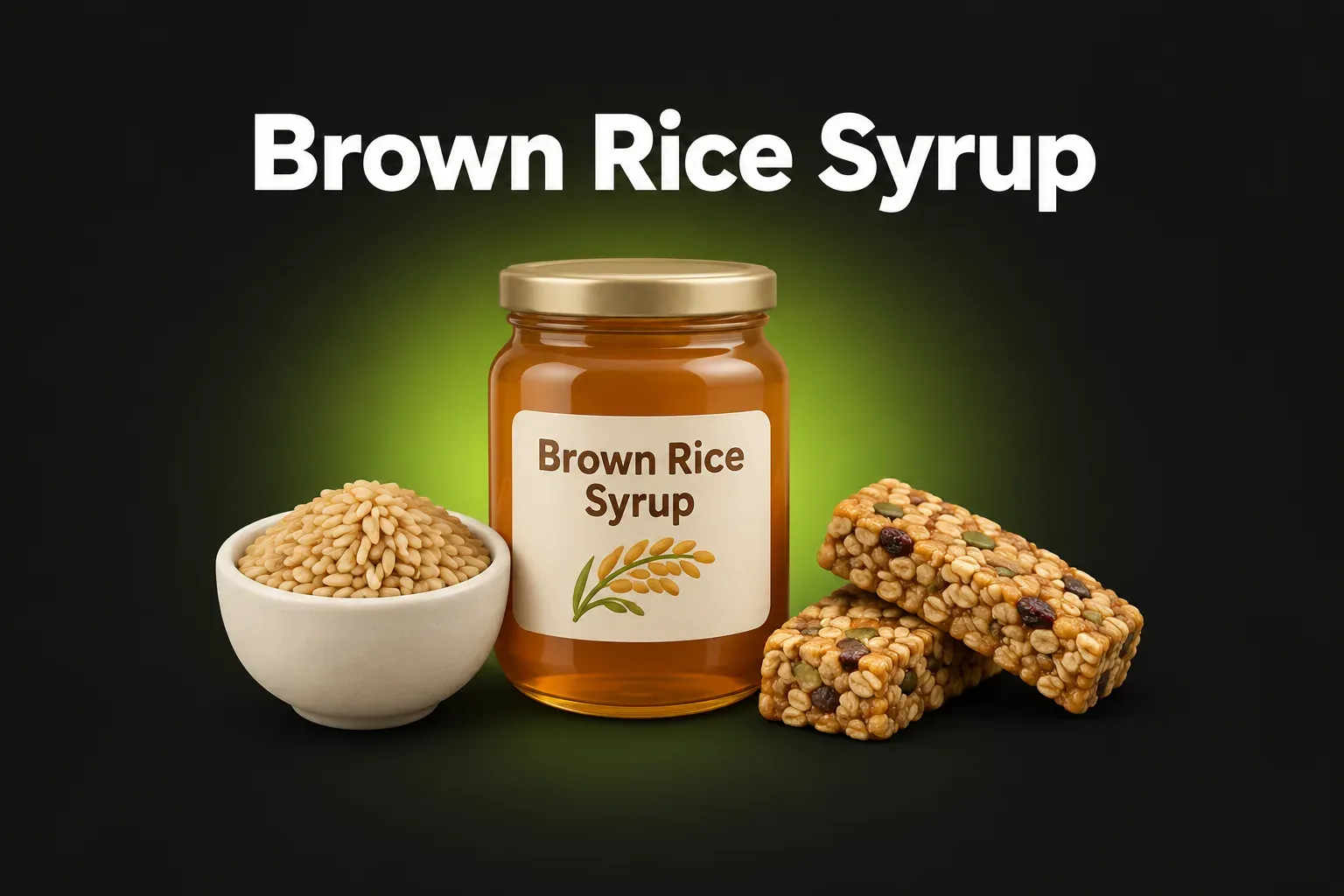
Brown rice syrup – also sold as rice syrup or rice malt syrup – is popular in organic granola bars, vegan baking, “refined sugar-free” snacks and some sports and baby foods. It sounds wholesome, and the word “brown” makes it look like a whole-grain food.
The short answer: brown rice syrup is sugar made from rice starch. It has about 60–70 calories per tablespoon, almost no nutrients and a very high glycemic index (about 98) – it raises blood sugar faster than table sugar. It has almost no fructose, which is its only real advantage. And because rice takes up arsenic from soil, products made with brown rice syrup have been found to contain more arsenic. It’s not healthier than sugar.
What is brown rice syrup?
Brown rice syrup is made like this:
- Brown rice is cooked to soften the starch.
- Enzymes (often from sprouted barley or added enzymes) break the starch into smaller sugars.
- The liquid is filtered and boiled down into a thick, amber syrup.
The result is mostly maltose (two glucose units joined), maltotriose (three glucose units) and a little glucose. There’s almost no fructose. The “brown” refers to the rice – the syrup doesn’t keep the fiber, vitamins or minerals of whole-grain rice.
On labels you’ll see brown rice syrup, organic brown rice syrup, rice syrup, rice malt syrup or brown rice syrup solids.
Brown rice syrup nutrition
Approximate values: the middle of 37 rice syrups in the Open Food Facts database. Brands differ a little.
| Amount | Calories | Sugars |
|---|---|---|
| 1 teaspoon (7 g) | about 22 kcal | about 4 g |
| 1 tablespoon (21 g) | about 60–70 kcal | about 11–13 g |
| 100 g | about 300–320 kcal | about 50–60 g |
Like tapioca syrup, part of brown rice syrup is longer glucose chains that don’t count as “sugars” on the label. Your body turns them into glucose quickly anyway, so the total carbs (about 75–80 g per 100 g) are what matter.
Brown rice syrup vs other sweeteners
| Sweetener | Glycemic index | Fructose | Calories per tbsp |
|---|---|---|---|
| Brown rice syrup | about 98 | almost none | about 60–70 |
| Glucose syrup | high | almost none | about 62 |
| Table sugar | about 65 | 50% | about 48 |
| Honey | about 55–60 | about 50% | about 64 |
| Agave syrup | about 15–30 | 70–90% | about 60 |
| Coconut sugar | about 35–55 | about 40–50% | about 45 |
Glycemic index values from the University of Sydney GI database and published studies; they vary by product.
Brown rice syrup has the highest glycemic index of the common sweeteners – higher than table sugar. If you have diabetes or watch your blood sugar, it’s one of the worst choices. Read more about low glycemic index foods.
The arsenic problem
Rice plants take up more arsenic from soil and water than other grains. Some of it is inorganic arsenic, which is linked to cancer and other health problems after long exposure.
In 2012, researchers at Dartmouth College tested products sweetened with organic brown rice syrup. They found:
- Toddler formulas with brown rice syrup as the main ingredient had arsenic levels up to six times the US limit for drinking water.
- Cereal bars and energy foods with brown rice syrup had much more arsenic than similar products without it (Jackson et al., Environmental Health Perspectives, 2012).
The FDA advises eating a variety of grains, not just rice, and has set an action level for inorganic arsenic in infant rice cereal (FDA). The amount of arsenic varies a lot between products, and many brands now test for it.
What to do: don’t use brown rice syrup every day, and avoid it for babies and toddlers, who are the most sensitive.
Is brown rice syrup bad for you?
On its own, a spoonful now and then isn’t dangerous. But it isn’t the healthy choice it’s often sold as:
- It’s added sugar. Diets high in added sugar are linked to weight gain, type 2 diabetes, fatty liver, heart disease and tooth decay.
- It spikes blood sugar more than table sugar.
- It may add arsenic to your diet.
Its one plus: it has almost no fructose, so some people with fructose malabsorption tolerate it better.
Spot brown rice syrup on any label in seconds. With NutriSmart, you photograph the ingredient list or scan the barcode, and the app tells you right away if the product has brown rice syrup – it counts it as sugar. Turn on an alert for sugar, and the app warns you every time a product you scan contains it. You’ll also see every other additive, the risks of each one and a health score out of 100.Get the app free
See our guides to the healthiest protein bars and is granola healthy? – two places brown rice syrup often hides.
The bottom line
Brown rice syrup is sugar made from rice starch. It has about 60–70 calories per tablespoon, almost no nutrients and a very high glycemic index – it raises blood sugar faster than table sugar. Products made with it have been found to contain more arsenic. Its only advantage is that it’s almost fructose-free. It’s not healthier than sugar, so use it rarely and don’t give it to babies or toddlers.
FAQ
What is brown rice syrup?
Brown rice syrup (also called rice syrup or rice malt syrup) is a sweetener made by breaking down the starch in cooked brown rice with enzymes. The result is a thick, amber syrup made mostly of maltose, maltotriose and a little glucose.
Is brown rice syrup healthier than sugar?
No. It has about the same calories as other syrups, almost no nutrients, and a very high glycemic index – it raises blood sugar faster than table sugar. Its only advantage is that it has almost no fructose.
Does brown rice syrup contain arsenic?
It can. Rice takes up more arsenic from soil and water than other grains. A 2012 Dartmouth study found much higher arsenic levels in cereal bars, energy foods and toddler formulas that used organic brown rice syrup. It's a good reason not to use it every day, and to avoid it for babies and toddlers.
What is the glycemic index of brown rice syrup?
Very high – about 98 on a scale where pure glucose is 100. Table sugar is about 65. That means it raises blood sugar very quickly.
How many calories are in brown rice syrup?
About 300–320 calories per 100 g, or about 60–70 calories per tablespoon (21 g), depending on the brand.
Is brown rice syrup good for a fructose-free diet?
It has almost no fructose, so some people with fructose malabsorption use it. But it's still sugar, it raises blood sugar fast, and it may contain arsenic, so use it in small amounts.