Is Agave Syrup Healthy? Agave vs Honey, Sugar & Diabetes
Is agave syrup (agave nectar) healthier than sugar or honey? Calories, glycemic index, what its fructose does to your liver, and if it's OK for diabetes.
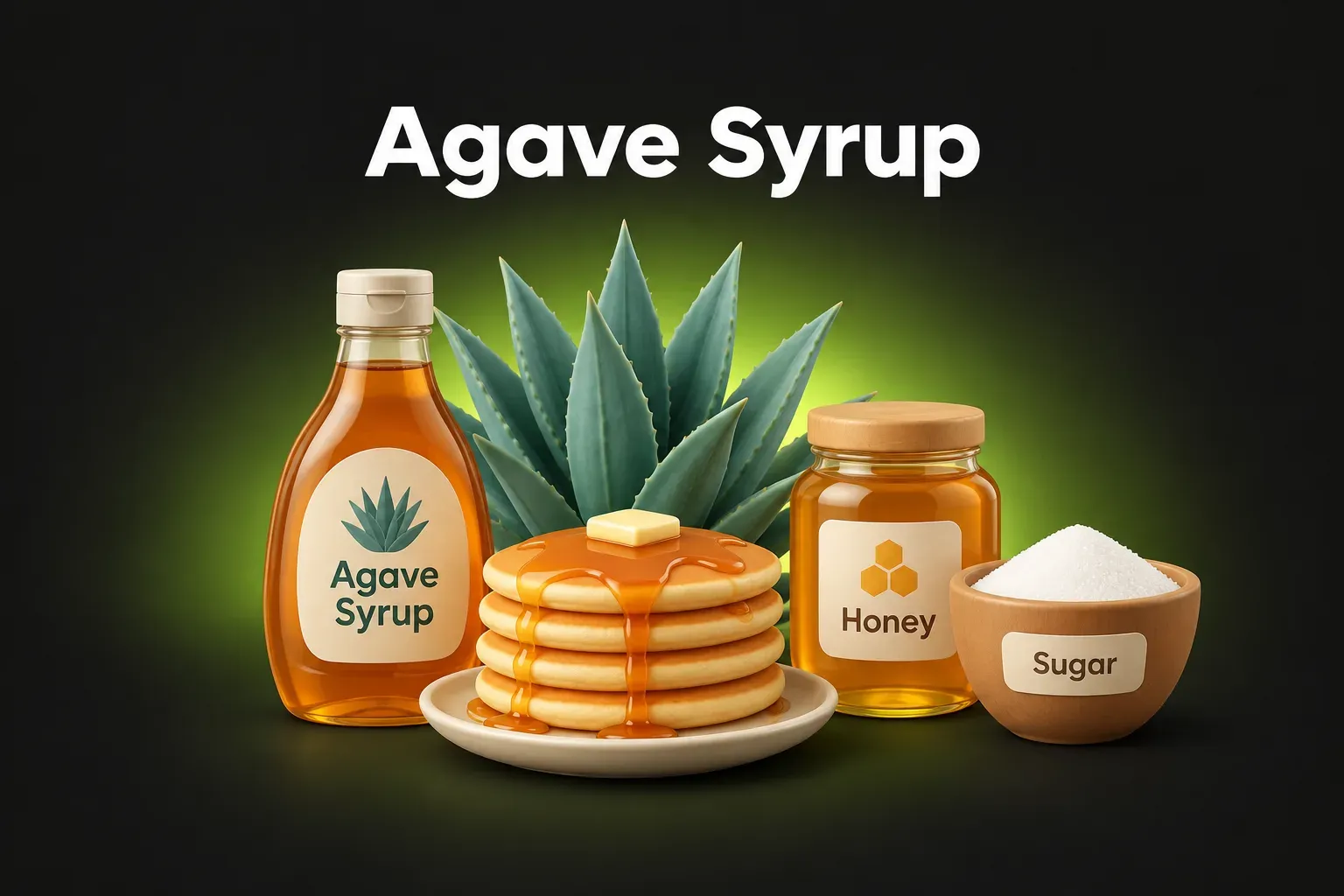
Agave syrup – also sold as agave nectar – is marketed as a “natural”, “low glycemic”, “diabetic-friendly” sweetener. You’ll find it in health food stores, in “refined sugar-free” treats and in countless recipes for pancakes, tea and smoothies. But is it really healthier than sugar or honey?
The short answer: agave syrup is no healthier than sugar. It has a low glycemic index, but only because it’s very high in fructose – often 70–90% of its sugars, more than table sugar and honey (about 50%). In large amounts, the liver turns fructose into fat. In studies with people, fructose increased fat around the organs and made the body respond worse to insulin. Agave is still added sugar: use it rarely and in small amounts.
What is agave syrup?
Agave syrup is made from the sap of the agave plant – the same plant used to make tequila. It grows mainly in Mexico. The sap naturally contains fructans (long chains of fructose, a kind of fiber). In the factory, the sap is heated or treated with enzymes, and the fructans are broken down into fructose. Then the liquid is filtered and boiled down into a syrup.
So even though the plant contains fiber, the final syrup is almost pure sugar, mostly fructose. “Raw” agave isn’t different: it’s heated too, just at lower temperatures.
Agave syrup vs other sweeteners
| Sweetener | Fructose (share of sugars) | Glycemic index | Calories / 100 g |
|---|---|---|---|
| Agave syrup | 70–90% | 10–20 | 310 |
| Honey | about 50% | 55–60 | 304 |
| Table sugar | 50% | about 65 | 387 |
| Maple syrup | about 50% | about 55 | 260 |
| High fructose corn syrup | 42–55% | – | about 280 |
| Stevia | 0 | 0 | 0 |
Agave is about 1.4–1.6 times sweeter than sugar, so you can use a little less. But one tablespoon (21 g) still has about 65 calories.
Is agave syrup healthy? What the research says
Why a low glycemic index isn’t an advantage here
The glycemic index shows how fast a food raises blood sugar. Agave has a very low glycemic index because fructose doesn’t go straight into the blood like glucose does. It goes to the liver first. The liver turns it into glucose, stores it or – when there’s too much – turns it into fat.
So your blood sugar doesn’t spike, but your liver gets a heavy load. A low glycemic index doesn’t make a food healthy.
Fructose, belly fat and insulin
- At the University of California, adults with overweight drank fructose- or glucose-sweetened drinks for 10 weeks. The drinks gave them a quarter of their daily calories. Both groups gained the same weight. But only the fructose group gained fat around the organs – the most harmful kind. Their liver made more fat, and their body responded worse to insulin (Stanhope et al., Journal of Clinical Investigation, 2009).
- In 41 children with obesity, scientists replaced the sugar in their food with starch for just 9 days, with the same calories. Liver fat dropped by almost half (from 7.2% to 3.8%), and insulin worked better (Schwarz et al., Gastroenterology, 2017).
- A review of the evidence names sugar, and especially fructose, as one of the main drivers of fatty liver disease (Jensen et al., Journal of Hepatology, 2018).
Agave has even more fructose than sugar, so these effects apply to it directly.
Uric acid and gout
When the liver breaks down fructose, it makes uric acid. A large study followed over 46,000 men for 12 years. Those who ate the most fructose had about twice the risk of gout (Choi & Curhan, BMJ, 2008). If you have gout or high uric acid, agave is one of the worst sweeteners you can choose.
What animal studies show
To be fair: in a small study, 18 mice ate food with agave syrup or table sugar for 34 days. The agave mice gained less weight and had lower blood sugar and insulin (Hooshmand et al., Journal of Medicinal Food, 2014). But only 6 mice got agave, and the study was short. The authors say larger studies, including in people, are needed. So far, those human studies don’t exist.
Animal studies matter, because testing large amounts of fructose on people for years would put their health at risk. And mice share most of their genes with us. But one small study doesn’t outweigh the many human studies on fructose.
Minerals and antioxidants
Agave contains traces of minerals and antioxidants. But the amounts are so small that they wouldn’t matter even if you ate a lot of it – and then you’d be eating far too much sugar.
Agave vs honey
| Agave syrup | Honey | |
|---|---|---|
| Fructose | 70–90% of sugars | About half |
| Glycemic index | 10–20 | 55–60 |
| Calories per tablespoon | About 65 | About 64 |
| Sweetness | Sweeter than sugar | About as sweet as sugar |
| Antioxidants | Traces | A few, more in dark honey |
| Vegan | Yes | No |
| Babies under 1 year | Added sugar – avoid | Never (risk of botulism) |
Neither is a health food. Honey raises blood sugar faster. Agave puts more fructose on your liver. If you like the taste of one, use a little of it – and count both as added sugar.
Agave and diabetes
Many people with diabetes choose agave because it “doesn’t raise blood sugar”. But:
- it counts as added sugar, just like table sugar and honey;
- it has about 65 calories per tablespoon, and extra calories make weight and blood sugar harder to control;
- fructose can add fat to the liver and make insulin work less well over time.
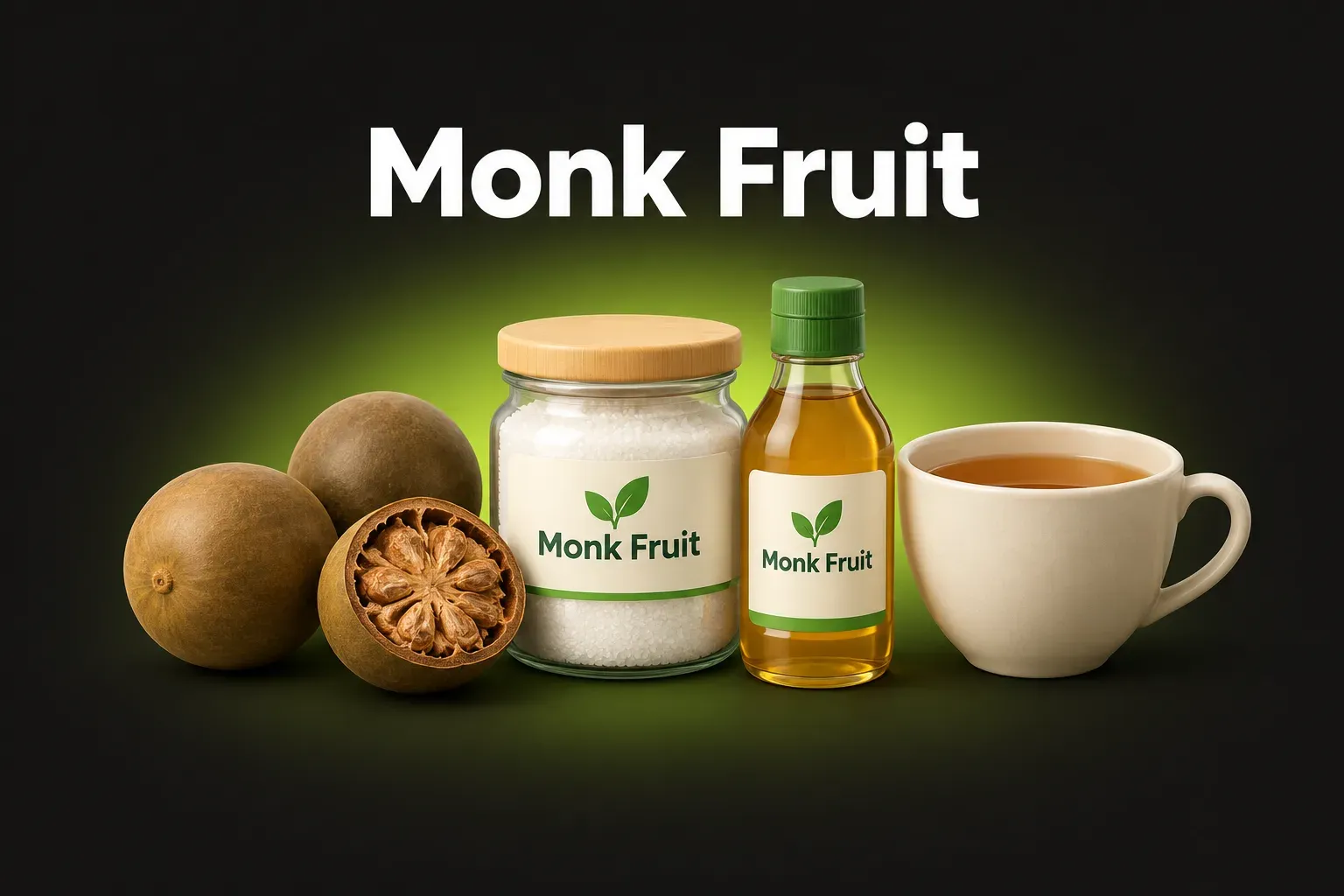
If you have diabetes, it’s better to get used to less sweetness, or use a zero-calorie sweetener like stevia or monk fruit now and then. Talk to your doctor before using any syrup often.
How much agave syrup is OK?
The World Health Organization recommends keeping added sugars – including honey, syrups and fruit juice – under 10% of your calories, ideally under 5%. The American Heart Association suggests at most 25 g a day for women and 36 g for men. For most adults, 25 g is about one heaping tablespoon of agave, counting all the added sugar you eat that day.
How to use less agave syrup
- Don’t think of it as “healthy sugar”. Put it in the same group as sugar and honey.
- Sweeten with fruit: mashed banana in oatmeal, berries in yogurt, dates in baked goods. Whole fruit has fiber, which slows down the fructose.
- Use half the amount the recipe calls for. The taste changes less than you’d think.
- Read the label on “refined sugar-free” and “raw” products – many are sweetened with agave, dates or coconut sugar.
- Get used to less sweetness. Your taste buds adjust within a few weeks.
Spot agave syrup on any label in seconds. With NutriSmart, you photograph the ingredient list or scan the barcode, and the app tells you right away if the product has agave syrup. Turn on an alert for it, and the app warns you every time a product you scan contains it. You’ll also see every other additive, the risks of each one and a health score out of 100.Get the app free
You can also read about zero-calorie sweeteners: stevia, monk fruit, erythritol and allulose. For low-sugar breakfast ideas, see our list of healthy breakfast ideas.
The bottom line
Agave syrup has a low glycemic index, but that doesn’t make it healthy. It has more fructose than sugar and honey. In large amounts, the liver turns fructose into fat, and fructose raises belly fat and uric acid and makes insulin work less well. The only study showing it’s better than sugar was done in 6 mice. Treat agave like any other added sugar: a little, now and then.
FAQ
Is agave syrup healthy?
It's no healthier than sugar. It has a low glycemic index, so it doesn't spike blood sugar. But that's because it's very high in fructose – often 70–90% of its sugars. In large amounts, the liver turns fructose into fat. In studies with people, drinks high in fructose increased fat around the organs and made the body respond worse to insulin. Agave is still added sugar, so use it rarely and in small amounts.
Is agave syrup good for people with diabetes?
It's not a good choice. It raises blood sugar more slowly, but it has as many calories as other syrups and a lot of fructose, which can add fat to the liver and make insulin work less well. For diabetes, it counts as added sugar. If you have diabetes, talk to your doctor before using it often.
Agave vs honey – which is better?
Neither is healthy in large amounts. Honey is about half fructose, while agave is often 70–90%. Honey raises blood sugar faster, but it has less fructose and a few antioxidants. Agave is sweeter, so you can use a little less. For both, the rule is the same: as little as possible.
How many calories are in agave syrup?
About 310 calories per 100 g, or about 65 calories per tablespoon (21 g). That's a bit less than sugar by weight, but syrup is denser, so a tablespoon of agave has more calories than a tablespoon of sugar. Because it's sweeter than sugar, you can use a little less.
What is the glycemic index of agave syrup?
Very low – usually between 10 and 20, compared with about 65 for table sugar and 55–60 for honey. That's because fructose doesn't raise blood sugar directly. But a low glycemic index doesn't make a food healthy.
Is agave nectar the same as agave syrup?
Yes. "Agave nectar" and "agave syrup" are two names for the same product. "Nectar" just sounds more natural.