Is Stevia Bad for You? Benefits, Side Effects & Safety
What stevia (E960) is, what studies show about blood sugar, blood pressure and gut bacteria, and why many stevia products are mostly erythritol.
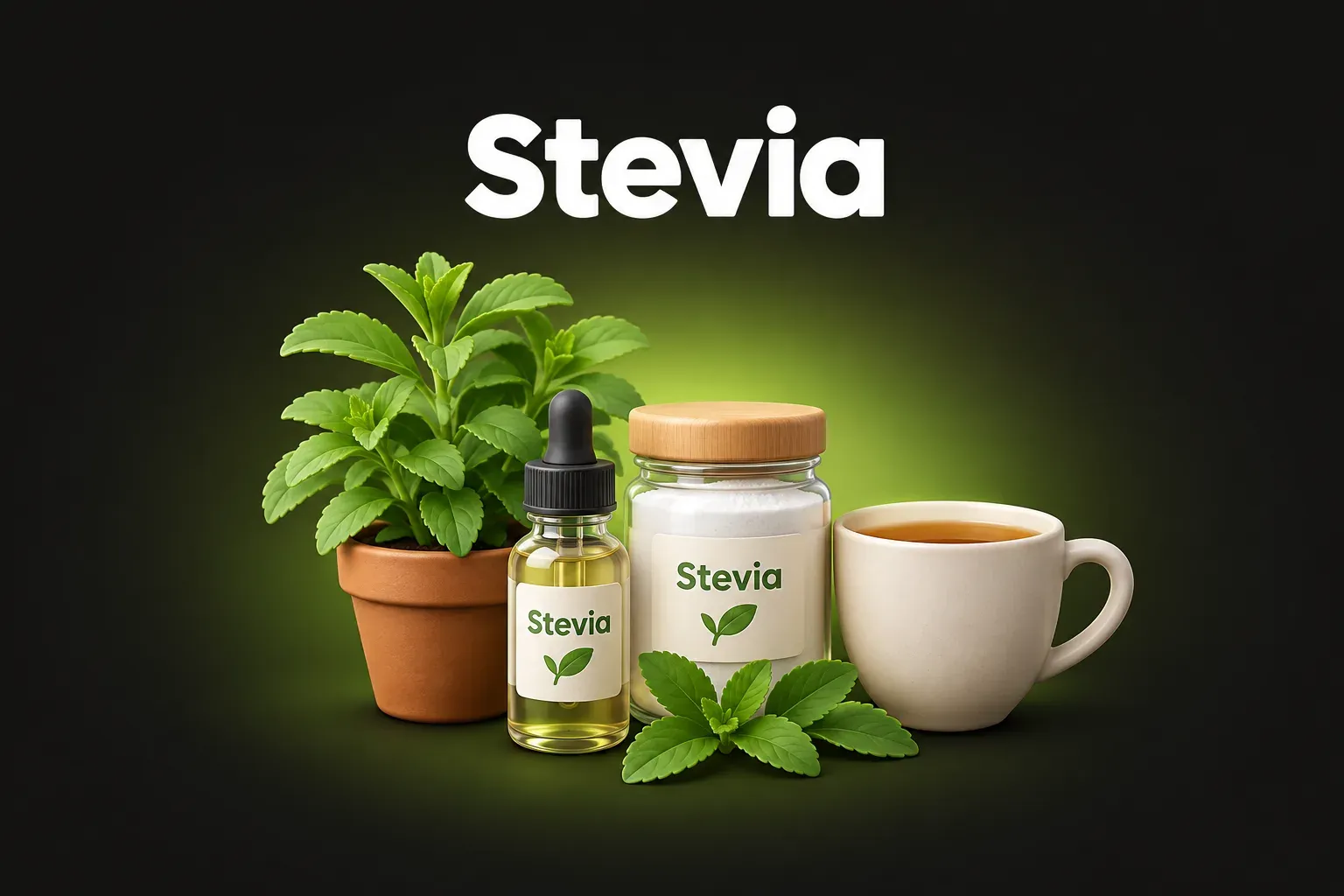
Stevia is the sweetener people often choose when they want something natural, with zero calories. It comes from the leaves of a South American plant and is 200–400 times sweeter than sugar. Of all sweeteners, it has some of the fewest health worries. But many products sold as “stevia” contain very little of it. So is stevia bad for you?
The short answer: pure stevia has no calories and doesn’t raise blood sugar. In studies with people, it hasn’t caused serious harm at normal amounts. A review of studies even found it slightly lowered blood pressure. Its effects on gut bacteria are still unclear. The main thing to watch is the label. Many “stevia” sweeteners are mostly erythritol, dextrose or maltodextrin, which have their own downsides.
What is stevia?
Stevia comes from Stevia rebaudiana, a plant from Paraguay and Brazil. People there have used its leaves to sweeten tea for hundreds of years. The sweetness comes from substances called steviol glycosides. The main ones are stevioside and rebaudioside A (Reb A). Newer products use Reb M and Reb D, which taste more like sugar.
The stevia you buy is made by soaking the leaves in water, then cleaning the extract. Some newer kinds are made with the help of yeast or enzymes.
| Stevia extract | Sugar | |
|---|---|---|
| Sweetness | 200–400 times sweeter | 1× |
| Calories | 0 | 4 per gram |
| Glycemic index | 0 | 65 |
| Causes cavities | No | Yes |
| Taste | Sweet, sometimes bitter or licorice-like | Sweet |
On labels, you’ll see it as stevia, stevia extract, steviol glycosides, rebaudioside A (Reb A) or E960.
Read the label: many “stevia” products are mostly something else
Stevia is so sweet that only a tiny amount is needed. To make it look and measure like sugar, most stevia powders and granules add a filler:
- Erythritol – the most common, and linked to blood clotting and heart risk in recent studies
- Dextrose or maltodextrin – which raise blood sugar quickly
Pure liquid stevia drops or pure stevia powder with no other ingredients are the cleanest options.
Is stevia bad for you? What the research says
Blood sugar
Pure stevia doesn’t raise blood sugar or insulin. A 2022 study gave sweeteners to 120 healthy adults for two weeks. Stevia changed some gut bacteria. But unlike sucralose and saccharin, it didn’t clearly make blood sugar control worse (Suez et al., Cell, 2022). This makes stevia a good choice for people with diabetes. Read more about the glycemic index.
Blood pressure
A review looked at nine careful studies with 462 people. Stevia lowered the top blood pressure number by about 6 mm Hg compared with a fake pill. Effects on blood sugar, weight and cholesterol were too small to count (Bundgaard Anker et al., Nutrients, 2019).
Gut bacteria
- In people: in a 2024 study, people took five drops of stevia twice a day for 12 weeks. It didn’t clearly change their gut bacteria (Singh et al., Nutrients, 2024).
- In rats: low doses of Reb A changed the gut bacteria. They also affected dopamine, the brain chemical linked to pleasure and cravings (Nettleton et al., Nutrients, 2019).
Studies on animals matter, because many effects can’t be tested on people for years without putting their health at risk. But so far, studies in people are reassuring.
Weight control
In 2023, the World Health Organization advised against using sweeteners – including stevia – to control weight. They don’t help with weight loss in the long run (WHO, 2023). Swapping sugar for stevia cuts calories, but it doesn’t reduce the craving for sweet foods.
Side effects
- A bitter or licorice-like aftertaste, especially in older extracts
- Bloating or gas – usually from the erythritol or other sugar alcohols added to stevia products, not from the stevia itself
- Rarely, allergic reactions in people allergic to plants in the daisy family, like ragweed
How much stevia is safe?
The FDA and EFSA say purified stevia is safe up to 4 mg per kg of body weight per day (counted as steviol). That’s about 280 mg a day for a 70 kg adult. Stevia is so sweet that most people get far less than that.
Whole stevia leaves and raw extracts aren’t approved as food additives in the US or EU, because they’ve been tested less for safety.
Stevia vs other sweeteners
| Sweetener | Calories | Raises blood sugar | Main concerns |
|---|---|---|---|
| Stevia | 0 | No | Few; aftertaste; often mixed with erythritol |
| Erythritol | ~0.2 kcal/g | No | Blood clotting and heart risk in studies |
| Xylitol | 2.4 kcal/g | Slightly | Blood clotting and heart risk in studies; toxic to dogs |
| Allulose | ~0.4 kcal/g | No | Bloating; few long-term studies; not allowed in the EU |
| Sucralose | 0 | No, but may affect insulin | Gut bacteria, DNA damage in lab tests, heating |
| Aspartame | ~0 | No | Possible cancer risk (WHO) |
How to use stevia well
- Choose pure stevia – liquid drops or powder without erythritol, dextrose or maltodextrin.
- Start with a little – it’s very sweet, and too much tastes bitter.
- Try Reb M or “sugar-like” stevia if the aftertaste bothers you.
- Use it to cut sugar, not to eat more sweets – the goal is to get used to less sweetness.
Spot stevia on any label in seconds. With NutriSmart, you photograph the ingredient list or scan the barcode, and the app tells you right away if the product has stevia. Turn on an alert for it, and the app warns you every time a product you scan contains it. You’ll also see every other additive, the risks of each one and a health score out of 100.Get the app free
You can also read about other sweeteners: erythritol, xylitol, saccharin and allulose.
Compare all sweeteners and their NutriSmart ratings in our full list of artificial sweeteners.
The bottom line
Stevia is one of the safest sweeteners. It has no calories, no effect on blood sugar, and studies in people found no serious harm. It may even lower blood pressure a little. Its effects on gut bacteria are still being studied. The biggest catch is that many “stevia” products are mostly erythritol or dextrose. So choose pure stevia, use small amounts, and try to need less sweetness over time.
FAQ
Is stevia bad for you?
Stevia is one of the sweeteners with the fewest worries. It has no calories and doesn't raise blood sugar. Studies in people haven't found serious harm at normal amounts. The bigger problem is that many "stevia" products are mostly erythritol, dextrose or maltodextrin, which have their own downsides. Pure stevia in small amounts is a good choice.
Does stevia raise blood sugar or insulin?
No. Pure stevia extract has no calories and doesn't raise blood sugar or insulin. In a large 2022 study of sweeteners, stevia didn't make blood sugar control clearly worse. Sucralose and saccharin did.
Does stevia affect gut bacteria?
Studies don't agree yet. A 2024 study in people found that 12 weeks of stevia drops didn't clearly change the gut bacteria. But a study in rats found that low doses changed gut bacteria and the part of the brain linked to pleasure and cravings. More research is needed.
Why does stevia taste bitter?
Stevia's sweet substances, especially older ones like stevioside, also trigger the bitter taste buds on your tongue. So some people get a bitter or licorice-like aftertaste. Newer extracts with Reb M or Reb D taste more like sugar.
Is stevia safe during pregnancy and for children?
The FDA and EFSA say purified stevia extracts are safe below the daily limit of 4 mg per kg of body weight (as steviol). Whole stevia leaves and raw extracts haven't been approved as food additives. So pregnant women and children should stick to purified products, in small amounts.
What is E960?
E960 is the European code for steviol glycosides, the sweet substances from stevia. On labels you'll see "steviol glycosides", "stevia extract", "rebaudioside A" or "sweetener: E960".