Saccharin (E954): Is the Oldest Sweetener Safe?
What saccharin (E954) is, why it once carried a cancer warning, what new studies show about blood sugar and gut bacteria, and what EFSA decided in 2024.
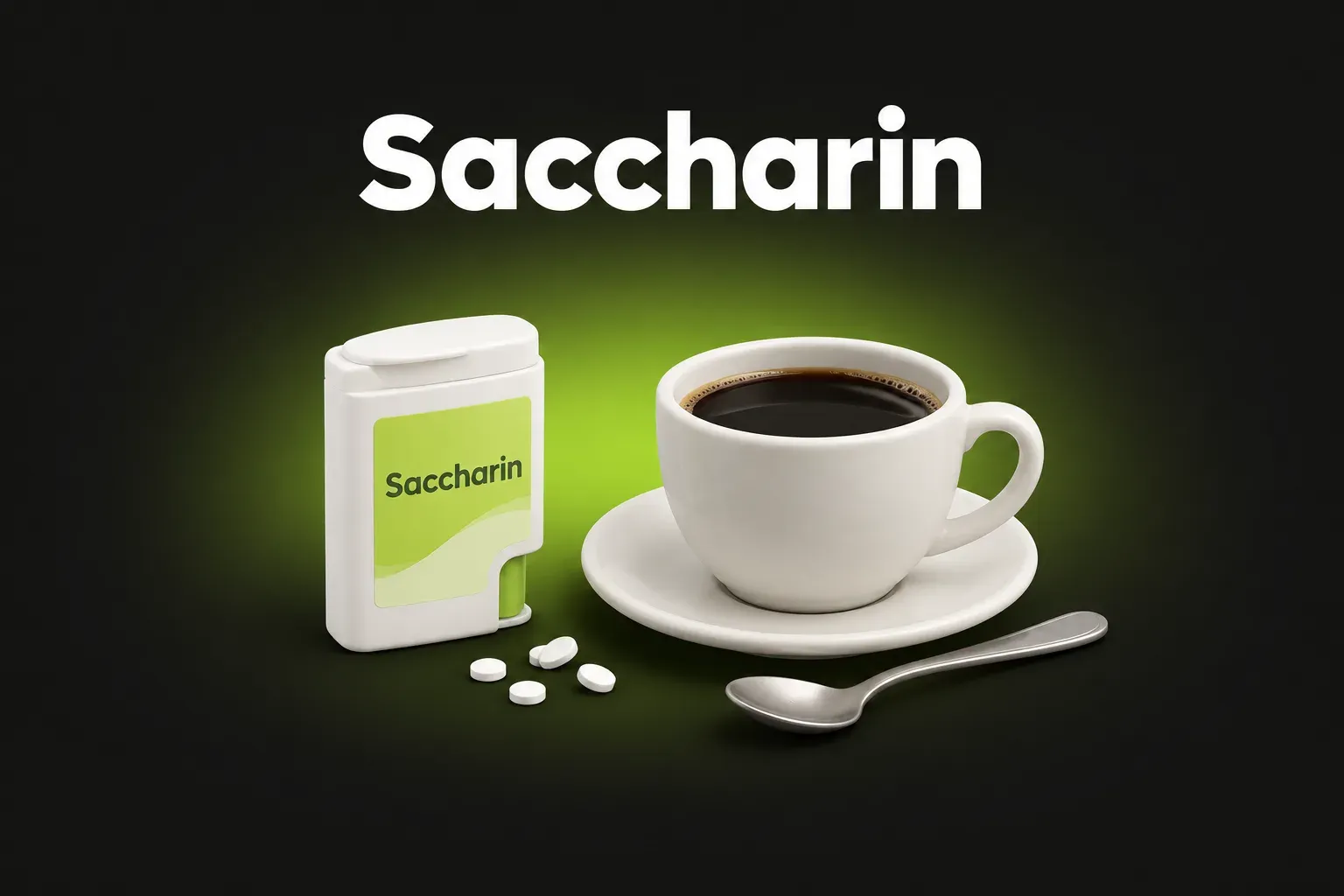
Saccharin is the grandfather of all artificial sweeteners. It’s been around for more than 140 years, survived a famous cancer scare in the 1970s and is still in tablets, diet drinks and toothpaste today. In 2024, European experts even raised its safe daily limit. But newer studies on gut bacteria and blood sugar have raised fresh questions.
The short answer: saccharin (E954) is a calorie-free sweetener 300–500 times sweeter than sugar. The bladder cancer found in rats came from a mechanism that doesn’t occur in humans, studies in people found no clear link, and the US warning label was removed in 2000. In 2024, the European Food Safety Authority raised the safe daily limit to 9 mg per kg of body weight. But in a 2022 trial, saccharin worsened the body’s response to sugar in some people through changes in their gut bacteria. It’s fine in small amounts – but not a health food.
What is saccharin?
Saccharin was discovered by accident in 1879 at Johns Hopkins University, when a chemist noticed a sweet taste on his hands after work. It became popular during the sugar shortages of the two World Wars and later with the first diet drinks.
- It’s 300–500 times sweeter than sugar
- It has no calories – the body doesn’t use it and gets rid of it in the urine
- It’s stable when heated, so it can be used in baking
- It has a slightly bitter, metallic aftertaste, so it’s often mixed with other sweeteners like aspartame or cyclamate
On labels, it appears as saccharin, sodium saccharin or E954.
Where is saccharin found?
- Tabletop sweeteners: small tablets and pink packets
- Diet and “zero” drinks, especially fountain drinks and some juices
- Sugar-free sweets, gum and jams
- Toothpaste and mouthwash
- Medicines: chewable tablets, syrups and lozenges
Does saccharin cause cancer?
In the 1970s, studies found bladder cancer in male rats that were fed huge doses of saccharin – especially rats whose mothers had also been fed saccharin. Canada banned it, and in the US, products had to carry a warning label from 1977.
Later research explained the result: in male rats, saccharin at high doses forms crystals in the urine that irritate the bladder and lead to tumors. This happens because of the special pH and proteins in rat urine, and doesn’t happen in humans. In 1999, the World Health Organization’s cancer agency moved saccharin to the group “not classifiable as a cause of cancer in humans”, and the US removed the warning in 2000. Studies in people haven’t found a clear link to bladder cancer.
What the new research says
What EFSA says
In 2024, the European Food Safety Authority finished its re-evaluation of saccharin. It found no concern for genotoxicity (gene damage) from saccharin made by the most common method. It raised the safe daily limit from 5 mg to 9 mg per kg of body weight – about 630 mg a day for a 70 kg adult. People’s intake stays below this limit. But EFSA found a possible genotoxicity concern for impurities from a second, less common way of making saccharin (EFSA, 2024).
Blood sugar and gut bacteria
- In 2014, researchers found that saccharin changed the gut bacteria of mice and made them worse at handling sugar. When they moved these bacteria into other mice, those mice got the same problem. In a small test with 7 people, 4 also handled sugar worse after one week of saccharin (Suez et al., Nature, 2014).
- In a 2022 trial with 120 healthy adults, two weeks of saccharin and sucralose – in doses below the safe limit – changed the gut bacteria and worsened the response to sugar in some people. The effect depended on each person’s gut bacteria (Suez et al., Cell, 2022).
- But another trial gave healthy adults saccharin at the maximum safe dose for two weeks and found no changes in gut bacteria or blood sugar (Serrano et al., Microbiome, 2021).
So the results are mixed. Saccharin doesn’t raise blood sugar directly, but it may affect some people through their gut bacteria.
Weight
In 2023, the World Health Organization advised not to use sugar substitutes for weight control, because long-term studies didn’t show they help people lose weight – and some linked them to a higher risk of type 2 diabetes and heart disease. This advice applies to all sweeteners, not just saccharin.
Pregnancy
Saccharin crosses the placenta and passes into breast milk, and babies get rid of it more slowly. There’s no proof of harm, but many doctors advise limiting it during pregnancy and breastfeeding.
Saccharin vs other sweeteners
| Sweetener | Sweeter than sugar | Heat‑stable | Main concern |
|---|---|---|---|
| Saccharin (E954) | 300–500 times | Yes | Gut bacteria, blood sugar in some people |
| Aspartame (E951) | About 200 times | No | “Possibly carcinogenic” label (IARC, 2023) |
| Sucralose (E955) | About 600 times | Mostly | Gut bacteria, breakdown products when heated |
| Acesulfame K (E950) | About 200 times | Yes | Links to cancer and heart disease in a French study |
| Stevia (E960) | 200–300 times | Yes | Few, but often mixed with other sweeteners |
How to use saccharin wisely
- Use it to cut down on sugar, not as an excuse to keep everything very sweet.
- Try to slowly reduce sweetness – your taste buds adjust in a few weeks.
- Limit it in pregnancy and don’t give sweeteners to small children.
- Drink water, unsweetened tea or coffee most of the time.
- If you have diabetes, notice how your blood sugar responds – people react differently.
Spot saccharin on any label in seconds. With NutriSmart, you photograph the ingredient list or scan the barcode, and the app tells you right away if the product has saccharin. Turn on an alert for it, and the app warns you every time a product you scan contains it. You’ll also see every other additive, the risks of each one and a health score out of 100.Get the app free
Compare all sweeteners and their NutriSmart ratings in our full list of artificial sweeteners.
The bottom line
Saccharin (E954) is the oldest artificial sweetener. The bladder cancer seen in rats came from a mechanism that doesn’t occur in humans, studies in people found no clear link, and in 2024 EFSA raised its safe daily limit. But a recent trial found that it can worsen the body’s response to sugar in some people by changing their gut bacteria, and the WHO doesn’t recommend sweeteners for weight loss. A few tablets in your coffee are fine – but the best long-term goal is to get used to less sweetness.
FAQ
What is saccharin?
Saccharin is the oldest artificial sweetener, discovered in 1879. It's 300 to 500 times sweeter than sugar, has no calories and leaves a slightly bitter, metallic aftertaste. It's sold as small tablets and in pink packets, and used in diet drinks, sugar-free foods, toothpaste and some medicines. Its E-number is E954.
Does saccharin cause cancer?
In the 1970s, very high doses caused bladder cancer in male rats, and products in the US carried a warning label. Later research showed this happened because of something specific to rat urine that doesn't occur in humans. The warning was removed in 2000, and studies in people haven't found a clear link to cancer.
Is saccharin bad for blood sugar?
It doesn't raise blood sugar directly. But in a 2022 trial with 120 adults, two weeks of saccharin worsened the body's response to sugar in some people, through changes in their gut bacteria. Another trial found no effect after two weeks. The answer may depend on the person.
How much saccharin is safe per day?
In 2024, the European Food Safety Authority raised the safe daily limit to 9 mg per kg of body weight – about 630 mg for a 70 kg adult. One sweetener tablet usually has only 10–20 mg, so most people stay far below the limit.
Is saccharin safe during pregnancy?
Saccharin crosses the placenta and passes into breast milk, and the baby clears it more slowly. There's no proof of harm, but many doctors advise limiting it during pregnancy and breastfeeding, to be safe.
Is saccharin better than aspartame or sucralose?
None is clearly the best. Saccharin has the longest history of use and EFSA recently raised its safe limit. But it may affect gut bacteria and blood sugar in some people, like sucralose. Water, unsweetened tea and coffee, or slowly using less sweetener are the safest options.