Foods High in Iron: List of Iron-Rich Foods per 100 g
A list of foods high in iron – meat, seafood, beans, seeds, greens – with iron per 100 g, how much you need a day and how to absorb more iron from plant foods.
Iron carries oxygen in your blood. When you don’t get enough, you feel tired, weak and short of breath Over time, you can develop iron deficiency anemia, the most common lack of a nutrient in the world. Women, pregnant women, children, vegetarians and frequent blood donors are most at risk. Eating more foods high in iron is the simplest way to prevent it.
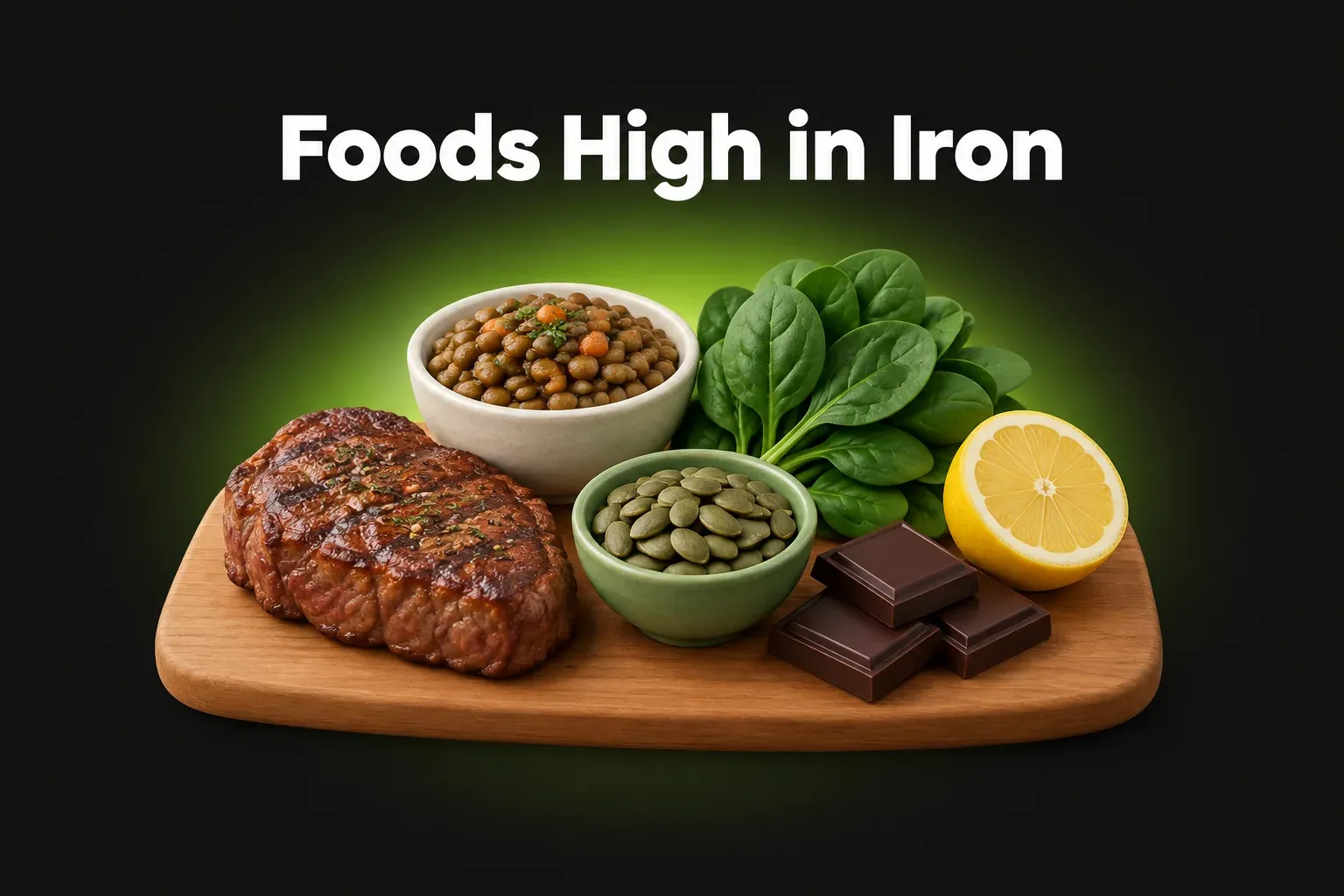
The short answer: the foods highest in iron are liver, oysters, mussels and red meat, plus seeds (sesame, pumpkin), dark chocolate, cashews, tofu, lentils, beans, chickpeas, spinach and fortified cereals. Your body takes in iron from animal foods (heme iron) much better than iron from plants (non-heme iron). But eating plant sources together with vitamin C can help your body take in several times more. Most adults need 8–18 mg a day, and pregnant women need 27 mg.
Values below are approximate, per 100 g of food (cooked where that’s how you eat it), from the US Department of Agriculture’s database (USDA FoodData Central).
Animal foods high in iron (heme iron)
| Food (100 g, cooked) | Iron |
|---|---|
| Chicken liver | 11.6 mg |
| Oysters | 9 mg |
| Mussels | 6.7 mg |
| Beef liver | 6.2 mg |
| Beef (lean) | 2.5–3 mg |
| Sardines (canned in oil) | 2.9 mg |
| Egg | 1.8 mg |
| Tuna (canned) | 1.3 mg |
| Chicken breast | 1 mg |
Liver is extremely rich in iron, but also in vitamin A – pregnant women should eat it only occasionally.
Plant foods high in iron (non-heme iron)
| Food (100 g) | Iron |
|---|---|
| Sesame seeds | 14.6 mg |
| Dark chocolate (70–85%) | 11.9 mg |
| Pumpkin seeds | 8.8 mg |
| Cashews | 6.7 mg |
| Oats (dry) | 4.5 mg |
| Spinach (cooked) | 3.6 mg |
| Lentils (cooked) | 3.3 mg |
| Kidney beans (cooked) | 2.9 mg |
| Chickpeas (cooked) | 2.9 mg |
| Tofu | 2.7–5.4 mg |
| Dried apricots | 2.7 mg |
| Quinoa (cooked) | 1.5 mg |
Fortified breakfast cereals often contain 8–18 mg of iron per serving – check the label. Many breads and flours are fortified too.
About spinach: it’s known as a top source of iron, but it also contains oxalates, substances that hold on to the iron. So the body takes in only a small part of it. Lentils, beans and seeds are better plant sources.
How much iron do you need per day?
| Group | Iron per day (US recommendation) |
|---|---|
| Men 19+ | 8 mg |
| Women 19–50 | 18 mg |
| Women 51+ | 8 mg |
| Pregnant women | 27 mg |
| Breastfeeding women | 9–10 mg |
| Vegetarians and vegans | about 1.8 times more |
Women who still have periods need more iron because they lose blood every month. The safe upper limit for adults is 45 mg a day (NIH Office of Dietary Supplements).
Heme vs non-heme iron
- Heme iron – in meat, poultry and seafood: the body takes in a lot of it, about 15–35%, no matter what else you eat.
- Non-heme iron – in plants, eggs, dairy and fortified foods: the body takes in less, about 2–20%, and it depends a lot on the rest of the meal.
How to absorb more iron
Things that help:
- Vitamin C – peppers, tomatoes, citrus, strawberries, kiwi, broccoli. In a classic study, adding vitamin C to a meal helped people take in several times more iron from plants (Hallberg et al., International Journal for Vitamin and Nutrition Research, 1989).
- A little meat or fish in the same meal also helps the body take in iron from plants.
- Soak, sprout or ferment beans and grains (like sourdough bread). This lowers phytates, substances that block iron.
Things that block iron:
- Tea and coffee – drink them between meals, at least an hour apart.
- Calcium – from supplements or large amounts of dairy in the same meal.
- Phytates – in whole grains, beans and seeds (soaking helps).
Good combinations: lentil soup with peppers and tomatoes; oatmeal with strawberries or kiwi; spinach salad with orange slices; hummus with red pepper sticks; beans with a squeeze of lemon.
Signs of low iron
- Tiredness and weakness
- Pale skin
- Shortness of breath, dizziness
- Cold hands and feet
- Brittle nails, hair loss
- Trouble concentrating
If you have these symptoms, ask your doctor for a blood test (hemoglobin and ferritin) before taking iron supplements. Too much iron can be harmful, and tiredness can have many other causes.
How to eat more iron
- Eat beans, lentils or chickpeas several times a week, with vitamin C-rich vegetables.
- Add seeds (pumpkin, sesame) to salads, yogurt and oatmeal.
- Eat red meat or seafood a couple of times a week if you eat animal foods – small portions are enough.
- Choose fortified cereals if you’re vegetarian or vegan.
- Move tea and coffee away from meals.
- Cook in a cast-iron pan – it adds a little iron to food, especially acidic dishes like tomato sauce.
Track your nutrition without guesswork. With NutriSmart, you snap a photo of what you eat, and the app counts your calories, protein, carbs, fat and fiber and shows how close you are to your daily target.Get the app free
You can also read about high fiber foods and high protein snacks.
The bottom line
The foods highest in iron are liver, shellfish and red meat, plus seeds, dark chocolate, cashews, tofu, lentils, beans and fortified cereals. Your body takes in iron from animal foods best. For plant foods, add vitamin C and keep tea and coffee away from meals. Most adults need 8–18 mg a day. If you feel tired all the time, get your iron checked before taking supplements.
FAQ
What foods are highest in iron?
Among animal foods: chicken and beef liver, oysters, mussels and red meat. Among plant foods: sesame and pumpkin seeds, dark chocolate, cashews, tofu, lentils, beans, chickpeas, spinach and iron-fortified cereals. Animal foods contain heme iron, which the body takes in two to three times better.
How much iron do I need per day?
In the US, the recommendation is 8 mg a day for men and for women over 50, 18 mg for women aged 19–50, and 27 mg during pregnancy. Vegetarians and vegans need about 1.8 times more, because the body takes in less iron from plants.
What is the difference between heme and non-heme iron?
Heme iron is found only in meat, poultry and seafood. The body takes in a lot of it: about 15–35%. Non-heme iron is found in plants, eggs, dairy and fortified foods. The body takes in less of it, about 2–20%, depending on what you eat with it.
How can I absorb more iron?
Eat plant sources of iron together with vitamin C – for example, lentils with peppers or tomatoes, or oatmeal with strawberries – or with some meat or fish. Drink tea and coffee between meals rather than with them, and don't take calcium supplements at the same time as iron-rich meals.
What are the signs of low iron?
Tiredness, weakness, pale skin, shortness of breath, dizziness, cold hands and feet, brittle nails and trouble concentrating. If you have these symptoms, ask your doctor for a blood test before taking iron supplements.
Can you get too much iron?
From food it's very rare, but iron supplements can cause stomach problems and, in high doses, be dangerous. The safe upper limit for adults is 45 mg a day from supplements and food. People with hemochromatosis, an inherited condition, take in too much iron from food and should avoid supplements.