Foods High in Vitamin D: 15 Best Sources (IU per Serving)
The foods highest in vitamin D – fatty fish, cod liver oil, UV mushrooms, eggs and fortified foods – with IU per serving, daily needs and what studies show.
Vitamin D helps your body absorb calcium and build strong bones, and it matters for your muscles and immune system. It’s a special vitamin: most of it is made by your skin in sunlight, and very few foods contain much of it. That’s why low vitamin D is common, especially in winter, in older adults and in people who spend most of the day indoors. In the US, many foods are fortified with vitamin D, which helps. Here are the foods highest in vitamin D.
The short answer: the best food sources are cod liver oil, fatty fish (trout, salmon, mackerel, sardines), mushrooms exposed to UV light, egg yolks and fortified foods like milk, plant milks, orange juice and cereals. Adults need 600 IU (15 mcg) a day, or 800 IU after age 70. It’s hard to get that from food alone, so sunlight matters a lot. Supplements help if you’re low. But in large studies they didn’t prevent cancer or heart attacks in people with normal levels.
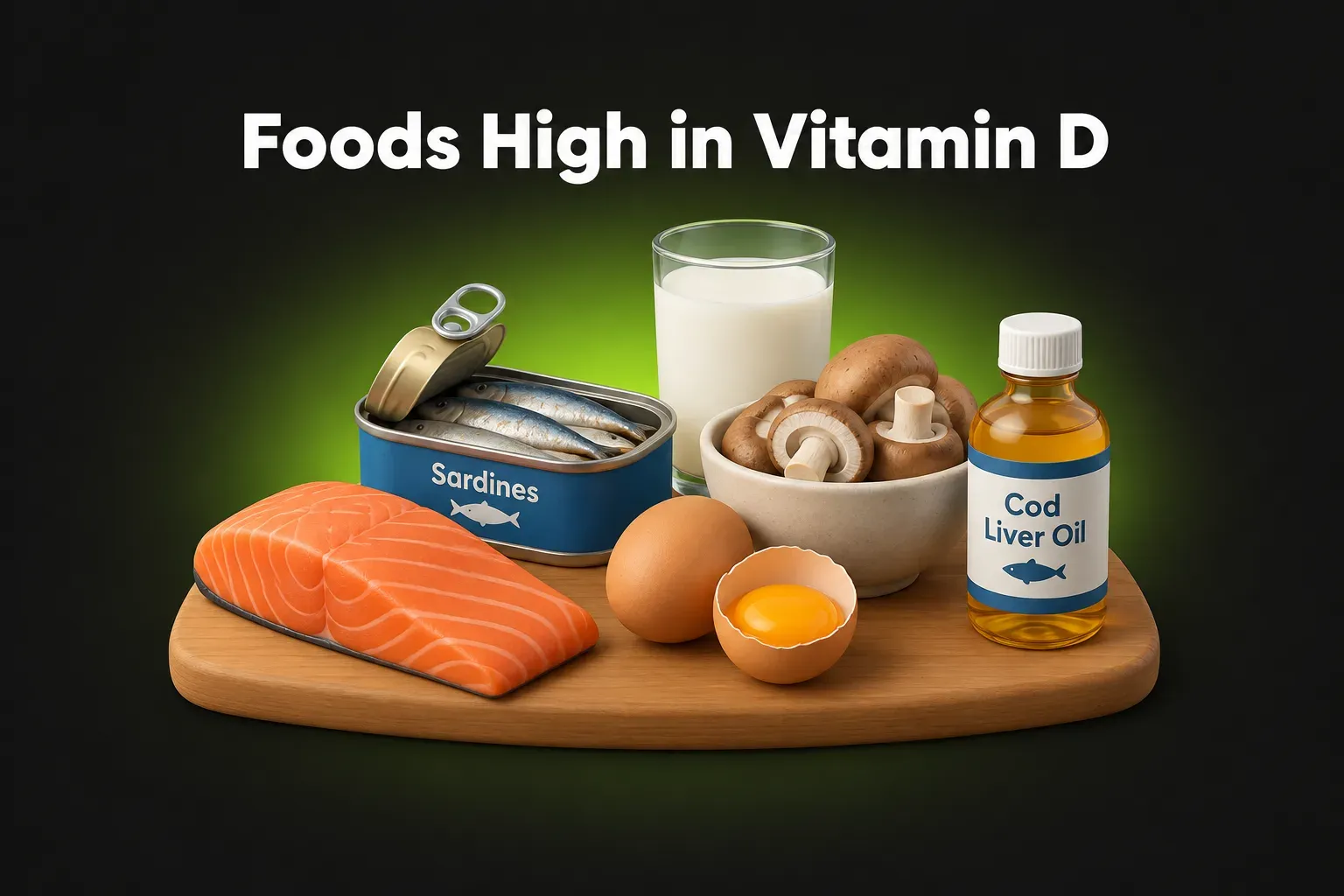
15 foods high in vitamin D (per serving)
The values below are approximate, from the National Institutes of Health (NIH Office of Dietary Supplements). Vitamin D is measured in international units (IU) or micrograms (mcg): 1 mcg = 40 IU. The %DV column shows how much of the 800 IU Daily Value on food labels one serving gives you.
| Food | Serving | Vitamin D | %DV |
|---|---|---|---|
| Cod liver oil | 1 tbsp | 1,360 IU | 170% |
| Rainbow trout, farmed | 3 oz | 645 IU | 81% |
| Sockeye salmon | 3 oz | 570 IU | 71% |
| Atlantic mackerel | 3 oz | about 550 IU | 69% |
| Mushrooms, UV-exposed | ½ cup | 366 IU | 46% |
| Soy, almond or oat milk, fortified | 1 cup | 100–144 IU | 13–18% |
| Milk, fortified | 1 cup | 120 IU | 15% |
| Orange juice, fortified | 1 cup | 100 IU | 13% |
| Breakfast cereal, fortified | 1 serving | 80 IU | 10% |
| Sardines, canned | 2 sardines | 46 IU | 6% |
| Egg, large | 1 egg | 44 IU | 6% |
| Beef liver, cooked | 3 oz | 42 IU | 5% |
| Tuna, canned light | 3 oz | 40 IU | 5% |
| Cheddar cheese | 1.5 oz | 17 IU | 2% |
| Mushrooms, regular | ½ cup | 4 IU | 1% |
A few things to know:
- Wild salmon usually has more vitamin D than farmed salmon, and the numbers vary a lot from fish to fish.
- Mushrooms make vitamin D when they’re exposed to UV light, just like your skin. Regular mushrooms have almost none, but some are treated with UV light and say so on the label. You can also leave mushrooms in the midday sun for a while before cooking them.
- Fortified foods are where most Americans get their vitamin D from food. Check the Nutrition Facts label: since 2020, vitamin D must be listed there.
How much vitamin D do you need?
The US recommended amounts for adults are (NIH Office of Dietary Supplements):
| Age | Vitamin D per day |
|---|---|
| 1–70 years | 600 IU (15 mcg) |
| Over 70 | 800 IU (20 mcg) |
| Pregnant or breastfeeding | 600 IU (15 mcg) |
| Safe upper limit (adults) | 4,000 IU (100 mcg) |
Getting 600 IU from food alone is hard. You’d need fatty fish several times a week plus fortified foods every day. That’s why, for most people, sunlight is the main source.
Sunlight and vitamin D
Your skin makes vitamin D from UVB light. For many people, a few minutes of midday sun on the arms and face a few times a week, from spring to early fall, is enough. In winter, especially in the northern half of the US, UVB light is much weaker, and your skin makes very little.
You make less vitamin D if you:
- spend most of the day indoors
- have darker skin
- are over 65 – skin makes less with age
- always wear sunscreen or clothes that cover most of your skin
- have obesity – vitamin D gets stored in body fat
You don’t need to burn. Sunburned skin doesn’t make more vitamin D, and it raises your risk of skin cancer. Short, frequent sun breaks are better.
What the research says about vitamin D
Cancer and heart disease: the VITAL trial
In the large VITAL trial, 25,871 US adults took 2,000 IU (50 mcg) of vitamin D a day or a placebo for about 5 years. Vitamin D didn’t lower cancer (4% fewer cases, not a clear difference) or heart attacks, strokes and heart deaths (3% fewer, not a clear difference) (Manson et al., New England Journal of Medicine, 2019). Most people had normal vitamin D levels at the start. In people who are low, the effect might be different.
Colds and chest infections
Researchers combined 25 trials and found that vitamin D slightly lowered colds, flu and chest infections (12% fewer). The effect was bigger when it was taken daily or weekly (19% fewer) rather than in large single doses, and in people with very low vitamin D (Martineau et al., BMJ, 2017).
Bones and muscles
Without vitamin D, your body absorbs much less calcium. A severe shortage causes rickets in children and soft bones (osteomalacia) in adults. In older adults, it contributes to weak bones (osteoporosis) and weak muscles.
Should you take a vitamin D supplement?
- If you’re low (confirmed by a blood test), your doctor may recommend a supplement, usually taken daily or weekly.
- Babies who are breastfed usually get vitamin D drops in the first year. Follow your pediatrician’s advice.
- Older adults, people who get little sun and people with darker skin may need one, especially in winter.
- Don’t take high doses without your doctor: more than 4,000 IU a day for a long time can raise calcium in your blood too much and damage your kidneys.
How to get more vitamin D
- Eat fatty fish two or three times a week: salmon, trout, mackerel or sardines.
- Eat the whole egg, not just the white.
- Get some sun wisely: a few minutes around midday, a few times a week, from spring to fall.
- Try UV-exposed mushrooms, or leave mushrooms in the sun for a while before cooking.
- Choose fortified foods: milk, plant milks, yogurt, orange juice or cereals with vitamin D added.
- Talk to your doctor before taking high-dose supplements.
Keep track of what you eat. With NutriSmart, you snap a photo of what you eat and the app counts calories, protein, carbs, fat and fiber, and shows how you’re doing against your daily goal.Get the app free
More nutrient-rich food lists: foods high in potassium, foods high in iron and high protein foods.
The bottom line
Vitamin D is found mostly in fatty fish, cod liver oil, UV-exposed mushrooms, egg yolks and fortified foods. But most of it is made by your skin in sunlight. Adults need about 600 IU a day, and 800 IU after age 70. Supplements help if you’re low, but in people with normal levels they didn’t prevent cancer or heart attacks. Eat fatty fish often, get some sun wisely, and ask for a blood test if you think you’re low.
FAQ
What foods are highest in vitamin D?
Cod liver oil (about 1,360 IU per tablespoon), trout and salmon (about 570–645 IU per 3 oz), mushrooms exposed to UV light (about 370 IU per half cup), and fortified milk, plant milks, orange juice and cereals (about 80–145 IU per serving). Eggs, sardines and canned tuna have smaller amounts. Most other foods have very little.
How much vitamin D do I need a day?
In the US, adults up to 70 need 600 IU (15 mcg) a day, and adults over 70 need 800 IU (20 mcg). The safe upper limit for adults is 4,000 IU (100 mcg) a day.
Can you get enough vitamin D from food alone?
It's hard. To reach 600 IU a day from food, you'd need fatty fish several times a week plus fortified foods. That's why sunlight matters so much: your skin makes vitamin D from UVB light, especially from spring to early fall around midday.
Do eggs have vitamin D?
Yes, in the yolk. One large egg has about 44 IU, about 7% of what you need in a day. Eggs from hens raised outdoors or fed extra vitamin D can have more.
Does vitamin D prevent cancer or heart attacks?
In the large VITAL trial, almost 26,000 adults took 2,000 IU of vitamin D a day for about 5 years. It didn't lower cancer, heart attacks or strokes. But another review of 25 trials found that taking vitamin D daily or weekly slightly lowered colds and chest infections, especially in people with very low levels.
Can you take too much vitamin D?
Not from food or sunlight, but yes from supplements. Taking more than 4,000 IU a day for a long time can raise calcium in the blood too much and damage the kidneys. Don't take high doses without your doctor.