Calories in Salmon: Per Fillet, Per 3 oz and 100 g
How many calories are in salmon – per fillet, per 3 oz and per 100 g, farmed vs wild, raw vs cooked and smoked – plus protein, omega-3 and vitamin D.
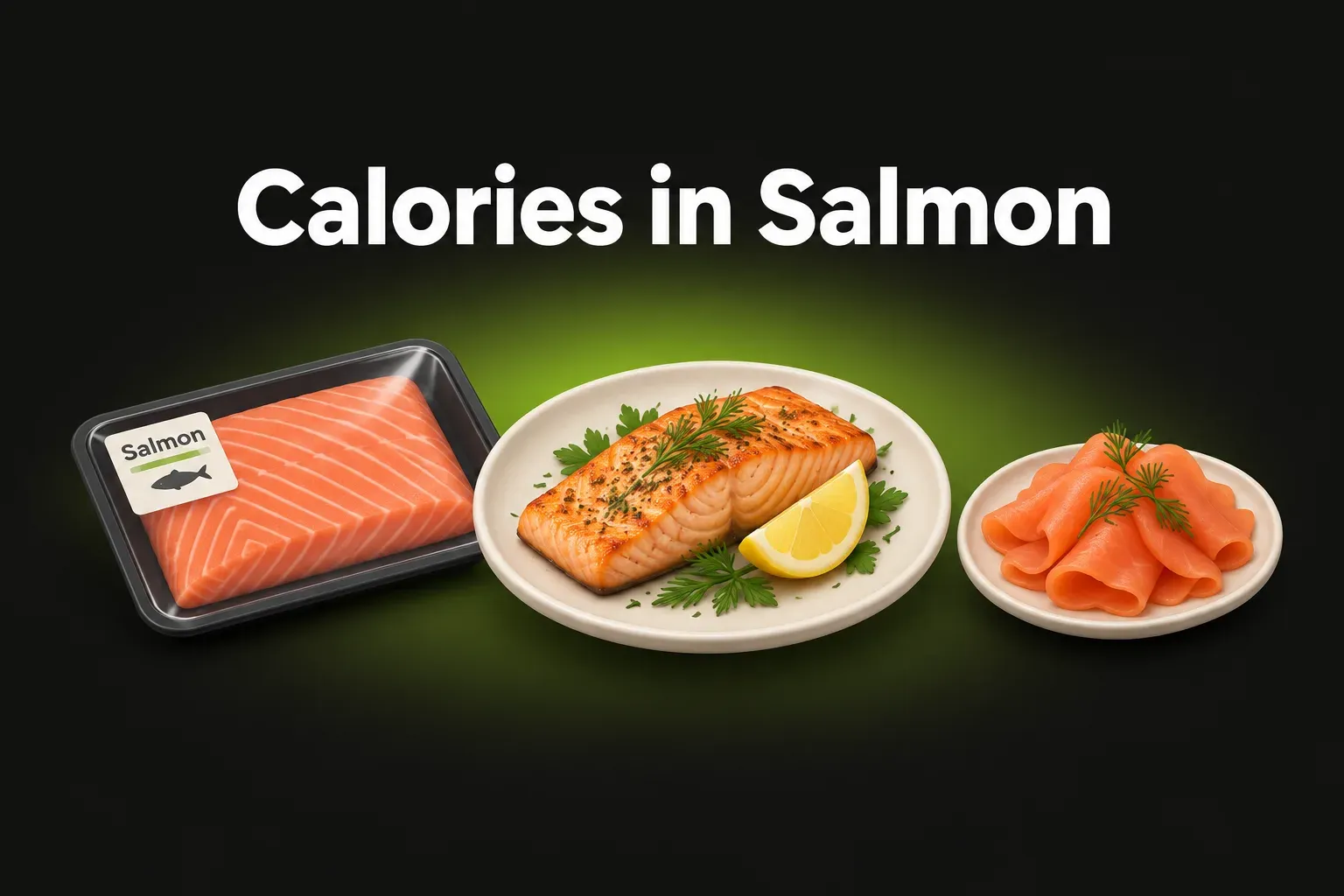
Salmon is one of the most popular fish in the world – rich, tender and easy to cook. It’s also famous for its omega-3 fats, which means it has more calories than leaner fish like cod or tuna. So how many calories are in salmon, and how much should you eat?
The short answer: 100 g of cooked farmed salmon has about 206 calories, and 100 g of cooked wild salmon about 182. A typical 6 oz (170 g) cooked fillet has about 310–350 calories. Salmon gives you 22–25 g of protein per 100 g, plenty of omega-3 and vitamin D, and no carbs. The calories add up with butter, creamy sauces and glazes.
Calories in salmon by portion
Values for Atlantic salmon, from the US Department of Agriculture (USDA FoodData Central):
| Portion (cooked) | Farmed salmon | Wild salmon |
|---|---|---|
| 3 oz (85 g) | 175 kcal | 155 kcal |
| 4 oz (113 g) | 233 kcal | 206 kcal |
| 6 oz fillet (170 g) | 350 kcal | 309 kcal |
| 100 g | 206 kcal | 182 kcal |
Raw or cooked? Fish loses water when you cook it, so 100 g of cooked salmon has more calories than 100 g of raw salmon – but the fillet as a whole has the same calories. Raw farmed salmon has about 208 calories per 100 g and raw wild salmon about 142. If you weigh it raw, use the raw value.
Salmon nutrition facts
| Nutrient (per 100 g cooked) | Farmed | Wild |
|---|---|---|
| Calories | 206 kcal | 182 kcal |
| Protein | 22.1 g | 25.4 g |
| Fat | 12.4 g | 8.1 g |
| – saturated | 2.4 g | 1.3 g |
| Omega-3 (EPA + DHA) | 2.2 g | 1.8 g |
| Carbohydrates | 0 g | 0 g |
| Vitamin D | 13 µg | – |
| Vitamin B12 | 2.8 µg | 3.1 µg |
| Selenium | 41 µg | 47 µg |
| Potassium | 384 mg | 628 mg |
The USDA doesn’t list vitamin D for cooked wild Atlantic salmon; wild salmon is generally also a rich source.
Salmon is one of the best sources of EPA and DHA, the omega-3 fats linked to heart and brain health: one 3–4 oz portion gives you several times the 250–500 mg a day most health groups recommend. Farmed salmon is also rich in vitamin D – 100 g has about 13 µg, close to the 15 µg adults need daily. See our list of foods high in vitamin D and high protein foods.
Calories in salmon dishes and other types
| Food | Portion | Calories |
|---|---|---|
| Smoked salmon | 2 oz (57 g) | about 70–115 kcal |
| Canned pink salmon, drained | 3 oz (85 g) | about 120–135 kcal |
| Salmon with 1 tbsp butter | 6 oz fillet | about 450 kcal |
| Teriyaki-glazed salmon | 6 oz fillet | about 400–430 kcal |
| Salmon sushi (nigiri) | 2 pieces | about 110–140 kcal |
| Bagel with cream cheese and lox | 1 bagel | about 450–550 kcal |
Smoked salmon has fewer calories than a fillet because the portion is small – but it’s very salty. A bagel with cream cheese and lox gets most of its calories from the bagel and cream cheese, not the fish.
Is salmon good for weight loss?
Yes. Salmon is high in protein, which helps you feel full and keeps your muscles while you lose weight. Its fat is mostly the healthy unsaturated kind. Yes, it has more calories than chicken breast or white fish – but a normal portion still fits easily into a calorie deficit.
A balanced plate:
- 4–6 oz of salmon (about 230–350 calories)
- Half a plate of vegetables – broccoli, green beans, salad
- A small serving of carbs – ½ cup of rice or a small potato
That’s a filling meal of about 450–550 calories. Read more about the calorie deficit and find your number with our calorie calculator.
How to eat salmon when you’re losing weight
- Bake, grill, steam or air-fry it with lemon, herbs and a little olive oil.
- Measure the butter and sauces – 1 tablespoon of butter adds about 100 calories.
- Go easy on sweet glazes like teriyaki or honey-mustard.
- Use canned salmon for cheap, quick salads and wraps.
- Eat fish twice a week – one of them oily fish like salmon, as most health guidelines suggest.
Count the calories in your salmon without guesswork. With NutriSmart, you snap a photo of what you eat, and the app counts your calories, protein, carbs and fat and shows how much you have left for the day. In the food library, you can also see the glycemic index of each food.Get the app free
For meal ideas, see our high protein dinner recipes and our healthy dinner ideas. You can also read how many calories are in sushi.
The bottom line
100 g of cooked farmed salmon has about 206 calories, and wild salmon about 182. A typical 6 oz fillet has about 310–350 calories, with 37–43 g of protein, no carbs and plenty of omega-3. Salmon fits well into weight loss – just bake or grill it and keep the butter, sauces and glazes in check.
FAQ
How many calories are in a salmon fillet?
A typical 6 oz (170 g) fillet of cooked farmed Atlantic salmon has about 350 calories. The same fillet of wild Atlantic salmon has about 310 calories. A smaller 4 oz (113 g) portion has about 205–235 calories.
How many calories are in 100 g of salmon?
Cooked farmed Atlantic salmon has about 206 calories per 100 g, with 22 g of protein and 12 g of fat. Cooked wild Atlantic salmon has about 182 calories, with 25 g of protein and 8 g of fat.
Is farmed or wild salmon better?
Both are good choices. Farmed salmon has more fat and calories, and also a bit more omega-3 per serving. Wild salmon is leaner and has more protein per calorie. Pick the one that fits your budget and taste.
Is salmon good for weight loss?
Yes. Salmon is rich in protein, which keeps you full, and its fat is mostly the healthy kind. A 4–6 oz portion with vegetables and a small serving of rice or potatoes makes a filling meal of about 450–550 calories.
How much omega-3 is in salmon?
About 2 g of EPA and DHA per 100 g of cooked farmed salmon, and about 1.8 g in wild salmon. One 3–4 oz portion gives you more than the 250–500 mg a day that health groups usually recommend.
How many calories are in smoked salmon?
Usually about 120–200 calories per 100 g, depending on the type of salmon. A typical serving of 2 oz (57 g) has about 70–115 calories. Smoked salmon is very salty, so keep portions small.