What Are Natural Flavors? Are They Safe or Bad for You?
What "natural flavors" on food labels really are, how they're made, what they can hide, how they differ from artificial flavors and whether they're bad for you.
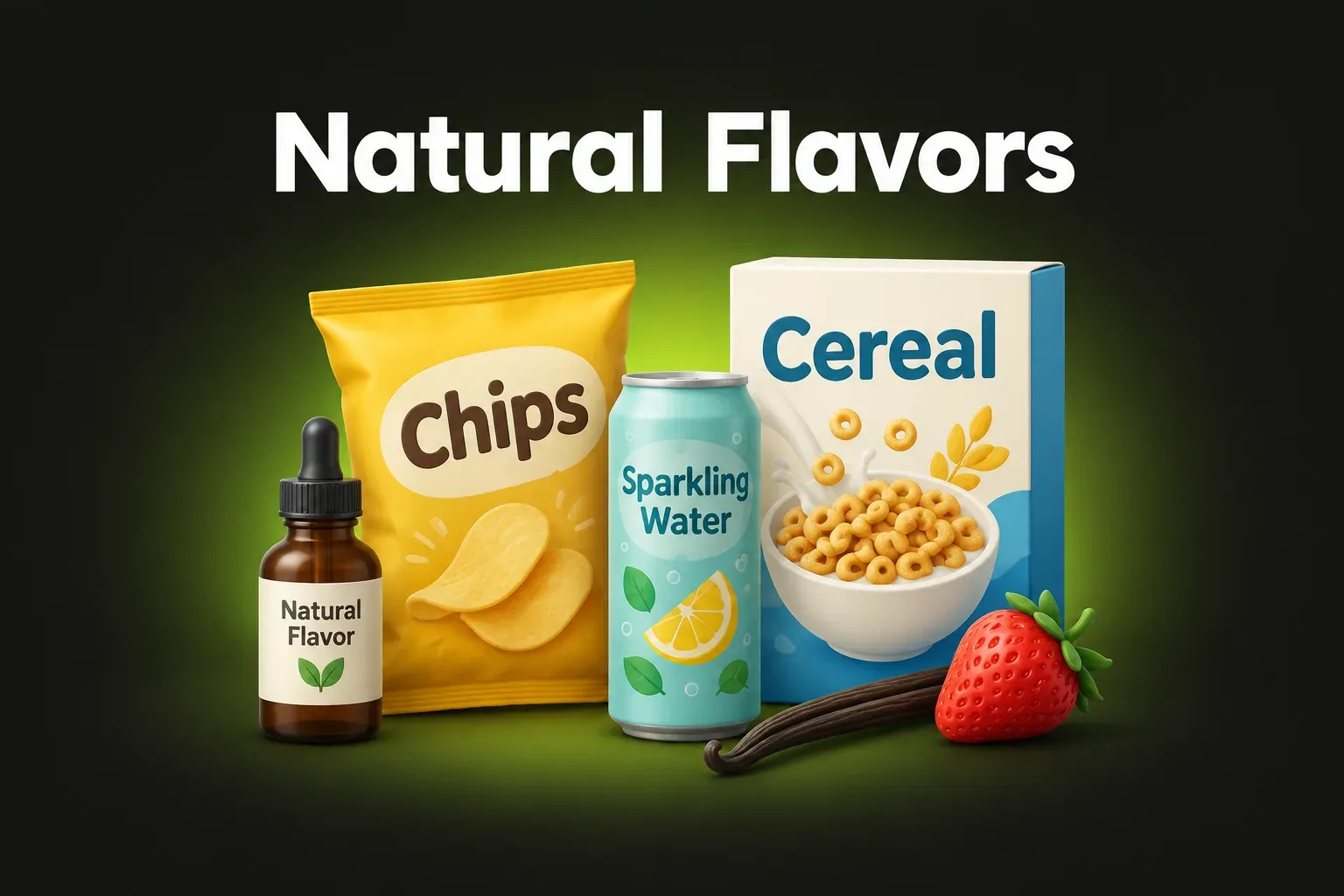
“Natural flavors” is one of the most common ingredients on food labels. You’ll find it on chips, cereal, sparkling water, yogurt, soups and even on “healthy” snacks. It sounds simple and harmless – but almost nobody knows what it actually means. So what are natural flavors, really?
The short answer: natural flavors are flavorings made in labs from a natural source – fruit, spices, herbs, yeast, meat, dairy and more. One “natural flavor” can be a mix of many substances, including solvents and preservatives that don’t have to be listed. They aren’t known to be harmful in the tiny amounts used. But they’re not healthier than artificial flavors. Their main job is to make processed foods taste better – which makes it easier to eat too much.
What are natural flavors?
In the US, the FDA says a natural flavor must come from a spice, fruit or fruit juice, vegetable, edible yeast, herb, bark, bud, root, leaf, meat, seafood, poultry, eggs or dairy. The source can be soaked, boiled, heated, roasted or fermented to get the flavor out. The key rule: its main job is flavor, not nutrition (FDA, 21 CFR 101.22).
In real life, natural flavors are made by flavor chemists who work for special companies. They take substances from natural sources and mix them into a flavor that tastes the same every time – like the “strawberry” in a yogurt or the “cheese” in chips.
What can be hidden in “natural flavors”?
The words “natural flavors” can stand for a mix of many things:
- the flavor substances themselves – sometimes dozens of them
- solvents and carriers, such as alcohol, propylene glycol or glycerin, that hold the flavor together
- preservatives and emulsifiers that keep the mix from going bad or separating
In the US, the extra substances used only to make or carry the flavor don’t have to appear on the label. Companies also don’t have to say where the flavor comes from. The “natural flavor” in a vanilla yogurt may or may not come from vanilla.
In the EU, the rules are a bit stricter. A “natural vanilla flavoring” must come at least 95% from vanilla. A plain “natural flavoring” can still come from any natural source.
Natural vs artificial flavors
| Natural flavors | Artificial flavors | |
|---|---|---|
| Source | Plants, animals, yeast | Other chemicals, often from petroleum |
| Made in a lab | Yes | Yes |
| Can be the same molecule | Yes | Yes |
| Have to list all ingredients | No | No |
| Healthier | Not necessarily | Not necessarily |
The difference is only the source. Vanillin is the main taste of vanilla. It can come from vanilla beans, from fermented rice bran, or from chemicals made from oil. It’s the same substance, but only the first two can be called natural in the US.
Here’s an interesting example. In 2018, the FDA banned six lab-made flavorings, including methyl eugenol, myrcene and pulegone. They had caused cancer in lab animals at high doses. But the same substances are also found in plants such as basil and mint. The FDA said the ban doesn’t apply to the natural versions, so they can still be sold as “natural flavors” (FDA, 2018). The FDA thinks the tiny amounts in food are low risk. But the example shows that “natural” doesn’t always mean “safe”.
Are natural flavors bad for you?
They make processed food easier to overeat
The biggest worry isn’t one single substance. It’s what flavors are used for. Ultra-processed foods often lose much of their taste in the factory. Flavors make them taste rich and tasty again, so people want more.
A well-known study took place at the US National Institutes of Health. 20 adults lived in a clinic for four weeks. For two weeks they ate ultra-processed foods, and for two weeks they ate unprocessed foods. Both diets offered the same amounts of sugar, fat, fiber and salt. Still, on the ultra-processed diet they ate about 500 calories more per day and gained weight (Hall et al., Cell Metabolism, 2019). Read more about ultra-processed foods.
You don’t know what’s in them
The full recipe of a flavor is a company secret. So you can’t know exactly what you’re eating. That matters if you:
- follow a vegan or vegetarian diet – natural flavors can come from meat, fish, eggs or dairy
- avoid certain foods for religious reasons
- have a rare allergy or intolerance – in the US, the major allergens must still be listed, but less common ones don’t have to be
- react to glutamate – some salty, meaty flavors, such as yeast extracts, naturally contain it, like MSG
Some flavor chemicals are harmful to breathe in
Diacetyl is the substance that gives butter its taste. It’s found naturally in butter and can be part of butter flavorings. Some workers at a microwave popcorn factory breathed in the fumes of butter flavoring. They got a serious lung disease that never went away (Kreiss et al., New England Journal of Medicine, 2002). This was about breathing in large amounts at work, not eating popcorn. But it shows that flavor chemicals aren’t always harmless.
What about castoreum?
You may have read that “natural flavors” can come from castoreum, a substance from beavers. It is allowed. But it’s very expensive and rarely used in food today, so your vanilla ice cream almost surely doesn’t contain it.
Which foods contain natural flavors?
- Snacks: chips, crackers, popcorn, flavored nuts
- Drinks: flavored sparkling water, soft drinks, juices, iced tea, energy drinks
- Breakfast: cereal, granola bars, flavored oatmeal
- Dairy: flavored yogurt, ice cream, plant-based milks
- Savory foods: soups, sauces, ready meals, plant-based meats
- Supplements: protein powders and gummies
How to choose
- Don’t see “natural” as “healthy”. A product full of sugar and additives isn’t better because its flavor is natural.
- Look at the whole ingredient list. A long list with several flavors, sweeteners and emulsifiers usually means an ultra-processed food.
- Choose foods that taste good on their own: fruit, plain yogurt, nuts, whole grains – and add flavor yourself with real fruit, vanilla, cinnamon or herbs.
- If you’re vegan or have an allergy, contact the company to ask where the flavor comes from.
Spot natural flavors on any label in seconds. With NutriSmart, you photograph the ingredient list or scan the barcode, and the app tells you right away if the product has natural flavors. Turn on an alert for them, and the app warns you every time a product you scan contains them. You’ll also see every other additive, the risks of each one and a health score out of 100.Get the app free
You can also read about MSG, another flavor additive, and about ultra-processed foods.
Another ingredient that boosts flavor without an E number is yeast extract.
The bottom line
“Natural flavors” are lab-made flavorings from natural sources. One natural flavor can be a mix of many substances you’ll never see on the label. They’re used in tiny amounts and aren’t known to be harmful on their own. But they’re not healthier than artificial flavors. Their main job is to make processed foods taste so good that you eat more. The fewer products with “natural flavors” in your cart, the more real food you’re probably eating.
FAQ
What are natural flavors?
Natural flavors are flavorings made from a natural source, such as fruit, vegetables, spices, herbs, bark, yeast, meat, dairy or eggs. The source is pressed, soaked, heated, roasted or fermented to pull out its taste. They're usually made in labs by flavor companies. One "natural flavor" on a label can be a mix of many substances.
Are natural flavors bad for you?
Most natural flavors are used in tiny amounts and aren't known to be harmful on their own. But there are three worries. You don't know what's in them. The mix can have solvents (liquids that hold the flavor) and preservatives that don't have to be listed. And they're mostly used to make ultra-processed foods taste better, so it's easier to eat too much.
What is the difference between natural and artificial flavors?
Only the source. Natural flavors come from plants or animals. Artificial flavors are made from other chemicals. The final flavor can be exactly the same substance – for example, vanillin from vanilla beans or from a lab. Natural flavors are not always healthier.
Are natural flavors vegan?
Not always. In the US, natural flavors can come from meat, seafood, poultry, eggs or dairy, and the label doesn't have to say so. If a product isn't labeled vegan, you'd have to ask the company.
Do natural flavors contain MSG or allergens?
In the US, the major allergens – such as milk, eggs, soy, wheat and nuts – must be listed even if they're part of a flavor. Some salty, meaty flavors, such as yeast extracts and protein hydrolysates (proteins broken into small pieces), naturally contain glutamate. That's the same substance that gives MSG its taste.
Is castoreum used in natural flavors?
Castoreum, a substance from beavers, is allowed as a natural flavor in the US. But it's very expensive and rarely used in food today. Vanilla and strawberry flavors in your food almost surely don't come from beavers.