Yeast Extract: Is It Hidden MSG? What It Is and Is It Safe
What yeast extract is, why it's in chips, soups and "no MSG" foods, how much glutamate it contains, whether it's safe, and who should limit it.
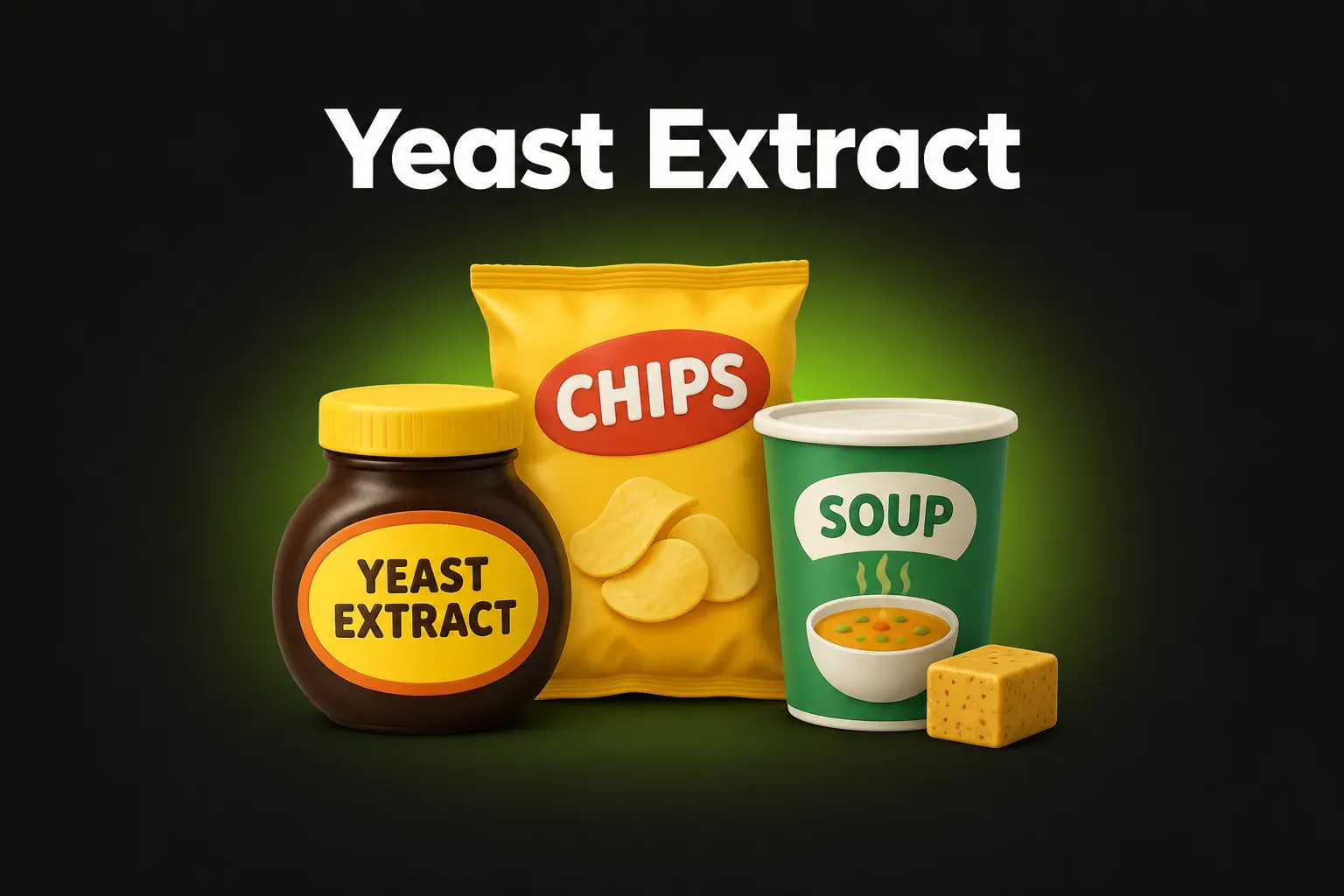
Yeast extract is everywhere in savory processed foods: chips, crackers, instant soups, bouillon, sauces, ready meals and meat substitutes. It’s also the main ingredient in Marmite and Vegemite. It often appears on products that proudly say “no added MSG” – which is why some people call it “hidden MSG”. Here’s what it really is.
The short answer: yeast extract is made by breaking open yeast cells and removing their walls. What’s left is rich in free glutamate, nucleotides and B vitamins, so it gives food a strong savory (umami) taste – much like MSG. It’s a food ingredient, not an additive, and it’s safe for most people. But it lets companies boost flavor while claiming “no added MSG”, it’s often salty, and people with gout or MSG sensitivity may want to limit it.
How is yeast extract made?
- Yeast (the same species used for bread and beer) is grown on a sugar source like molasses.
- The cells are warmed so their own enzymes break down the proteins inside (this is called autolysis). Sometimes salt or added enzymes speed this up.
- The cell walls are removed, and the liquid is concentrated into a paste or powder.
The result is full of amino acids, including glutamate (the umami compound in MSG), plus nucleotides like inosinate and guanylate, which make umami even stronger. On labels you’ll see yeast extract, autolyzed yeast extract or yeast extract (contains glutamate).
Yeast extract vs MSG
| Yeast extract | MSG (E621) | |
|---|---|---|
| What it is | Broken-down yeast | Pure monosodium glutamate |
| Glutamate | Naturally present, often several percent | About 78% |
| Other compounds | Nucleotides, peptides, B vitamins, salt | None |
| Label | Ingredient name, no E number | Additive, E621 |
| “No added MSG” claim allowed? | Yes | No |
Chemically, the glutamate in yeast extract is the same as the glutamate in MSG, tomatoes or parmesan. The body can’t tell the difference. That’s why the FDA says it’s misleading to claim “no MSG” on a product that contains ingredients rich in free glutamate, such as yeast extract or hydrolyzed protein.
Is yeast extract safe?
For most people, yes. It’s been eaten for more than a century, and it’s made from a food. It even provides B vitamins, and some spreads are fortified with vitamin B12, which is useful for vegans.
A few groups may want to limit it:
- People sensitive to MSG: if you notice symptoms after MSG, yeast extract can have a similar effect, though good studies haven’t confirmed a consistent “MSG reaction”.
- People with gout: yeast is rich in purines, which the body turns into uric acid.
- People watching salt: yeast extract and the foods it’s used in are often very salty. Marmite, for example, is about 10% salt.
- People with celiac disease: most yeast extract is gluten-free, but some is made from brewer’s yeast and can contain traces of gluten.
The real issue: what it’s used for
Yeast extract is mostly a flavor booster for ultra-processed foods – it makes chips, soups and snacks taste richer and more “moreish”, and easier to overeat. The ingredient itself isn’t the problem; the type of food usually is. Read more about ultra-processed foods.
How to spot it
- Look for yeast extract, autolyzed yeast extract, yeast extract (contains glutamate) or torula yeast.
- Be skeptical of “no added MSG” or “no artificial flavor enhancers” claims – check for yeast extract and hydrolyzed vegetable protein.
- Check the sodium on the label.
- If you have gout, limit yeast spreads, bouillon and flavored snacks.
Spot yeast extract on any label in seconds. With NutriSmart, you photograph the ingredient list or scan the barcode, and the app tells you right away if the product has yeast extract. Turn on an alert for it, and the app warns you every time a product you scan contains it. You’ll also see every other additive, the risks of each one and a health score out of 100.Get the app free
You can also read about MSG, natural flavors and disodium inosinate.
The bottom line
Yeast extract is made from broken-down yeast and is rich in natural glutamate, so it boosts savory flavor much like MSG. It’s a safe food ingredient for most people and even provides B vitamins. But it lets products claim “no added MSG” while getting a similar effect, it’s often paired with lots of salt, and people with gout or MSG sensitivity may want to limit it. Mostly, it’s a sign of a processed, flavor-boosted food.
FAQ
What is yeast extract?
Yeast extract is made from the same kind of yeast used for bread and beer. The yeast cells are broken open, usually with their own enzymes, and the cell walls are removed. What's left is a savory, salty-tasting paste or powder rich in amino acids – especially glutamate – plus nucleotides and B vitamins.
Is yeast extract the same as MSG?
Not exactly, but it works in a similar way. MSG is pure monosodium glutamate. Yeast extract naturally contains free glutamate (often several percent) plus other flavor compounds, so it gives the same savory boost. That's why critics call it "hidden MSG" in products labeled "no added MSG".
Is yeast extract safe?
Yes, for most people. It's a food ingredient made from yeast, not a chemical additive, and it's been eaten for over a century in spreads like Marmite and Vegemite. People who react to MSG, people with gout and people watching their salt may want to limit it.
Why do products say "no MSG" but contain yeast extract?
Because yeast extract isn't legally MSG, products can say "no added MSG" while still getting a similar effect from yeast extract. In the US, the FDA has said "no MSG" claims are misleading if a product contains ingredients that are sources of free glutamate.
Is yeast extract vegan and gluten-free?
It's vegan. Most yeast extract is gluten-free, but some is made from brewer's yeast grown on barley, which can contain traces of gluten. People with celiac disease should check the label or choose certified gluten-free products.
Does NutriSmart rate yeast extract?
Yeast extract is a food ingredient, not an E-numbered additive, so it doesn't lower the score on its own. The app shows it in the ingredient list and flags the real additives that often come with it, like MSG (E621), disodium inosinate (E631) and disodium guanylate (E627).