Disodium Inosinate and Guanylate (E631, E627): Safe?
What disodium inosinate (E631) and guanylate (E627) are, why they're paired with MSG in chips and noodles, their link to gout, and if they're vegan.
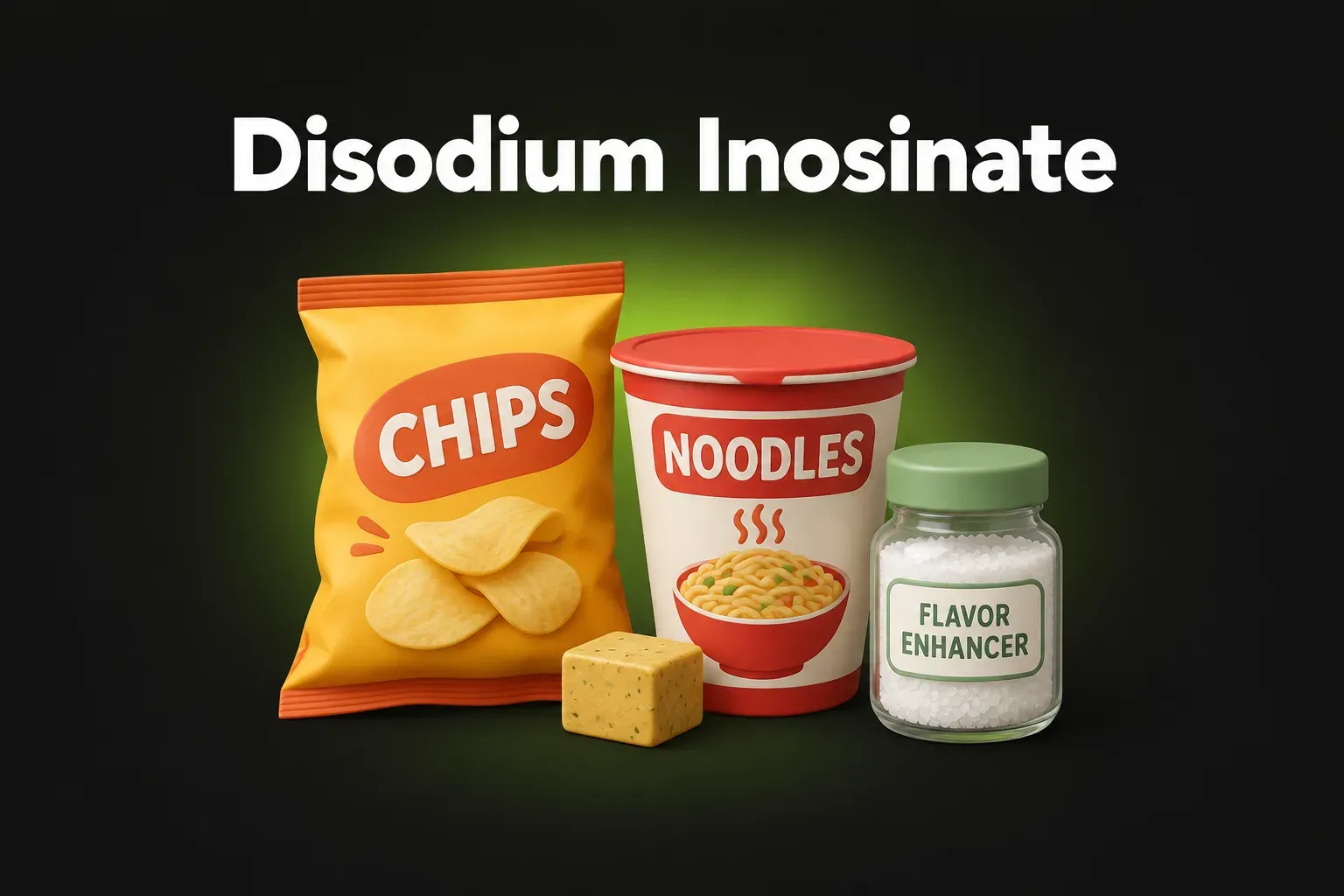
Disodium inosinate and disodium guanylate are two names you’ll see near the end of ingredient lists on chips, instant noodles, seasonings, bouillon cubes, canned soups and snack crackers – almost always next to MSG. Here’s what they are and who should watch out for them.
The short answer: disodium inosinate (E631) and disodium guanylate (E627) are flavor enhancers that make foods taste more savory (umami). They’re usually combined with MSG, because together they make it much stronger. For most people they’re considered safe in food amounts, and NutriSmart rates them as low risk. The main exception is gout: the body turns them into uric acid.
What are disodium inosinate and guanylate?
They’re salts of two natural compounds called inosinic acid and guanylic acid. These belong to a group called ribonucleotides, which are building blocks of our cells and are naturally found in foods:
- inosinate in meat and fish, like dried bonito flakes;
- guanylate in dried mushrooms, like shiitake.
For food production, they’re mostly made by fermentation with microbes, and sometimes extracted from fish or meat.
| Name | Code |
|---|---|
| Disodium inosinate | E631 |
| Disodium guanylate | E627 |
| Disodium 5′-ribonucleotides (a mix of both) | E635 |
Why are they used with MSG?
On their own, these enhancers have little taste. But combined with glutamate (from MSG, yeast extract or tomatoes and cheese), they multiply the savory taste many times over. This is the same effect cooks get by combining kombu (glutamate) with bonito flakes (inosinate) in Japanese dashi broth.
For food companies, that means they can use less MSG and still get a bold, “moreish” flavor. You’ll often see them in:
- Potato chips, corn snacks and crackers
- Instant noodles and cup soups
- Bouillon cubes, seasonings and spice mixes
- Canned soups, sauces and ready meals
- Processed meats and snack sausages
Are they safe?
Food agencies consider disodium inosinate and guanylate safe at the amounts used in food, and the WHO’s expert committee didn’t set a numerical daily limit. Some popular claims don’t hold up: there’s no good evidence that they cause headaches, asthma attacks or allergic reactions.
Gout and uric acid
The one clear caution is for people with gout or high uric acid. Inosinate and guanylate are purines, and the body breaks purines down into uric acid. Too much uric acid can form crystals in joints and trigger gout attacks. The amounts in a bag of chips are small compared with purine-rich foods like organ meats or sardines, but if you have gout, it’s sensible to limit them.
The bigger issue: what they come in
These enhancers are found almost only in salty, ultra-processed foods. Their job is to make those foods taste more intense – and easier to overeat. That’s not a risk of the additive itself, but it’s a good reason to eat those foods less often. Read more about ultra-processed foods.
They’re not allowed in foods for babies under 12 weeks in the EU.
Are they vegan?
Not always. Most are made by fermentation, but some come from fish or meat. Unless a product is certified vegan, you can’t tell from the label.
How to spot them
- Look for disodium inosinate, disodium guanylate, disodium 5′-ribonucleotides, or E627, E631, E635.
- If you see them, check for MSG, yeast extract or “hydrolyzed protein” too – they usually come together.
- If you have gout, limit flavored chips, instant noodles and seasoning mixes.
Spot disodium inosinate and guanylate on any label in seconds. With NutriSmart, you photograph the ingredient list or scan the barcode, and the app tells you right away if the product has disodium inosinate and guanylate. Turn on an alert for them, and the app warns you every time a product you scan contains them. You’ll also see every other additive, the risks of each one and a health score out of 100.Get the app free
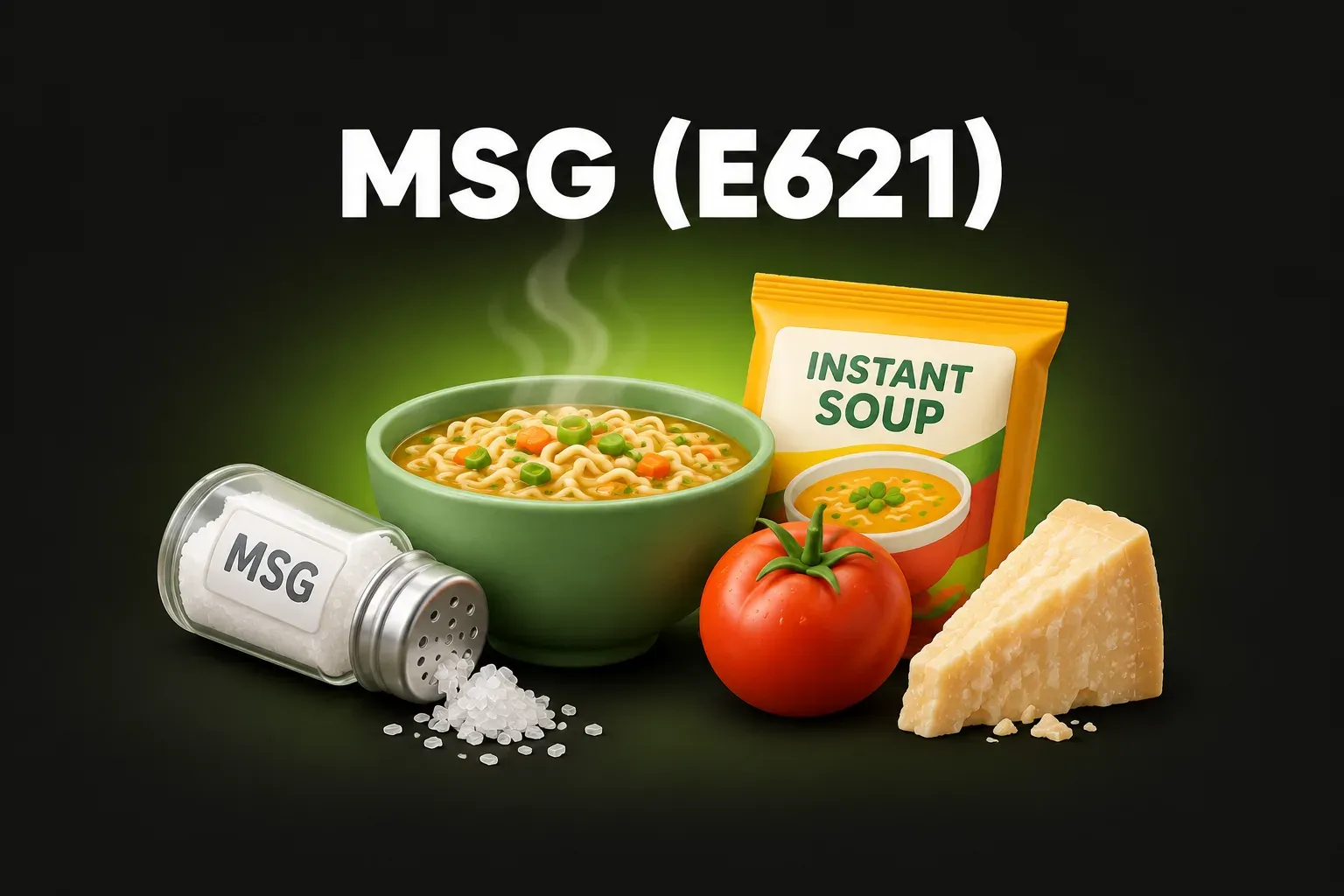
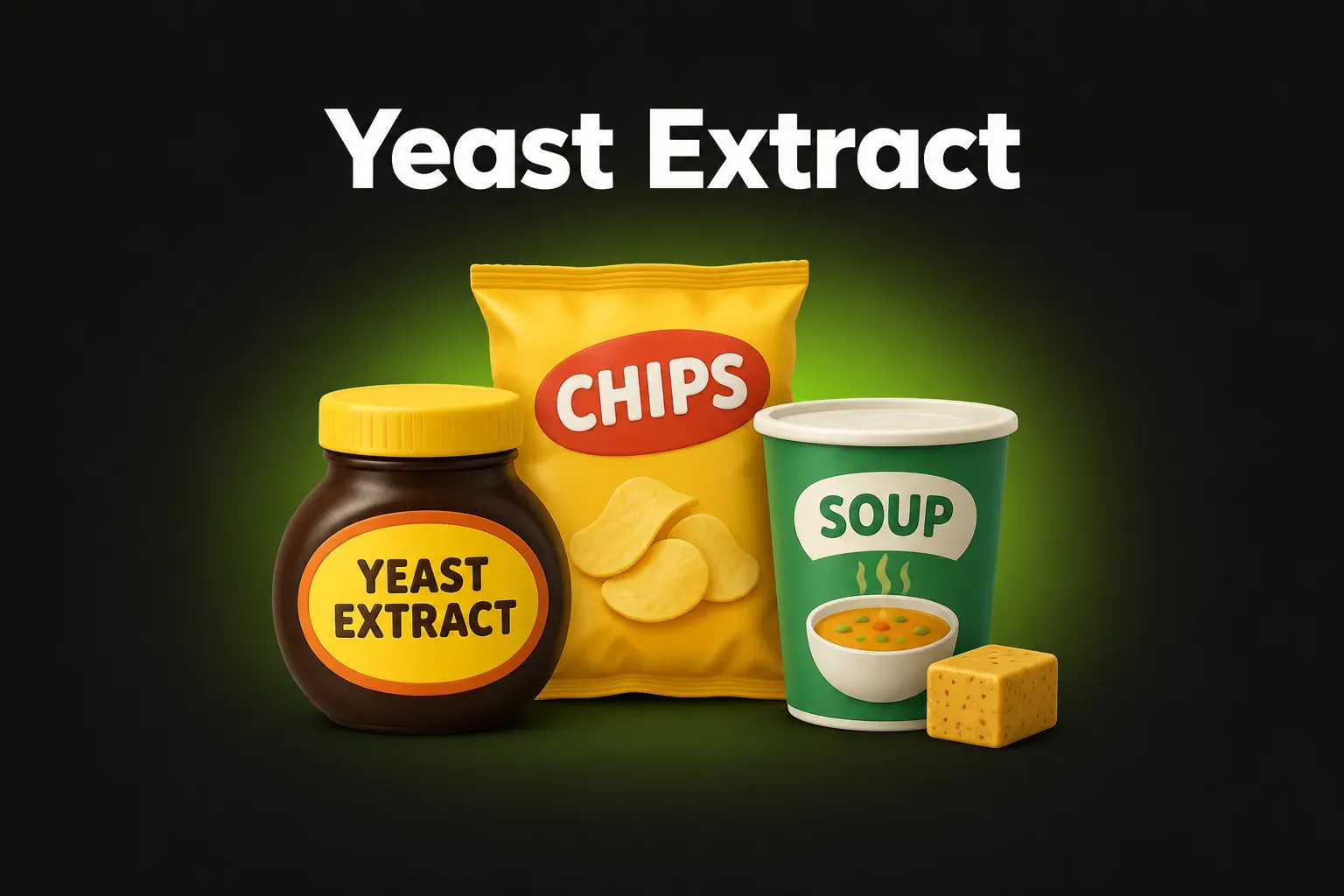
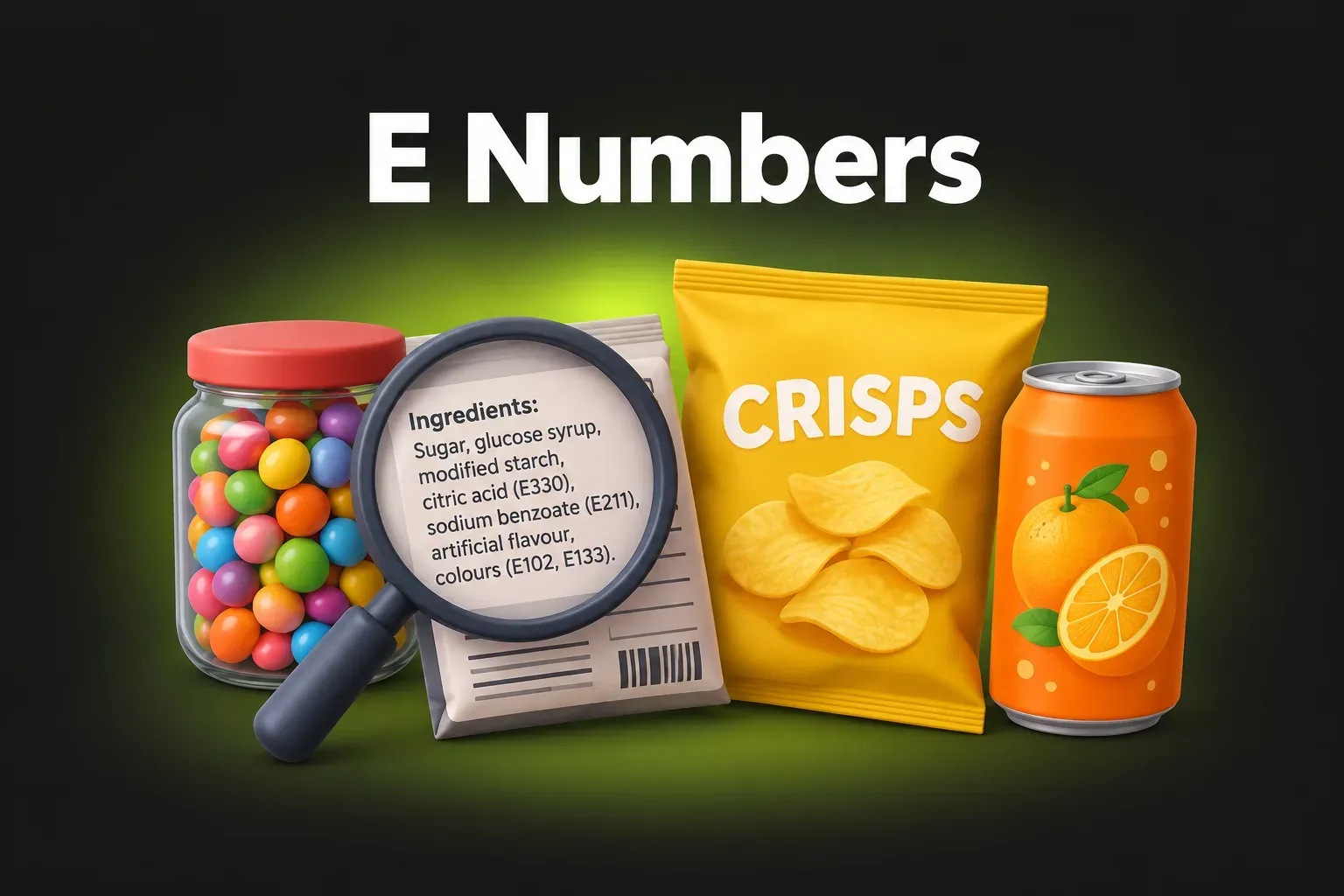
You can also read about MSG, yeast extract and natural flavors, or see the full E numbers list.
The bottom line
Disodium inosinate (E631) and disodium guanylate (E627) are flavor enhancers that boost umami taste, usually together with MSG. They’re considered safe for most people in food amounts, and NutriSmart rates them low risk. People with gout should limit them, because they turn into uric acid – and since they’re mostly found in salty processed snacks, eating less of those foods is a good idea anyway.
FAQ
What is disodium inosinate?
Disodium inosinate (E631) is a flavor enhancer that boosts savory, umami taste. It's a salt of inosinic acid, a natural compound found in meat and fish. It's almost always used together with disodium guanylate (E627) and monosodium glutamate (MSG).
Is disodium inosinate safe?
For most people, yes, in the amounts used in food. NutriSmart rates it as low risk. The main concern is for people with gout or high uric acid, because the body breaks it down into uric acid.
Why are disodium inosinate and guanylate used with MSG?
They work together. Small amounts of these two "ribonucleotides" make MSG taste many times stronger, so companies can use less MSG and still get a strong savory flavor. On labels you often see all three together.
Is disodium inosinate vegan?
Not always. It's usually made by fermentation, which is plant-based, but it can also be made from fish or meat. Labels rarely say which, so strict vegans may want to check with the company.
Can people with gout eat disodium inosinate?
It's best to limit it. Inosinate and guanylate are purines, which the body turns into uric acid – the substance that causes gout attacks. The amounts in one snack are small, but salty processed foods with these enhancers are worth cutting down anyway.
Does disodium inosinate cause headaches like MSG?
There's no good evidence for that. Studies on the so-called "MSG symptom complex" haven't shown consistent effects, and there are no solid studies showing that these flavor enhancers cause headaches.