What Is TBHQ? Is This Preservative Bad for You?
What TBHQ (tert-butylhydroquinone, E319) is, which foods contain it, and what studies show about the immune system, food allergies and safety limits.
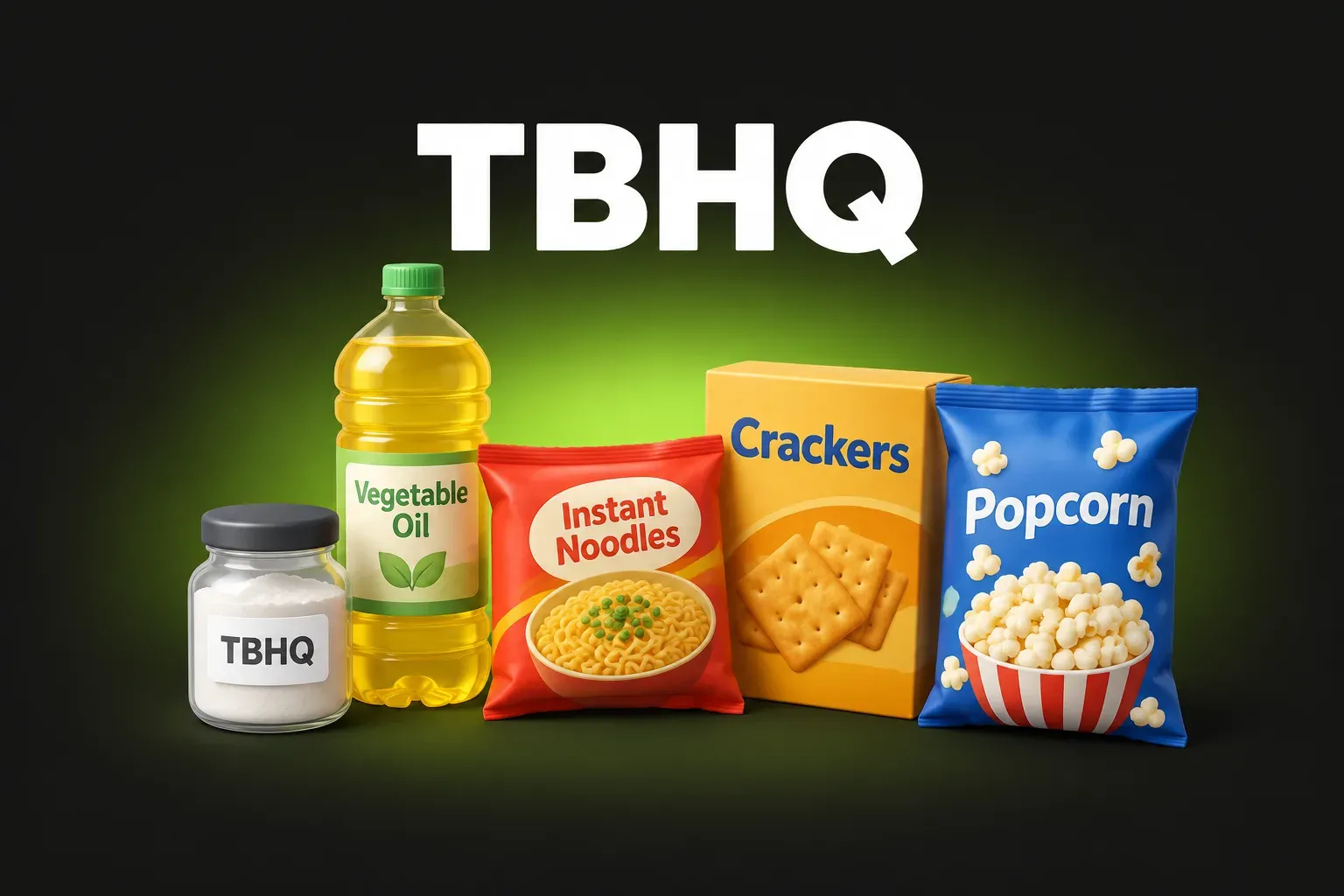
TBHQ is one of those ingredients most people skip over on the label. It’s a preservative added to oils and fatty foods – fried chicken, crackers, microwave popcorn, instant noodles – to stop them from going bad. It works well. But research on what it does to the immune system has raised new questions.
The short answer: TBHQ (tertiary butylhydroquinone, E319) is a lab-made preservative made from petroleum. It’s allowed in small amounts in the US and EU. But studies at Michigan State University found that it weakens several types of immune cells in the lab and in mice. Mice fed TBHQ also got stronger food allergies and worse allergic reactions. These effects haven’t been shown in people yet. But TBHQ is mostly found in fried and ultra-processed foods, so it’s an easy additive to cut back on.
What is TBHQ?
TBHQ is a lab-made preservative made from petroleum. Over time, fats and oils react with the air and go bad, which makes them taste bad. TBHQ slows this down, so oils and fatty foods last much longer. Restaurants can also use the same frying oil for longer.
On labels, you’ll see it as TBHQ, tertiary butylhydroquinone, tert-butylhydroquinone or E319. It’s often used together with similar preservatives, BHA (E320) and BHT (E321).
| Limit | Amount |
|---|---|
| US (FDA) | Up to 0.02% of the fat or oil in a food |
| EU safe daily limit | 0.7 mg per kg of body weight |
Which foods contain TBHQ?
- Vegetable oils and frying fats, especially in restaurants
- Fast food – fried chicken, nuggets, fries
- Crackers, chips and snack foods
- Microwave popcorn
- Instant noodles
- Frozen fried foods – fish sticks, nuggets
- Cookies and baked goods made with oil
- Pet foods
Is TBHQ bad for you? What the research says
The immune system
Scientists at Michigan State University have studied how TBHQ affects the immune system for years. They found that TBHQ:
- weakens natural killer (NK) cells – immune cells that kill cancer cells and cells infected by viruses (Boss et al., Food and Chemical Toxicology, 2018)
- slows down T cells when they first switch on – these cells lead the body’s defense (Zagorski et al., Biochemical Pharmacology, 2018)
- stops dendritic cells from growing up and switching on – these are the cells that warn the immune system about bacteria and viruses (Awali et al., Toxicology in Vitro, 2026)
A weaker immune system could mean the body fights viruses and bacteria less well.
Food allergies
In a 2024 study, some mice ate food with TBHQ. Then they were given a protein from eggs. Their bodies made much more IgE – the antibody behind food allergies. They also had worse allergic reactions (anaphylaxis) than mice without TBHQ. TBHQ pushed the immune system to react in an “allergic” way (Jin et al., Frontiers in Immunology, 2024).
Food allergies have become much more common in the last few decades. The scientists think food additives like TBHQ could be one of the reasons.
Other animal studies
Zebrafish were fed a lot of TBHQ. Fewer of them survived, they grew less, and their organs didn’t form normally (Leonard et al., Food and Chemical Toxicology, 2023). The dose was far higher than in food. But the study shows TBHQ has real effects on living bodies.
What these studies mean
These are lab and animal studies. No study has yet shown that TBHQ in food harms people. But testing whether a preservative weakens the immune system or causes allergies in children would put their health at risk. And mice share most of their genes with us, and their immune systems work much like ours. Studies from several labs point the same way, and that’s a good reason to be careful.
Skin allergy
TBHQ can also cause allergic skin reactions in sensitive people. This mostly happens with makeup and hair dyes, where it’s also used.
TBHQ vs other antioxidant preservatives
| Preservative | Source | Main worries |
|---|---|---|
| TBHQ (E319) | Lab‑made | Weaker immune system and food allergy in animal studies |
| BHA (E320) | Lab‑made | Likely to cause cancer in humans, says the US National Toxicology Program |
| BHT (E321) | Lab‑made | Animal studies don’t agree; being checked again |
| Vitamin E (tocopherols, E306–E309) | Natural | Considered safe |
| Rosemary extract (E392) | Natural | Considered safe |
Many companies now use vitamin E (tocopherols) or rosemary extract instead – look for them on the label.
How to avoid TBHQ
- Eat less fast food and fried food – restaurant frying oils are a major source.
- Read labels on crackers, chips, microwave popcorn and instant noodles – look for TBHQ or E319.
- Choose products preserved with tocopherols (vitamin E) or rosemary extract.
- Cook at home with fresh oil, and store oils in a cool, dark place.
- Eat fewer ultra-processed foods – read more about ultra-processed foods.
Spot TBHQ on any label in seconds. With NutriSmart, you photograph the ingredient list or scan the barcode, and the app tells you right away if the product has TBHQ. Turn on an alert for it, and the app warns you every time a product you scan contains it. You’ll also see every other additive, the risks of each one and a health score out of 100.Get the app free
You can also read about other preservatives: BHA and BHT, sodium benzoate, potassium sorbate and sulfites.
The bottom line
TBHQ is a preservative made from petroleum that keeps oils and fried foods from going bad. It’s allowed in small amounts. But studies found it weakens immune cells and makes food allergies worse in mice. There’s no proof yet that it harms people. It’s found mostly in fast food and ultra-processed snacks, so cutting back on those is an easy way to avoid it.
FAQ
What is TBHQ?
TBHQ (tertiary butylhydroquinone, E319) is a lab-made preservative made from oil (petroleum). It's added to oils and fatty foods to stop them from going bad, so they last longer on the shelf.
Is TBHQ bad for you?
It's allowed in small amounts in the US and EU. But studies at Michigan State University found that TBHQ weakens several types of immune cells (the body's defense cells) in the lab and in mice. In mice fed TBHQ, food allergies got stronger and allergic reactions got worse. These effects haven't been shown in people yet. But there's enough reason to limit it.
What foods contain TBHQ?
Vegetable oils and frying fats, fast food (especially fried chicken and nuggets), crackers, chips, microwave popcorn, instant noodles, frozen fried foods, cookies and some pet foods.
Does TBHQ cause food allergies?
It hasn't been proven in people. But in a 2024 study, mice ate TBHQ in their food. Their bodies made much more IgE, the antibody behind food allergies. Their allergic reactions (anaphylaxis) were also worse. Scientists think it could be one reason food allergies are becoming more common.
How much TBHQ is allowed?
In the US, TBHQ can make up no more than 0.02% of the fat or oil content of a food. In the EU, the safe daily limit is 0.7 mg per kg of body weight.
What is E319?
E319 is the European code for TBHQ (tertiary butylhydroquinone). Similar lab-made preservatives are BHA (E320) and BHT (E321).