Is Potassium Sorbate Bad for You? Uses & Side Effects
What potassium sorbate (E202) is, which foods contain it, and what studies show about DNA damage, gut bacteria, inflammation and skin allergies.
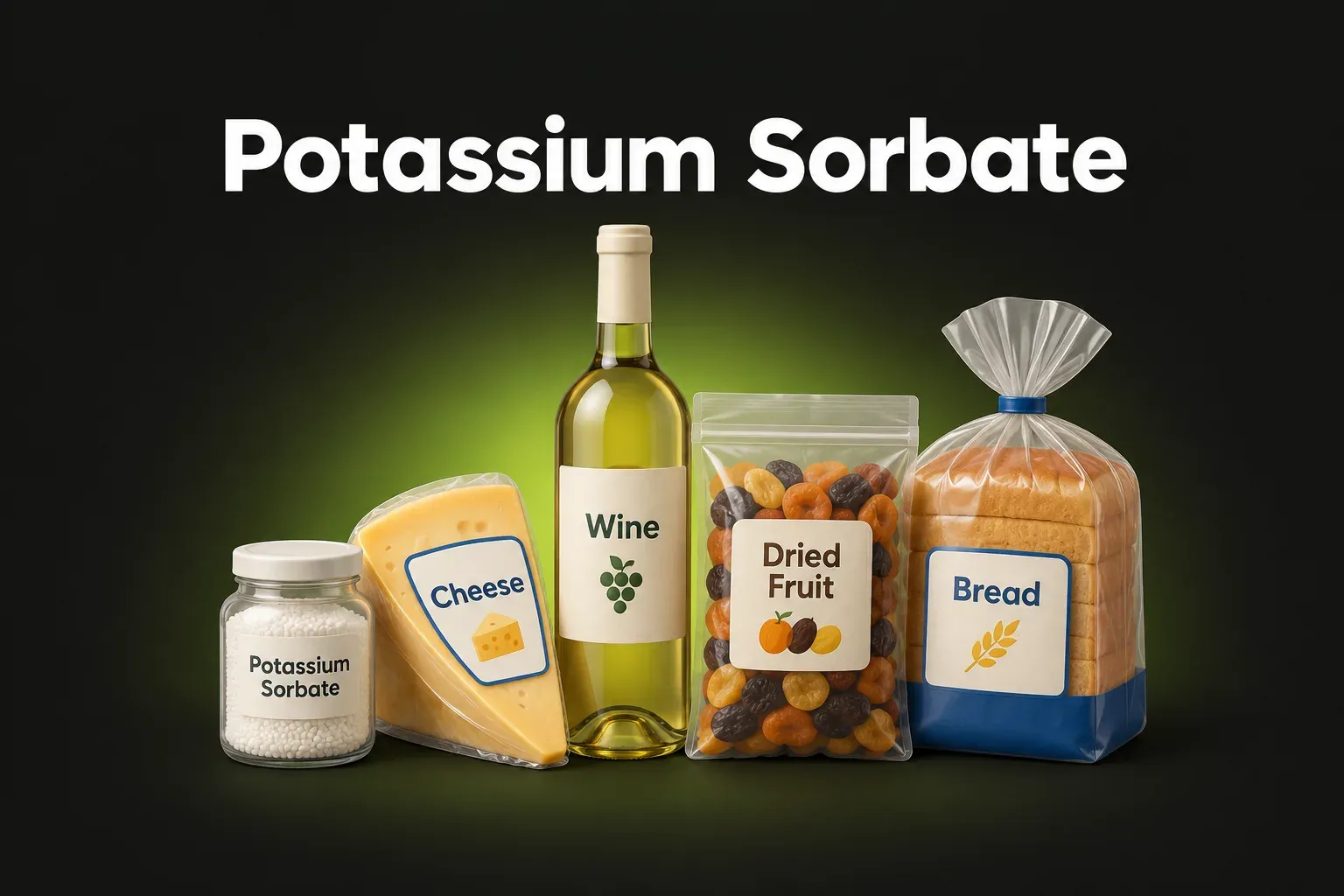
Potassium sorbate is one of the most common preservatives in the world. It’s in cheese, wine, packaged bread, dried fruit, jams and sauces. It’s also in many shampoos and creams. It keeps food from going moldy, which is useful. But is it safe to eat every day?
The short answer: potassium sorbate is one of the milder preservatives, and it’s allowed in many foods. But it isn’t harmless. In lab tests, high amounts damaged DNA in human blood cells. In animal studies, it changed gut bacteria and caused liver inflammation. It can also cause skin allergies in some people. Most of these effects were seen at higher doses than people usually eat. Still, it’s a good reason to choose fresher, less processed foods when you can.
What is potassium sorbate?
Potassium sorbate is made from sorbic acid and potassium. Sorbic acid was first found in rowan berries in the 1800s. But the potassium sorbate used today is made in factories.
It stops mold and yeast from growing, so food lasts longer on the shelf. It works best in slightly sour foods.
On labels, you’ll see it as:
| Name | Where you’ll see it |
|---|---|
| Potassium sorbate | Ingredient lists worldwide |
| E202, “preservative: E202” | European Union, UK and many other countries |
| Sorbic acid (E200), calcium sorbate (E203) | Related preservatives |
Which foods contain potassium sorbate?
- Dairy: cheese, cheese spreads, sliced and grated cheese, yogurt with fruit
- Bakery: packaged bread, tortillas, cakes, pastries
- Fruit: dried fruit, jams, fruit fillings, syrups
- Drinks: wine, cider, soft drinks, juices
- Sauces and spreads: dressings, dips, mayonnaise, margarine
- Other: pickles, olives, smoked fish, sausages
- Non-food: shampoos, creams, makeup and some medicines
Is potassium sorbate bad for you? What the research says
What regulators say
The FDA lists potassium sorbate as “generally recognized as safe”. In 2019, the European Food Safety Authority (EFSA) set a safe daily limit of 11 mg per kilogram of body weight for sorbic acid and its forms. The body breaks most of it down like a normal fat.
DNA damage in lab tests
In a 2010 study, scientists put potassium sorbate on human white blood cells in the lab. It damaged chromosomes and broke DNA strands. The authors said it is “clearly” harmful to the genes of these cells (Mamur et al., Toxicology in Vitro, 2010).
Another lab study found that potassium sorbate on its own was harmless. But it was then mixed with vitamin C (ascorbic acid) and iron, which are also added to many foods. Together they formed substances that damaged DNA in bacteria (Kitano et al., Food and Chemical Toxicology, 2002).
To be fair, older reviews of many tests found that sorbates usually weren’t harmful to genes in animals (Würgler et al., Mutation Research, 1992). And cells in a dish aren’t the same as a whole body.
Gut bacteria and inflammation
Potassium sorbate is made to kill microbes (tiny living things like bacteria and mold). Some of the microbes in your gut are sensitive to it too:
- Human gut bacteria in the lab: Czech scientists tested potassium sorbate, sodium benzoate and sodium nitrite. Helpful gut bacteria that calm inflammation were hurt much more than bacteria linked to inflammation (Hrncirova et al., Folia Microbiologica, 2019).
- Mice: mice got potassium sorbate for 10 weeks. They developed inflammation in the liver and changes in their gut bacteria. The good news: 5 weeks after they stopped getting it, the inflammation went down (Xiao et al., Food and Chemical Toxicology, 2024).
- Rats: rats got potassium sorbate or sodium benzoate in their water for 8 weeks. The doses were ones officially said to cause no harm. Still, the rats lost good Lactobacillus bacteria and had more bacteria linked to inflammation. The authors say testing each additive alone isn’t enough, because people often eat several preservatives together (Rezaei et al., Journal of the Science of Food and Agriculture, 2026).
- Zebrafish: potassium sorbate upset the gut bacteria and changed the immune system (the body’s defense system) of zebrafish (Peng et al., Food & Function, 2019).
Studies on animals matter. Testing these doses on people on purpose would put their health at risk. And mice and rats share most of their genes with us, and their bodies work in many of the same ways. There’s no proof yet that the amounts in food harm people. But several independent labs found the same kind of effects on the gut. That’s a good reason to be careful.
Skin allergies
Sorbic acid and potassium sorbate can cause skin allergies, rashes and itching in some people. This mostly happens with creams, shampoos and makeup, but sometimes with food. If you get rashes from skin care products, check the label for sorbic acid or potassium sorbate.
How to eat less potassium sorbate
- Buy fresh bread from a bakery instead of packaged bread that lasts for weeks.
- Choose cheese without added preservatives – many natural cheeses don’t need them.
- Read labels on dried fruit, jams and sauces – many brands are available without preservatives.
- Eat fewer ultra-processed foods – they often contain several preservatives at once. Read more about ultra-processed foods.
Spot potassium sorbate on any label in seconds. With NutriSmart, you photograph the ingredient list or scan the barcode, and the app tells you right away if the product has potassium sorbate. Turn on an alert for it, and the app warns you every time a product you scan contains it. You’ll also see every other additive, the risks of each one and a health score out of 100.Get the app free
You can also read about other preservatives: sodium benzoate, sulfites and calcium propionate.
The bottom line
Potassium sorbate is one of the milder preservatives, and it’s allowed in many foods. But in lab studies, high amounts damaged DNA in human cells. In animal studies, it changed gut bacteria and caused liver inflammation. It can also cause skin allergies. There’s no proof that the amounts in food harm people. But choosing fresher, less processed foods is an easy way to get less of it.
FAQ
Is potassium sorbate bad for you?
In the amounts used in food, food safety agencies see it as one of the safer preservatives. But in lab tests, high amounts damaged DNA in human blood cells. In animal studies, it changed gut bacteria and caused liver inflammation (swelling). It can also cause skin allergies in sensitive people. It's worth limiting, along with the processed foods it's used in.
Is potassium sorbate natural?
No. Sorbic acid was first found in rowan berries. But the potassium sorbate used in food today is made in factories.
What foods contain potassium sorbate?
Cheese, wine, baked goods and packaged bread, dried fruit, jams, syrups, sauces, dips, margarine, soft drinks and juices. It's also used in cosmetics, shampoos and medicines.
Does potassium sorbate cause cancer?
There's no proof that it causes cancer. In lab tests, high amounts of potassium sorbate damaged DNA in human blood cells. When mixed with vitamin C and iron, it formed substances that damaged DNA in bacteria. These are lab results, not studies in people.
Is potassium sorbate the same as sodium benzoate?
No, but both are preservatives that stop mold and yeast, and they're often used together. Potassium sorbate (E202) works best against mold and yeast. Sodium benzoate (E211) is mostly used in sour drinks. With vitamin C, it can form benzene, a substance that causes cancer.
What is E202?
E202 is the European code for potassium sorbate. Related preservatives are sorbic acid (E200) and calcium sorbate (E203).