Is Sodium Benzoate Bad for You? Benzene, ADHD & Side Effects
What sodium benzoate (E211) is, which foods contain it, how it can form benzene in drinks with vitamin C, its link to hyperactivity in children and what animal studies show.
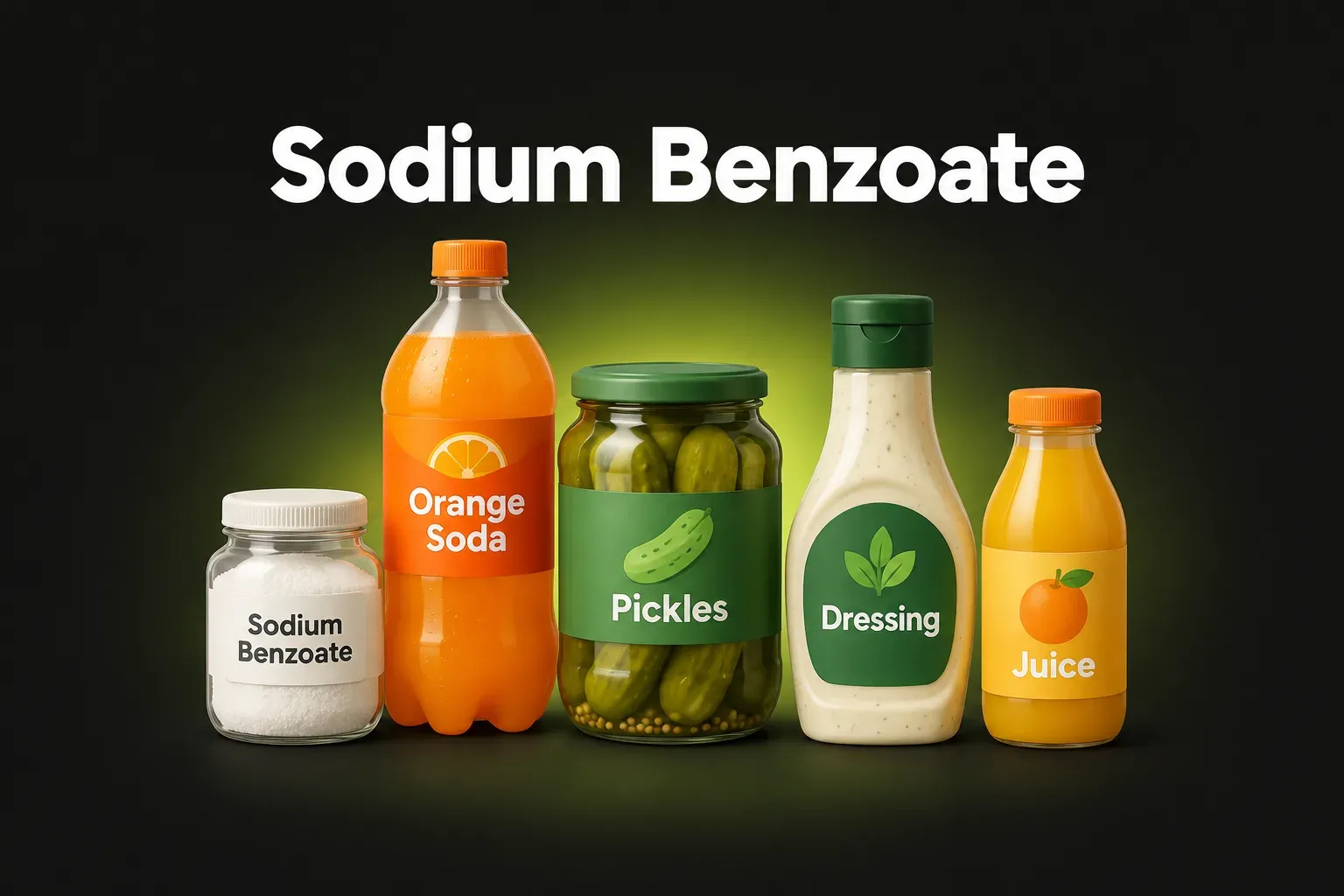
Sodium benzoate is one of the most widely used preservatives in the world. It keeps soft drinks, pickles, sauces and dressings from spoiling. It’s cheap and it works. But there’s more research on it than on most common additives, and some of it is worrying.
The short answer: sodium benzoate is allowed in small amounts, but there are three reasons to limit it. In drinks that also contain vitamin C, it can turn into benzene, a substance known to cause cancer. A large study found that drinks with sodium benzoate and artificial colors made ordinary children more hyperactive. And animal and lab studies have found effects on memory, the brain and DNA. Most of these effects were seen at higher doses than people usually eat. But if you or your children drink soft drinks every day, it’s worth cutting back.
What is sodium benzoate?
Sodium benzoate is made from benzoic acid and sodium. Small amounts of benzoic acid are found in cranberries, cinnamon, cloves and plums. But the sodium benzoate in food is made in factories.
It stops mold, yeast and bacteria from growing. But it only works well in sour foods, so you mostly find it in drinks, pickles and sauces.
On labels, you’ll see it as:
| Name | Where you’ll see it |
|---|---|
| Sodium benzoate | Ingredient lists worldwide |
| E211, “preservative: E211” | European Union, UK and many other countries |
| Benzoic acid (E210), potassium benzoate (E212), calcium benzoate (E213) | Related preservatives with the same effects |
Which foods contain sodium benzoate?
- Drinks: soft drinks, diet sodas, fruit drinks, juices, iced teas, energy drinks
- Pickled foods: pickles, olives, sauerkraut in jars
- Sauces: salad dressings, ketchup, mayonnaise, barbecue and soy sauce
- Other foods: jams, fruit fillings, margarine, ready salads
- Non-food: cough syrups and other medicines, mouthwash, toothpaste, shampoo and creams
Is sodium benzoate bad for you? What the research says
What regulators say
The FDA lists sodium benzoate as “generally recognized as safe” at up to 0.1% of a food. In 2016, the European Food Safety Authority (EFSA) set a safe daily limit of 5 mg per kilogram of body weight for benzoic acid and its forms together. It also said that young children who eat and drink a lot of these foods could go over it.
Benzene in drinks with vitamin C
This is the best-known problem. When sodium benzoate and vitamin C (ascorbic acid) are in the same drink, they can form benzene. Benzene is known to cause cancer, especially leukemia (blood cancer). Heat and light make this happen faster. Sugar slows it down.
The US FDA tested 199 soft drinks and other drinks. Most had no benzene, or less than the US limit for tap water (5 parts per billion). The drinks that had more were changed by their makers, and after that they had little or none (Nyman et al., Journal of Agricultural and Food Chemistry, 2008).
So the risk from a single drink is small. But don’t keep drinks with both ingredients in a hot car or in the sun. And choose drinks without sodium benzoate when you can.
Hyperactivity in children
In 2007, scientists at the University of Southampton tested nearly 300 ordinary children aged 3 and 8–9. Some drinks had sodium benzoate plus a mix of artificial colors. Others looked the same but had no additives. Neither the families nor the scientists knew which drink was which. With the additive drinks, the children became more hyperactive (McCann et al., The Lancet, 2007).
Sodium benzoate and the colors were always given together. So the study can’t tell how much of the effect came from each. After this study, the EU required a warning on foods with six of the colors (including Red 40), but not on sodium benzoate.
A later survey asked 475 college students about their drinks. Those who drank the most drinks with sodium benzoate had more signs similar to ADHD (Beezhold et al., Journal of Attention Disorders, 2014). A survey like this can’t prove that one thing causes the other. People with these signs may simply drink more soda. But it points the same way.
What animal and lab studies show
Many effects of food additives can only be tested on animals or cells. Giving large amounts to people on purpose would put their health at risk. Mice, rats and fish share most of their genes with humans, and their bodies work in many of the same ways. That’s why these studies are used to spot possible dangers early:
- Memory and the brain in mice: mice got sodium benzoate in their water for four weeks. They had worse memory and balance, and more oxidative stress – a kind of cell damage – in their brains (Khoshnoud et al., Journal of Biochemical and Molecular Toxicology, 2018).
- Growth in zebrafish: young zebrafish were put in water with sodium benzoate. They grew with body defects, had cell damage and acted anxious. The authors warned against using too much of it in processed foods (Gaur et al., Biochemical and Biophysical Research Communications, 2018).
- DNA in human cells: in human white blood cells grown in the lab, sodium benzoate caused damage to chromosomes and DNA (Zengin et al., Food and Chemical Toxicology, 2011).
- DNA in rats: rats got sodium benzoate together with the yellow food dye Sunset Yellow (E110) for 12 weeks. They had DNA damage in liver cells (Ali et al., Drug and Chemical Toxicology, 2020).
To be fair, these studies have limits. The doses were often higher than what people usually eat. Cells in a dish aren’t the same as a whole body. And no study has yet proven these effects in people. But several independent labs, using different methods, keep finding the same kind of harm: cell damage, DNA damage and effects on the brain. That’s a good reason to be careful instead of waiting for final proof.
Allergy-like reactions
In a small number of sensitive people, benzoates can cause hives, itching or asthma attacks, like some people’s reactions to aspirin. If you notice this after soft drinks or sauces, check the labels for E210–E213.
Interesting fact: it’s also a medicine
Doctors use sodium benzoate, in carefully measured doses, to treat a rare disease people are born with. In this disease, ammonia builds up in the blood. Scientists are also testing it as an extra treatment for schizophrenia (Lin et al., Biological Psychiatry, 2018). This shows that it acts on the body and the brain. That’s exactly why it makes sense to watch how much of it you get from food every day.
How to avoid sodium benzoate
- Cut back on soft drinks and fruit drinks – they’re the biggest source, especially for children.
- Be careful with drinks that have both sodium benzoate and ascorbic acid (vitamin C) on the label, and don’t leave them in heat or sunlight.
- Make simple dressings at home from olive oil, vinegar or lemon juice.
- Read labels on pickles, sauces and jams – many brands use other preservation methods or none at all.
- Choose fresh foods that are processed as little as possible – read more about ultra-processed foods.
Spot sodium benzoate on any label in seconds. With NutriSmart, you photograph the ingredient list or scan the barcode, and the app tells you right away if the product has sodium benzoate. Turn on an alert for it, and the app warns you every time a product you scan contains it. You’ll also see every other additive, the risks of each one and a health score out of 100.Get the app free
You can also read about other preservatives: potassium sorbate, sulfites, calcium propionate and citric acid.
Check other preservatives and colours in our E numbers list.
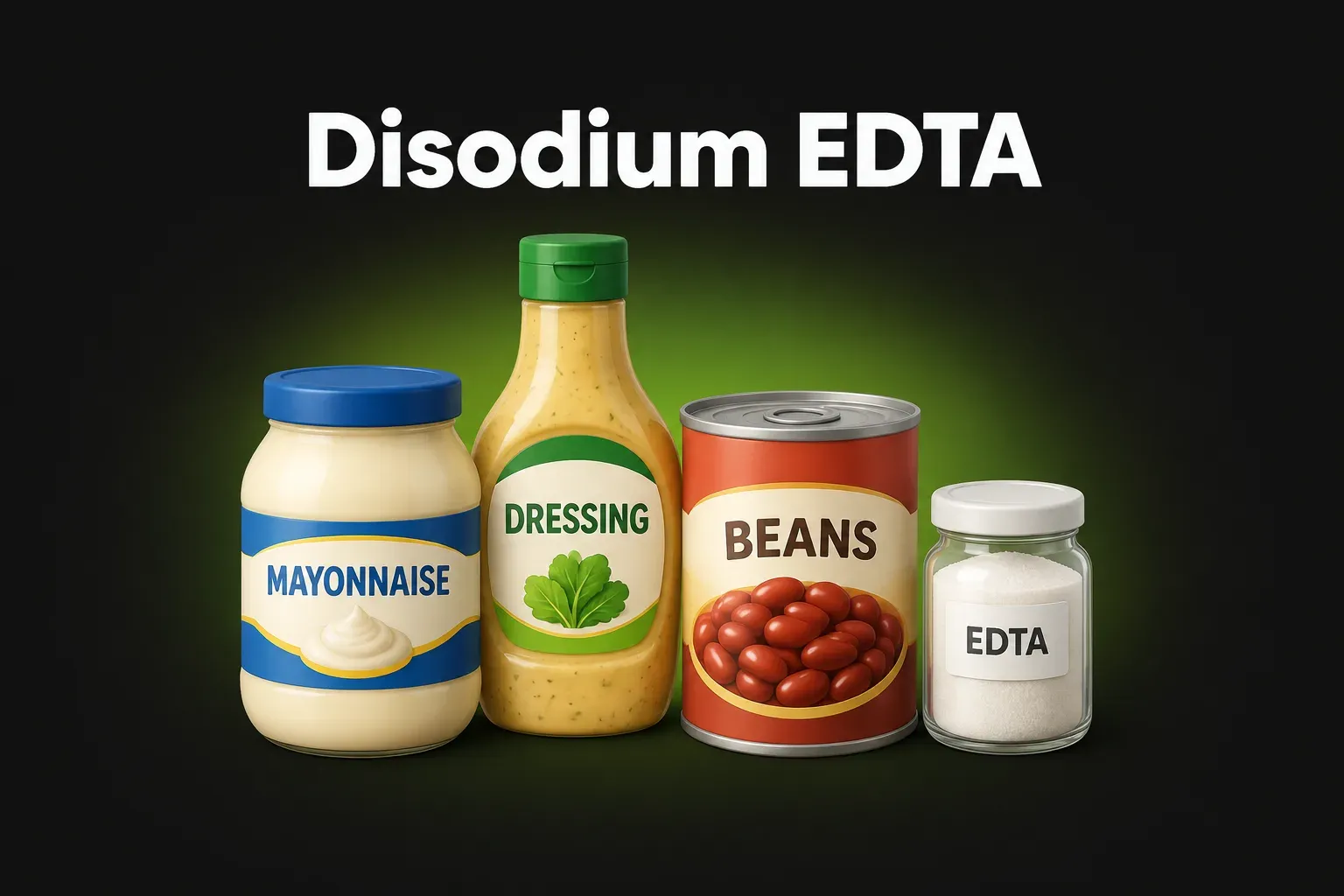
In some soft drinks, EDTA is added to help stop benzene from forming.
The bottom line
Sodium benzoate is allowed in food, and the amounts in one drink are small. But it can form benzene in drinks with vitamin C. It was part of the additive mix that made children more hyperactive in the Southampton study. And animal and lab studies found effects on memory, the brain and DNA. There’s no proof yet that normal amounts harm people. But there’s enough reason to limit it – especially in soft drinks and especially for children.
FAQ
Is sodium benzoate bad for you?
In small amounts, food safety agencies say it's safe. But there are three worries. In drinks that also have vitamin C, it can turn into benzene, a substance that causes cancer. A large study in children linked it, together with artificial colors, to more hyperactive behavior. And animal and lab studies found effects on memory, the brain and DNA at higher doses. It's worth limiting, especially for children.
Does sodium benzoate cause cancer?
Sodium benzoate itself is not listed as a cause of cancer. The worry is benzene. When sodium benzoate and vitamin C (ascorbic acid) are in the same drink, they can form small amounts of benzene, especially with heat and light. In FDA tests, most drinks had little or no benzene. The few with more were changed by their makers.
Does sodium benzoate cause ADHD?
It hasn't been shown to cause ADHD. But a large 2007 study from the University of Southampton tested drinks with sodium benzoate and artificial colors. They made ordinary children aged 3 and 8–9 more hyperactive than a drink without additives. Benzoate and colors were given together, so the study can't say how much came from each.
What foods contain sodium benzoate?
Mostly sour foods: soft drinks, fruit drinks and juices, pickles, salad dressings, sauces, ketchup, jams, margarine and some ready salads. It's also used in medicines, mouthwash and cosmetics.
What is E211?
E211 is the European code for sodium benzoate. Related preservatives are benzoic acid (E210), potassium benzoate (E212) and calcium benzoate (E213).
Is sodium benzoate natural?
No. The benzoic acid it comes from is found in small amounts in cranberries, cinnamon, cloves and plums. But the sodium benzoate in food is made in factories.