Are Rice Cakes Healthy? Calories, Nutrition and Better Picks
Are rice cakes healthy? Calories and nutrition facts, why they raise blood sugar fast, what flavored ones add, arsenic, weight loss and healthy toppings.
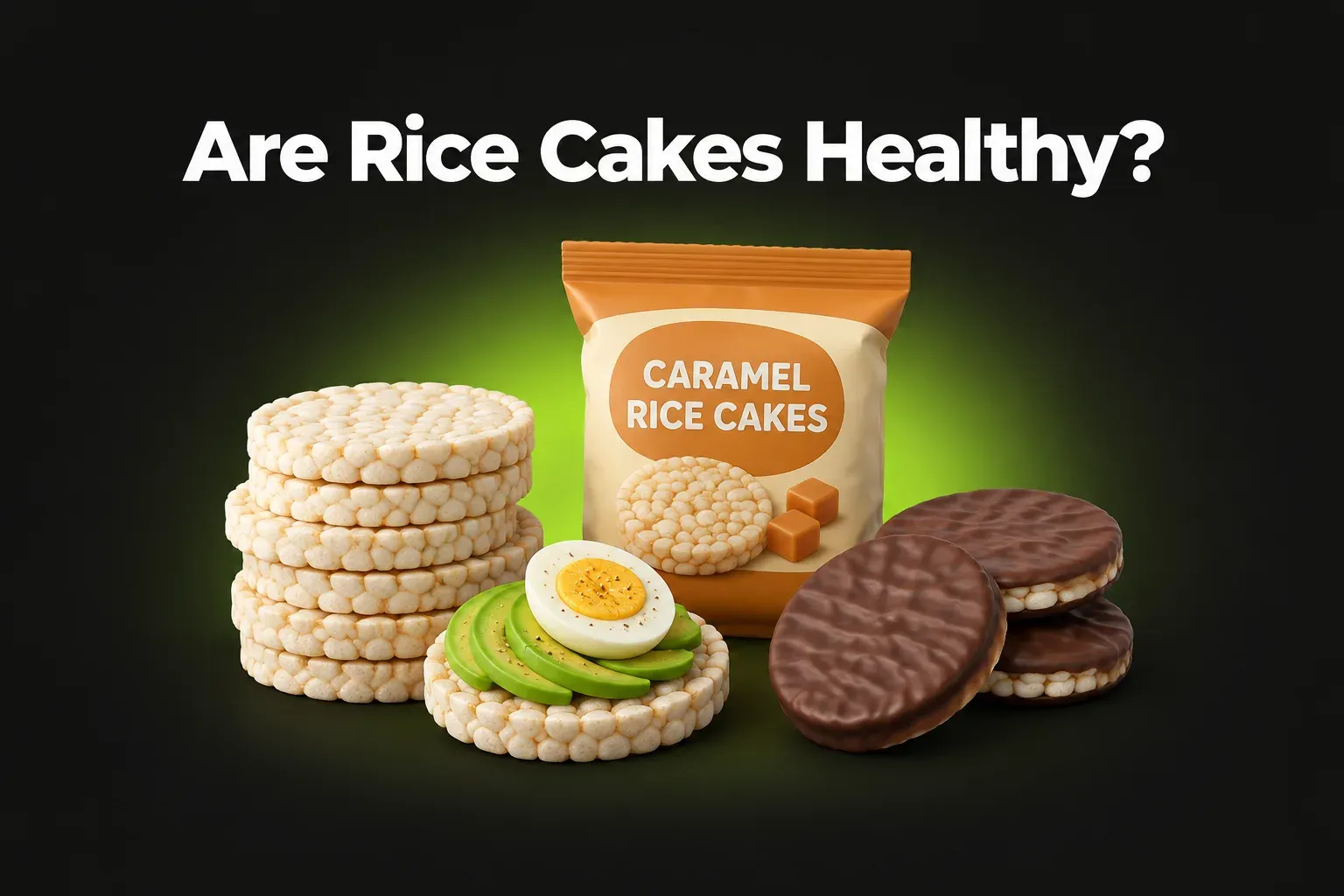
Rice cakes have been a “diet food” for decades: light, crunchy and only 35 calories each. But are rice cakes healthy, or just air with a crunch? The answer depends on which ones you buy. Plain rice cakes are made from rice and maybe salt. Flavored ones – caramel, chocolate, cheddar, sour cream and onion – can add sugar, oils, flavor powders and colors.
The short answer: plain rice cakes are low in calories and have few ingredients, but they have almost no protein, fiber or vitamins and raise blood sugar quickly. They’re a fine base for healthy toppings, not a filling snack on their own. Flavored rice cakes are closer to chips or cookies. Rice also contains some arsenic, so it’s best to vary your snacks.
Rice cake nutrition facts
Typical numbers per rice cake. Brands differ – check the label.
| Rice cake | Weight | Calories | Carbs | Protein | Fiber |
|---|---|---|---|---|---|
| Plain brown rice | 9 g | 35 | 7 g | 0.7 g | 0.4 g |
| Lightly salted | 9 g | 35 | 7 g | 0.7 g | 0.4 g |
| Multigrain | 9 g | 35 | 7 g | 0.8 g | 0.5 g |
| Caramel | 13 g | 50 | 11 g | 0.7 g | 0.2 g |
| Chocolate‑coated | 17 g | 80–90 | 11–12 g | 1 g | 0.5 g |
| Mini cheddar (per serving) | 30 g | 130 | 23 g | 2 g | 0.5 g |
Light per cake, not per gram. Rice cakes are mostly air. Per 100 g, plain rice cakes have about 390 calories – about the same as bread crumbs or crackers. That’s why a few rice cakes can add up quickly.
The good side of plain rice cakes
- Few ingredients: often just rice, or rice and salt.
- Low in calories per piece, so they’re easy to portion.
- Naturally gluten-free, if made only from rice.
- Low in fat and sugar in the plain version.
- A crunchy base that works with both sweet and savory toppings.
The downsides
Very little nutrition
A plain rice cake has less than 1 g of protein and less than half a gram of fiber. Puffing the rice at high heat leaves mostly starch. Compared with a slice of whole-grain bread, you get much less fiber and fewer vitamins and minerals.
They raise blood sugar fast
Puffed rice is digested very quickly. Rice cakes have a high glycemic index – about 70 or higher in most tests, similar to white bread. This means a fast rise in blood sugar, and for many people hunger comes back sooner. If you have diabetes or insulin resistance, eat them with protein, fat or fiber, which slow the rise. Learn more about the glycemic index.
Arsenic
Rice takes up more arsenic from soil and water than other grains. Some of it is inorganic arsenic, which can raise the risk of cancer and other diseases when eaten often over many years. Because of this, the EU sets a legal maximum of inorganic arsenic for rice cakes, rice crackers and rice waffles – and a much stricter limit for rice foods for babies and young children.
For adults who eat rice cakes now and then, this isn’t a big concern. But if you eat them every day, or give them to toddlers often, it’s wise to switch between different snacks – like oat cakes, rye crispbread, corn cakes or fruit.
What flavored rice cakes add
Flavored rice cakes are where most of the problems are. Look at the label and you may find:
- Sugar and syrups – caramel and apple-cinnamon rice cakes can have 3–4 g of sugar per cake. Five cakes is like a small dessert.
- Chocolate or yogurt coating – adds sugar and often palm oil.
- Cheese and savory powders – with maltodextrin, MSG, natural flavors and colors like annatto or paprika extract.
- Salt – mini savory rice cakes often have 250–300 mg of sodium per serving.
A plain rice cake with your own topping is almost always the healthier choice.
Are rice cakes good for weight loss?
They can help, but only if you eat them the right way. A plain rice cake has just 35 calories, so it’s easy to fit into a calorie deficit. The problem is that rice cakes don’t keep you full: they’re mostly air and fast carbs, with almost no protein or fiber. Many people eat 4–6 cakes and are still hungry.
The fix: turn them into a mini meal with protein and fiber on top.
Healthy rice cake toppings
| Topping | Calories per cake | Protein | Why |
|---|---|---|---|
| Cottage cheese + tomato | 80–90 | 6–7 g | High protein, low calorie |
| Hard‑boiled egg + avocado | 140–150 | 7 g | Protein and healthy fat |
| Hummus + cucumber | 80–100 | 2–3 g | Fiber, plant protein |
| Peanut butter + banana | 150–160 | 4 g | Filling, sweet without added sugar |
| Greek yogurt + berries | 70–80 | 5–6 g | Protein, natural sweetness |
| Tuna + a little mayo | 100–110 | 7–8 g | Lots of protein |
For the peanut butter, choose one made only from peanuts – see how to pick the healthiest peanut butter. For more ideas, see our list of high-protein snacks.
Rice cakes vs other crunchy snacks
| Snack | Per serving | Calories | Fiber | Notes |
|---|---|---|---|---|
| Plain rice cakes | 2 cakes | 70 | 0.8 g | Few ingredients, little nutrition |
| Rye crispbread | 2 slices | 70 | 3–4 g | Much more fiber |
| Oat cakes | 2 cakes | 90 | 2 g | More fiber, slower carbs |
| Air‑popped popcorn | 3 cups | 95 | 3.5 g | Whole grain, high volume |
| Potato chips | 1 oz (28 g) | 150–160 | 1 g | More fat and salt |
For more crunchy options, see how to pick the healthiest chips and crackers.
Check any pack in seconds. With NutriSmart, you photograph the label or scan the barcode. The app shows the calories, sugar and salt, flags flavorings, oils and other additives in flavored rice cakes, explains each one and gives the product a health score out of 100.Get the app free
The bottom line
Plain rice cakes are low in calories and simple – usually just rice and salt – but they have almost no protein or fiber and raise blood sugar quickly. They’re a good base for toppings like cottage cheese, eggs, hummus or peanut butter. Flavored rice cakes with caramel, chocolate or cheese powder add sugar, oils and additives. And because rice contains some arsenic, mix rice cakes with other snacks instead of eating them every day.
FAQ
Are rice cakes healthy?
Plain rice cakes are low in calories and have very few ingredients, but they also have almost no protein, fiber or vitamins, and they raise blood sugar quickly. They're fine as a base for healthy toppings. Flavored rice cakes with caramel, chocolate or cheese powder add sugar, oils and additives.
How many calories are in a rice cake?
One plain rice cake (about 9 g) has about 35 calories, 7 g of carbs, less than 1 g of protein and less than 0.5 g of fiber. Caramel rice cakes have about 50 calories each, and chocolate-coated ones 80–90.
Are rice cakes good for weight loss?
They're low in calories per cake, but they don't fill you up much because they have little protein and fiber. Eaten alone, many people end up eating several. Top them with protein – cottage cheese, eggs, hummus or peanut butter – so they keep you full.
Do rice cakes raise blood sugar?
Yes. Puffed rice is digested very quickly, so rice cakes have a high glycemic index – about 70 or higher in tests. Adding protein, fat or fiber on top slows the rise.
Do rice cakes contain arsenic?
Rice takes up more arsenic from soil and water than other grains, so rice cakes contain some inorganic arsenic. The EU sets a legal maximum for rice cakes. For adults eating them sometimes, it isn't a big concern, but it's wise to vary snacks, especially for young children.
Are rice cakes gluten-free?
Plain rice cakes made only from rice are naturally gluten-free. Some flavored or multigrain rice cakes contain barley, wheat or malt, so check the label if you have celiac disease.