Healthiest Peanut Butter: What to Look For on the Label
How to pick the healthiest peanut butter: the ingredients it should have, why to skip hydrogenated oils and "reduced fat", powdered peanut butter, and calories.
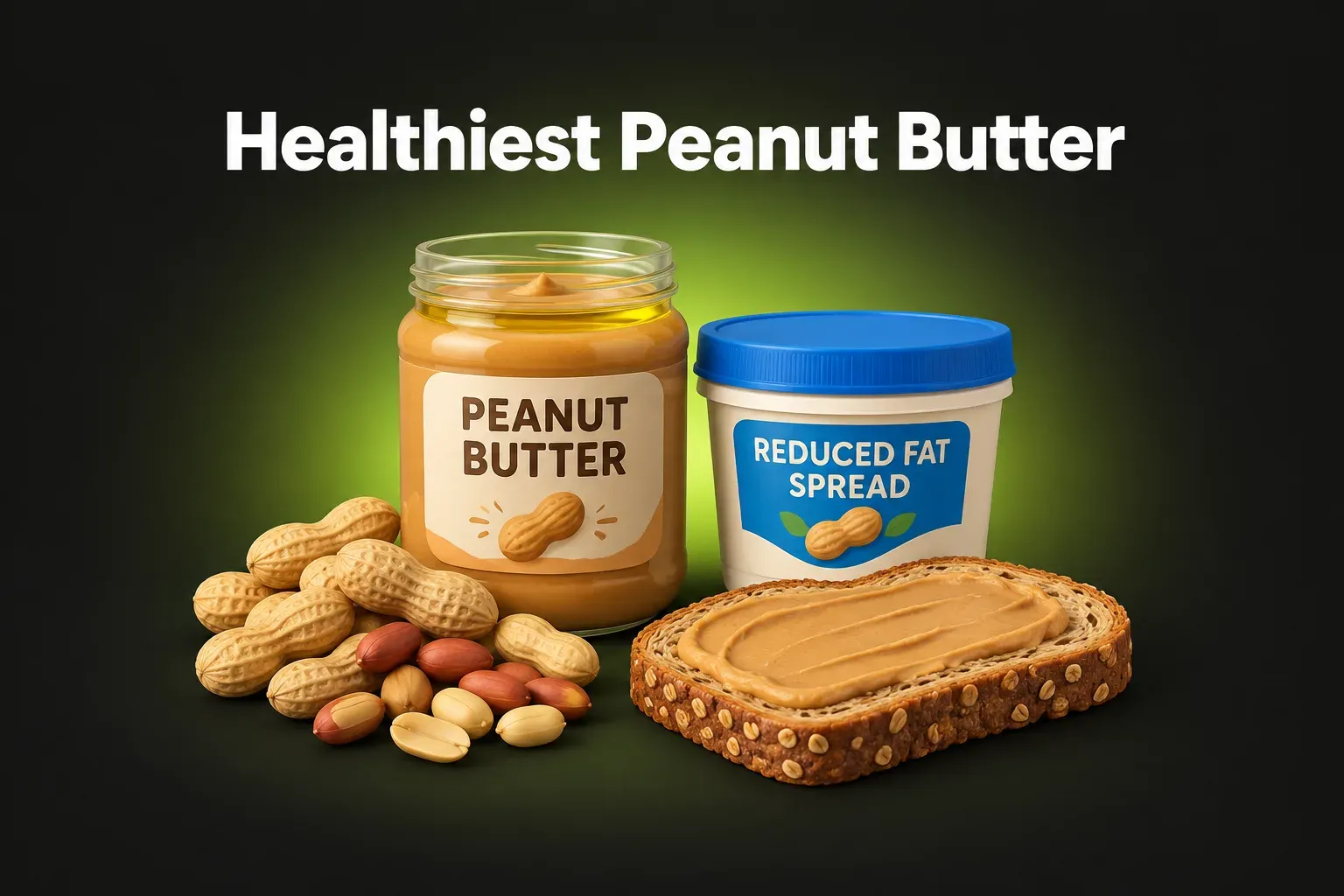
Peanut butter is cheap, filling and packed with protein and healthy fats. People who eat nuts and peanuts regularly tend to live longer. But the jar matters: some peanut butters are almost 100% peanuts, while others add sugar, hydrogenated oils, palm oil and salt. Here’s how to pick the healthiest one in about five seconds.
The short answer: the healthiest peanut butter has one or two ingredients: peanuts and maybe salt. Skip jars with added sugar, hydrogenated oils or palm oil, and skip “reduced fat” versions – they replace healthy fat with sugar. If the oil separates on top, that’s a good sign. Keep portions to 1–2 tablespoons, because it’s about 95 calories per tablespoon.
The 5-second label check
Turn the jar around and read the ingredients:
| Ingredients | Verdict |
|---|---|
| Peanuts | Best choice |
| Peanuts, salt | Best choice |
| Peanuts, palm oil, salt | OK – “no-stir natural”; more saturated fat |
| Peanuts, sugar, hydrogenated oils, salt | Classic peanut butter; worth switching |
| Peanuts, corn syrup solids, sugar, oils, salt… | “Reduced fat” spread; skip it |
Also check “Added sugars” on the nutrition label. The healthiest jars show 0 g.
Peanut butter types compared
Per 2 tablespoons (32 g). Numbers are typical and differ by brand.
| Type | Calories | Protein | Added sugar | Notes |
|---|---|---|---|---|
| Natural (peanuts ± salt) | 190 | 7–8 g | 0 g | Oil separates; stir and refrigerate |
| No‑stir natural | 190–200 | 7 g | 0–2 g | Uses palm oil to stop separation |
| Regular | 190 | 7 g | 2–3 g | Sugar and hydrogenated oils |
| Reduced‑fat spread | 190 | 7 g | 4 g | Less peanuts, more sugar and starch |
| Honey or chocolate flavored | 190–200 | 6–7 g | 4–7 g | Closer to a dessert spread |
| Powdered (2 tbsp powder) | 50–60 | 5–6 g | 0–2 g | Most of the fat removed |
Why peanut butter can be healthy
Peanuts are technically legumes, but their nutrition is close to nuts. Two tablespoons of peanut butter give you 7–8 g of protein, 2–3 g of fiber, healthy unsaturated fats, vitamin E, magnesium and niacin.
Large studies link nuts and peanuts to a longer life:
- In two big US studies of nurses and doctors, people who ate nuts every day had a 20% lower risk of dying during the study than people who ate none (Bao et al., New England Journal of Medicine, 2013). The study was partly funded by a tree nut industry group.
- Another study followed over 200,000 people in the US and China. Those who ate the most nuts and peanuts had a 17–21% lower risk of dying during the study, mostly from heart disease (Luu et al., JAMA Internal Medicine, 2015). Many of them ate mainly peanuts, which are cheap.
These studies show a link, not proof. Nut eaters may have other healthy habits. But the results are very consistent.
What to avoid in peanut butter
Hydrogenated oils
Many classic peanut butters add fully hydrogenated vegetable oils (often rapeseed, cottonseed or soybean). They keep the oil from separating. The US banned partially hydrogenated oils because of their trans fats. Fully hydrogenated oils have very little trans fat, but they’re a sign of a more processed product and add saturated fat.
Palm oil
“No-stir natural” peanut butters often use palm oil instead. It’s better than hydrogenated oils, but it adds saturated fat. If you don’t mind stirring, plain peanuts are better.
Added sugar
Peanuts are naturally a little sweet. Regular brands still add sugar, molasses or syrups. Honey and chocolate versions add even more.
“Reduced fat” peanut butter
This sounds healthy but isn’t. To replace the fat, makers add corn syrup solids, sugar and maltodextrin. The calories stay about the same, but you get more sugar and less of the good fat. In the US, peanut butter must be at least 90% peanuts. Many reduced-fat versions have less, so they’re sold as “peanut butter spread”.
Is powdered peanut butter healthy?
Powdered peanut butter is made by pressing most of the oil out of roasted peanuts and grinding the rest. Mixed with water, it tastes like peanut butter with about 70% fewer calories.
It’s useful if you’re counting calories, or for adding peanut flavor and protein to smoothies, oatmeal or yogurt. But you lose most of the healthy fats that make peanuts good for your heart. Choose one with only peanuts (or peanuts and a little salt), since some add sugar.
Peanut butter and weight loss
Peanut butter has about 95 calories per tablespoon (see all portions in calories in peanut butter). That’s the catch. A “spoonful” eaten straight from the jar is often 2–3 tablespoons – up to 285 calories in a few bites.
Still, it can help with weight loss when you measure it. The protein, fiber and fat keep you full, so a small amount on an apple or whole-grain toast can stop you from snacking later. Tips:
- Use a measuring spoon for a week to learn what one tablespoon looks like.
- Spread it thin on toast or fruit instead of eating it by the spoon.
- Pair it with fiber – apple, banana, celery or oats.
- Track it – peanut butter is one of the foods people most often forget to count.
Read more about how a calorie deficit works, and see our list of high-protein snacks.
Other things to know
- Peanut allergy is one of the most common and serious food allergies. If you have it, avoid all peanut butter.
- Aflatoxins are toxins from a mold that can grow on peanuts. In the US and EU, peanut products are tested and the limits are strict, so this is rarely a problem with store-bought peanut butter.
- Almond and other nut butters are similar in calories. Use the same rule: nuts and maybe salt, nothing else.
Check any jar in seconds. With NutriSmart, you photograph the label or scan the barcode. The app flags added sugar, hydrogenated oils and palm oil, explains each ingredient and gives the peanut butter a health score out of 100.Get the app free
The bottom line
The healthiest peanut butter is just peanuts, or peanuts and salt. Skip added sugar, hydrogenated oils and “reduced fat” spreads, which swap healthy fat for sugar and starch. Palm-oil “no-stir” jars are a middle ground. Peanut butter is linked to better heart health, but it has about 95 calories per tablespoon – so measure it, and enjoy 1–2 tablespoons a day.
FAQ
What is the healthiest peanut butter?
Peanut butter made from just peanuts, or peanuts and a little salt. It has no added sugar, no hydrogenated oils and no palm oil. The oil will separate on top – that's normal. Stir it in, then keep the jar in the fridge.
Is natural peanut butter healthier?
Usually yes, if the label lists only peanuts (and salt). But some jars called "natural" add palm oil and sugar so you don't have to stir. Always read the ingredients, not the front of the jar.
Is reduced-fat peanut butter healthier?
No. To replace the fat, makers add sugar, corn syrup solids or maltodextrin. It has about the same calories as regular peanut butter, but more sugar and less of the healthy fat from peanuts. In the US it's even called a "spread", because it has less than 90% peanuts.
Is peanut butter good for weight loss?
It can be part of a weight-loss diet. It has protein, fiber and healthy fats that keep you full. But it's high in calories – about 190 in 2 tablespoons – and easy to overeat. Measure it instead of scooping straight from the jar.
Is powdered peanut butter healthy?
It can be a useful low-calorie option. Most of the oil is pressed out, so 2 tablespoons have about 50–60 calories instead of 190. But you lose most of the healthy fats, and some brands add sugar and salt. Check the label.
How much peanut butter should I eat a day?
About 1–2 tablespoons a day is a good amount for most people. That gives you healthy fats and protein for 95–190 calories. Eating nuts or peanuts most days has been linked to a lower risk of heart disease and early death.