Calories in Peanut Butter: Per Tablespoon and Serving
How many calories are in a teaspoon, tablespoon and serving of peanut butter – smooth, crunchy, natural, reduced fat and powdered – and how much to eat.
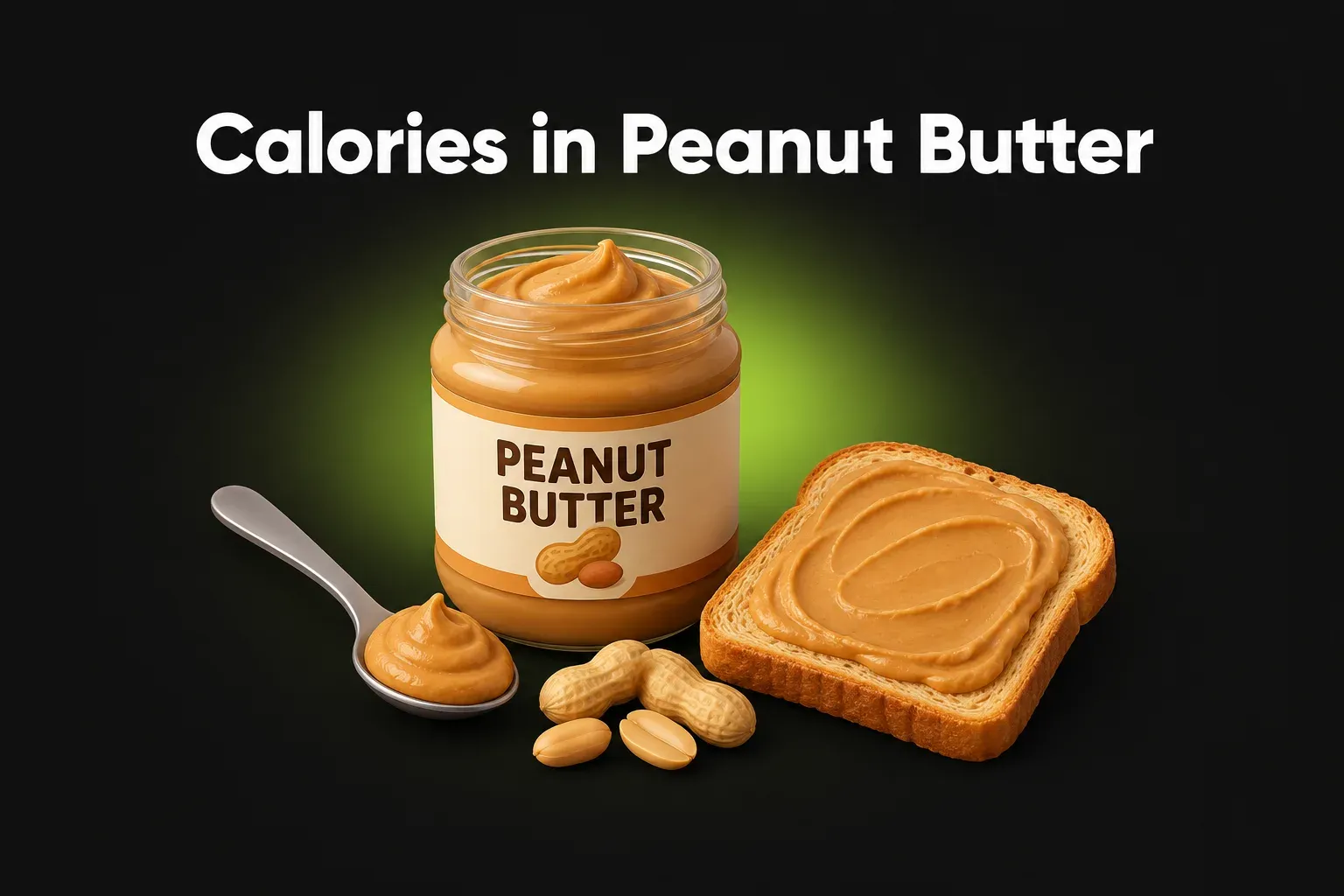
Peanut butter is creamy, filling and goes with almost everything – toast, apples, oatmeal, smoothies. It’s also one of the most calorie-dense foods in the kitchen, and one of the easiest to over-serve. So how many calories are in peanut butter, and how much can you eat?
The short answer: a level tablespoon (16 g) of peanut butter has about 94 calories, and the standard 2-tablespoon serving (32 g) has about 188 calories. 100 g has about 590 calories. Smooth, crunchy and natural peanut butter all have about the same calories. The real issue is the portion – a heaped spoon can be twice a level one.
Calories in peanut butter by portion
Values for smooth peanut butter, from the US Department of Agriculture (USDA FoodData Central):
| Portion | Weight | Calories |
|---|---|---|
| 1 teaspoon, level | 5 g | 29 kcal |
| 1 tablespoon, level | 16 g | 94 kcal |
| 1 tablespoon, heaped | 25–30 g | 150–175 kcal |
| 2 tablespoons (1 serving) | 32 g | 188 kcal |
| ¼ cup | 65 g | 382 kcal |
| 100 g | 100 g | 588 kcal |
Tip: most people use more than a level tablespoon without noticing. Weigh your usual amount once on a kitchen scale – many are surprised to find their “tablespoon” is 30 g or more.
Calories by type of peanut butter
| Peanut butter (2 tbsp) | Calories | Protein | Sugar |
|---|---|---|---|
| Smooth | 188 kcal | 7.0 g | 2.1 g |
| Crunchy (chunky) | 188 kcal | 7.7 g | 2.7 g |
| Natural (peanuts + salt) | about 190 kcal | about 8 g | about 1–2 g |
| Reduced fat | 187 kcal (36 g) | 9.3 g | 3.3 g |
| Powdered (12–13 g of powder) | about 50–60 kcal | about 6 g | about 1–2 g |
| Almond butter, for comparison | about 195 kcal | about 7 g | about 1 g |
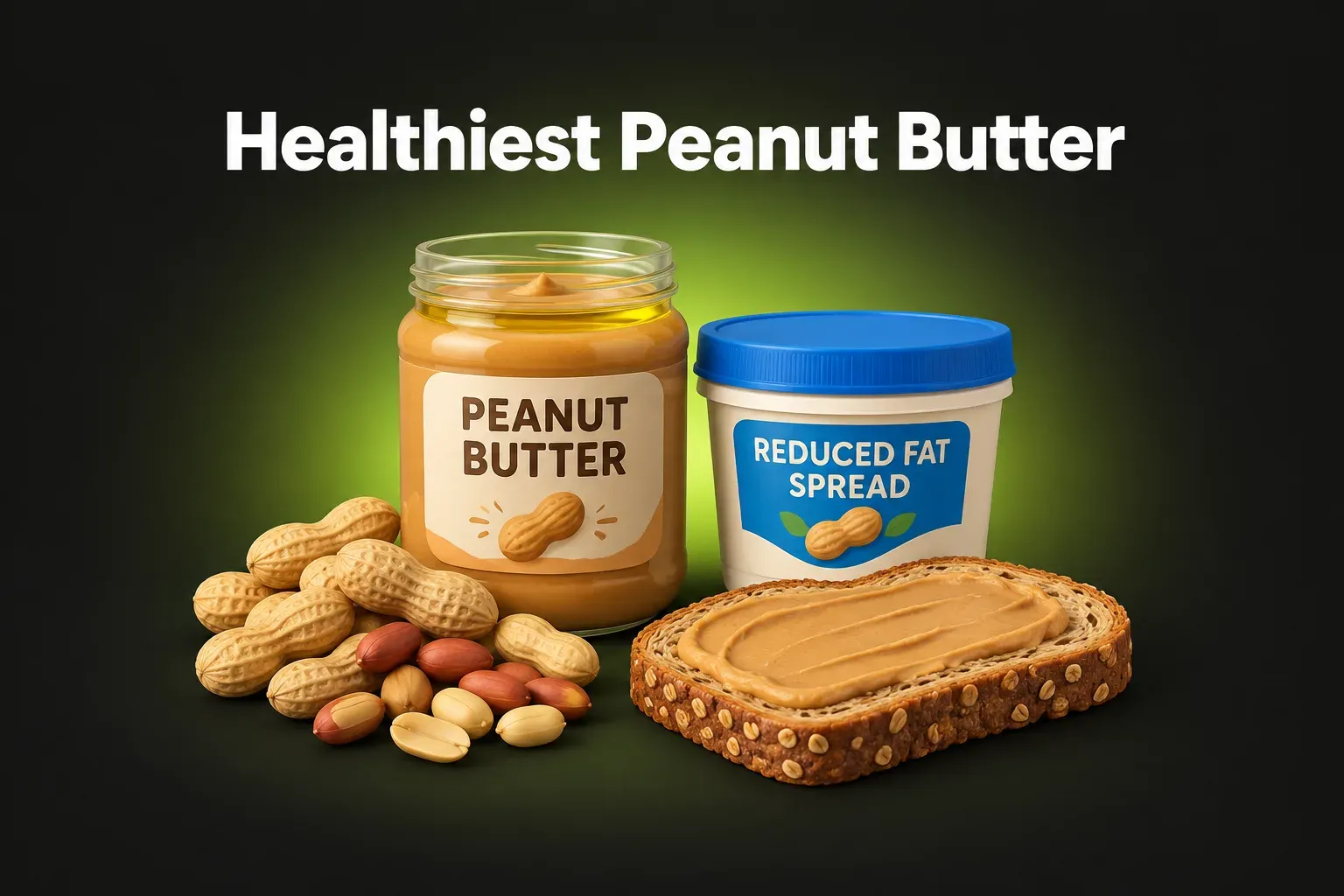
Reduced-fat peanut butter saves almost no calories – the fat is replaced with sugar and starch. Powdered peanut butter is the only type that’s much lower, because most of the oil has been removed. For the best jar, see our guide to the healthiest peanut butter.
Peanut butter nutrition facts
| Nutrient | Per 2 tbsp (32 g) | Per 100 g |
|---|---|---|
| Calories | 188 kcal | 588 kcal |
| Fat | 15.8 g | 49.5 g |
| – saturated | 3.0 g | 9.5 g |
| – monounsaturated | 6.6 g | 20.7 g |
| Carbohydrates | 7.7 g | 24.0 g |
| – of which sugars | 2.1 g | 6.5 g |
| Fiber | 1.8 g | 5.7 g |
| Protein | 7.0 g | 21.9 g |
About 75% of the calories in peanut butter come from fat – mostly the healthier unsaturated kind. It also gives you 7 g of protein and some fiber per serving. But it’s not a “high protein food” in the way chicken or Greek yogurt is: you get only about 4 g of protein per 100 calories. See our list of high protein foods.
Calories in popular peanut butter snacks
| Snack | Calories |
|---|---|
| Apple + 1 tbsp peanut butter | about 190 kcal |
| Banana + 1 tbsp peanut butter | about 200 kcal |
| 1 slice whole wheat toast + 1 tbsp peanut butter | about 175 kcal |
| Peanut butter and jelly sandwich (2 tbsp PB, 1 tbsp jelly) | about 380–400 kcal |
| Celery sticks + 1 tbsp peanut butter | about 105 kcal |
| Oatmeal (½ cup oats) + 1 tbsp peanut butter | about 245 kcal |
| Smoothie with 2 tbsp peanut butter, banana and milk | about 420–450 kcal |
Is peanut butter good for weight loss?
It can be – in measured amounts. Peanut butter is filling thanks to its fat, protein and fiber, and it makes healthy foods like apples and oatmeal more satisfying. But because it’s so calorie-dense, a few extra spoonfuls a day can quietly add 200–300 calories.
For most people, 1–2 level tablespoons a day fits well into a weight-loss plan. Read more about the calorie deficit and find your number with our calorie calculator.
How to eat peanut butter when you’re losing weight
- Measure it – use a measuring spoon or a scale, not a heaped spoon from the jar.
- Pair it with fruit or vegetables – apple slices, banana, celery.
- Choose a jar with just peanuts (and salt) – no added sugar, no hydrogenated or palm oil.
- Try powdered peanut butter in smoothies and oatmeal for the taste with fewer calories.
- Don’t eat it straight from the jar – it’s the easiest way to lose track.
Count the calories in your peanut butter without guesswork. With NutriSmart, you snap a photo of what you eat – toast, oatmeal or fruit with peanut butter – and the app counts your calories, protein, carbs and fat. For the jar itself, scan the barcode to check for added sugar and oils and see a health score out of 100.Get the app free
You can also read how many calories are in an apple and a banana.
The bottom line
A level tablespoon of peanut butter has about 94 calories, a 2-tablespoon serving about 188, and 100 g about 590. Smooth, crunchy, natural and even reduced-fat versions all have about the same calories; only powdered peanut butter is much lower. Peanut butter fits into weight loss when you measure it – 1–2 level tablespoons a day – and choose a jar with just peanuts and salt.
FAQ
How many calories are in a tablespoon of peanut butter?
About 94 calories in a level tablespoon (16 g). A heaped tablespoon can easily hold 25–30 g – about 150–175 calories.
How many calories are in 2 tablespoons of peanut butter?
About 188 calories in the standard 2-tablespoon serving (32 g), with about 7 g of protein, 16 g of fat and 8 g of carbs.
Does natural peanut butter have fewer calories?
No. Natural peanut butter (just peanuts and salt) has about the same calories as regular – about 190 per 2 tablespoons. It's still the better choice, because it has no added sugar or hydrogenated oils.
Is reduced-fat peanut butter lower in calories?
Barely. A 2-tablespoon serving of reduced-fat peanut butter has about 187 calories – almost the same as regular – because the fat is replaced with sugar and starch. It's usually not worth it.
How much peanut butter should I eat a day to lose weight?
One to two level tablespoons (about 95–190 calories) a day fits easily into most weight-loss plans. Measure it with a spoon or a scale, because it's very easy to eat more than you think.
How many calories are in powdered peanut butter?
About 50–60 calories per 2 tablespoons of powder (12–13 g), because most of the oil has been pressed out. Mixed with water, it's a lower-calorie option for smoothies, oatmeal and sauces.