How Many Calories in an Apple? Small, Medium & Large
How many calories are in a small, medium or large apple and per 100 g, plus carbs, sugar and fiber by variety, and whether apples help with weight loss.
Apples are one of the easiest snacks there is: crunchy, sweet, cheap and ready to eat. If you count calories, though, you might wonder how many calories an apple has – and whether the sugar in it is a problem when you’re trying to lose weight.
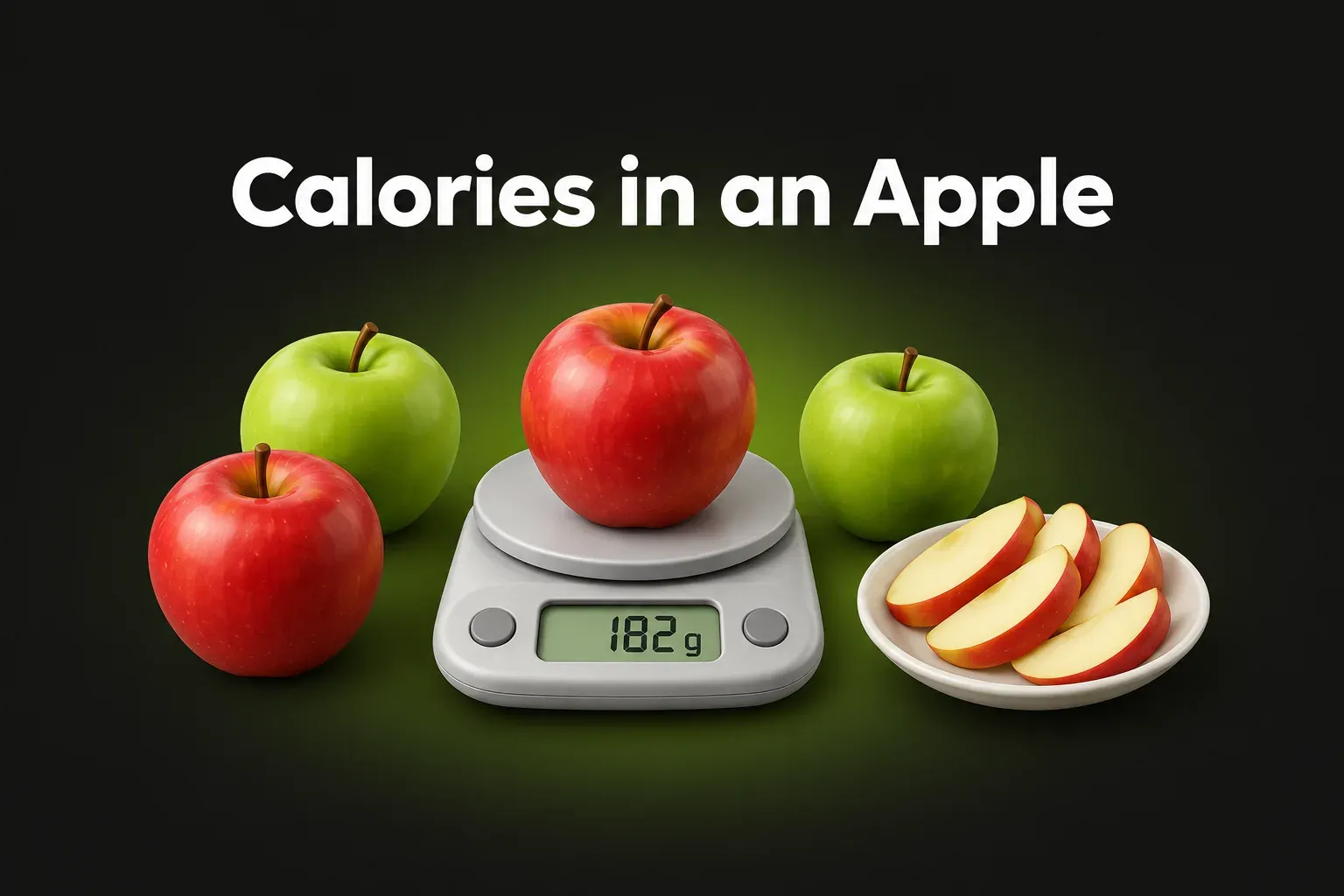
The short answer: a medium apple (about 3 inches across, 182 g) has about 95 calories, and 100 g of apple has 52 calories. Apples are mostly water and fiber, they have a low glycemic index and keep you full for very few calories. The ones to watch are apple juice, dried apples and apple pie.
Calories in an apple by size
Values are for raw apple with the skin, without the core, from the US Department of Agriculture (USDA FoodData Central):
| Size (width) | Weight | Calories |
|---|---|---|
| Extra small (2.5 in) | 101 g | 53 kcal |
| Small (2.75 in) | 149 g | 77 kcal |
| Medium (3 in) | 182 g | 95 kcal |
| Large (3.25 in) | 223 g | 116 kcal |
| 1 cup sliced | 109 g | 57 kcal |
Tip: many apples sold today are bigger than the USDA “medium”. If your apple fills your whole hand, it’s probably closer to 220–250 g and 115–130 calories. A kitchen scale settles it in a second.
Apple nutrition facts
| Nutrient | Per 100 g | Per medium apple (182 g) |
|---|---|---|
| Calories | 52 kcal | 95 kcal |
| Carbohydrates | 13.8 g | 25 g |
| – of which sugars | 10.4 g | 19 g |
| Fiber | 2.4 g | 4.4 g |
| Protein | 0.3 g | 0.5 g |
| Fat | 0.2 g | 0.3 g |
| Water | 86 g | 156 g |
| Potassium | 107 mg | 195 mg |
| Vitamin C | 4.6 mg | 8.4 mg |
An apple is about 86% water. Almost all of its calories come from natural sugar, but it also brings 4–5 g of fiber – about 15% of what you need in a day. A good part of the fiber is pectin, which turns into a gel in your stomach and slows down digestion. More fiber ideas in our list of high fiber foods.
Keep the skin on. Peeled apple has slightly fewer calories (48 instead of 52 per 100 g), but almost half the fiber is lost with the peel.
Calories by apple variety
Per 100 g, raw with skin, USDA. Per medium apple (182 g) in the last column.
| Variety | Per 100 g | Medium apple |
|---|---|---|
| Gala | 57 kcal | about 104 kcal |
| Golden Delicious | 57 kcal | about 104 kcal |
| Granny Smith | 58 kcal | about 106 kcal |
| Red Delicious | 59 kcal | about 107 kcal |
| Fuji | 63 kcal | about 115 kcal |
Green apples like Granny Smith taste more sour, but they have almost the same sugar and calories as red ones. The size of the apple matters much more than the color or the variety.
Calories in apple juice, applesauce and other apple foods
| Food | Portion | Calories |
|---|---|---|
| Fresh apple | 1 medium (182 g) | 95 kcal |
| Apple juice, unsweetened | 1 cup (8 fl oz) | about 115 kcal |
| Applesauce, unsweetened | ½ cup (122 g) | about 50 kcal |
| Applesauce, sweetened | ½ cup (128 g) | about 90 kcal |
| Dried apple rings | 1 oz (28 g) | about 70 kcal |
| Apple pie | 1 slice (125 g) | about 300 kcal |
Apple juice has more calories than a whole apple but almost no fiber, so it doesn’t fill you up. Dried apples have about 240 calories per 100 g – a small handful is fine, a whole bag adds up fast.
Some popular combinations:
- Apple + 1 tablespoon peanut butter (16 g): about 190 calories
- Apple + 1 oz cheddar (28 g): about 210 calories
- Half an apple sliced into oatmeal (½ cup oats cooked in water): about 200 calories
Are apples good for weight loss?
Yes. Apples have few calories, lots of water and fiber, and you need time to chew them – all things that help you feel full.
One study at Penn State University tested this directly. 58 adults ate a whole apple, applesauce, apple juice or nothing before lunch. On the days they ate the whole apple, they ate about 15% fewer calories in total at lunch, counting the apple itself. The apple filled them up more than applesauce or juice with the same calories (Flood-Obbagy & Rolls, Appetite, 2009).
Apples aren’t magic, of course: you lose weight only when you eat fewer calories than you burn. Read more about the calorie deficit and find your number with our calorie calculator. For more filling snacks, see our list of low calorie foods.
Apples and blood sugar
Apples have a low glycemic index of about 36, so they raise blood sugar slowly. The fiber and the type of sugar in apples (a lot of it is fructose) both help. Apple juice raises blood sugar faster than a whole apple, because the fiber is gone.
If you have diabetes, a whole apple is usually a good choice for a snack – ideally with some protein, like a handful of nuts or a piece of cheese. Ask your doctor or dietitian what fits your plan. Read more about low glycemic fruits.
How to eat apples when you’re losing weight
- Eat the whole apple, not the juice – you get the fiber and you feel full.
- Keep the skin on – that’s where much of the fiber is.
- Have one before a meal or as a snack instead of cookies or chips.
- Pair it with protein: peanut butter, cheese, Greek yogurt or nuts keep you full longer – just measure the peanut butter.
- Limit dried apples, apple chips and sweetened applesauce.
Count the calories in your apple without guesswork. With NutriSmart, you snap a photo of what you eat, and the app counts your calories, protein, carbs and fat and shows how much you have left for the day. In the food library, you can also see the glycemic index of each food.Get the app free
You can also read how many calories are in a banana and a pear, and see our list of low calorie snacks.
The bottom line
A medium apple has about 95 calories, and 100 g of apple has 52 calories. Apples are mostly water and fiber, have a low glycemic index and fill you up better than apple juice or applesauce. Eat them with the skin, pair them with a little protein, and go easy on dried apples, apple chips and apple pie.
FAQ
How many calories are in an apple?
A medium apple (about 3 inches across, 182 g) has about 95 calories. A small apple (149 g) has about 77 calories, and a large one (223 g) has about 116 calories.
How many calories are in 100 g of apple?
Apple with the skin has about 52 calories per 100 g, with 13.8 g of carbs (about 10 g of sugar), 2.4 g of fiber, 0.3 g of protein and 0.2 g of fat.
Does peeling an apple change the calories?
Only a little: peeled apple has about 48 calories per 100 g instead of 52. But you lose almost half of the fiber, so it's better to eat the skin – just wash it well.
Which apple has the fewest calories?
The differences are small. Per 100 g, Gala and Golden Delicious have about 57 calories, Granny Smith about 58, Red Delicious about 59 and Fuji about 63. The size of the apple matters much more than the variety.
Are apples good for weight loss?
Yes. An apple has under 100 calories, lots of water and fiber, and fills you up. In one study, people who ate an apple before lunch ate about 15% fewer calories in total. Apple juice and applesauce don't fill you up as much.
Is it OK to eat an apple every day?
Yes. One or two apples a day fit easily into a healthy diet. Just mix them with other fruits and vegetables so you get a wider range of vitamins.