Low Calorie Foods: 30 Filling Foods to Help You Lose Weight
30 low calorie foods that keep you full, with calories per 100 g and per portion, why energy density matters for weight loss, and how to build filling meals.
When you’re trying to lose weight, the hardest part is often being hungry. The trick isn’t to eat tiny portions – it’s to eat foods that fill you up for few calories. A big bowl of salad with chicken can have fewer calories than a small handful of chips.
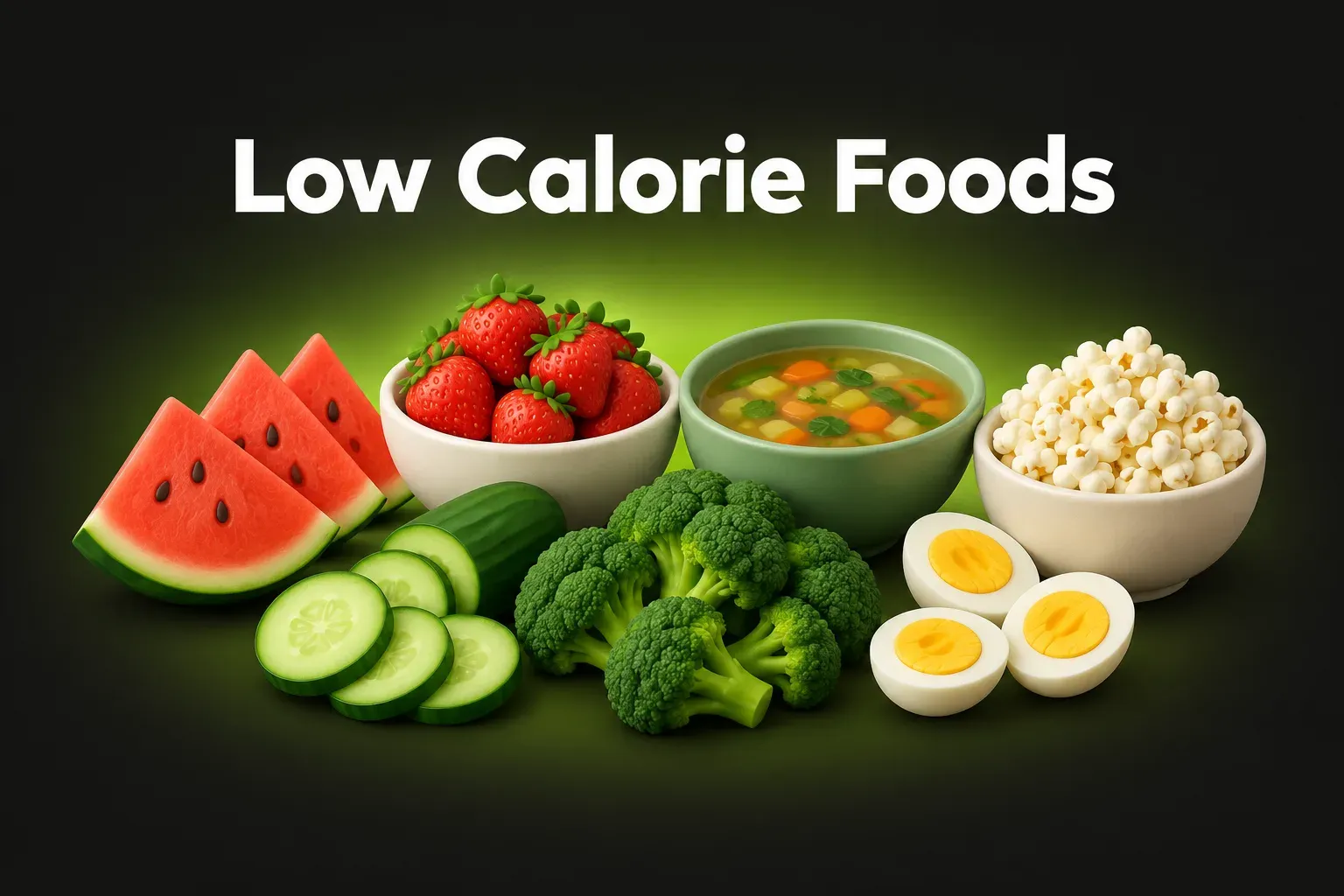
The short answer: the best low calorie foods are rich in water, fiber or protein: vegetables, fruit, broth-based soups, legumes, eggs, white fish, chicken breast, Greek yogurt and potatoes. They have low energy density – few calories per gram – so you can eat big, filling portions. In a one-year study, women who ate more water-rich foods like fruit and vegetables lost more weight and felt less hungry. Below are 30 of the best, with calories per 100 g and per portion.
Why low calorie foods work: energy density
Energy density is the number of calories in each gram of food. It depends mostly on how much water, fiber and fat a food contains:
- Water adds weight and volume with zero calories – that’s why vegetables and soups are so low.
- Fiber adds bulk and slows digestion.
- Fat has 9 calories per gram, more than twice as much as protein or carbs.
People tend to eat a similar weight of food each day. So if that food has fewer calories per gram, you eat fewer calories without eating less food.
In a study at Penn State University, 97 women with obesity were counseled for a year. One group ate less fat; the other ate less fat and more water-rich foods, especially fruit and vegetables. After a year, the second group had lost 7.9 kg compared with 6.4 kg, and they felt less hungry – even though they were eating a larger amount of food (Ello-Martin et al., American Journal of Clinical Nutrition, 2007).
30 low calorie foods
Vegetables
| Food | Calories per 100 g | Typical portion |
|---|---|---|
| Cucumber | 15 | 1 cucumber (300 g): 45 |
| Lettuce | 15 | 1 big bowl (100 g): 15 |
| Celery | 16 | 2 stalks (80 g): 13 |
| Zucchini | 17 | 1 zucchini (200 g): 34 |
| Tomatoes | 18 | 1 tomato (120 g): 22 |
| Mushrooms | 22 | 1 cup (100 g): 22 |
| Spinach | 23 | 1 bowl (60 g): 14 |
| Cauliflower | 25 | 1 cup (110 g): 27 |
| Bell pepper | 26 | 1 pepper (150 g): 39 |
| Broccoli | 34 | 1 cup (90 g): 31 |
| Carrots | 41 | 1 carrot (60 g): 25 |
Fruit
| Food | Calories per 100 g | Typical portion |
|---|---|---|
| Watermelon | 30 | 1 big slice (300 g): 90 |
| Strawberries | 32 | 1 cup (150 g): 48 |
| Grapefruit | 42 | ½ grapefruit (120 g): 50 |
| Orange | 47 | 1 orange (150 g): 70 |
| Apple | 52 | 1 apple (180 g): 94 |
| Blueberries | 57 | 1 cup (150 g): 86 |
Protein foods
| Food | Calories per 100 g | Protein per 100 g |
|---|---|---|
| Egg whites | 52 | 11 g |
| Nonfat Greek yogurt | 59 | 10 g |
| Low‑fat cottage cheese | 72 | 12 g |
| Cod (cooked) | 105 | 23 g |
| Shrimp (cooked) | 99 | 24 g |
| Whole eggs | 143 | 13 g |
| Chicken breast (cooked) | 165 | 31 g |
| Tofu (firm) | 144 | 17 g |
Protein is the most filling nutrient, so a low calorie meal should almost always include some. See our list of high-protein foods.
Filling carbs
| Food | Calories per 100 g | Typical portion |
|---|---|---|
| Broth soup | 10–30 | 1 bowl (300 ml): 30–90 |
| Oatmeal (cooked in water) | 71 | 1 bowl (250 g): 178 |
| Boiled potatoes | 87 | 1 potato (170 g): 148 |
| Lentils (cooked) | 116 | ½ cup (100 g): 116 |
| Air‑popped popcorn | 387 | 3 cups (24 g): 93 |
Values are approximate and vary by type and how food is cooked.
Popcorn looks high per 100 g, but it’s so light and airy that a big bowl has under 100 calories – as long as you skip the butter. Potatoes are one of the most filling foods per calorie, as long as they’re boiled or baked, not fried.
How to build filling, low calorie meals
- Fill half your plate with vegetables. They add volume for almost no calories.
- Add a palm-sized portion of protein – chicken, fish, eggs, tofu, legumes or Greek yogurt.
- Add a fist-sized portion of filling carbs – potatoes, whole grains or legumes.
- Add a little healthy fat – a spoon of olive oil, a few nuts or some avocado. Fat isn’t bad, but it’s calorie-dense, so measure it.
- Start with soup or salad. A bowl of broth-based soup before a meal helps you eat less overall.
- Choose whole fruit over juice and dried fruit – it has the same sugar but far more volume and fiber.
- Watch the “hidden” calories – oil, dressings, sauces, cheese and sugary drinks can double a meal’s calories. Read about ultra-processed foods, which tend to be high in calories and low in fullness.
Don’t go too low
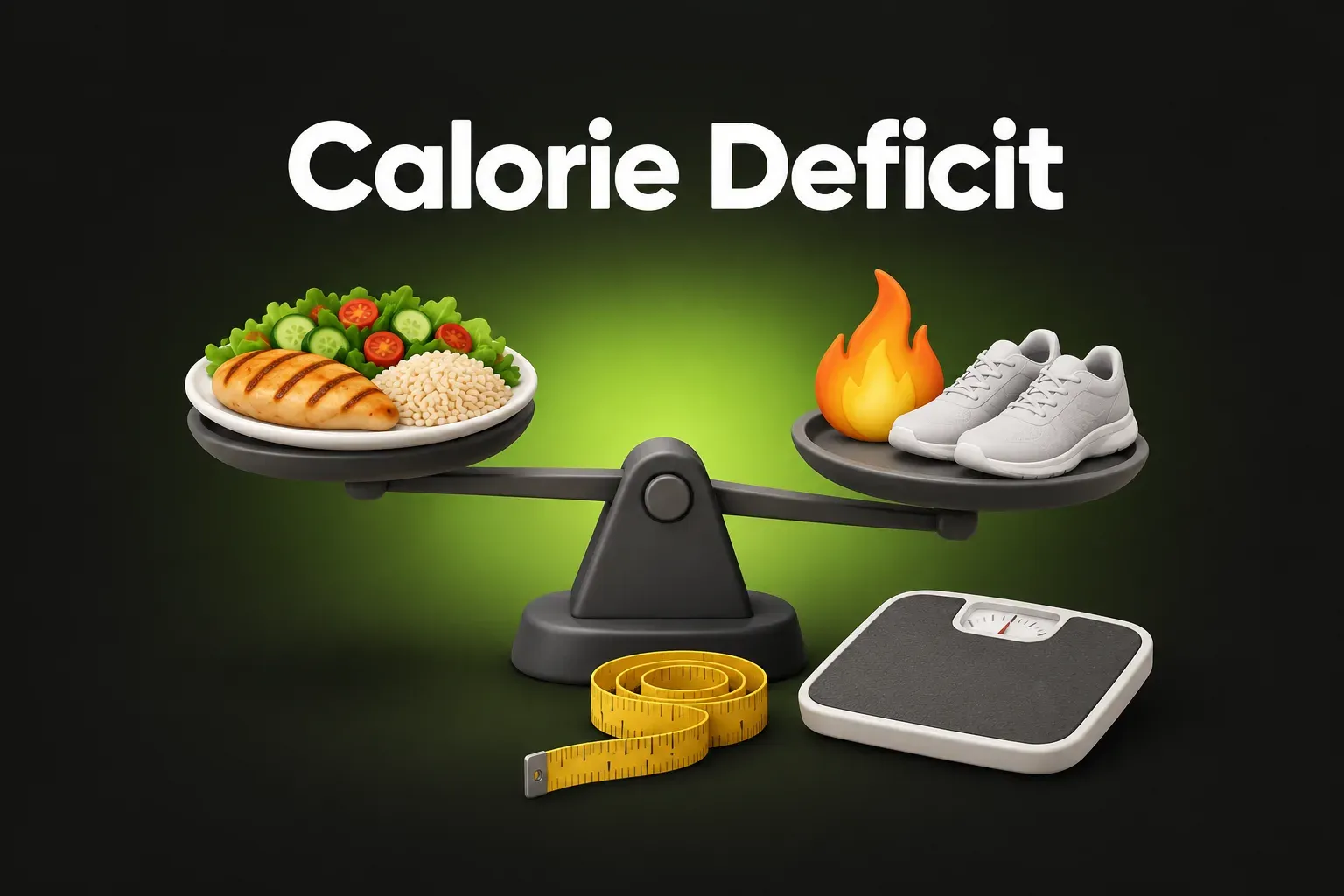
Low calorie foods help you eat less without feeling starved – but your body still needs enough calories, protein and healthy fat. Very low-calorie diets can cause muscle loss, tiredness, hair loss and nutrient gaps, and the weight often comes back. A moderate calorie deficit of about 300–500 calories a day is easier to keep up. Use our calorie calculator to find your target.
See what’s on your plate, without counting by hand. With NutriSmart, you take a photo of your meal and the app counts calories, protein, carbs, fat and fiber, and shows how much you have left for the day – so you can see which foods fill you up for the fewest calories.Get the app free
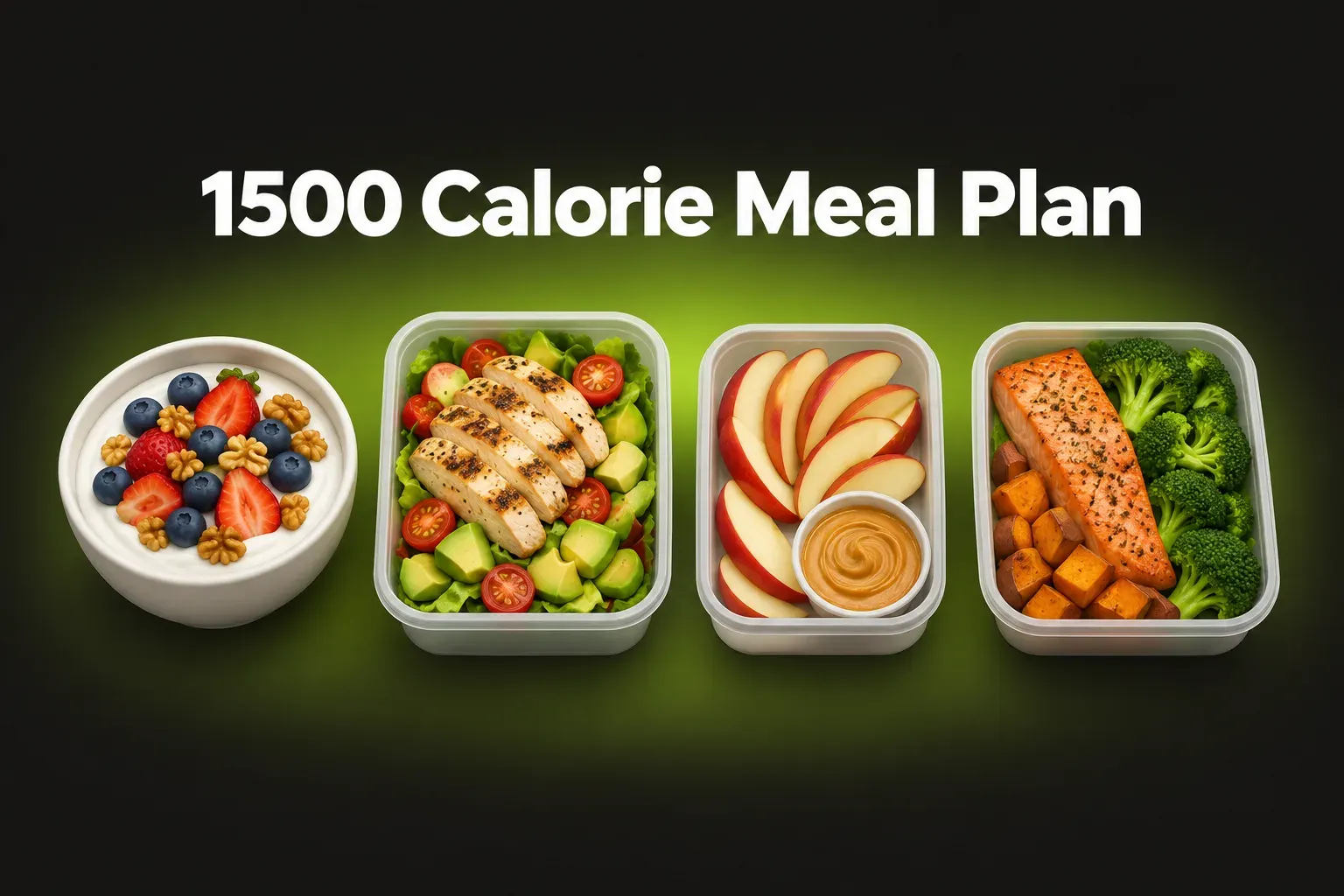
To see how these foods fit into full days, try our 1500, 1800 and 2000 calorie meal plans.
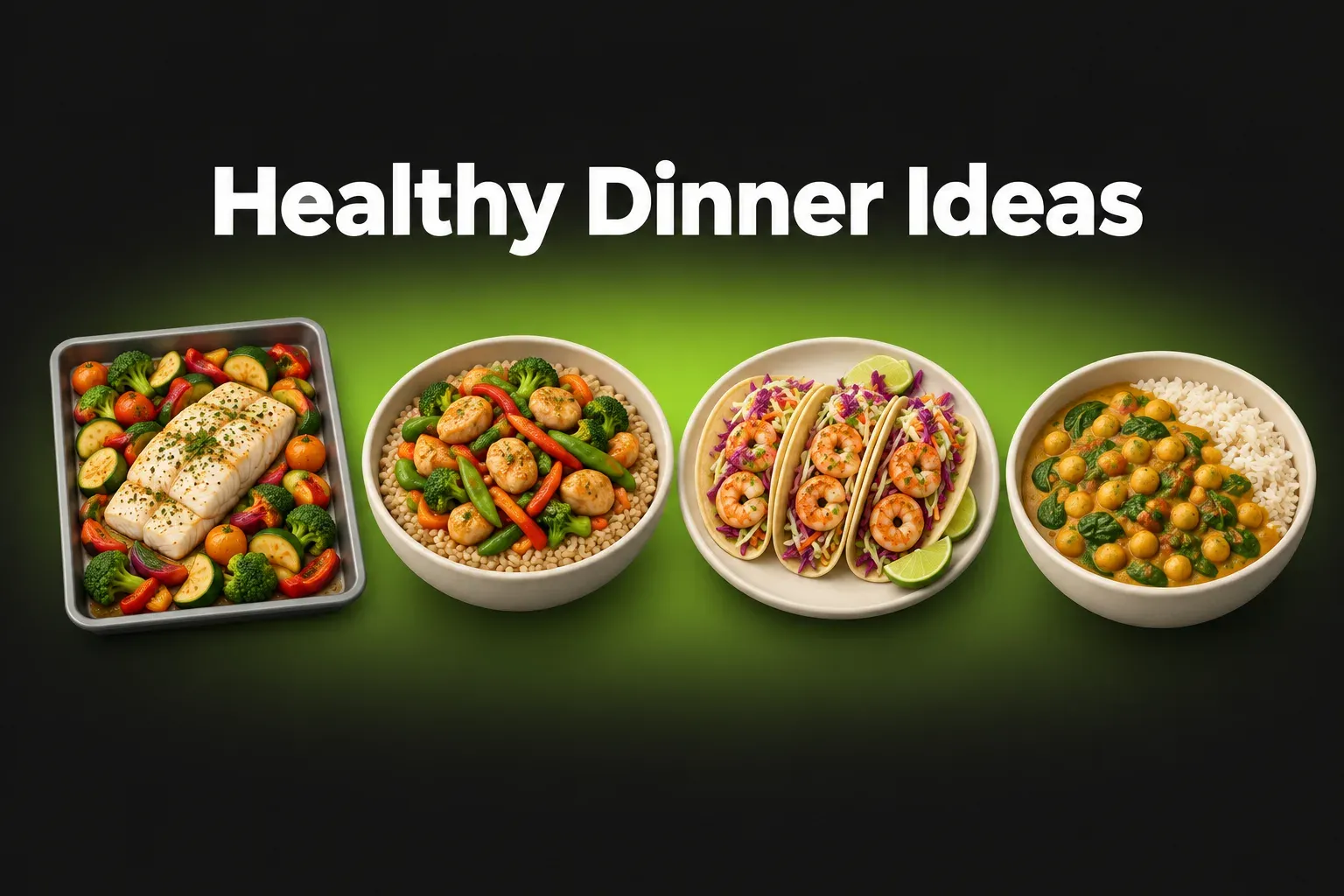
For full recipes built on these foods, see our healthy dinner ideas with calories per serving.
For between meals, see our list of low calorie snacks with calories per portion and our list of zero calorie foods.
Pair these foods with more daily movement: here’s how many steps a day you really need.
The bottom line
Low calorie foods help you lose weight because they let you eat big, filling portions for few calories. The best ones are rich in water, fiber or protein: vegetables, fruit, soups, legumes, eggs, fish, chicken, Greek yogurt and potatoes. Fill half your plate with vegetables, add protein and some filling carbs, measure the fat – and keep your calorie deficit moderate so you can stick with it.
FAQ
What are the lowest calorie foods?
Watery vegetables like cucumber, lettuce, celery, zucchini, tomatoes and spinach have only 15–25 calories per 100 g. Watermelon, strawberries and grapefruit are among the lowest-calorie fruits. Clear vegetable soups, egg whites and white fish are also very low in calories.
What low calorie foods keep you full?
Foods with a lot of water, fiber or protein: vegetables, fruit, broth-based soups, legumes, eggs, Greek yogurt, cottage cheese, white fish, chicken breast and potatoes. Popcorn and oatmeal are also filling for their calories.
Do low calorie foods help you lose weight?
Yes, if they replace higher-calorie foods. In a one-year study, women who ate less fat and more water-rich foods like fruit and vegetables lost more weight (7.9 kg) than women who only ate less fat (6.4 kg) – and reported feeling less hungry.
What is energy density?
Energy density is the number of calories in a gram of food. Foods with low energy density, like vegetables and soups, let you eat a big portion for few calories. Foods with high energy density, like chips, chocolate and oil, pack a lot of calories into a small amount.
Are there negative calorie foods?
No. The idea that celery or cucumber burn more calories to digest than they contain is a myth. But they're so low in calories that they're almost "free" foods.
Is eating only low calorie foods healthy?
No. You still need protein, healthy fats and enough calories overall. Very low-calorie diets can cause muscle loss, tiredness and nutrient gaps. Use low calorie foods to fill your plate, and keep some protein and healthy fat at every meal.