Zero Calorie Foods: 25 Foods With Almost No Calories
Are there zero calorie foods? 25 foods and drinks with almost no calories, per 100 g and per serving, the negative calorie myth and how to use them.
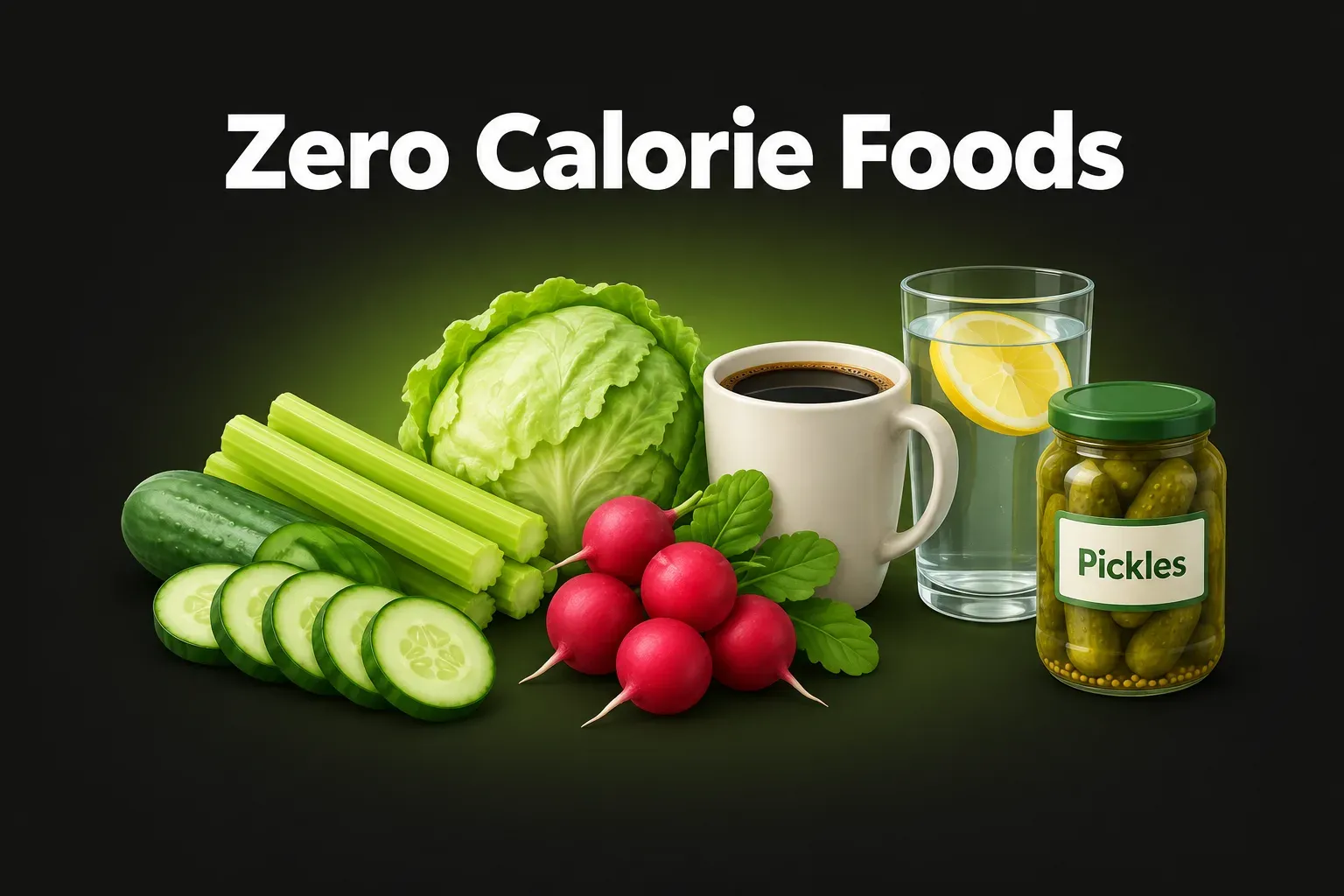
When you’re trying to lose weight, zero calorie foods sound like magic: food you can eat without counting. The truth is a little less exciting, but still useful. Apart from water, no food has exactly zero calories. But many vegetables, a few fruits and some drinks come so close that they barely count.
The short answer: foods with almost no calories are mostly watery vegetables – cucumber (15 calories per 100 g), celery (14), iceberg lettuce (14), bok choy (13), radishes (16) and zucchini (17). Pickles, broth, black coffee and tea are also very low. There’s no such thing as a “negative calorie” food – celery doesn’t burn more calories than it gives you. But filling up on these foods helps you eat less of everything else, as long as you don’t drown them in dressing or oil.
Are there really zero calorie foods?
Only water has zero calories. Everything else has at least a few, because it contains some carbs, protein or fat.
On food labels in the US, a product can say “calorie free” or “zero calories” if one serving has fewer than 5 calories (FDA, 21 CFR 101.60). That’s why a can of diet soda or a sugar-free drink mix can say “0 calories” even if it has 2 or 3.
So when people say “zero calorie foods”, they really mean foods with so few calories that a normal portion barely counts – usually under about 30 calories per 100 g.
The negative calorie myth
You may have heard that celery or cucumber have “negative calories”: that chewing and digesting them burns more calories than they contain. It’s a myth.
Your body uses about 10% of a food’s calories to digest it (Westerterp, Nutrition & Metabolism, 2004). A medium stalk of celery has about 6 calories, so digesting it costs less than 1 calorie. You still come out ahead – just by a very small amount.
The good news: you don’t need negative calories. Foods this low are still a great tool for weight loss.
25 foods with almost no calories
Values are for raw foods, from the US Department of Agriculture database (USDA FoodData Central), rounded.
Vegetables
| Food | Per 100 g | Per serving |
|---|---|---|
| Bok choy | 13 kcal | 9 kcal per cup, shredded (70 g) |
| Celery | 14 kcal | 6 kcal per medium stalk (40 g) |
| Iceberg lettuce | 14 kcal | 10 kcal per cup, shredded (72 g) |
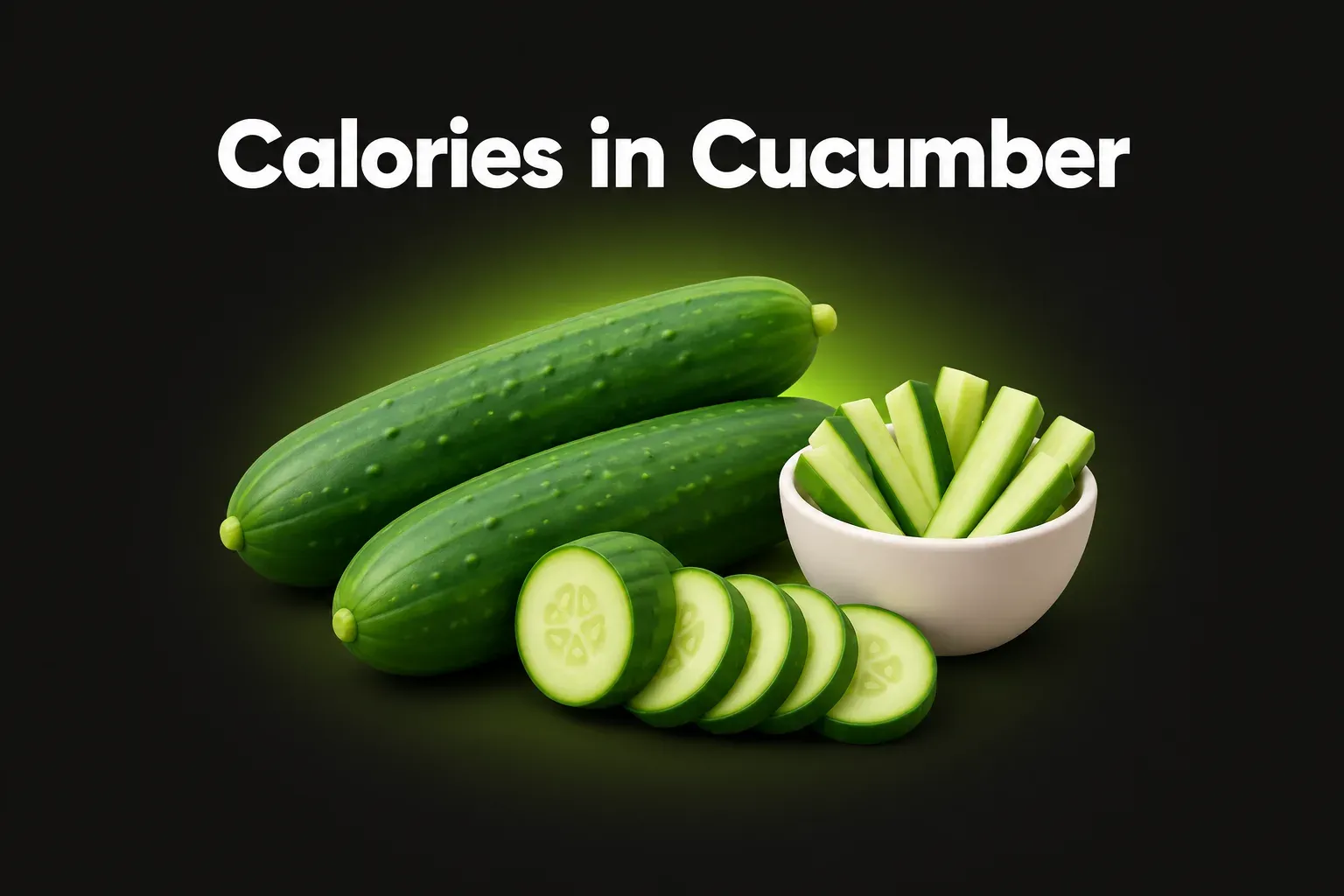
| Cucumber | 15 kcal | 45 kcal per whole cucumber (300 g) |
| Radishes | 16 kcal | 19 kcal per cup, sliced (116 g) |
| Zucchini | 17 kcal | 33 kcal per medium zucchini (196 g) |
| Tomatoes | 18 kcal | 22 kcal per medium tomato (123 g) |
| Asparagus | 20 kcal | 16 kcal per 5 medium spears (80 g) |
| Green bell pepper | 20 kcal | 24 kcal per medium pepper (119 g) |
| White mushrooms | 22 kcal | 15 kcal per cup, sliced (70 g) |
| Spinach | 23 kcal | 7 kcal per cup (30 g) |
| Arugula | 25 kcal | 3 kcal per cup (10 g) |
| Cabbage | 25 kcal | 22 kcal per cup, chopped (89 g) |
| Cauliflower | 25 kcal | 27 kcal per cup, chopped (107 g) |
| Broccoli | 34 kcal | 31 kcal per cup, chopped (91 g) |
| Kale | 35 kcal | 7 kcal per cup (21 g) |
Cooking doesn’t add calories – the oil or butter does. Steamed, boiled, grilled or roasted with a teaspoon of oil, these vegetables stay very low. Read more about calories in cucumber and calories in a tomato.
Fruit
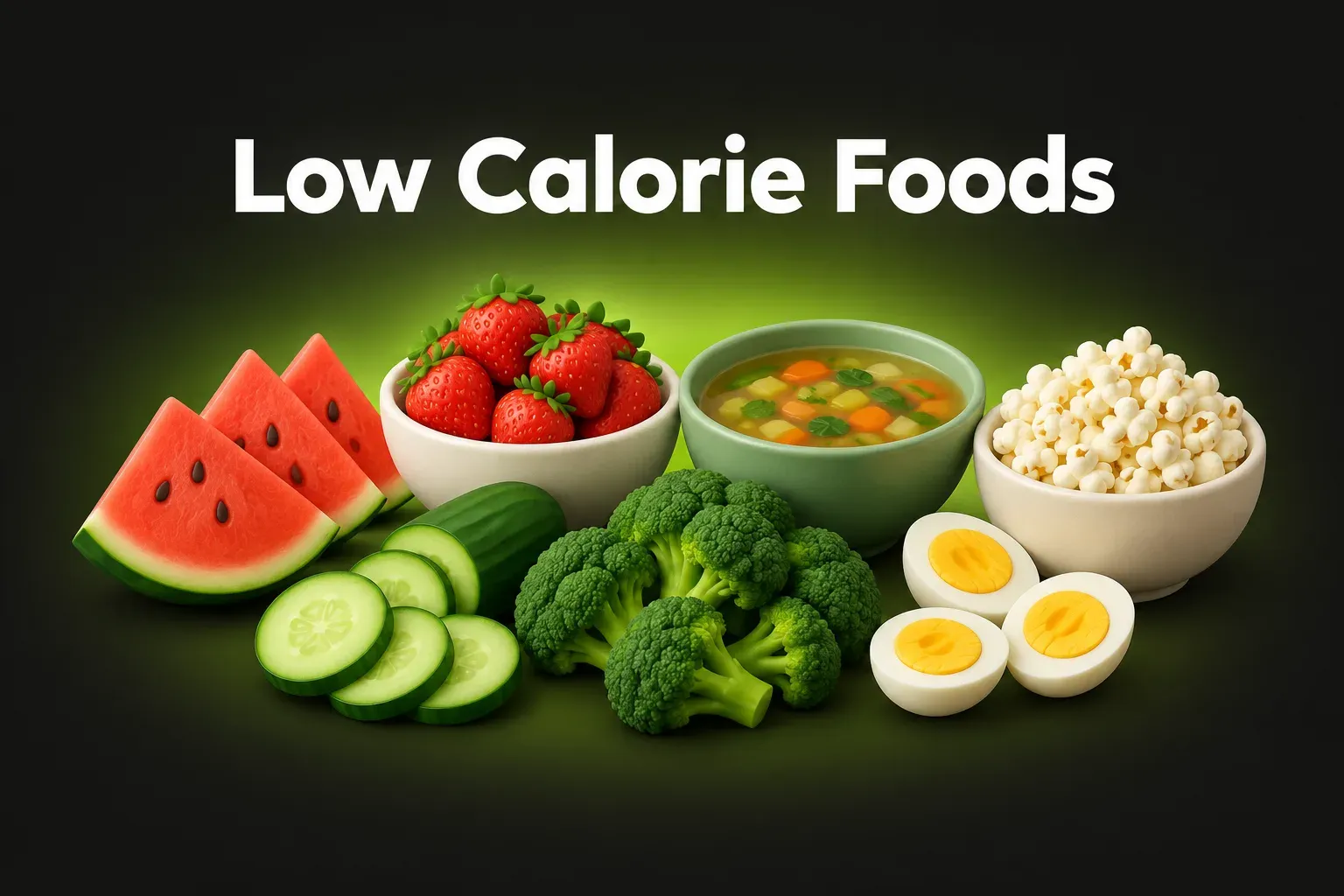
Fruit has more natural sugar than vegetables, so it’s never close to zero. These are the lowest:
| Fruit | Per 100 g | Per serving |
|---|---|---|
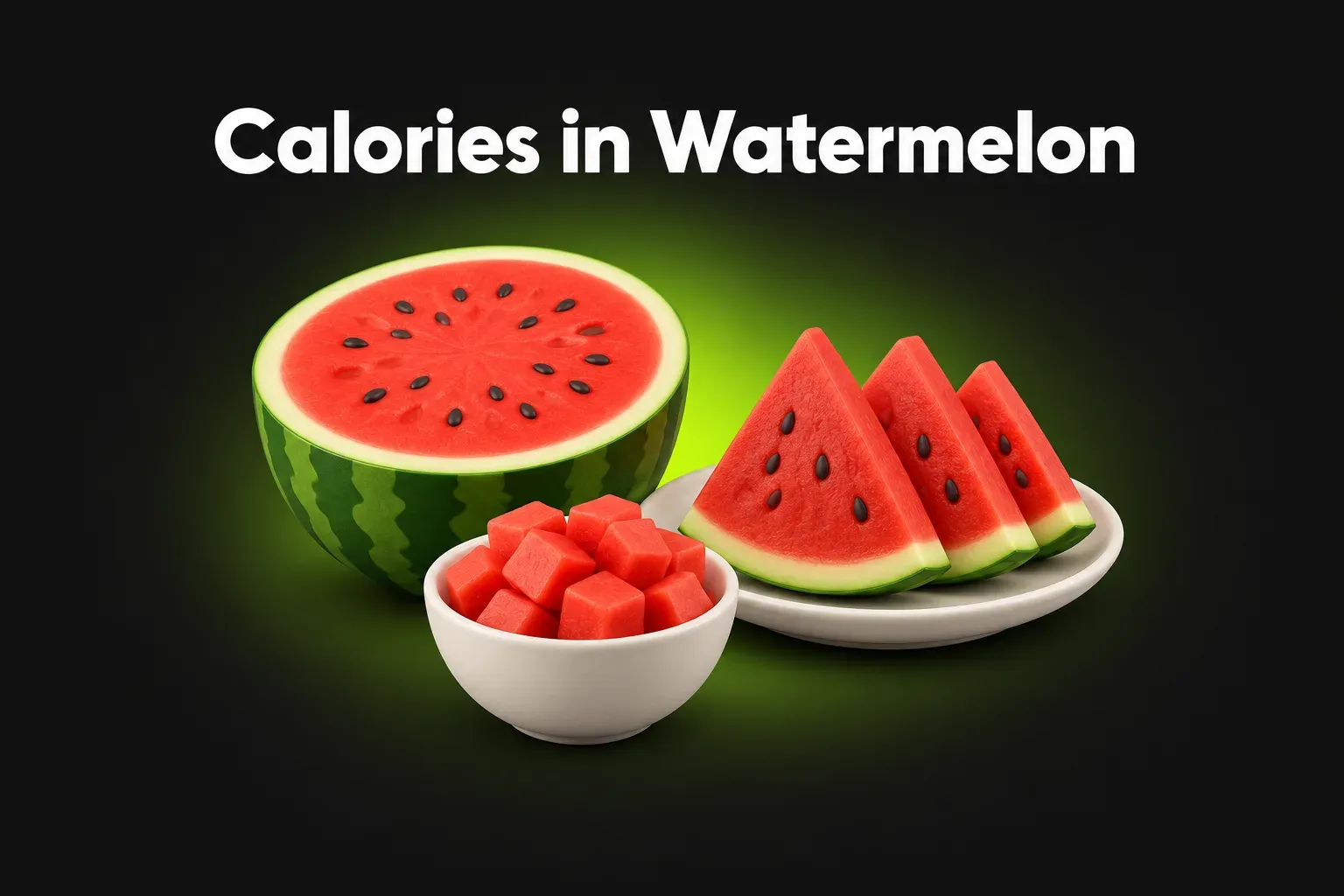
| Watermelon | 30 kcal | 46 kcal per cup, diced (152 g) |
| Strawberries | 32 kcal | 49 kcal per cup, halves (152 g) |
| Cantaloupe | 34 kcal | 54 kcal per cup, cubes (160 g) |
| Grapefruit | 42 kcal | 52 kcal per half (123 g) |
See more in calories in watermelon and calories in strawberries.
Pickles, broth and flavor
| Food | Per 100 g | Per serving |
|---|---|---|
| Chicken broth | 6 kcal | 15 kcal per cup (249 g) |
| Dill pickles | 12 kcal | 4 kcal per small spear (35 g) |
| Sauerkraut | 19 kcal | 13 kcal per ½ cup (71 g) |
| Salsa | 29 kcal | 10 kcal per 2 tbsp (36 g) |
| Yellow mustard | 60 kcal | 3 kcal per tsp (5 g) |
Pickles, sauerkraut, broth and mustard are high in salt. They’re fine in small amounts, but go easy if you have high blood pressure.
Drinks
| Drink | Calories |
|---|---|
| Water, sparkling water | 0 kcal |
| Black coffee | about 2 kcal per cup |
| Green or black tea, no sugar | about 2 kcal per cup |
| Diet soda | 0–7 kcal per can |
| Lemon juice | 3 kcal per tbsp |
| Vinegar | 3 kcal per tbsp |
Diet sodas and “zero sugar” drinks get their sweet taste from sweeteners such as aspartame or sucralose. In 2023, the World Health Organization advised against using sweeteners to control weight, because long-term studies didn’t show a benefit (WHO, 2023). Water, coffee and tea are the better daily choice. Read more about artificial sweeteners.
Why these foods help you lose weight
Your stomach notices how much you eat, not just how many calories. Foods full of water and fiber take up a lot of space for very few calories. Experts call this low energy density.
In a study at Penn State University, people who ate a large, low-calorie salad before lunch ate about 12% fewer calories at the whole meal than people who skipped the salad (Rolls et al., Journal of the American Dietetic Association, 2004). The trick only worked when the salad was light. A salad with lots of cheese and creamy dressing made people eat more.
How to use zero calorie foods
- Start meals with vegetables. A bowl of salad with lemon juice or vinegar, or a cup of broth, takes the edge off your hunger.
- Bulk up your plate. Add zucchini, mushrooms, spinach or cauliflower to pasta, rice, eggs and stews. You get a bigger portion for the same calories.
- Swap the base. Lettuce wraps instead of tortillas, zucchini noodles for half the pasta, cauliflower rice for half the rice.
- Snack on crunch. Cucumber, celery, radishes, pepper strips and cherry tomatoes with salsa or mustard.
- Watch what you add. A tablespoon of olive oil has about 120 calories and two tablespoons of ranch about 130 – more than a whole bowl of greens.
- Don’t forget protein. Vegetables alone won’t keep you full for long. Pair them with eggs, chicken, fish, beans, tofu or Greek yogurt. See our list of high-protein snacks.
Don’t make it a zero calorie diet
These foods are a tool, not a meal plan. Eating only vegetables and diet drinks leaves you short on protein, healthy fats and many vitamins, and very low calorie diets are hard to keep up. A steady, moderate calorie deficit works better. Our free calorie calculator shows how many calories you need, and our guide to low calorie foods lists filling foods from every food group.
Track your low calorie foods – and what you add to them. With NutriSmart, you snap a photo of what you eat, and the app counts the calories, protein, carbs and fat for you. You see how much you have left for the day – and how much the oil, dressing and dips really add.Get the app free
The bottom line
Apart from water, there are no truly zero calorie foods, and negative calorie foods are a myth. But many vegetables – cucumber, celery, lettuce, bok choy, radishes, zucchini and spinach – have so few calories that a normal portion barely counts. Use them to start your meals, bulk up your plate and snack on, watch the oil and dressing, and pair them with protein so you stay full.
FAQ
Are there any zero calorie foods?
Only water has truly zero calories. Black coffee and plain tea have 1–2 calories a cup. Many vegetables come close: cucumber, celery, lettuce, radishes, zucchini and bok choy all have under 20 calories per 100 g.
Is celery a negative calorie food?
No. Digesting food uses about 10% of its calories. A medium stalk of celery has about 6 calories, so your body spends less than 1 calorie digesting it. Celery is still one of the lowest calorie foods there is.
What drinks have zero calories?
Water, sparkling water, black coffee, plain tea and herbal tea have 0–2 calories a cup. Diet sodas have 0–7 calories a can. Watch out for coffee drinks, juice and smoothies, which can have 150–500 calories.
Can you eat as many low calorie vegetables as you want?
Almost. It's hard to overeat cucumber, lettuce or celery. The calories come from what you add: dressing, oil, cheese, dips and sauces. One tablespoon of oil has about 120 calories – more than a whole bowl of salad greens.
What are good zero calorie snacks?
Cucumber or celery sticks with salsa or mustard, a few dill pickle spears, cherry tomatoes, radishes, a cup of broth or sugar-free gum. For a snack that also keeps you full, add protein, like Greek yogurt or a boiled egg.
Do zero calorie foods help you lose weight?
They can. Foods with lots of water and fiber fill your stomach for very few calories. In one study, eating a large low-calorie salad before lunch cut how much people ate at the whole meal by about 12%.