Is Palm Oil Bad for You? Health Risks & Foods
Is palm oil bad for you? What it does to cholesterol, the harmful substances formed when it's refined, what animal studies show, and which foods contain it.
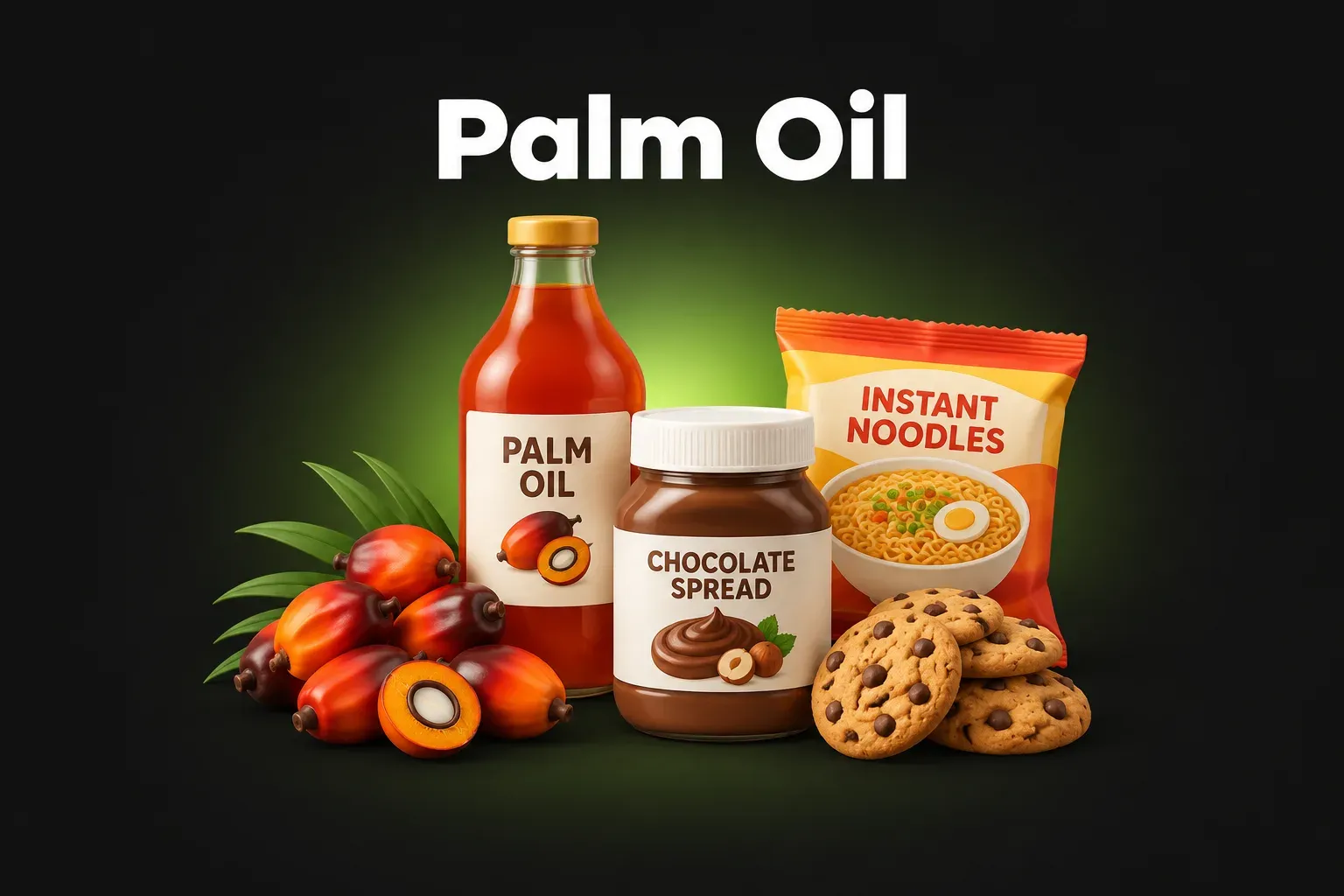
Palm oil is the most widely used vegetable oil in the world. It’s in cookies, chocolate spreads, chips, instant noodles, pastries and margarine. Many people try to avoid it, both for their health and for the rainforests cut down to grow it. So is palm oil bad for you?
The short answer: palm oil isn’t poison, but it’s not a healthy fat either. It’s about half saturated fat, and it raises “bad” LDL cholesterol more than oils like olive, sunflower or rapeseed. Refined palm oil also has more harmful substances formed during refining than any other vegetable oil. The European Food Safety Authority (EFSA) links them to cancer. And in mice, palmitic acid – its main fat – helped cancer spread. Limiting it is a good idea, especially since most palm oil comes in ultra-processed foods.
What is palm oil?
Palm oil comes from the fruit of the oil palm, which grows mainly in Indonesia and Malaysia. There are two main types:
| Type | Where it comes from | What it’s like |
|---|---|---|
| Palm oil | The orange flesh of the fruit | About 50% saturated fat; red when unrefined, pale when refined |
| Palm kernel oil | The seed inside the fruit | About 80% saturated fat, similar to coconut oil |
Most palm oil in food is refined. It’s heated to high temperatures, bleached and has its smell removed, so it has no color or taste. That matters, because refining removes its natural vitamins. It also creates new, unwanted substances (see below).
Food makers love it because it’s cheap, solid at room temperature, doesn’t spoil easily and has no taste. When trans fats were limited by law, many companies switched to palm oil.
Is palm oil bad for you? What the research says
Cholesterol and heart health
A review looked at many studies done on people. Palm oil raised LDL cholesterol – the “bad” kind that builds up in blood vessels. It raised it more than oils low in saturated fat, such as olive, sunflower or soybean oil (Sun et al., Journal of Nutrition, 2015). It was better than trans fats, but worse than the healthier oils. High LDL cholesterol is one of the main causes of heart attacks and strokes.
Harmful substances from refining: glycidyl esters and 3-MCPD
When palm oil is refined at high heat, it forms substances called glycidyl esters and 3-MCPD. In 2016, EFSA found that:
- palm oil and palm fat had the most of these substances of all the vegetable oils tested
- in the body, glycidyl esters turn into glycidol, which can damage DNA and cause cancer – so EFSA could not set a safe level
- babies who drink infant formula were among those who got the most
Since then, companies have lowered these levels and the EU has set limits. But the substances haven’t gone away.
What animal studies show
- Cancer spread: a 2021 study in Nature fed mice a diet rich in palmitic acid, the main fat in palm oil. Their mouth and skin cancers spread much more. Even a short time on this diet left a lasting “memory” in the tumor cells, which kept them spreading faster. Oleic acid (from olive oil) and linoleic acid didn’t do this (Pascual et al., Nature, 2021).
- Blood sugar: many processed foods now use interesterified palm oil. This is palm oil changed with chemicals, used to replace trans fats. In mice, it made blood sugar worse than regular palm oil. The body handled sugar less well, and the liver made more of it (Dos Santos et al., Food Research International, 2024).
These studies were done in mice because mice share most of their genes with humans, and their bodies work in many of the same ways. Testing this on people would put their health at risk. The studies don’t prove the same happens in humans. But they’re a good reason to be careful.
Red palm oil is different
Unrefined red palm oil keeps its natural carotenoids (plant colors the body can turn into vitamin A) and vitamin E. It still has the same saturated fat. But it’s very different from the refined, colorless palm oil used in most processed foods.
Which foods contain palm oil?
- Spreads: chocolate and hazelnut spreads, margarine, some peanut butters
- Sweets and bakery: cookies, wafers, croissants, cakes, cereal bars, chocolate fillings
- Snacks: chips, crackers, microwave popcorn
- Ready meals: instant noodles, frozen pizza, frozen pastries and fries
- Other: non-dairy creamers, some infant formulas, and many soaps and cosmetics
How to spot palm oil on the label
- In the EU and UK, labels must name the oil – you’ll see “palm oil” or “palm fat” instead of just “vegetable oil”.
- Also look for palm kernel oil, palmolein, palmitate, hydrogenated palm oil and interesterified palm oil.
- In the US, it may still appear as “vegetable oil”, so check for “palm” in the list.
Spot palm oil on any label in seconds. With NutriSmart, you photograph the ingredient list or scan the barcode, and the app tells you right away if the product has palm oil. Turn on an alert for it, and the app warns you every time a product you scan contains it. You’ll also see every other additive, the risks of each one and a health score out of 100.Get the app free
How to eat less palm oil
- Swap chocolate spreads for nut butters with only nuts (and maybe salt) on the label.
- Choose bakery products made with butter or sunflower oil – or bake at home.
- Cook with olive, rapeseed or sunflower oil instead of shortening or margarine.
- Cut back on ultra-processed snacks – that’s where most palm oil comes from. Read more about ultra-processed foods and about seed oils. Seed oils are often blamed, but studies show they’re better for the heart.
Palm oil and the environment
Palm oil farming is one of the biggest reasons rainforests have been cut down in Indonesia and Malaysia. This puts animals like orangutans in danger. Certified sustainable palm oil (look for the RSPO label) tries to reduce the damage, but it doesn’t solve every problem. Eating less of it is good for both your health and the planet.
The bottom line
Palm oil is cheap and useful for food makers, but not great for you. It raises LDL cholesterol. Refined palm oil has the most cancer-linked substances formed during refining. And animal studies link its main fat to cancer spread. You don’t need to panic over one cookie. But choosing products without palm oil, and eating fewer ultra-processed foods, is an easy change worth making.
FAQ
Is palm oil bad for you?
In large amounts, it's not a good choice. Palm oil is about half saturated fat. It raises "bad" LDL cholesterol more than oils like olive or sunflower. Refined palm oil also has the most harmful substances formed during refining, such as glycidyl esters. The European Food Safety Authority sees these as a cancer risk. It's best to limit palm oil and choose foods made with other oils.
Is palm oil worse than butter?
They're similar. Both are high in saturated fat and raise LDL cholesterol more than oils such as olive, sunflower or rapeseed oil. The bigger problem with palm oil is that it's found in so many ultra-processed foods.
Why is palm oil in so many foods?
It's cheap, stays solid at room temperature, doesn't spoil easily and has no taste. That makes it perfect for cookies, spreads, chips and pastries. It also replaced trans fats in many products after those were limited by law.
Is red palm oil healthy?
Unrefined red palm oil keeps its natural carotenoids (plant colors the body can turn into vitamin A) and vitamin E. These are lost in refined palm oil. It still has the same amount of saturated fat, so it's not a health food. But it's very different from the refined palm oil used in processed foods.
How do I know if a product contains palm oil?
In the EU and the UK, labels must say "palm oil" or "palm fat" instead of just "vegetable oil". Also look for palm kernel oil, palmitate and palmolein. In the US, it may appear simply as palm oil, palm kernel oil or vegetable oil.
Is palm oil bad for the environment?
Large palm oil farms are a main reason rainforests have been cut down in Indonesia and Malaysia. This puts animals such as orangutans in danger. Certified sustainable palm oil (RSPO) tries to reduce the damage, but it doesn't solve every problem.