Carboxymethylcellulose (Cellulose Gum, E466): Is It Bad for You?
What cellulose gum (carboxymethylcellulose, E466) is, which foods contain it, and what studies show about gut bacteria, inflammation and heart health.
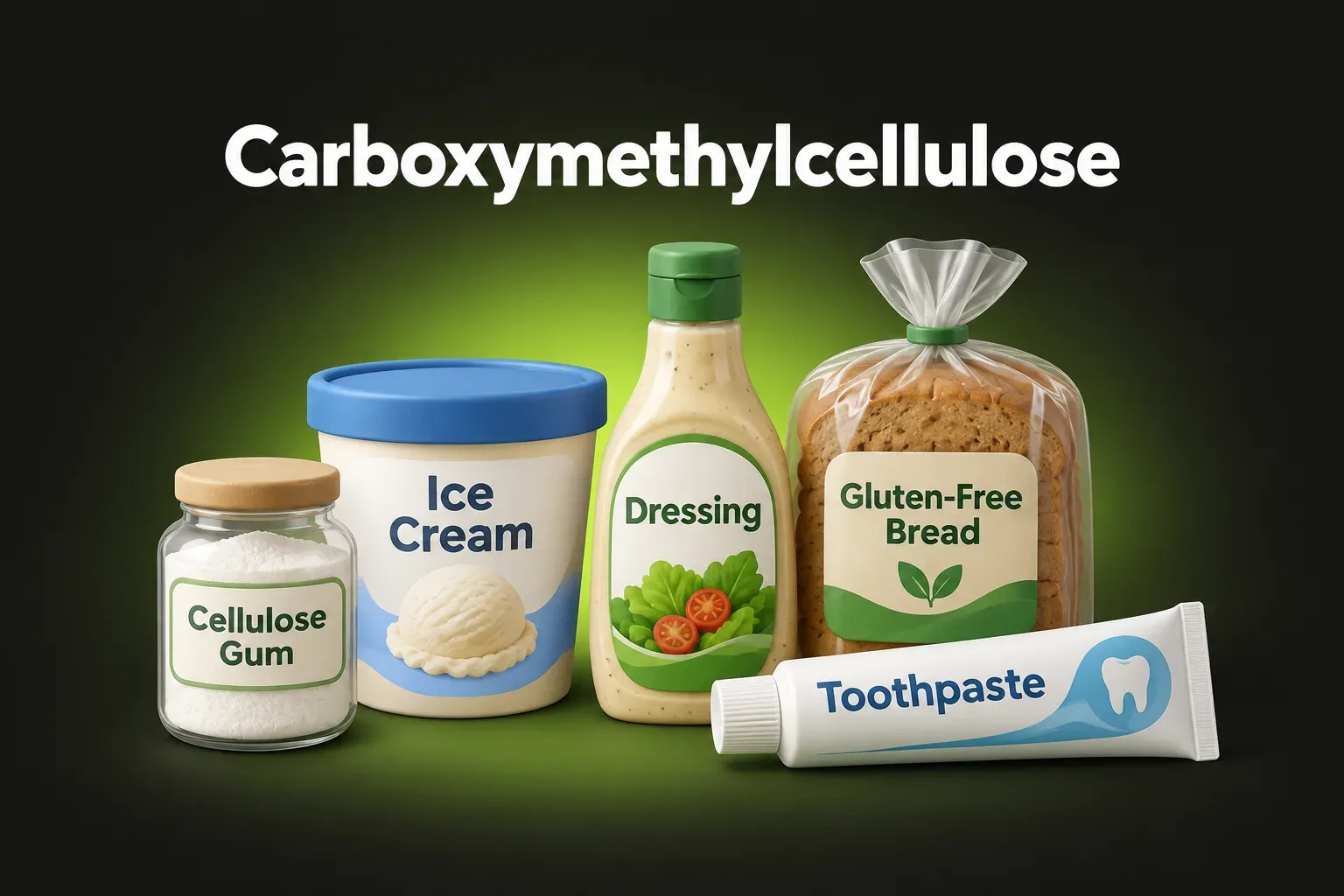
Carboxymethylcellulose – often listed as cellulose gum – is in ice cream, salad dressings, gluten-free bread, protein shakes and “light” foods. It’s also one of the additives scientists have studied most closely in the last ten years, because of what it seems to do to the gut.
The short answer: carboxymethylcellulose is allowed in food and doesn’t pass into the blood. But it’s one of the emulsifiers with the strongest evidence of harm to the gut. In mice, it caused gut inflammation, weight gain and blood sugar problems and made colon tumors grow faster. In a careful study in people, it reduced the variety of gut bacteria and the healthy substances they make. And a large French study linked it to a slightly higher risk of heart disease. There’s no proof yet that normal amounts make people sick, but it’s worth limiting.
What is carboxymethylcellulose?
Carboxymethylcellulose (CMC) is made from cellulose, the material that makes up the walls of plant cells. It usually comes from wood pulp or cotton. In a factory, it’s treated with chemicals so that it dissolves in water and forms a thick gel.
In food, it’s used to:
- thicken sauces, dressings and drinks
- keep ice cream smooth and stop ice crystals from forming
- hold gluten-free bread together and keep it soft
- give low-fat and diet foods a creamy texture
- keep ingredients from separating
On labels, you’ll see it as:
| Name | Where you’ll see it |
|---|---|
| Cellulose gum, carboxymethylcellulose | Ingredient lists worldwide |
| Sodium carboxymethylcellulose, CMC | Ingredient lists worldwide |
| E466, “thickener: E466”, “stabilizer: E466” | European Union, UK and many other countries |
Which foods contain carboxymethylcellulose?
- Desserts: ice cream, frozen desserts, puddings, icings and fillings
- Sauces: salad dressings, sauces, gravies, ketchup
- Bakery: gluten-free bread, cakes and baked goods
- Drinks: protein shakes, plant-based milks, juices, drink mixes
- Diet foods: low-fat and “light” products, meal-replacement shakes
- Non-food: toothpaste, laxatives, eye drops, tablets and cosmetics
Is carboxymethylcellulose bad for you? What the research says
What regulators say
The FDA considers it “generally recognized as safe”, and in the EU it’s allowed in most foods without a daily limit. Regulators’ reasoning is that CMC doesn’t pass into the blood: it goes through the gut and leaves the body. But that’s exactly where the newer concerns are – in the gut, where it meets your gut bacteria.
Gut inflammation and weight gain in mice
In a famous study at Georgia State University, mice drank water with small amounts of carboxymethylcellulose or polysorbate 80. Their gut bacteria moved closer to the gut wall, which is normally protected by a layer of mucus. The bacteria also changed in a harmful way. The mice got mild gut inflammation, weight gain and blood sugar problems. Mice that easily get gut disease developed severe colitis (gut inflammation). When their gut bacteria were moved into mice with no bacteria of their own, those mice got the same problems (Chassaing et al., Nature, 2015).
Colon tumors in mice
In a follow-up study, mice that got carboxymethylcellulose or polysorbate 80 developed more colon tumors. The changes in their gut bacteria were enough to cause this (Viennois et al., Cancer Research, 2017).
What happens in people
- A careful study: healthy adults ate the same diet for 11 days, either without emulsifiers or with 15 g of carboxymethylcellulose a day. Those who got CMC had more stomach discomfort after meals and less variety in their gut bacteria. They also had fewer short-chain fatty acids, the healthy substances gut bacteria make from fiber. In two people, bacteria moved into the protective mucus layer, a key sign of gut inflammation (Chassaing et al., Gastroenterology, 2022). A follow-up study showed that some people’s gut bacteria are much more sensitive to CMC than others (Daniel et al., Cellular and Molecular Gastroenterology and Hepatology, 2024).
- A larger trial: in 2026, 60 healthy adults ate brownies with one emulsifier or none for four weeks. Those who got carboxymethylcellulose had lower levels of the healthy fatty acids gut bacteria make (Wellens et al., Clinical Gastroenterology and Hepatology, 2026).
- Heart disease: a French study followed over 95,000 adults for about seven years. People who ate more carboxymethylcellulose had a slightly higher risk of heart disease (Sellem et al., BMJ, 2023). This kind of study shows a link, not proof of cause.
When scientists tested 20 emulsifiers on human gut bacteria in the lab, carboxymethylcellulose and polysorbate 80 were among those with a lasting harmful effect (Naimi et al., Microbiome, 2021).
To be fair, not every study agrees. In a 2025 trial in 24 people with Crohn’s disease, a healthy diet with many emulsifiers didn’t make the disease worse than one with few emulsifiers, over 4 weeks (Fitzpatrick et al., Alimentary Pharmacology & Therapeutics, 2025).
Studies on mice matter, because giving people large amounts of an additive for months on purpose would put their health at risk. And mice share most of their genes and body processes with us. Mice, human cells and short studies in people all point the same way: carboxymethylcellulose disturbs gut bacteria. That’s a good reason to be careful rather than wait for final proof.
Digestive side effects
In larger amounts, carboxymethylcellulose can cause bloating, gas and loose stools. It’s even used as a laxative in some medicines.
How to avoid carboxymethylcellulose
- Read labels on ice cream, dressings and protein shakes – look for “cellulose gum”, “carboxymethylcellulose” or E466.
- Choose simpler ice cream made from milk, cream, sugar and eggs.
- Make dressings at home with olive oil, vinegar or lemon, and mustard.
- Be careful with “light” and diet foods – thickeners often replace the fat that was removed.
- Eat more fiber from vegetables, fruit, legumes and whole grains – it feeds the gut bacteria that emulsifiers harm.
- Eat fewer ultra-processed foods – they often contain several emulsifiers together. Read more about ultra-processed foods.
Spot carboxymethylcellulose on any label in seconds. With NutriSmart, you photograph the ingredient list or scan the barcode, and the app tells you right away if the product has carboxymethylcellulose. Turn on an alert for it, and the app warns you every time a product you scan contains it. You’ll also see every other additive, the risks of each one and a health score out of 100.Get the app free
You can also read about other emulsifiers and thickeners: polysorbate 80, carrageenan, xanthan gum and soy lecithin.
A related but chemically different cellulose additive is methylcellulose.
The bottom line
Carboxymethylcellulose (cellulose gum, E466) is allowed in food and doesn’t pass into the blood. But it’s one of the additives with the clearest evidence of harm to the gut. It caused inflammation, weight gain and tumor growth in mice. In people, it reduced the variety of gut bacteria and the healthy substances they make. It was also linked to a slightly higher risk of heart disease. There’s no proof yet that normal amounts make people sick. But it’s an easy additive to cut back on – especially in ice cream, dressings and protein shakes.
FAQ
Is cellulose gum bad for you?
Cellulose gum is another name for carboxymethylcellulose (E466). It's allowed in food and isn't absorbed into the blood. But studies in mice and people found it can disturb gut bacteria. A large French study also linked it to a slightly higher risk of heart disease. NutriSmart rates it at a medium risk level, so it's worth limiting.
Is carboxymethylcellulose bad for you?
Regulators allow it, and it doesn't pass into the blood. But it's one of the emulsifiers with the strongest evidence of harm to the gut. In mice, it caused gut inflammation, weight gain and blood sugar problems, and made colon tumors grow faster. In a careful study in people, it reduced the variety of gut bacteria and the healthy substances they make. A large French study also linked it to a slightly higher risk of heart disease. It's worth limiting.
Is cellulose gum the same as carboxymethylcellulose?
Yes. Cellulose gum, carboxymethylcellulose, CMC, sodium carboxymethylcellulose and E466 are all names for the same additive.
Is carboxymethylcellulose natural?
It's made from natural cellulose, from wood pulp or cotton. But it's changed with chemicals in a factory, so it's partly man-made, not a natural ingredient.
What foods contain carboxymethylcellulose?
Ice cream, salad dressings, sauces, gluten-free bread and baked goods, diet and low-fat foods, protein shakes, plant-based drinks, frozen desserts, fillings and icings. It's also used in toothpaste, laxatives, eye drops and medicines.
Is carboxymethylcellulose safe for people with Crohn's disease or IBS?
Animal studies suggest it could make gut inflammation worse, and some doctors tell people with inflammatory bowel disease to limit emulsifiers. But a 2025 trial in 24 people with Crohn's disease found no difference over 4 weeks between a healthy diet with many or few emulsifiers. Talk to your doctor about what's right for you.
What is E466?
E466 is the European code for carboxymethylcellulose (cellulose gum). On labels you'll see it as "cellulose gum", "carboxymethylcellulose", "thickener: E466" or "stabilizer: E466".