Methylcellulose (E461): What It Is and Is It Safe?
What methylcellulose (E461) is, why it's in plant-based burgers and gluten-free bread, how it works as a fiber laxative, and if it's safe.
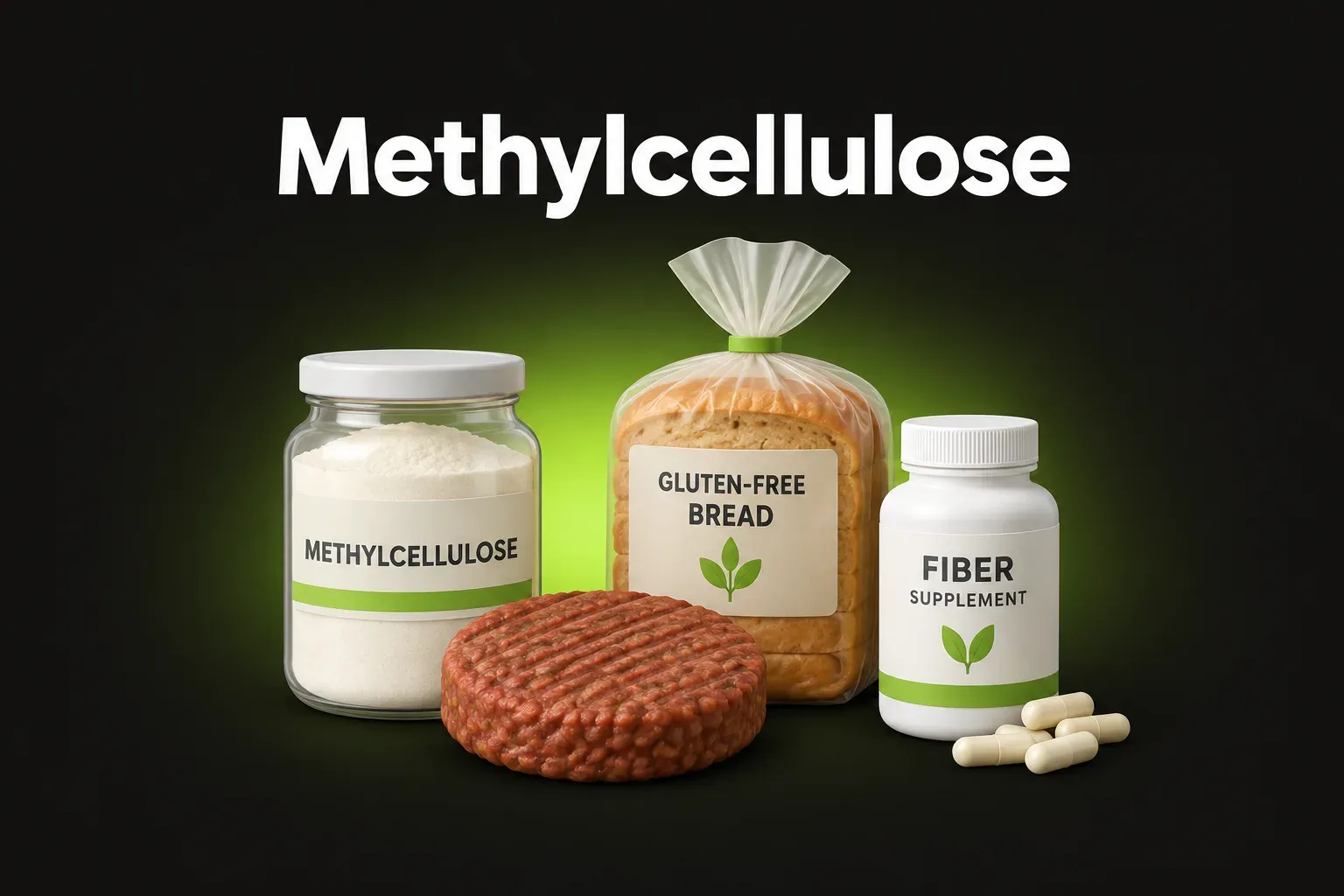
Methylcellulose is one of the reasons a plant-based burger holds together on the grill. It’s also in gluten-free bread, sauces, whipped toppings and frozen foods – and in some fiber supplements. Here’s what it is and what the research says.
The short answer: methylcellulose (E461) is a thickener and binder made from plant cellulose, usually wood pulp or cotton. Your body can’t digest it, so it acts like fiber and has almost no calories. In larger amounts it works as a laxative. It’s one of the better-tolerated additives, and NutriSmart rates it as low risk. A large French study linked cellulose-type additives to a slightly higher risk of heart disease – a link worth knowing, but not proof of harm.
What is methylcellulose?
Cellulose is the main fiber in plant cell walls. To make methylcellulose, cellulose from wood pulp or cotton is treated with chemicals that add small “methyl” groups. This changes how it behaves:
- it dissolves in cold water, making liquids thicker;
- it forms a firm gel when heated – the opposite of most thickeners;
- it holds water and fat, so foods stay juicy.
Like other celluloses, it isn’t digested or absorbed. It passes through the gut, adding a little bulk to stool.
Where is methylcellulose used?
| Food | What it does |
|---|---|
| Plant-based burgers, sausages and nuggets | Binds and holds in juices, like egg or meat protein |
| Gluten-free bread and baked goods | Replaces the structure of gluten |
| Sauces, gravies and fillings | Thickens and stops separation |
| Whipped toppings and ice cream | Keeps texture smooth and stable |
| Frozen and fried foods | Reduces oil uptake and keeps coatings crisp |
| Fiber supplements (e.g. Citrucel) | Bulk-forming laxative |
Is methylcellulose safe?
Methylcellulose has a long history of use, and food agencies consider it safe. It’s even used as a medicine for constipation. Because it isn’t absorbed, it doesn’t build up in the body. Still, there are a few things to know:
Heart: a link with cellulose additives
In the French NutriNet-Santé study of over 95,000 adults, people who ate more cellulose-type additives (E460–E468) had a slightly higher risk of heart disease over about seven years (Sellem et al., BMJ, 2023). The clearest signals were for cellulose (E460) and carboxymethylcellulose (E466); methylcellulose belongs to the same group but wasn’t singled out. This is an observational study, so it shows a link, not proof.
Gut: less studied than its “cousin” CMC
A related additive, carboxymethylcellulose (CMC), changed gut bacteria and the protective mucus layer in mice and in a feeding study in people (Chassaing et al., Gastroenterology, 2022). Methylcellulose is chemically different, and similar studies haven’t been done for it – so we can’t say whether it has the same effect.
Digestion
In large amounts, methylcellulose can cause gas, bloating or loose stools, like any fiber supplement. Food portions usually contain far less than a laxative dose.
That’s why NutriSmart rates methylcellulose as low risk: it’s well tolerated, but it’s part of a group of additives with some open questions, and it’s mostly found in ultra-processed foods.
How to eat less methylcellulose
- Read the ingredient list – look for methylcellulose, methyl cellulose or E461.
- Choose whole-food protein like beans, lentils, tofu or tempeh more often than processed plant-based meats.
- Bake with recipes that use eggs, psyllium or flax instead of gum blends, if you’re gluten-free.
- Get fiber from foods – vegetables, fruit, oats and beans – rather than only from supplements.
Spot methylcellulose on any label in seconds. With NutriSmart, you photograph the ingredient list or scan the barcode, and the app tells you right away if the product has methylcellulose. Turn on an alert for it, and the app warns you every time a product you scan contains it. You’ll also see every other additive, the risks of each one and a health score out of 100.Get the app free
You can also read about carboxymethylcellulose, microcrystalline cellulose, xanthan gum, guar gum and psyllium husk, or see the full E numbers list.
The bottom line
Methylcellulose (E461) is a thickener and binder made from plant cellulose. It isn’t digested, acts like fiber and is also used as a laxative. It’s considered safe and NutriSmart rates it low risk, though a large French study linked cellulose additives as a group to slightly higher heart risk. It’s mostly found in processed foods, so eating more whole foods naturally keeps it low.
FAQ
What is methylcellulose?
Methylcellulose is a thickener and binder made from cellulose, the fiber in plant cell walls – usually wood pulp or cotton. The cellulose is treated so it dissolves in cold water and forms a gel when heated. The body can't digest it, so it passes through like fiber.
Is methylcellulose safe to eat?
It's one of the better-tolerated food additives, and NutriSmart rates it as low risk. It isn't absorbed, and it's also used as a fiber laxative. A large French study linked higher intake of cellulose-type additives (E460–E468) to a slightly higher risk of heart disease, but that study can't prove cause and effect.
Why is methylcellulose in plant-based burgers?
It acts like the protein in egg or meat: it binds the patty, holds in moisture and fat, and firms up when cooked. Without it, many plant-based burgers and sausages would fall apart on the grill.
Is methylcellulose a laxative?
Yes, in larger doses. It's the active ingredient in some fiber supplements, like Citrucel. It absorbs water and adds bulk to stool. In the small amounts used in food, it rarely has a noticeable effect.
Is methylcellulose vegan and gluten-free?
Yes. It's made from plant cellulose and contains no animal products or gluten, which is why it's common in vegan and gluten-free foods.
Is methylcellulose the same as carboxymethylcellulose?
No. Both are made from cellulose, but carboxymethylcellulose (CMC, E466) is chemically different. CMC has more research showing gut effects in mice and people, while methylcellulose has been studied less.