Microcrystalline Cellulose (E460): Is It Safe to Eat?
What microcrystalline cellulose (E460) is, why it's in shredded cheese, supplements and low-calorie foods, whether it's made from wood, and if it's safe.
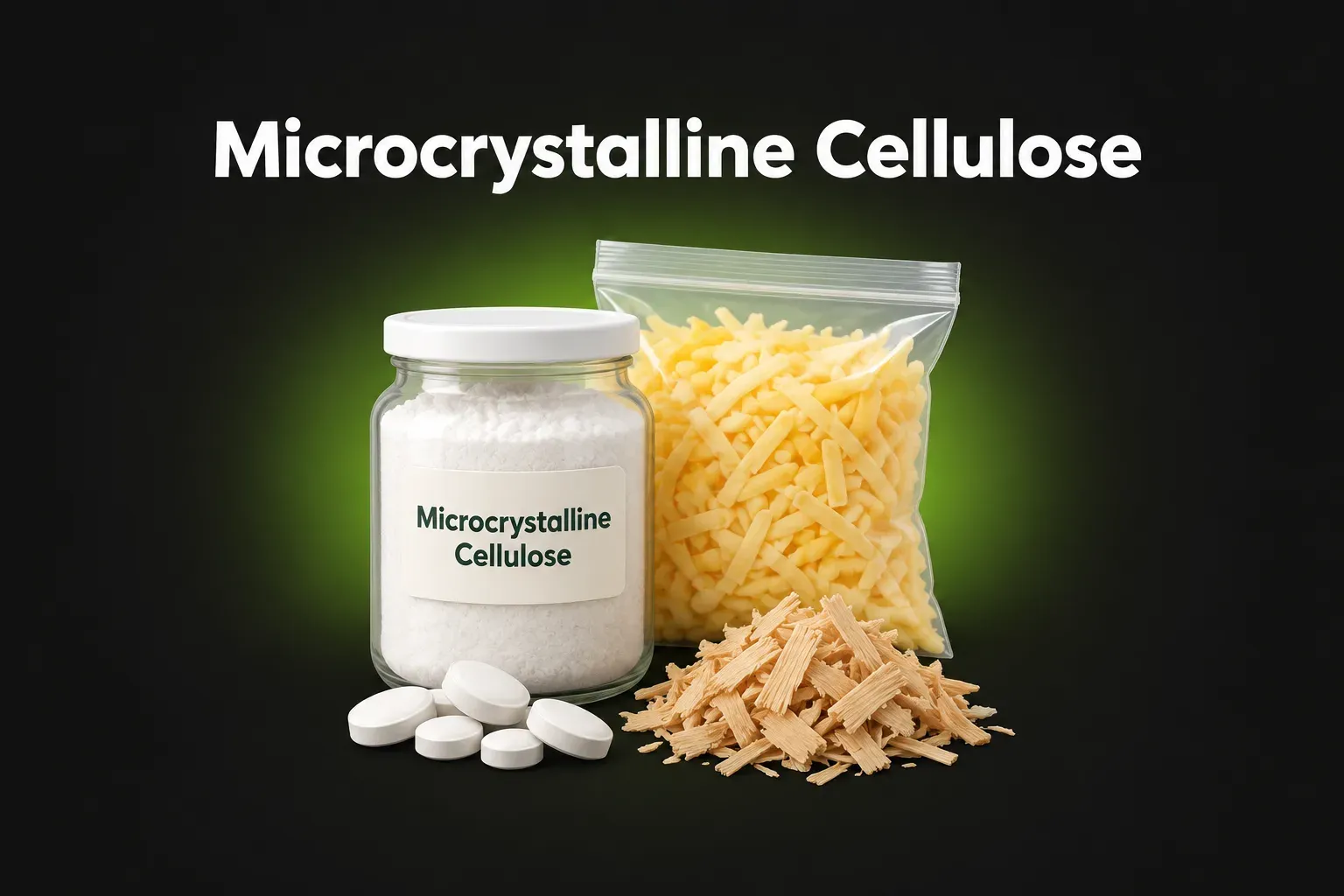
Microcrystalline cellulose – often written as MCC, cellulose gel or E460 – is one of the most common ingredients in vitamins and supplements. It’s also in shredded cheese, low-fat sauces, whipped toppings and diet foods. The name sounds scary, especially when you learn it often comes from wood.
The short answer: microcrystalline cellulose is purified plant fiber, usually from wood pulp or cotton. Your body can’t digest it, so it passes through you like the fiber in vegetables. It’s used to hold tablets together, stop cheese from clumping and replace fat in low-calorie foods. The European Food Safety Authority (EFSA) found no safety concern in 2018. Very large amounts can cause bloating, but the amounts in food are small. NutriSmart rates it at a low risk level.
What is microcrystalline cellulose?
Cellulose is the material that makes up the walls of plant cells. It’s in every vegetable, fruit and grain you eat – it’s the main kind of insoluble fiber.
To make microcrystalline cellulose:
- Cellulose is taken from wood pulp or cotton.
- It’s treated with a mild acid, which breaks it into tiny, partly crystal-like pieces.
- It’s washed, dried and ground into a fine white powder.
Chemically, it’s the same cellulose that’s in celery or apples – just very pure.
On labels, you’ll see:
| Name | What it is |
|---|---|
| Microcrystalline cellulose, MCC, cellulose gel, E460(i) | The fine powder described here |
| Powdered cellulose, cellulose, E460(ii) | A similar, less processed form |
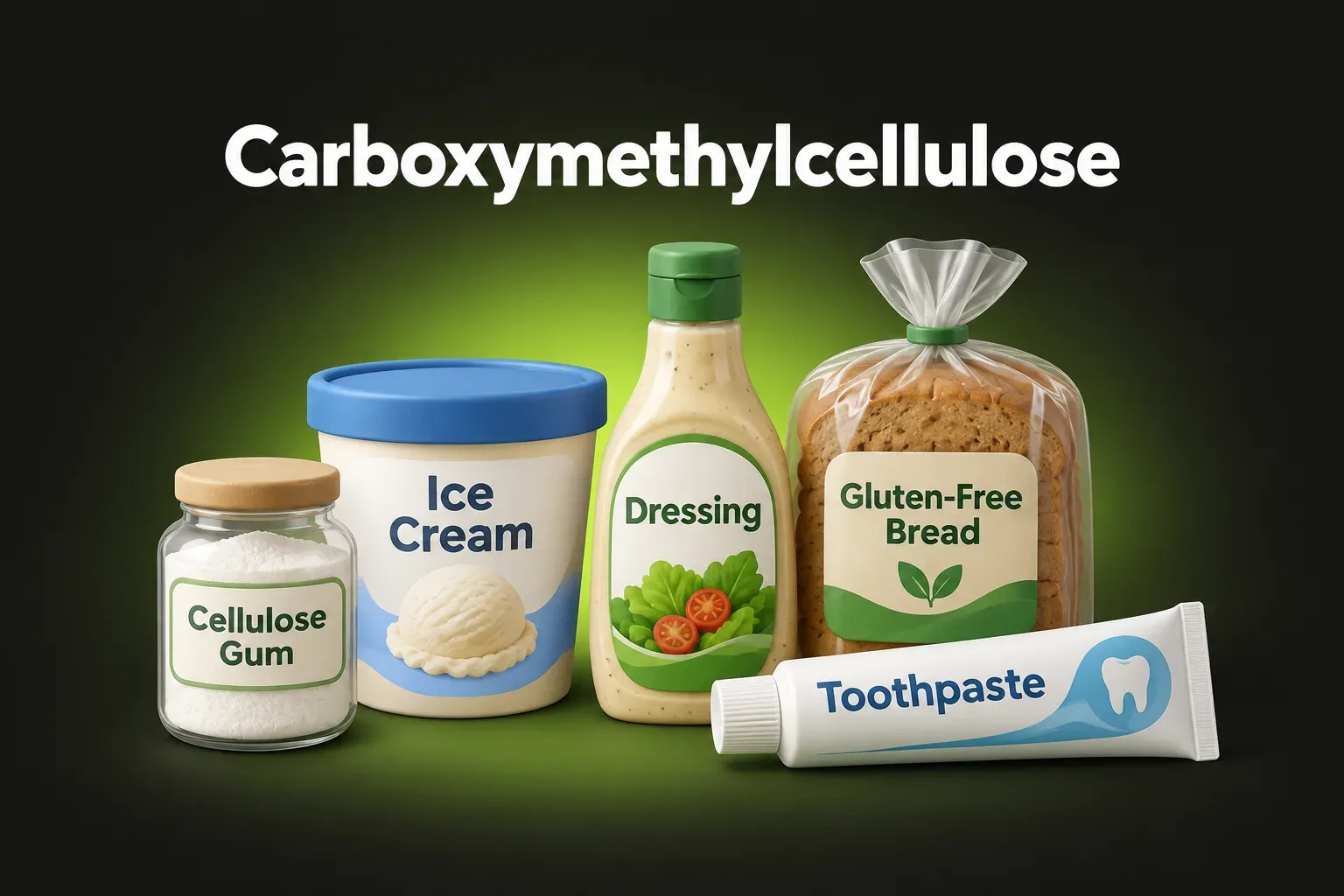
| Cellulose gum (CMC), E466 | A chemically changed cellulose – a different additive |
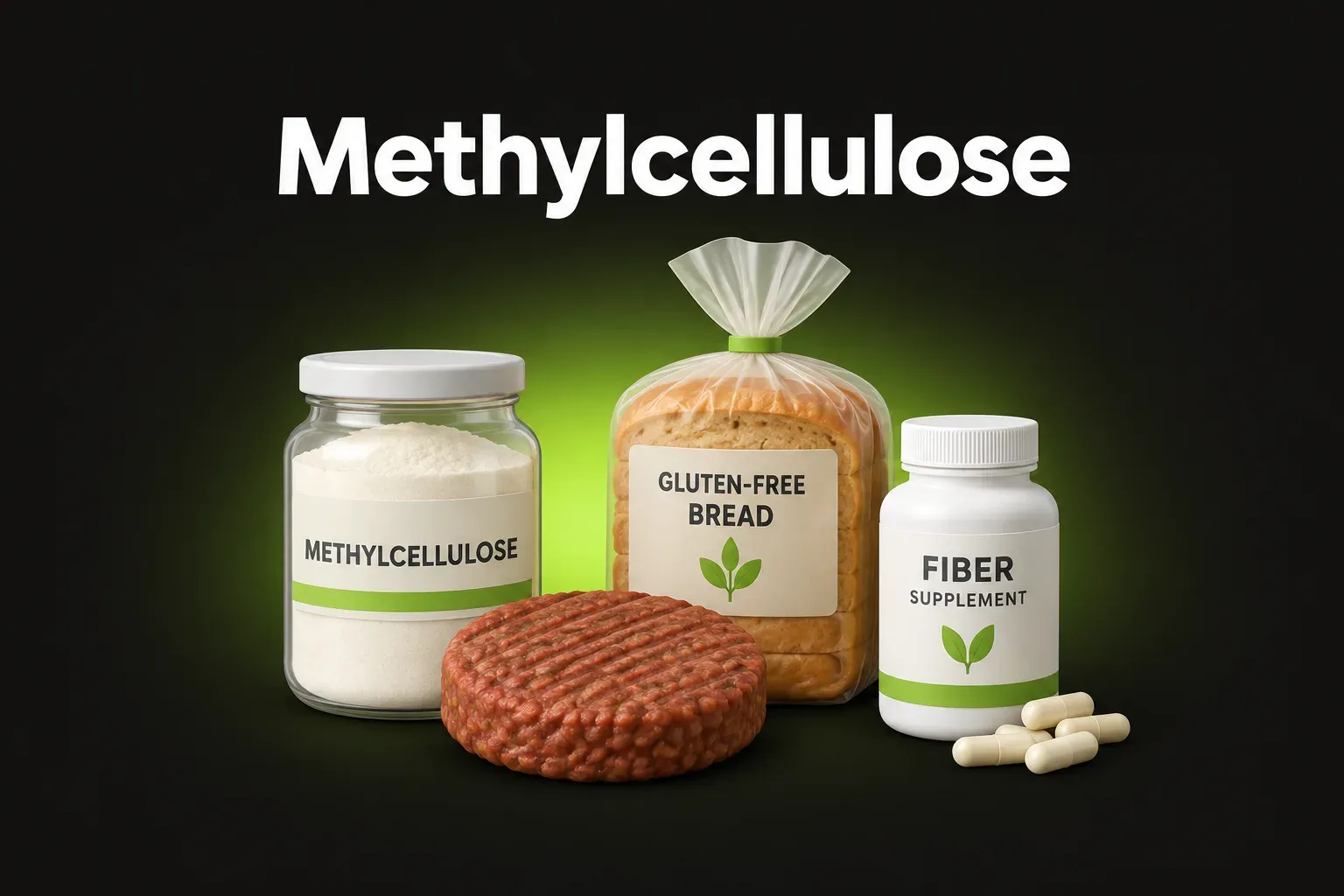
| Methylcellulose, E461 | Another chemically changed cellulose |
Where you’ll find microcrystalline cellulose
- Vitamins, supplements and medicines – its biggest use: it fills out and binds tablets
- Shredded and grated cheese – powdered cellulose stops clumping
- Low-fat and diet foods – creamy texture with fewer calories
- Whipped toppings, sauces and dressings – thickens and stabilizes
- Frozen desserts and ice cream
- Baked goods and high-fiber bread
- Powdered drink mixes and spices – flows freely without caking
In 2016, US tests found that some “100% Parmesan” cheeses contained much more cellulose than allowed, and some had almost no Parmesan at all. That led to lawsuits and a criminal case. The cellulose itself wasn’t harmful – the problem was that buyers were cheated.
Is microcrystalline cellulose safe? What the research says
What regulators say
- EU: in 2018, EFSA re-checked all cellulose additives (E460–E466) and found no need for a daily limit and no safety concern at the amounts used (EFSA Journal, 2018).
- US: the FDA considers it generally recognized as safe.
Why it’s considered safe
- It’s not absorbed. It moves through the gut and leaves the body, like the fiber in vegetables.
- It’s not changed by chemicals the way cellulose gum (CMC) is. CMC dissolves in water and has been linked to gut problems in studies. Plain cellulose hasn’t.
- The amounts are small. A tablet or a serving of shredded cheese contains well under a gram.
Side effects
In very large amounts – many grams a day – cellulose can cause bloating, gas and loose stools, like any insoluble fiber. In large amounts it may also slightly lower how well you absorb some minerals. At normal levels, that’s not a concern.
One study to know about
A large French study followed over 95,000 adults. People who ate more cellulose additives, including E460, had a slightly higher risk of heart disease – about 5% higher for each step up in intake (Sellem et al., BMJ, 2023). This kind of study shows a link, not proof: people who eat more of these additives also eat more processed food in general.
The risk found was small and other studies haven’t shown harm. That’s why NutriSmart gives it a low risk level.
Cellulose additives compared
| Additive | E number | NutriSmart risk | Main point |
|---|---|---|---|
| Microcrystalline / powdered cellulose | E460 | Low | Plain plant fiber, not absorbed |
| Methylcellulose | E461 | Low | Thickener in plant-based meat and gluten-free bread |
| Cellulose gum (CMC) | E466 | Medium | Linked to gut changes in mice and people |
Check E460 in seconds. With NutriSmart, you photograph the ingredient list or scan the barcode, and the app tells you right away if the product has microcrystalline cellulose (E460) and what its risk level is. Turn on an alert for any additive you want to avoid, and the app warns you every time a product you scan contains it. You’ll also see every other additive, the risks of each one and a health score out of 100.Get the app free
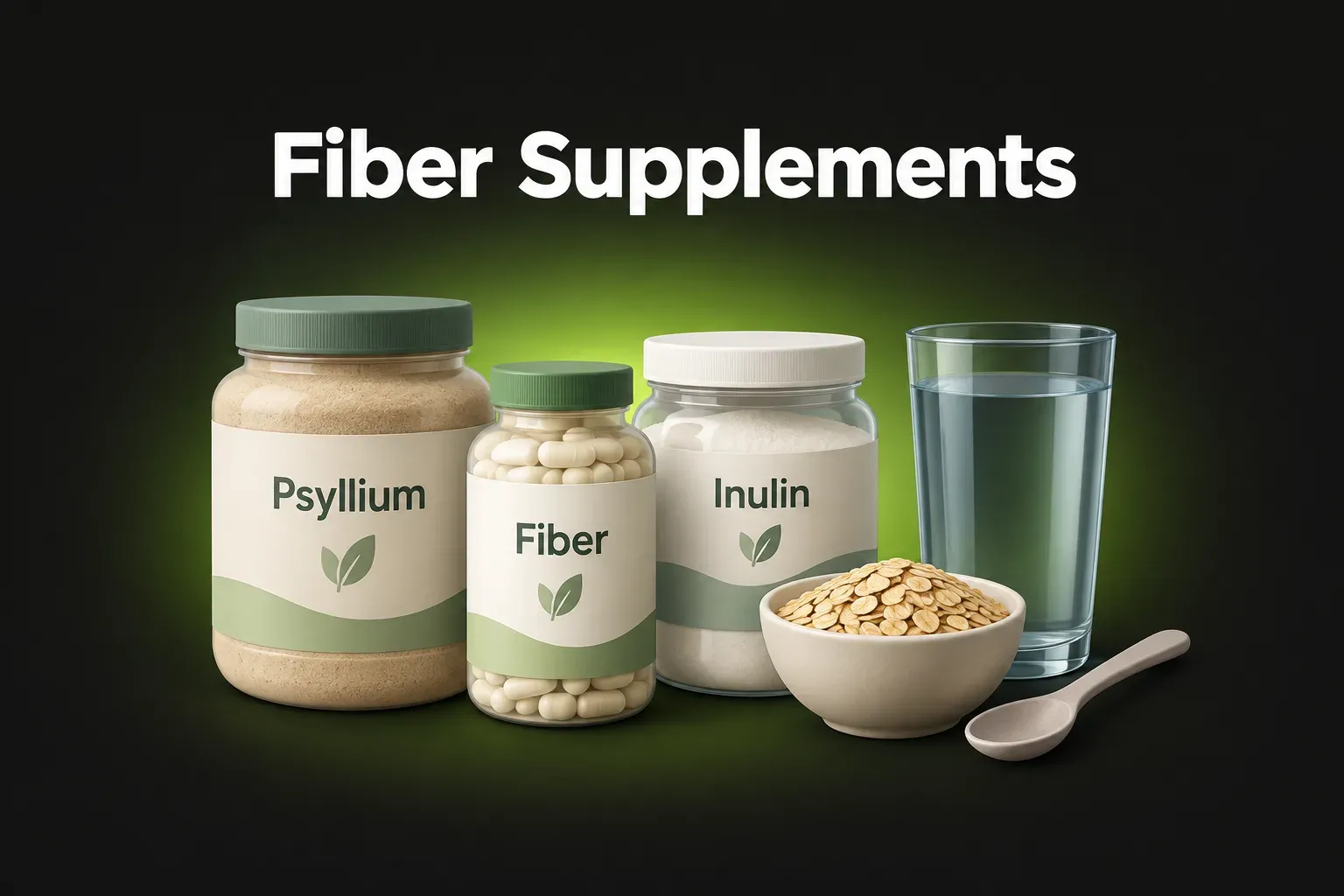
If you want more fiber, real food is better than additives: read about high-fiber foods and fiber supplements.
The bottom line
Microcrystalline cellulose (E460) is purified plant fiber, usually from wood pulp or cotton – the same cellulose found in vegetables. It holds tablets together, keeps shredded cheese from clumping and makes low-fat foods creamy. Your body doesn’t absorb it, and EFSA found no safety concern. Unlike cellulose gum (CMC), it isn’t one you need to avoid.
FAQ
What is microcrystalline cellulose?
Microcrystalline cellulose (MCC) is purified plant fiber, usually from wood pulp or cotton. It's a fine white powder that your body can't digest. It's used as a filler and binder in tablets and supplements, and as an anti-caking agent, thickener and fat replacer in foods. Its European code is E460(i).
Is microcrystalline cellulose safe?
Yes, at the amounts used in food and pills. In 2018 the European Food Safety Authority found no safety concern and no need for a daily limit. It passes through the gut without being absorbed, like the fiber in vegetables. Very large amounts can cause bloating or loose stools. NutriSmart rates it at a low risk level.
Is microcrystalline cellulose made from wood?
Often, yes. Cellulose is the main building block of all plants, and the cheapest pure source is wood pulp. Chemically it's the same cellulose found in vegetables, fruit and grains.
Why is cellulose in shredded cheese?
Powdered cellulose stops shredded and grated cheese from clumping together in the bag. It's allowed in small amounts. In the US, "100% Parmesan" products were found in 2016 to contain more cellulose than allowed, which led to lawsuits.
Is microcrystalline cellulose vegan and gluten-free?
Yes. It's made from plants and contains no gluten.
Is microcrystalline cellulose a fiber?
Yes. It's an insoluble fiber, like wheat bran. But the small amounts in foods and pills add very little fiber to your diet.