Maltitol: Is It Keto? Blood Sugar, Side Effects & Safety
What maltitol (E965) is, why it's in sugar-free chocolate and candy, how much it raises blood sugar, why it's not keto-friendly and its side effects.
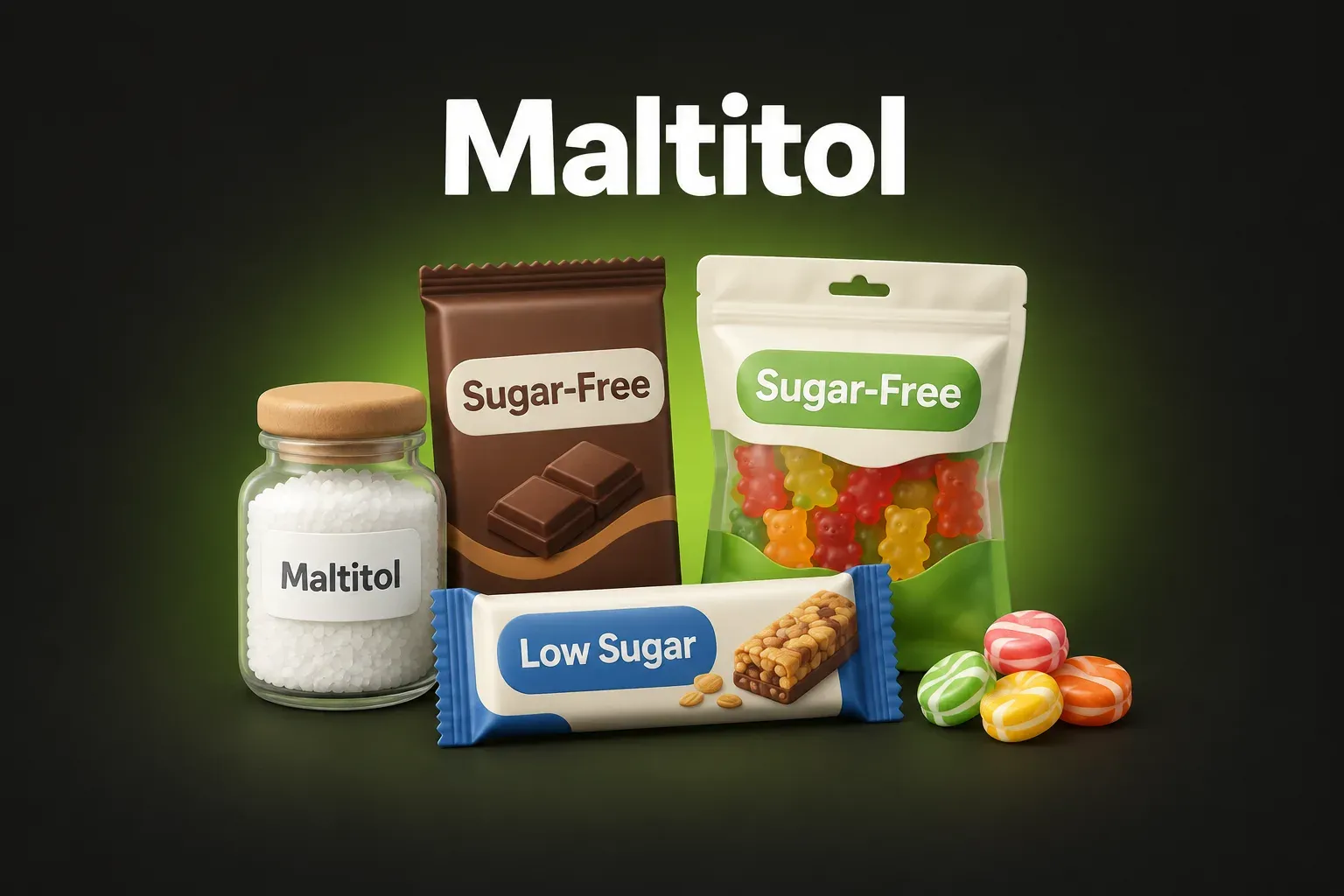
Maltitol is the sweetener in most sugar-free chocolate, candy and baked goods – and in many “low sugar” protein bars. It tastes almost exactly like sugar, which is why manufacturers love it. But it raises blood sugar more than other sugar alcohols, it’s not really keto-friendly, and it’s known for causing digestive trouble.
The short answer: maltitol is a sugar alcohol made from corn or wheat starch, about 75–90% as sweet as sugar with about half the calories. Unlike erythritol or stevia, part of it is turned into glucose, so it raises blood sugar and insulin. It does so less than sugar, but enough to matter for people with diabetes or on a keto diet. In larger amounts it causes gas, bloating and diarrhea. Many “sugar-free” products with maltitol also contain as much fat and almost as many calories as the regular versions.
What is maltitol?
Maltitol is a polyol (sugar alcohol). It’s made by adding hydrogen to maltose, a sugar made from starch. Most maltitol comes from corn or wheat starch.
It’s popular because it acts like sugar. It’s almost as sweet and has no aftertaste. It doesn’t feel cool in the mouth like xylitol or erythritol. And it melts and browns like sugar in chocolate and baking.
| Maltitol | Sugar | |
|---|---|---|
| Sweetness | about 75–90% of sugar | 100% |
| Calories | about 2.1–2.4 per gram | 4 per gram |
| Glycemic index | about 35 (syrup up to 52) | 65 |
| Causes cavities | No | Yes |
On labels, you’ll see it as maltitol, maltitol syrup, hydrogenated glucose syrup or E965.
Where you’ll find maltitol
- Sugar-free chocolate – often the main sweetener
- Sugar-free candy, gummies and hard candy
- “No sugar added” cookies, cakes and ice cream
- Low sugar protein bars and “diabetic” sweets
- Chewing gum and mints
- Some cough syrups and medicines
Maltitol and blood sugar
Part of maltitol is digested in the small intestine and broken down into glucose and sorbitol. That’s why it raises blood sugar more than other sugar alcohols:
| Sweetener | Glycemic index |
|---|---|
| Sugar (sucrose) | 65 |
| Maltitol syrup | up to about 52 |
| Maltitol | about 35 |
| Xylitol | about 7–13 |
| Sorbitol | about 9 |
| Erythritol | 0 |
| Stevia | 0 |
Read more about the glycemic index.
Is maltitol keto-friendly?
Not really. Many keto and low-carb products subtract all the maltitol from their “net carbs”, making them look almost carb-free. But because part of maltitol turns into glucose, it raises blood sugar and insulin and can push you out of ketosis. A common rule is to count about half of the maltitol as carbs. If you’re on a strict keto diet, products sweetened with erythritol, stevia or allulose are a better fit.
Side effects: gas, bloating and diarrhea
The part of maltitol that doesn’t pass into the blood reaches the large intestine. There it pulls in water and is broken down by bacteria. This can cause gas, bloating, cramps and diarrhea.
How much it takes varies a lot. In a French study of healthy adults, people could handle on average about 90 g of maltitol a day. But diarrhea was more common than with the same amount of sugar (Ruskoné-Fourmestraux et al., European Journal of Clinical Nutrition, 2003). In real life, many people – especially those with IBS – react to much smaller amounts. A few sugar-free chocolates or a bag of sugar-free gummies eaten at once can be enough. Maltitol syrup tends to cause more trouble than powdered maltitol.
In the EU, foods with more than 10% added polyols must warn that “excessive consumption may produce laxative effects”.
Is maltitol safe?
Maltitol is approved in the US and EU without a daily limit. It doesn’t cause cavities and is safe in normal amounts. The main concerns are:
- Blood sugar: it’s not “free” for people with diabetes or on keto.
- Digestion: it can cause gas and diarrhea, especially in people with IBS.
- The “sugar-free” trap: maltitol chocolates and cookies usually have as much fat and only a bit fewer calories than regular ones. It’s easy to eat more because they’re “sugar-free”.
Maltitol vs other sweeteners
| Sweetener | Calories | Raises blood sugar | Digestive tolerance | Main concerns |
|---|---|---|---|---|
| Maltitol | ~2.1 kcal/g | Yes, moderately | Poor | Not keto; diarrhea |
| Sorbitol | 2.6 kcal/g | Slightly | Poor | Diarrhea; fatty liver in animal study |
| Xylitol | 2.4 kcal/g | Slightly | Medium | Blood clotting in studies; toxic to dogs |
| Erythritol | ~0.2 kcal/g | No | Good | Blood clotting in studies |
| Allulose | ~0.4 kcal/g | No | Medium | Few long-term studies; not allowed in the EU |
| Stevia | 0 | No | Good | Few concerns |
How to handle maltitol
- Don’t trust “net carbs” on maltitol products – count about half the maltitol as carbs.
- Check your blood sugar if you have diabetes and eat maltitol-sweetened foods.
- Start with a small portion – a square or two of sugar-free chocolate, not the whole bar.
- Compare calories and fat with the regular product – “sugar-free” isn’t always lighter.
- Avoid it if you have IBS or a sensitive stomach.
Spot maltitol on any label in seconds. With NutriSmart, you photograph the ingredient list or scan the barcode, and the app tells you right away if the product has maltitol. Turn on an alert for it, and the app warns you every time a product you scan contains it. You’ll also see every other additive, the risks of each one and a health score out of 100.Get the app free
You can also read about other sweeteners: sorbitol, erythritol and stevia, or read our overview of all sugar alcohols.
Related: Polydextrose, a low-calorie fiber often used together with maltitol.
Compare all sweeteners and their NutriSmart ratings in our full list of artificial sweeteners.
The bottom line
Maltitol tastes and bakes like sugar, which is why it’s in so much sugar-free chocolate and candy. But it raises blood sugar more than other sugar alcohols, isn’t really keto-friendly, and can cause gas and diarrhea. And maltitol sweets often have as much fat as regular ones. Treat “sugar-free” maltitol products as a treat, not a free food.
FAQ
What is maltitol?
Maltitol is a sugar alcohol made from maltose, a sugar from corn or wheat starch. It tastes very much like sugar – about 75–90% as sweet – and acts like sugar in chocolate and baking. That's why it's the most common sweetener in sugar-free chocolate and candy.
Does maltitol raise blood sugar?
Yes, more than other sugar alcohols. Maltitol has a glycemic index of about 35, and maltitol syrup up to about 52 – compared with 65 for sugar, about 9 for sorbitol and 0 for erythritol. Part of it is digested into glucose, so it raises blood sugar and insulin, though less than sugar.
Is maltitol keto-friendly?
Not really. Because part of maltitol is digested into glucose, it raises blood sugar and insulin and can affect ketosis. Many products subtract all maltitol from "net carbs", which makes them look lower in carbs than they are. A common rule is to count about half of maltitol as carbs.
Does maltitol cause diarrhea?
It can. Only part of maltitol passes into the blood. The rest pulls water into the bowel and is broken down by bacteria, which can cause gas, bloating and diarrhea. How much it takes varies a lot. Sensitive people may react to a few pieces of sugar-free candy, while others can handle much more.
Is maltitol safe for people with diabetes?
In small amounts, it's better than sugar, but it isn't free of blood sugar effects. Sugar-free chocolates and candies with maltitol often contain as much fat and almost as many calories as regular ones. Check your blood sugar response and count maltitol in your carbs.
What is E965?
E965 is the European code for maltitol and maltitol syrup. On labels you'll see "maltitol", "maltitol syrup", "hydrogenated glucose syrup" or "sweetener: E965".