How Many Calories in an Egg? Boiled, Fried, White & Yolk
How many calories are in a small, medium, large or jumbo egg, in egg whites and yolks, in fried and scrambled eggs, how much protein an egg has and how many eggs a day are OK.
Eggs are one of the easiest high-protein foods: cheap, filling and ready in minutes. If you’re counting calories, it helps to know exactly how many are in an egg – and how much the way you cook it changes the number.
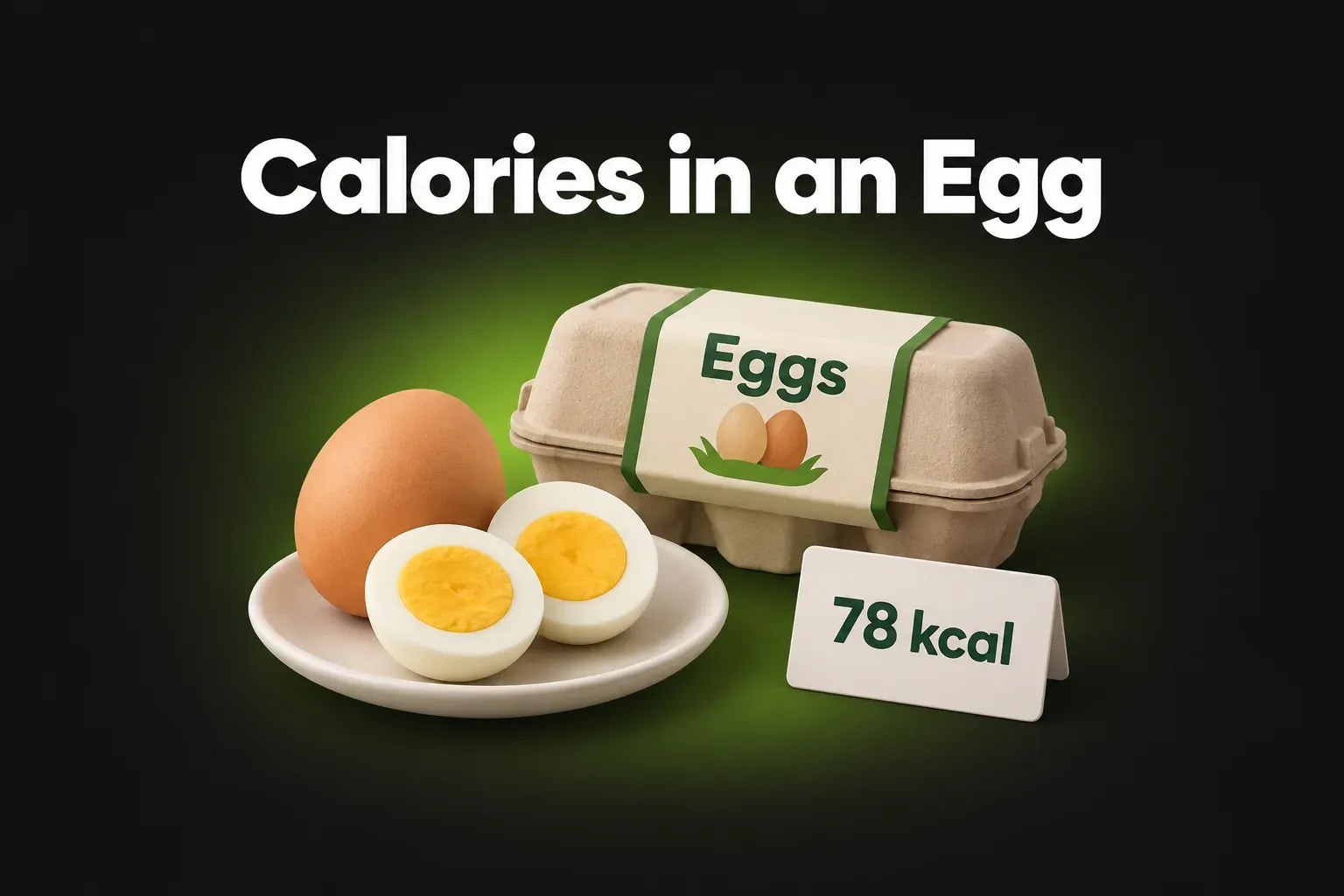
The short answer: a large egg has about 72 calories raw and 78 calories hard-boiled, with 6.3 g of protein. The white has only about 17 calories, and the yolk about 55. Boiled or poached eggs don’t gain calories; fried and scrambled eggs do, because of the oil or butter.
Calories in an egg by size
Values are for the edible part (without the shell), boiled, from the US Department of Agriculture (USDA FoodData Central):
| Egg size (US) | Weight without shell | Calories (boiled) |
|---|---|---|
| Small | 38 g | 59 kcal |
| Medium | 44 g | 68 kcal |
| Large | 50 g | 78 kcal |
| Extra large | 56 g | 87 kcal |
| Jumbo | 63 g | 98 kcal |
Egg nutrition: whole egg, white and yolk
| Nutrient | Boiled egg (100 g) | Large egg (50 g) | White | Yolk |
|---|---|---|---|---|
| Calories | 155 kcal | 78 kcal | 17 kcal | 55 kcal |
| Protein | 12.6 g | 6.3 g | 3.6 g | 2.7 g |
| Fat | 10.6 g | 5.3 g | 0.1 g | 4.5 g |
| Carbs | 1.1 g | 0.6 g | 0.2 g | 0.6 g |
| Cholesterol | 373 mg | 187 mg | 0 mg | 184 mg |
The egg white is almost pure protein and water. The yolk has nearly all the fat and cholesterol – but also most of the vitamins and minerals: vitamins A, D, E and B12, choline, lutein and zeaxanthin (good for the eyes). That’s why whole eggs are more nutritious than egg whites alone.
Calories in fried, scrambled and other eggs
| How it’s cooked (1 large egg) | Calories (approx.) |
|---|---|
| Raw | 72 kcal |
| Boiled (soft or hard) | 78 kcal |
| Poached | 72 kcal |
| Fried, with a little fat | 90 kcal |
| Scrambled or omelet, with milk and butter | 91 kcal |
Watch the fat: each teaspoon of oil (5 ml) adds about 40 calories, and a tablespoon of butter (14 g) about 100. Three eggs fried in a tablespoon of oil can reach over 350 calories. If you’re losing weight, boil or poach them, or use a non-stick pan with very little fat.
Are eggs good for weight loss?
They can help, because they have lots of protein for few calories. Protein keeps you full longer than carbs and fat and helps you keep muscle while losing weight. An egg breakfast instead of pastries or sugary cereal can help you eat less until lunch. For more ideas, see our list of healthy breakfast ideas.
What you eat with them matters: two boiled eggs with vegetables and whole-grain toast are very different from fried eggs with bacon and sausages. To find out how many calories and how much protein you need, use our calorie calculator and protein calculator, and read about the calorie deficit.
How many eggs a day are OK?
Eggs are high in cholesterol – about 187 mg in a large egg – and studies don’t fully agree:
- A large Harvard study followed over 215,000 people for up to 32 years. Together with a review of studies with over 1.7 million people, it found that one egg a day wasn’t linked to a higher risk of heart disease (Drouin-Chartier et al., BMJ, 2020).
- Another study followed nearly 30,000 Americans. Each extra half egg a day was linked to a 6% higher risk of heart disease and an 8% higher risk of death, mainly because of the cholesterol (Zhong et al., JAMA, 2019).
In short: for most healthy people, one egg a day seems fine. If you have high cholesterol, diabetes or heart disease, ask your doctor how many eggs fit your diet. And if you want lots of protein, you can use more whites and fewer yolks.
How long to boil an egg
Place eggs in already boiling water and time from when it boils again:
- 6 minutes: soft, runny yolk
- 8 minutes: creamy, almost set yolk
- 10–12 minutes: hard-boiled, good for salads and snacks
Cool them in cold water – they’ll peel more easily. Hard-boiled eggs keep in the fridge, in their shells, for about a week.
Count the calories in your eggs without guesswork. With NutriSmart, you snap a photo of what you eat, and the app counts your calories, protein, carbs and fat and shows how much you have left for the day.Get the app free
You can also read how many calories are in bacon and cottage cheese, and see our list of high protein snacks.
The bottom line
A large egg has about 72 calories raw and 78 boiled, with 6.3 g of protein. The white has just 17 calories, the yolk about 55 – plus most of the vitamins. Boiled or poached, eggs are one of the best high-protein snacks; only the fat you fry them in adds a lot of calories.
FAQ
How many calories are in an egg?
A large egg (about 50 g without the shell) has about 72 calories raw and about 78 calories hard-boiled. A medium egg has about 68 calories and an extra-large egg about 87 calories when boiled.
How many calories are in a boiled egg?
A large hard-boiled egg has about 78 calories, 6.3 g of protein, 5.3 g of fat and less than 1 g of carbs. Boiling doesn't add calories; per 100 g, boiled egg has about 155 calories.
How many calories are in an egg white and a yolk?
The white of a large egg has about 17 calories and 3.6 g of protein, with almost no fat. The yolk has about 55 calories, 2.7 g of protein and almost all of the egg's fat, vitamins and cholesterol.
How many calories are in a fried egg?
A large egg fried with a little fat has about 90 calories. Each teaspoon of oil adds about 40 calories, and each tablespoon of butter about 100, so the cooking fat matters more than the egg itself.
How much protein is in an egg?
A large egg has about 6.3 g of protein – about 3.6 g in the white and 2.7 g in the yolk. Egg protein is high quality: it has all the building blocks of protein (amino acids) your body needs.
How many eggs a day is safe?
For most healthy people, up to one egg a day hasn't been linked to a higher risk of heart disease in large studies. Other studies found a somewhat higher risk in people who eat a lot of eggs and cholesterol. If you have high cholesterol, diabetes or heart disease, ask your doctor how many fit your diet.